
Real-Life Investing Decisions: How to Simplify Retirement, Taxes, and Financial Planning
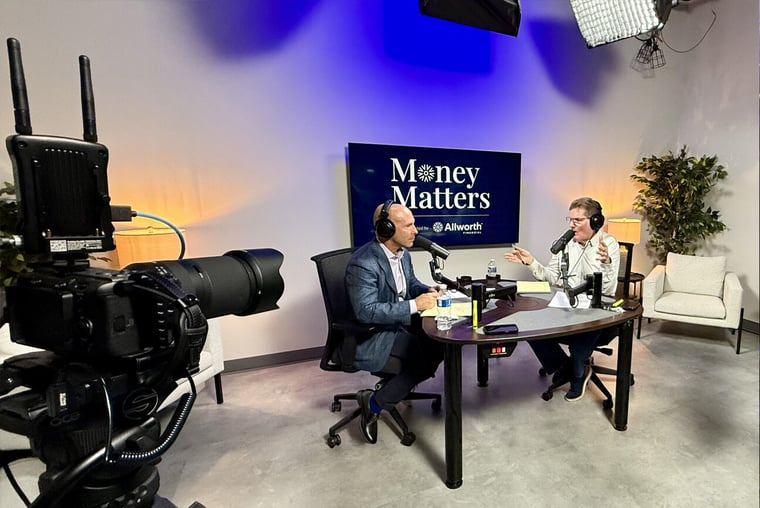
When it comes to investing, the most important decisions aren’t made in theory—they happen in real life. In this episode of Allworth’s Money Matters, Scott and Pat answer real listener calls and break down how smart investing decisions actually play out.
Martha, a 79-year-old retiree with $4–5 million, considers a complex investing strategy involving direct indexing to generate tax losses and improve tax efficient investing strategies. But does this level of complexity actually benefit her portfolio—or just add unnecessary risk?
Then Dennis, age 51, with nearly $2.3 million saved and major expenses ahead, faces key investing decisions around portfolio allocation, college funding, and building a sustainable retirement income plan.
Through these real-world financial questions, Scott and Pat show that successful investing isn’t about chasing complexity—it’s about simplifying your strategy, aligning with your goals, and making confident decisions over time.
What You’ll Learn:
- When complex investing strategies like direct indexing are actually worth it
- How to approach tax efficient investing strategies without unnecessary risk
- Smart ways to think about portfolio allocation as you near retirement
- How to build reliable retirement income from your investments
- How to evaluate real-world financial questions with confidence
- Why simpler investing strategies often lead to better long-term results
Join Money Matters: Get your most pressing financial questions answered by Allworth's co-founders Scott Hanson and Pat McClain live on-air! Call 833-99-WORTH. Or ask a question by clicking here. You can also be on the air by emailing Scott and Pat at questions@moneymatters.com.
Scott: Welcome to Allworth's "Money Matters". Scott Hanson.
Pat: Pat McClain. Thanks for joining us.
Scott: Glad to be here in the studio with Pat as we're talking about financial matters. And I love taking calls. Interesting time.
Pat: The profits are still there, Scott.
Scott: Oh, goodness.
Pat: It's amazing.
Scott: I mean, like the chip stocks are on fire right now. Crazy. But even if you back out some of those and you look at this kind of the broader market, while the stock price is on...the typical stock is not up that much, earnings continue to bow forward. And as an investor, you should be less concerned about daily stock prices and much more concerned about earnings of the companies.
Pat: That's all there is.
Scott: Because over the next 20 years, your portfolio returns are going to be based upon...
Pat: How the profits of the companies. It's no different than a small business, right? Cost of goods sold, cost of labor, cost of overhead, capital expenditures, and then, how much money are we making at the end of the day? End of the day, how much money?
Scott: It all comes back to...
Pat: But I got to tell you, Scott, we've been hearing about this K-shaped recovery for the last, what, three, four years, which is there's two economies.
Scott: Correct. And it's worsening.
Pat: Because of gasoline, fuel prices.
Scott: Well, that's having a big impact.
Pat: We haven't seen it in food, yet we will.
Scott: When you think about it, the upper half of society, the top 10% or 20%, it's an annoyance what we pay, but it doesn't impact my stand. I'm not making other choices in life.
Pat: Correct. But if you were...
Scott: You have $200extra discretionary a month or $300 discretionary a month, instead of going out to Red Lobster with your family once or twice a month, you're not going out.
Pat: I was thinking this morning about McDonald's, right?
Scott: How are they doing? We don't spend a lot of time looking at these different...
Pat: All the fast foods are actually struggling a little bit. They worry about it because the cost of goods going up.
Scott: And I just picked on Red Lobster. You just kind of said it. But you wonder if the whole kind of chili's Red Lobster, that segment's going to get hammered worse.
Pat: Yeah, because people are actually dying down.
Scott: That is right. I was in Sonoma County a few weeks ago at the town of Healdsburg and it was just absolutely packed. You couldn't get into a restaurant. And of course, the kind of place where I gave my checkbook, I said, "Do I have anything left?"
Pat: It's a K-shaped recovery, which isn't good, by the way, for the long term.
Scott: No, no, no.
Pat: For the long term, it's not good. I mean, as a society, it's not good. But it's... And the markets don't seem to pay any attention to what's going on in the Middle East. It's just like...
Scott: I was thinking this morning, and it's even interesting the kind of the calls we've had over the last number... We've been doing this 30 some years, all the calls we've... With the whole tariff thing, and even before the Liberation Day, which was roughly a year ago, right, markets sold off quite a bit over a short period of time, quickly recovered. Then of course, the war, we'll think, "Well, you shut off oil? What's that going to do?" And we're at new highs.
Pat: It's why you cannot time the market.
Scott: It's kind of crazy.
Pat: It is a little bit.
Scott: It's always a little crazy. The markets are always a little crazy.
Pat: We haven't seen the Hormuz crisis hit food yet, but it's coming because of the...
Scott: Of the transportation costs.
Pat: That and...
Scott: Fertilizer.
Pat: ...fertilizer.
Scott: Both.
Pat: Most fertilizer are derived from a petroleum product.
Scott: Well, you know, I mean, we're here in California where it's like 80% of our oil we import now.
Pat: You'll figure.
Scott: I as a child, a couple of years I live not far from Bakersfield. And I think they've... I don't know if you're allowed to drill in California anymore.
Pat: Well, even if you're allowed to drill, they don't refine, which is the problem.
Scott: I think the number one importer in California, where we get the... Our number one provider is Iraq.
Pat: For oil.
Scott: For oil.
Pat: For raw oil.
Scott: So, it turned into gasoline for us here. And here we go. Anyway, it's a...
Pat: It's an interesting time.
Scott: And then...
Pat: The markets still continue. Just remember, the political environment is probably... I can't say it's never been more divisive. We did have a civil war.
Scott: There's that.
Pat: There is that. It's pretty divisive.
Scott: And I think, for a long term investor, Pat, it's good to remember the importance about being invested. And, it's funny, the other day I was thinking, I was actually looking around, like, what are some of the worst performing areas of real estate the last five years? I was just looking at publicly traded REITs, just out of curiosity to see. Nobody's come to me and say, "Hey, Scott, I think it makes a lot of sense to invest in some..."
Pat: Real estate? But what were the worst performing? Do you recall?
Scott: Oh, it's, I mean, office buildings. But a lot of those areas have gotten really hammered just because, yeah...
Pat: I mean, I was talking to a developer of self-storage units, and he was just talking about the later projects that are not making any money because you have a construction loan. By the time you're finished, the construction loan needs to get refinanced. Interest rates are higher and the higher payment and there's overcapacity in the mini-storage.
Scott: Correct. It's one of those classic. It just seems like a really easy business model. You don't have to deal with many employees, the people, right?
Pat: There's no TIs.
Scott: I may have had a number of people over there, "What do you think about self-storage, Scott? It seems like a fantastic..." One of those areas, I think, too much capital floods and prices get dropped. But from an investment standpoint, as you often stated, if you're well diversified, at any particular time, there's going to be pieces of your portfolio that you're not happy with.
Pat: Probably 20%.
Scott: So, if you own commercial real estate, odds are you're not too happy with it, by and large. Lots of different areas. But also, when you're looking at your own portfolio... And as an advisor, nobody's ever come to me and say, "Hey...?"
Pat: "Let's get rid of this."
Scott: "...this thing, well, I don't know what's going on, but this is way overperformed and this is underperformed. Can we sell some of the overperformed and buy some of the underperformed?"
Pat: It's happened to me twice.
Scott: Okay. Can we actually sell high and buy low?
Pat: Out of the hundreds of clients that I've worked with and thousands and thousands of meetings, it's happened to me twice, and I remember them because it was so unusual.
Scott: Yeah. It was like, "Wow, you actually understand this."
Pat: Exactly.
Scott: And I'll never forget in early 2000, the year 2000, 1999, if I remember correctly, the Nasdaq was up something like 78% or 85% or somewhere crazy, but essentially, double that. And the S&P 500 was up roughly 20%, 19 point something, if my recollection is correct. So, great year on stock. And I remember I had a client who was in, he was highly diversified, had some fixed income. His portfolio was up like 23%. And he came in, he says, "You're not paying attention to this portfolio." I'm like, "What are you talking about?" And he says, "Why do we have real estate in here?" And I said, "What?" There's like 5% of his portfolio. "Why do we have real estate in here?" I'm like, "Well, you're at retirement age, you talk about diversification, market cycles, and stuff." And he fired me over that. And I don't know exactly how his portfolio was allocated, but I can clearly imagine...
Pat: After.
Scott: ...in the year 2000, right before the dot-com thing blew up, and what was the best performer the next five years?
Pat: Real estate.
Scott: Real estate. I mean, not that I was predicting real estate, but it's...
Pat: Yeah. When you're looking at the portfolio, just make sure it's well-diversified. And I was talking to this guy, he had sold his company and he put it all in equities. And I said, "You know there are periods of time that the stock market goes down for extended periods of time where it will be years." And he said, "No, that doesn't really happen. It goes down for a short period of time and then comes back." I said, "Well, that's a relatively... The last few downturns, that has been the case. But if you go back in history, that is not the case." And I...
Scott: You can go years before you hit a new high.
Pat: And I said, "So, it wouldn't hurt you. You're going to sacrifice returns over the short term if you had 20% of your portfolio. But what it's going to allow you to do is to actually weather these downturns relatively easily if you would just spend a little bit more time thinking about risk rather than return. It's a risk adjusted return, is what you're interested in." And he said, "Well, that doesn't make any sense to me." And I thought, all right.
Scott: I wonder how you'll be... And it's like the short term bear markets are no big deal because they're so quick.
Pat: They're fast.
Scott: Yes. But, you know, just talking about 2000. So, we peaked in March of 2000. We didn't hit a low on the stock market until November of '22, give or take. That's my recollection. It's right around that time. I think that's it, right?
Pat: Yes.
Scott: It's somewhere right in there.
Pat: And it took how many years to hit a new high?
Scott: Oh, I don't even remember. But the challenge with that long of a bear market, two and a half years of declines. And so, markets would go down, down, down, have a pop up for a month or two down, down, down, down, a little pop up, down, down, down. And I remember even as advisors, Pat, the clients would call. Most of our clients are retirement age and would have a diversified approach to things. Not everything's in stocks, but they would get so concerned about the markets. And you'd show them history. It's a combination between education of history and dealing with the emotions and reminding them what's not tied to the stock market. What are your actual cash flow needs from this portfolio? "Oh, okay. That makes a lot of sense. I'm going to stick with the plan." Four months later, the markets are hitting new lows. They're calling again. Eight months later, the markets hit a new lows. They're calling again. Those are the hard bear markets.
Pat: And they will happen again. Who was the...
Scott: They will happen again.
Pat: ...the consultant to the financial services industry, they called them lifeboat drills?
Scott: Nick Murray.
Pat: Nick Murray. And he said, "You have to conduct lifeboat drills."
Scott: When things are good. I think that's kind of what we're doing right now.
Pat: Right. That's what reminded me of that.
Scott: Yeah. Because the markets are going up, up, up and everyone's excited. I like looking at my own portfolios, too. It's pretty amazing.
Pat: Yes, yes. But we can't expect this. It's not going to last forever.
Scott: No, and...
Pat: But it will last. The market goes up 53% of the time.
Scott: Per day.
Pat: Yes, correct. So, over the long term, you can expect that your portfolio will do well, but you have to be in it over the long term.
Scott: Yeah. Anyway, here we are. We're going to take some calls. If you want to be part of our program, love taking calls, answering questions, and getting to know people as well, s.hanson@moneymatters... That's my... Questions@moneymatters.com, questions@moneymatters.com
Pat: There you go.
Scott: We'll get you on here.
Pat: Are you okay? You got it? Questions@moneymatters.com. We've had the Money Matters domain for a long time.
Scott: Anyway, let's talk with Martha. Martha, you're with Allworth's "Money Matters".
Martha: Hello.
Scott: Hi, Martha.
Martha: Hi. Good morning. Nice to talk to you. Been a long-term listener and always have enjoyed your show.
Scott: Thank you.
Martha: I have questions on enhanced direct indexing.
Scott: Okay. What are you trying to accomplish?
Martha: Well, I'm trying to accomplish more tax loss harvesting. I'm currently doing enhanced... I mean, I'm currently doing direct indexing. And my wealth manager is talking to me about also doing enhanced direct indexing. And the words that scare me are margins and options.
Pat: Thank you. And why do you want these losses? Do you have a gain coming up that you're trying to offset?
Martha: I have some ossified accounts in some of my portfolios that have quite a bit of gains in them. And the direct indexing accounts are getting ossified. So...
Pat: Okay. I have not heard that term used in a long time.
Scott: In financial markets.
Pat: Yes. So, do you have any large single holdings that you're trying to bring down that have gains in it that you're trying to create the loss? So, like, you retired from a company and you had all these stocks from the company and they have large embedded gains, anything like that?
Martha: Yes, I have some accounts in a portfolio like Apple. Quite a bit of gain on that. I would like to realize without paying a tremendously a lot of taxes.
Scott: So, first of all, the term enhanced direct indexing doesn't mean anything. It's just a label that somebody slaps on some sort of strategy, right? So I don't know exactly what the strategy that is being discussed, but what I can say...
Pat: Because there are many, there are many ways to do this.
Scott: Yes, but look, what's happened even the last few years, there have been strategies that large hedge funds have been... And the term hedge fund, it can mean lots of things, but in its classic sense, it was designed to hedge a portfolio, or designed to... In the classic sense, a hedge fund would have been used by wealthy families or institutional investors as a way to provide some protection or to accomplish some other goal with the portfolio. With technology today, there are strategies that used to be used for portfolios of $100 million that can be used for a $5 million portfolio. And they're complicated because they have things such as options, and they might be long on some stocks and short on some other stocks.
Pat: And the idea is to get market-type returns while generating large losses. If that is that particular, which it sounds like the strategy you're going for. Tell us about your overall situation. Do you have way more money than you're ever going to use?
Martha: Hopefully.
Scott: And are you retirement age or retired?
Martha: Yes. Oh, yes, yes, yes, for several years.
Pat: I actually like the strategies realizing that they can have more risks than a regular index portfolio.
Scott: Yeah, they make sense in certain situations and don't make sense in other situations.
Pat: Yes. But in this particular situation, which is, she's got embedded gains and a large portion of the portfolio is allocated to a single company stock, which you believe...
Scott: How old are you Martha?
Martha: I'm 79.
Pat: Are you single?
Martha: Yes, widowed.
Scott: And how long have you been widowed? Sorry about that.
Martha: About seven years.
Pat: And you have all these gains, even though you received a step up in basis at your spouse's death?
Martha: Yes.
Scott: And is there a bypass trust that was created when your husband passed?
Martha: What I did is I created a new trust in my name only. And everything's been moved over in...
Scott: Okay. Are there assets that remain in his name or in a family trust name that you don't have complete...?
Martha: No.
Scott: Okay. So, everything's still in your name now.
Martha: Yes.
Scott: And when you pass on, is 100% of this going to your kids...? Like, what's the plan there?
Martha: The plan is to have the last check bounce.
Pat: What's your overall investable assets?
Martha: About $4 million to $5 million.
Pat: And how much are you spending a year of this?
Martha: $180,000.
Scott: It's not going to bounce. Your last check will not bounce.
Pat: And how much of this is in IRAs?
Martha: About $850,000.
Scott: And what's your largest position, stock position? Is that Apple?
Martha: In one of the portfolios, it's Apple, but in the big portfolio, there's several positions that are showing large gains. And Tesla, Berkshire.
Scott: Are you gifting to charities at all?
Martha: Yes.
Scott: Have you considered a charitable remainder trust?
Martha: Yes, I have considered that. But I am not quite sure which way to go. What is it? A direct...
Pat: And how much is your exposure to these particular stocks, Tesla, Apple of that...? You know, so let's get the IRA out of it. So, let's say there's about $4 million in brokerage accounts outside of the IRA. As you said, the overall assets are $4 million to $5 million. How much of the portfolio are concentrated in these individual stocks?
Martha: Not a great deal. Most of them are EFTs and mutual funds, that sort of thing. I mean, there's a small portion in, in individual equities.
Scott: And what percentages in a direct index, or how much money is in a direct index strategy?
Martha: I believe $250,000.
Scott: Okay. So, it's a small amount.
Pat: I don't know if you need any of this.
Scott: I mean, if you said 40% of my portfolio was an Apple, and you're trying to have a strategy to reduce your Apple exposure, or I don't care what company it is, 40% of your portfolio is in one company, then it's like, "All right, we need a strategy to reduce the exposure on this."
Pat: And did your advisor just ever talk about isolating those individual stocks and putting callers around them?
Martha: I don't understand what that is.
Pat: So, using options. You sell options and then you buy in order to keep the...you try to make it neutral, but it doesn't always turn out to be neutral.
Scott: To protect any or some of downside.
Pat: To protect the downside. You give up some upside to protect the downside.
Scott: There's some strategies to do that.
Pat: Around those particular, rather than recreate a whole portfolio. I just don't... It seems to be overcomplicating...
Scott: Overly complicated.
Pat: ...a situation that... I mean, sure, there's more risk in there than you may want, but you're spending $180,000 a year out of, as you said, a $5 million portfolio.
Scott: If you said, "I'm selling a family farm next year. I'm selling a business next year. I'm trying to figure out how to generate as many losses as possible to offset some future gain." Okay, then maybe look at some of these. But it's...
Pat: But what you're talking about is creating losses in order to create a gain that you don't really need to create in the first place, possibly. It doesn't sound like the portfolio is so grossly out of whack that we just don't either live with it or we put a stop loss on some of these individual stocks that you have too much exposure to.
Scott: Let me ask you this question. On that direct indexing strategy, are they specifically excluding Apple and Tesla and some of the other larger holdings?
Martha: It's following an index on those.
Pat: I understand, but you can build a direct index to exclude either sectors or individual stocks.
Scott: That's one of the beauties of it, yeah. You can mirror it next to your own portfolio and say, "Oh, we want to make sure we don't have it. We don't want to have any more Apple or any more Tesla or any more whatever it is."
Pat: Or even any more technology or...
Scott: Whatever.
Pat: You could build the index, which is one of the beautiful things about direct indexing, is you could try to create your own index in order to exclude certain individual stocks and/or sectors.
Scott: Maybe that's what it means or she means by enhanced indexing. But you said something about margin.
Pat: Yeah, she rounded up the margin.
Scott: Which should be probably selling short.
Martha: The reason behind the whole discussion was number one is to come up with sources to send my monthly funding to me. And number two, I probably will sell my home in about five years, and there'd probably be a pretty big gain on that. So, those were the two reasons that it was being discussed.
Scott: Do you have any money in the bank, fixed income, bonds, or anything?
Martha: Yes. I have cash in the bank of about $127,000, and I have treasury direct things about $40,000, savings bonds.
Pat: Martha, I'm confused. One of the reasons was in order to try to generate income for this $180,000 a year. Is that what you just said?
Martha: Yes, yes. And what they usually do is try to keep about five-years' worth of bonds and in the different accounts.
Scott: Oh, good. Okay. And is that where you are today?
Martha: Yes, yes.
Pat: I question...
Scott: And what other income do you have, taxable income?
Martha: Nothing.
Scott: Are they encouraging you to spend more money?
Martha: They don't say not to.
Pat: Do you want to?
Martha: I don't need to.
Scott: Okay. I mean, because the capital gain rates aren't that high for you. Like, it might not be that bad to pay some capital gain on some of this.
Pat: I actually don't... From what you've told us, right, and I'm not looking at your portfolio, from what you told us, I don't think you need to use the enhanced indexing. If you're worried about it... Does anyone's stock constitute more than 10% of your overall portfolio? Is there any one stock in your portfolio that's worth $400,000 or above?
Martha: I don't think so.
Pat: Which would be 8% total. I wouldn't mess with the enhanced indexing. It sounds like an advisor that has a new tool that wants to use it. That's what it sounds like.
Martha: You know, the old adages, if you don't understand it, get away from it.
Pat: Yeah, I get it. Well, that's why you called us.
Scott: Martha, whether you do this or not, it's going to have absolutely zero impact on your standard of living and your quality of life, absolutely zero. I'm 100% convinced of that. So, if you go down this path and it caused you additional stress or anxiety, then it's clearly not worth it.
Pat: Scott, if she was... Well, she'd have to be a young mother. She's 78. So, she was 20 when she had you. If she was your mother, what would you tell her to do?
Scott: My older sister. I wouldn't bother with it. No way. I wouldn't bother with it. From what you've told us...
Pat: I wouldn't mess with it at all.
Martha: Yeah. There are two big things looming in my future. Number one would be selling my home. And I have been trying to keep ahead of the aging game. And I've been looking at continuing care communities. And some of them is pretty hefty buy-in, and I would have to come up with some cash for that. And so, this might be one way of helping me come up...
Pat: What's the value of the home today?
Martha: I would say, conservatively $800,000 to $900,000.
Pat: And what was the value of the home the day your husband died?
Martha: Well, I had it appraised, and they appraised it at $800,000.
Pat: When he died?
Martha: Yes.
Pat: You don't have any capital gains in this, in the sale of your home? Because of step up in basis.
Martha: Yes, that's true. I forgot about that.
Pat: And the buy-in from the house into a community care, which I've had many clients go into this care centers where you live independently and then you live, you know, partially independent with services, and then you can go into a full on nursing care if need be, I've never seen one more than $800,000, the buy-in. And you have the proceeds from the sale of the house. And you've got $4 million to $5 million in your portfolio.
Martha: That's the kicker. I was going to move into it without selling the house or make sure...
Scott: Why would you do that?
Martha: Well, because I love my home, and if I don't like it there, it's not what I thought it was going to be, I always would have someplace to come back to, was the thought.
Pat: Well, I don't think...
Scott: Do you have a good relationship with your wealth manager?
Martha: Yes.
Scott: That's good.
Pat: I wouldn't mess with the enhanced indexing. If I was your advisor, I would have never brought it up. I would have thought, "This is a tool that doesn't..."
Scott: I mean, I appreciate the call very much, Martha. You know, the part of it, Pat, it's like, if one stock constituted 40% of our portfolio...
Pat: Oh, 100%.
Scott: ...then that may or may not be the kind of strategy, but we'd be looking at strategies to try to reduce that. But it doesn't sound like that's the case.
Pat: No, it doesn't sound like it. It sounds like they're looking for trouble. I mean, there's nothing that stands out in that conversation that says we should be doing anything.
Scott: All right, let's continue on. We're talking with Dennis. Dennis, you're with Allworth's "Money Matters".
Dennis: Hey, guys, how are you doing today?
Scott: Wonderful.
Dennis: Good. So, thanks for having me on the show. I'm a newer listener, probably about a month or so.
Scott: Oh, good.
Dennis: And the one observation actually, listening to the last caller and, you know, read news and stuff, you know, every caller that calls in seems to have a ton of money, like millions of dollars. And then you read the press, you know, the average 401(k) is, you know, $100 grand at age 40 or 30 and stuff. So, just quite interesting. Just wanted to bring that up.
Pat: But Dennis, we do get phone calls from people that don't have a lot of money, but based on their questions, you know they will have a lot of money.
Scott: And what's happened, Dennis, so we did this program live on radio for... We started the show 30 years ago, so we were on radio for years. We would have a variety because it's broadcast, right? So, you'd have a variety of different questions. Now, that we're podcast format and we end up talking about more complex strategies, just the people who tend to listen tend to be higher net worth people. And so, yeah.
Dennis: It makes sense.
Pat: So, anyway, what's your question for us?
Dennis: So, I'm about in the middle, okay? So, I'll tell you my question first and then I'll sort of give you...
Pat: Perfect.
Dennis: ...the background and financial position and so forth. So, I'm 51 years old. My wife is the same age. My question is, do I need an advisor? And this is sort of like for the next 10 years, planning 10, 20 years in decade chunks, right? And it's for potential tax strategy like wealth transfer, that sort of lens. Do you want me to give you our financial please?
Pat: Yep, please.
Scott: Please.
Dennis: Okay, perfect. So, my wife works in a school district hence the 403(b). But between 401(k) and 403(b), we have $1.8 million, about $1.65 of it's in the 401(k). That's me. My wife's the 403(b). We have about 550K in mutual funds, like, nonqualified savings brokerage account.
Pat: How much was that? Give me that?
Scott: 550k.
Pat: 550k?
Dennis: 550k, yep, 550k. We just paid off our house. We're in an expensive Northeast area, so it's about 2 million bucks market value. We both have life insurance. We each have a million dollar term policy of 30 years that gets us to age 70, and then another million dollar term policy that gets us to age 80.
Pat: Wow, okay.
Dennis: Okay. My wife who's gonna...we're planning, again, a retirement for her at age 55. Though she can go longer depending on where we're at then, about 60k a year. And another big one is...
Pat: Really quick, what does she earn now if her pension is going to be 60k?
Dennis: About 110. Okay. Another big nugget potential is inheritance from a set of parents, which probably, you know, are early to mid-70s. And I'm thinking maybe, like, 2.5 million bucks. This is sort of like set, like they have a substantial asset base. And then our two big expenses, we have five years of college left between two kids, so one and then four more, at about $90 grand a year. And then our oldest is disabled. You know, like the whole Medicaid Medicare system gets government funding and stuff. So, big picture, you heard the assets, not a lot of liabilities currently, but we're very cash poor because every dollar that goes in, you know, goes out and we're big spenders.
Pat: What's your income?
Dennis: About 450, combined.
Pat: So, your income is a 340.
Dennis: Correct.
Pat: And do you have a special needs trust set up for your disabled child?
Dennis: We're in the process of doing that.
Pat: And how old is this child?
Dennis: He's 24.
Pat: And how are your retirement accounts allocated?
Dennis: Everything's in mutual funds. So, of the $1.7, like, it's all in mutual funds. I heard the last caller, there's nothing that's more than 10% in one sector, but, you know, probably about 20% in small caps, another 20% in large cap value, and then the rest in, you know, S&P type stuff, S&P or growth.
Scott: And all stock?
Dennis: All stock in the 401(k). Now, the non-qualified, I'm just going to jump to that briefly, that was recently from a death of a parent. So, that's sort of new money is in the next...I'm sorry, the last six months. And only 100 of that is currently in stocks, individual stocks, and the rest is, unfortunately, like, money market/bond fund sort of. You know, we were thinking of what to do with it because it came unexpected and didn't want to pile right in right away.
Pat: And what's the individual stocks? How did you choose those?
Dennis: Just like the popular ones, you know, NVIDIA, Meta.
Pat: Okay. Popular now.
Dennis: Popular now.
Scott: Yeah, the popular now.
Pat: NVIDIA has been around for a long, long time.
Scott: It has. It's what's kind of funny about it. Well, so the question is, would you benefit from a financial advisor, right? That was your starting question?
Dennis: Yep, yep. That's the primary question. We are thinking of the next 10 or 20 years.
Scott: We are, number one, biased and number two, conflicted. So, we're biased because we are professional advisors. We've been doing this for a long time, and we see the value that we bring to clients. And frankly, the longer I've been in this industry, the greater, I believe, our value is. Not just the planning we do and the tax and all this, it's keeping people from making mistakes from which they cannot recover. And lived through enough market cycles. And then, internally, when life happens, there's a death in the family and unexpected tragedy and all that other crap that happens in life, keeping clients focused on their financial plan and not making changes at the wrong time based upon emotions. Like, that's pretty powerful.
Pat: And, Scott, I'm going to interrupt you here for a second, because this is going to be able to answer the question for me. You paid off your home, you said recently. How much did you owe on the home?
Dennis: Like, from the time we got it?
Pat: No, when you recently paid it off, did you pay it off with the use of the inheritance?
Dennis: Oh, I'm sorry, we had a 15-year mortgage and it was just a timing thing.
Scott: It ran out.
Pat: Okay. You didn't use inherited money to pay off the home.
Dennis: No, no, no.
Pat: Okay. Thank you. Thank you. All right. That was...
Scott: And we're conflicted because this is the industry that we're in and we're still... You know, so...
Pat: Well, here's what a financial plan would do for you. And it would be whether you need ongoing financial guidance or not, there's two questions to ask. One is, should I pay for a financial plans to make sure that I'm going the right direction and things are in place? And then the...
Scott: How should I allocate my dollars and stuff like that?
Pat: Yeah. And then, you know, I choose a retirement date and for both my wife and for yourself. And they will actually run an analysis and review everything and say, "Okay, do this, this, this, and this." You can pay for that independent of asset management.
Dennis: Got it, okay.
Pat: So, there are two separate things. You can pay for a financial plan where you go in and it's basically a checkup, and then it's a plan. The plan says, you say, "Dennis, I'd like to retire at age 62. This is all I have. This is everything I've got coming in. My wife wants to retire at age 55. How do we replace her income at 55?" And you pay for the financial plan.
Scott: What's the best way to fund the kids college and all that.
Pat: Yeah. And then should we be funding money into a bypass trust for my son or daughter that is special needs. So, you could pay for that. And then you could decide, "Okay, I'm going to hire this advisor for an ongoing basis to manage the assets and to do this every year to make sure I'm on track." Or you could just pay for it once and then go on your merry way. Like, okay, here you go, off you go. Or you could pay for asset management. Typically, firms, if you're using them for asset management, will give you the financial advice for free.
Scott: It's all part of the management fee.
Pat: It's all part of the management fee. But there are bespoke programs where you could just pay for financial advice. You would benefit...
Scott: Well, I know one firm, you can't become a client unless somebody pays for a financial plan. And talking to the founder of the firm, he says, "Well, we view it as a loss leader," right? So, they don't charge all that much for the plans, but they know that so many... Just like you, they're like, "I don't know if I really need an advisor. I'll pay the whatever, $5 grand or whatever it is for the financial plan." And then afterwards they're like, "Wow, there's a lot of value here. Maybe I should just hire these guys ongoing." So, there are firms out there. You can just get a fee for financial plan. No question.
Pat: So, you would benefit from a financial plan. Once you go through that process, you'll answer your own question as to whether you would benefit from an ongoing relationship with a financial advisor. But if you were my little brother, I would say, you know, first of all, why did my parents have children so many years apart? The second thing I would say is, pay for a plan. I've paid for plans for my own relatives from my firm because I thought they would benefit from them. And they're like, "Well, I don't want to spend the money." And they said, "I'll spend the money. I'll pay for your own financial plan. You decide whether you want to hire these people on an ongoing basis. These people being Allworth." But there's many firms like us across the country. So, you absolutely should pay for a financial plan, and then decide whether you want to engage them in a long-term relationship.
Dennis: Got it. That makes sense, guys.
Pat: Right? And you can do it by Zoom. I mean, it doesn't have to be an elaborate, you go into the office. You know, you can do it in two or three Zoom meetings where you download information, and they go to a zoom meeting and ask you a bunch of questions like, "What are your goals? What do you think about your child that is going to need help? How many years? What's the situation look like?" And then they'll give you a price, "This is what I'm going to charge you for financial plan." And they go through the plan, and at the end of it, you go, "Yeah, I like this. I'm going to hire you to manage my assets," or, "I'm going to come back to you in three years and pay you again."
Dennis: Right. Okay. Sure, I can start that.
Pat: I don't know why you have that million dollars to age 80 on the life insurance.
Scott: That kind of went to the same thing, too.
Pat: Sorry. What was that? I don't know why you had that second million dollars to age 80 on the life insurance. Oh, so you have $2 million overall per person.
Dennis: Maybe I probably don't need it.
Scott: You probably won't need it in your 70s.
Pat: Yeah. I probably wouldn't have bought it past the age of 65 given your...
Scott: My 20-year term just came up and I'm 59 and I did not renew.
Pat: So, that's...
Dennis: Yeah, it's just for extra security, I guess. I mean, a more conservative approach.
Scott: But you're paying for that.
Pat: And how long have you had these life insurance policies?
Dennis: So, the first one we got at age 40. That's the one that takes us to 70. And then we just did another million recently.
Pat: And what does that one cost you? Just out of curiosity.
Dennis: $220 a month per.
Pat: So, this is something the financial advisor would be able to answer for you right away. You may want to re qualify for a 10 year level term and get rid of that one. Because when they underwrite insurance policies... And I know you didn't call for this, but this is a podcast for all kinds of people.
Dennis: No, it is all useful info.
Pat: When they underwrite a term policy for a number of years, the further it gets away from the underwriting, which is the medical qualification in order to get the insurance...
Scott: The worst health you're in.
Pat: Yeah. And if you're in good health now and you've owned that policy for 10-plus years, it may make sense for you to go out and buy a new policy. Once you put that into place, cancel the old one, and you may save yourself substantial amounts of money.
Dennis: Okay. That's actually a good suggestion.
Scott: But I think the concept here, is by age 70, you should have your financial house in such a manner that you have financial independence. You don't have some... You didn't mention this. Do you have a pension that you're going to have or anything?
Dennis: Just my wife. Just the $60 grands.
Scott: Yeah, okay. So, the reality is, if you're now no longer working in your 70s and you die, your wife, there's not going to be a paycheck that's going to cease.
Pat: But the financial advice...
Dennis: Okay, got it.
Pat: When you pay for a plan, the amount of money that you would save just in life insurance costs alone over the next 15 years will pay for the financial plan. I promise you that.
Dennis: Okay. That's a good one. I'll definitely run the numbers.
Pat: All right, Dennis.
Scott: All right, I appreciate, Dennis.
Pat: We wish you well.
Dennis: Thank you guys so much. Appreciate it. Take care.
Scott: Thanks.
Pat: We are biased and conflicted.
Scott: You know, Pat, you had mentioned that just meet over Zoom. I was at a conference a couple of weeks ago, and the study that this one person presented, I don't know where the data came from, but 42% of consumers, so clients, found their advisor, last year, digitally.
Pat: That's how they engage them. That's how they found...
Scott: They found their advisor and engaged their advisor. So, like, we've all had the ads pop up.
Pat: Forty-two percent.
Scott: Forty-two percent. Or, like, I want to find an advisor. Maybe their friend had recommended someone's name, but they still spend some time online. Who is this person? Who is this firm? Click on something where they provide you one of those services that, "Here's three or four advisors in your area," or whatever.
Pat: So, that's 42% today, which is, this is a relatively new concept. Imagine what it will be in 10 years, like, 70% of people will... And financial advisory firms are offering more and more services to become more attractive to the clients. And it actually provides a better product. When I say more and more services...
Scott: Yeah, yeah, yeah, for sure.
Pat: ...we talked about it on the show before, tax and accounting.
Scott: Anyway. Hey, I want to let everyone know, if you would like to join, have us answer a question, Pat and I are sitting, we're doing two hours just sitting in the studio and upcoming call bank.
Pat: But this is...
Scott: So, we're just going to be in the studio to take calls.
Pat: No commentary.
Scott: Answer the kind of questions...
Pat: Just boom, boom, boom phone calls.
Scott: We're just taking calls. And it's really designed for those that have a million or more in savings. And the time we're doing this, Monday, June 1st, from 1130 to 1 30 p.m., Pacific time. 11:30, Pacific time, Monday, June 1st. If you'd like to sign up, send us an email at questions@moneymatters.com, again, questions@moneymatters.com, or you can call 833-99-WORTH. And we'd love to have a conversation with you, so hope to hear from you then. All right, that's it for today.
Pat: Anyway, wait, but the marketing people have asked us to ask you to subscribe to our YouTube page. So, apparently, this is a way that people are now listening to podcast, is they're no longer...
Scott: I find it challenging because I listened to most of my podcasts in the car, and I can do Spotify connection, but YouTube, my experience anyway, maybe I'm doing...I can't shut down or close the screen on my phone, it has to kind of just keep running as opposed to... So, it's a little more clunky for me to listen to podcasts via YouTube. Maybe I'm doing it wrong, but I'm just telling my personal user experience.
Pat: I'm trying to promote this, and you're...whatever. Did you not take a marketing class in college?
Scott: I did take a marketing class.
Pat: Okay. Well, they didn't say, "Bring up a list of negatives."
Scott: The one thing I remember is that the same time manufacturer will manufacture three different price points on ties. The ties might be entirely the same and have three complete different price points and different brands. I remember learning that in college.
Pat: Ties.
Scott: That pretty much applies to everything.
Pat: Like, a tie...
Scott: Neck ties.
Pat: ...you're going to wear them.
Scott: That's the one thing I remember. I don't wear them anymore. I try not to wear them anymore, but, yes.
Pat: Yeah, basically, ties are for weddings and funerals
Scott: And politicians.
Pat: I didn't know.
Scott: And the courtroom. I think that's about it.
Pat: Job interviews? You're not going to a lot of job interviews, I've taken.
Scott: Speaking, I was interviewed for a nonprofit board.
Pat: By the way, let me know if you're going to go on a job interview. We need to talk.
Scott: I was interviewed for this, to join a board of a large nonprofit. And it was a Zoom thing and they had, I don't know, 10-board members on there asking me questions.
Pat: How was it?
Scott: Well, I said, "I feel like I'm in a job interview for one thing." But then afterwards talking with the guys, he thought it's hilarious. He says, "You didn't try to sell yourself at all." And I said, "No," I said, "I'm not even sure I'm wanna become a board member." Not trying to sell myself. It's like, "You were just very succinct on your answer or something." Like, well, "What? That's funny.
Pat: Well, did you get it, Scott? Did you?
Scott: I'm on the board and it's a flavor of love.
Pat: Congratulations, Scott.
Scott: I don't know. Thank you.
Pat: Congratulations. All right. And then hit the Follow button on Apple and Spotify so that you don't miss any of our upcoming shows.
Scott: Well said, Pat.
Pat: This is right from the market. They keep talking about us getting enough subscribers to hit the tipping point, so maybe one day.
Scott: I will see you guys next week. This has been Scott Hanson and Pat McClain, Allworth's "Money Matters".
Automated Voice: This program has been brought to you by Allworth Financial, a registered investment advisory firm. Any ideas presented during this program are not intended to provide specific financial advice. You should consult your own financial advisor, tax consultant, or a state-planning attorney to conduct your own due diligence.
Insights for Complex Wealth Decisions
Join our email list for exclusive commentary from our Chief Investment Officer, early access to expert-led webinars, and your complimentary Wealth Planning Checklist for Complex Portfolios.
We take your privacy seriously and respect your privacy choices. By submitting this information you agree to our Terms of Use Agreement, Privacy Policy, and to receive important notices and other communications electronically.