
The Psychology of Investing & Retirement: Why Smart Investors Still Fear Spending Money
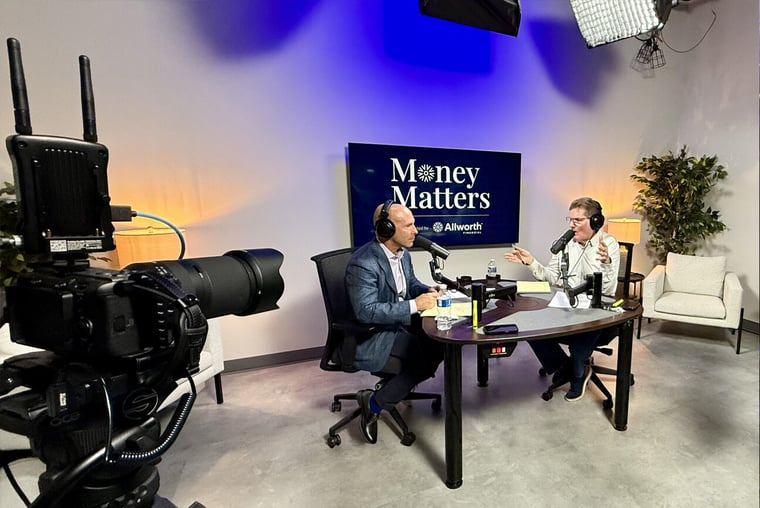
Why do so many successful investors struggle to actually enjoy the wealth they’ve built? In this Memorial Day weekend episode of Allworth’s Money Matters, Scott and Pat talk with UCLA professor and behavioral expert Hal Hershfield and explore the emotional side of money, retirement, and investing.
From fear of running out of money to recency bias and loss aversion, this episode dives deep into the hidden psychological forces that shape financial decisions — even for millionaires. If you’ve ever wondered why investors panic during market drops, hesitate to spend in retirement, or obsess over past financial mistakes, this conversation about investing will completely change how you think about money.
Scott, Pat, and Hal unpack why wealthy retirees often struggle to spend confidently, how emotions influence investing decisions, and why understanding investor psychology may be just as important as understanding the stock market itself. They also discuss longevity insurance, risk tolerance, mental accounting, and how advisors can help clients align money with purpose and happiness.
Whether you're approaching retirement or simply want to become a smarter long-term investor, this episode offers powerful insights into the psychology behind successful investing and financial decision-making.
What You’ll Learn:
- Why many wealthy retirees are afraid to spend money
- How loss aversion impacts investing decisions
- The dangers of recency bias in the stock market
- Why financial regrets stick with us longer than successes
- How psychology shapes investing behavior
- The emotional side of risk tolerance and market volatility
- How “mental accounting” affects spending habits
- Why longevity insurance hasn’t caught on with investors
- How financial advisors help clients align money with life goals
Join Money Matters: Get your most pressing financial questions answered by Allworth's co-founders Scott Hanson and Pat McClain live on-air! Call 833-99-WORTH. Or ask a question by clicking here. You can also be on the air by emailing Scott and Pat at questions@moneymatters.com.
Scott: Welcome to Allworth's "Money Matters". Scott Hanson.
Pat: Pat McClain.
Scott: Hey, this Memorial Day weekend, we've got a special show.
Pat: Yes. Super special.
Scott: We did it. It's really special. No, great. We have a great interview with a... I shouldn't say he's a professor of anything because you might not think he's terribly interesting. But we've got a great guest coming.
Pat: Yeah. So, Hal Hershfield. And so, we're not taking any calls to this show. It's just a normal...
Scott: Just an interview with Hal.
Pat: Yeah, with Hal.
Scott: But you'll enjoy it. Also, let you guys know, we do want to take calls and we will look into the next show. But we also have some time that Pat and I are just sitting in the studio for taking calls, doing nothing, but taking calls. So, if you have a million or more in savings, and you want to run something by us, we'd love to... It could be regarding anything in your portfolio or your financial plan or your state plan or whatnot. It's Monday, June 1st, between 11:30 a.m. and 1:30 p.m., Pacific time. Okay, 11:30 to 1:30, June 1st, Pacific time. If you want to join us super easy, just send us an email at questions@moneymatters.com, or call 833-99-WORTH. Again, questions@moneymatters.com, or 833-99-WORTH. Well, hey, we're going to talk to... Pat, I don't think we've had Hal on in a while.
Pat: It's been a while.
Scott: But Hal Hershfield, he's a professor of marketing, behavioral decision-making and psychology at UCLA's Anderson School of Management. And so, he's done a bunch of research, kind of the intersection between psychology and economics. And he looks at ways we can improve our long-term decisions, which I think is super important when it comes to the area of finance. Because...
Pat: How many clients have you had where the worst part of the portfolio in their financial situation...
Scott: Always, it's my own problem.
Pat: ...was... Yes. I think it is everyone's.
Scott: I mean, look at my own history. I'm like, I'm not proud of every financial decision I've made, no. Whether it's buying the wrong car that I turn into two months later or whatever.
Pat: I'm not proud of most of the financial decisions you've made either.
Scott: I didn't say most. Fortunately, they're a small minority of bad decisions and none of them too big.
Pat: That's the important part. That's the important part. As the percentage of the overall, none of them... Yes. But God, they live forever. The down ones, in my mind, they live forever. That's just my nature
Scott: I know. And I feel guilty about it. Isn't that funny?
Pat: And the good ones are pretty fleeting. I mean, I feel good about them for a week or two and then they're gone. But the bad ones live forever, which will... By the way, and Hal will talk about this a little bit, which has a huge effect on overall risk tolerance going forward, which isn't always positive.
Scott: Our emotional decisions?
Pat: Yeah. If you have a loser that lives in your brain forever, in your mind forever, it tampers your investment decisions in the future.
Scott: It certainly could.
Pat: And that's not positive because it stops you from taking risks that would be appropriate points of time.
Scott: And we're going to get to Hal in just a second. But one little trick that some advisors have done, like a client picks a stock, the stock goes next to zero, and the advisor never lets the client get rid of it as a reminder.
Pat: Yes, which I think is just cruel
Scott: It's an old... Anyway. And Hal has a new podcast called "The Behavioral Divide". So, Hal, thanks for joining the program today.
Hal: Hey, guys, I am always happy to be a part of it. Thanks for having me.
Scott: Yeah, it's been a while.
Hal: Yeah, I know. And I always love talking to you, because you guys make me laugh more than pretty much any other hosts.
Pat: Oh, well, I was hoping you'd say...
Scott: It's about our brilliance or something.
Pat: Oh, yeah, like, "Oh, you provide great insight." We make you laugh. What am I, a clown?
Scott: That is pretty funny. Thanks for the compliment, Hal.
Hal: Well, that too, that too. The brilliance is the table steak.
Pat: Okay.
Scott: That comes without saying.
Pat: Nice. Nice recovery.
Scott: That's pretty funny.
Pat: Nice recovery, doctor.
Scott: So, what's your new podcast about? Just out of curiosity, "Behavioral Divide".
Hal: Oh, yeah, yeah. No, it's a lot of fun because, basically, every episode I take one topic and I'll interview one financial advisor and one academic. And it's really interesting because there's stuff that academics study and it just goes to other academics...
Scott: Oh, boy.
Hal: ...but it's totally relevant to advisors and clients. And then there's stuff that advisors see every day that academics say, "Oh, my gosh, we could look into that." And we just did one on Social Security claiming and it was just... I mean, most people say, "Oh, Social Security claiming, totally fun," right? But the conversation was super interesting because you're like, there's so much psychology involved there. So, it's been a really intellectually engaging and fun thing to do. And every episode is, like, 25 minutes. I try to make it pretty short. You could speed through that on one and a half a piece, too.
Scott: You're not boring people to death.
Pat: All right, you listen, Hal, if you ever need a guest, Scott would love to be a guest on your podcast.
Scott: Thanks, Pat.
Hal: Scott, thanks for volunteering. I love it.
Scott: So, we wanted to kind of focus on the behavioral side for kind of high earners and high net worth individuals. In our experiences, look, a lot of high net worth individuals weren't necessarily high earners. They just had kind of a fear of spending from day one that's never really changed. And why do you think it is that there are some high net worth individuals that are still afraid to spend money even though they can afford too many times over?
Hal: So, I mean, first off, I think this is such an interesting problem. And I'll just say, you know, I give talks all the time to advisors about thinking about the future and how to sort of accumulate money optimally. And you know what? Almost every time, I have advisors come up to me afterwards and say, "This is so interesting, but my problem is having my clients spend some of that money."
And so, I think there's a lot of reasons for this problem. I'll give you one of them. And it was a friend and collaborator of mine named Jeff Brown. He came up with the term. He calls it the denominator problem. And the idea is most of these high net worth, high, you know, savers know their numerator. In other words, they know how much money they have. What they don't know is how much time they have to spend it. That's the denominator. And you can model out with the life expectancy tables and all that, you can model all that out for them, but emotionally they still feel like, "Yeah, but what if? What if I live to 120? What if something happened in the market?"
And then, they have this interesting problem of not knowing how much to spend and when to spend it. Even if you come up with the right models and you have the right mix of products in there and whatnot, to say, "No, you're going to be okay." It can be really scary, especially if you're someone who has spent the better part of decades accumulating money and doing the right things to get there. Now all of a sudden, I've got to essentially flip the switch and go the other way. So, I think that denominator problem and the likelihood of having to flip the switch, those are two of the contributors.
Scott: So, Hal, let's assume it's your mother for a moment. And let's assume your mother has $10 million, modest house paid for, very modest standard of living. Just yesterday, I had a conversation with the guy. His dad's worth 5 million bucks. His dad's 89. Lives with his son now. Eighty-nine. And he wanted his dad to get the family together for Thanksgiving. And so, "Dad, let's run a couple trailers for the property here. That way, everyone could be on the same property here," where his little farm is or whatnot. And the guy had a real challenge spending the whatever grand it was to have some trailers for a few days.
Pat: Like, $4,000 or $5,000.
Scott: Whatever, yes, and he's got 5 million bucks. So, how do you...? Being a behavioral scientist as you are, what is the process of helping somebody like that get to the point where they can say, "I'm okay taking these dollars and exchanging it for a beautiful experience of high value in my life?"
Hal: Yeah. Okay, so, I mean, that's a great example there. And it's laughable, right? Because you're saying, "I mean, this guy could go... You could do so much more."
Scott: He's 89.
Hal: Eighty-nine. Like, you know, the chances are, let's hope that he lives another 10 years. But, like, even...
Scott: But statistically, it's that couple.
Hal: Couple. And like, even if he did live another 10 years with the right portfolio mix and, you know, a smart advisor, like, he should be fine. I think there's two things you can do here. So, number one, I think you can take advantage of what behavioral scientists call mental accounting, right? I'm sure you guys have talked about this before on the show or know about it, but, you know, the gist is, even though money is fungible, even though in theory, my $5 million is a one pot, if you will... I mean, I know it's not really from an investment perspective, but it's my $5 million. We don't think about it that way.
And what might make sense is to say, "Hey," the advisor should say to him, "I'm going to allocate a certain amount of money into an account." And this is the spending money. I actually heard one advisor tell me recently that he, basically, tells his wealthy clients, "Hey, your RMD, what you're required to take out, think about that as your vacation money. That's what you're spending on a pretty great trip or two trips every year. It's not coming from the bigger pot," even though, you know, it kind of is. So, I think that can make it a little bit easier because now it's not like, "Oh, I'm draining down this pot of money that I don't know if I need all of it." It's like, "You've got the rest of it. This money here is for the fun, the family, the trip, the trailers on the property."
The other thing I think might be useful, and I love your guys' perspective on this, too, because look, I sit here, you know, not talking to actual... I'm not an advisor, right? I just studied this stuff. I think there's sometimes a tendency to think about money as money, but not then do the translation of what the money is for and what it can get you. And I think, you know, it may be useful for the son to really talk about, like, "Let's think through what this experience will look like." I bet he said something like, "Everybody will be on the same property together." Okay, that's fine, but that's just one step, let's make it even more vivid. Let's think about what this Thanksgiving could mean. Let's think about what we haven't been able to do in the past. Let's consider, you know, the real experiences and memories we might be able to have with this. And I recognize, I don't know anything about this guy and his dad. I don't know if that's a really hard conversation to have. Maybe they don't talk about feelings. Maybe they don't talk about these things.
Scott: Yeah, it gets complicated.
Hal: It's complicated, but I think, you know, if you start to like sort of reframe the conversation around, like, what the money's used for, and also, what he wants it to be used for, that could be valuable. We don't know. Does he have a strong bequest motive? He's here thinking, "I don't want to spend an ounce. I want to give it to you later," which is maybe misguided. Maybe the adult children actually kind of want some of that money now to be used for things like this and don't need it later. Like, I don't know any of those things without having the conversation and surfacing those values and points there.
Pat: That's right. Well, you know, when I try to encourage... First of all, the high net worth clients, most of them have that money for a reason, which is, they have a hard time spending it, right? That's the reality. Even someone that's made $200,000 or $300,000 a year and ends up with $10 or $15 million. The thing that I always go to is I try to get them when they travel to travel first class. Like, "You're in business class. You're going to enjoy it more. It looks like an expense, but if you're going to Europe, it actually adds a day or two of enjoyment to the trip because you're not there."
Hal: Yep. Kind of catch up, yep.
Pat: And I say, you know, "When your kids get this money, you know they're going to fly business class. Don't you?"
Scott: You know they will. It was 100% correct.
Pat: And I say, "So, the funny thing is you have enough money that you could both fly business class, not just them."
Scott: Yeah, you're paying for business class seats. The question is, who's going to sit on them, you or your kids?
Hal: Who's gonna use them?
Pat: But everyone can sit in business class now, everyone. You can, when your kids get the money, they will, right? But I love that example, Scott, because it's the experiences. The 89-year-old doesn't want more stuff.
Scott: Of course not.
Pat: Even the 75-year-old, typically, doesn't want more stuff.
Scott: I don't want more stuff.
Pat: Right?
Hal: Yeah, yeah. Same, same.
Scott: But, you know, since you... I remember, this was maybe 30 years ago. And I had a client, he had took some sort of a pension cash out and retired somewhat young, rolled it into an IRA, and never touched it. And they were living off Social Security. He and his wife were living on Social Security and not much in Social Security. The house was paid. Super modest lifestyle. And I would talk to him about, "Hey, you know, why don't you spend some of these dollars and this." And he came in one time, and his wife wasn't with him and I said, "Where's Peggy?" And he said, "Well, that's what I'm talking about." He says, "Peggy feels like whenever she sees you, you call her a cheapskate."
Hal: Okay, okay.
Scott: Right? And so, as a young advisor, obviously, it still resonates with me, right? Because it's this weird balance of, I want to do what the client's goals and wishes are, what they tell me they want. And at the same time, I want them to enjoy the assets that they have.
Hal: Right. You know, by the way, I think that's such an interesting anecdote because I'm sure you weren't trying to isolate anybody, and it's like you're using a little bit of humor there or whatever. But it does kind of highlight the need to bring up, you know, money values in a way and money backgrounds. And, you know, like, what experiences in my past have led me to be the way that I am now? And oftentimes, by the way, you see big differences within a couple. One of them grew up with money being readily available. The other didn't. And then that changes the way that they face money decisions today, right?
And so, I really do think, you know, I'll go back to what I said before, I think this becomes a conversation of, what's the money for? Because, you know, it's such an obvious purpose when you're in the accumulation phase of life, "I'm trying to save up so I can have a good retirement." Nobody says, "Well, why am I doing this? I don't get this." It's like, "Because we want to be able to fund your retirement." Okay, plain and simple. And then you get there, and all of a sudden it's like, "Well, now what am I supposed to do with this? What what's going on?"
And I think you're absolutely right. There's a lot of these high net worth folks who are used to spending in a way that might look frugal to others. I have a very wealthy colleague whose wife made a ton of money patenting some major drugs. And, I mean, we're talking like in the hundreds of millions of dollars. And the other day he pulled me aside and said, "Did you know if you go to Ralph's and you want to buy a six pack, you can actually save money if you break up the six pack first."
Pat: I love that guy.
Hal: Scott, man, if there's anybody who can afford to just... You could buy the keg, you know?
Pat: That is so awesome.
Scott: But you know what's it's also funny, Hal, and I've seen these studies...
Pat: That is so good. I want to meet this guy.
Scott: That kind of situation. We're at the supermarket and we'll do something like that, break the six pack apart, right, just to save a couple of dollars. But then we might go buy a piece of property or a home and, spend two million dollars and not really think about it.
Pat: That's my wife and I.
Scott: What do you mean?
Pat: We shop at the WinCo, like the lowest cost, and then we'll go on this beautiful vacation.
Scott: When Pat and I started, we were both broke when we started in this industry. If you knew how broke we were, you would not have hired us as advisors.
Pat: Oh, I remember. So, Hal, when I first started in the industry, I'll share this and we'll move on, but McDonald's had this thing that if they didn't serve your food in 60 seconds, it was free. And I'd look in the back and see that there are no fillet of fish on the rack.
Scott: That's what you would order.
Pat: And that's what I would order.
Scott: I never heard that story.
Pat: Because I knew they couldn't make one in 60 seconds. And I ordered two fillet of fish knowing that they were going to...
Scott: Please tell me you're not doing that still.
Pat: No, I don't need a McDonald's much anymore, mostly because of my weight. I would be doing it.
Scott: But to your point, Pat, so you still have that mindset and your wife does not?
Pat: No, my wife has it as well.
Scott: Okay, yeah, I thought so.
Pat: It's quite so. Anyway. So, can we talk a little bit about a common behavioral pitfalls like overconfidence bias, illusion of control, loss aversion. Like, we were talking about, earlier, I think you were on hold, you might have heard our conversation, where some of even my own investing decisions that didn't go well stick with me forever. But the winners are fleeting in my mind.
Hal: Yep. Yeah. So, look, I know that you brought up illusion of control, too. I'm going to talk about this, but let's just dig into what you just mentioned, because it... You know, the first thing that I might say, though, "Well, there's loss aversion there. We pay attention to our losses more than we pay attention to our gains." The classic thing, I'm sure you've heard it before is, a loss of $100 feels worse than a gain of $100 feels good.
Okay, now, I think there's a deeper thing here, too, which is... Because you're bringing up something different, which is, "Okay, yeah, yeah, the stock went up, my portfolio went up. Great." Nobody is paying as much attention to that as the losers. Like you said, this does stick with you. And I think this this calls to mind something that's called the headwind tailwinds asymmetry, which is, you know, it's just a fascinating sort of phenomenon where, basically, we notice the things that are the headwinds. And I notice a little bit my tailwinds, the things that push me forward, but they don't enter the level of consciousness. Here's my, like, regular day example, everyday example of this. I drive my kids to the bus in the morning, and as my wife says...
Scott: They don't complain? My kid complains when I make her take the bus. But anyway.
Hal: Oh, they complain. They complain. Let's be clear.
Scott: Not the bus.
Hal: "Why aren't you driving me to school, Dad?"
Scott: Because I have nothing better to do today.
Hal: That's part, yeah, because I have things to do. Now, the drive, in theory, is seven minutes. I can make it in five.
Pat: Okay. Because you have.
Hal: Now, I will say this, there's a series of traffic lights along the way. And they're timed lights. Most days they're green because of the time we go. And I got to tell you, when I drive the kids to the bus and I barely make the bus and the lights are green, I think, "Gotcha, we're good." Then there is the occasional day where I hit a red light and it screws up everything and boy, it's all I noticed and all I can talk about. And I'm, "Oh my gosh, luck is against me today. Barely made it or even miss it, now I got to drive you to school." It's the perfect example of the tailwinds and the headwinds. Those green lights are my tailwinds. They're pushing me along. There's all sorts of forces out there like that. But my upbringing, my colleagues, my wife and kids or a good market or macroeconomic situation that propelled my portfolio forward.
We don't have a lot of stories in the news. When the market's going well, you see something that says, "Oh, we hit whatever in the S&P today," but it's not something that we then hang on. But, boy, when there's a 2% drop, I mean, everybody starts freaking out. And this is what I mean by this. We now start attending to the things that are going against us. They're in our face. We're noticing them. They're, what we would call, salient. And that means we remember them. Now, that can be a good thing, you know, in the same way that, like, regrets can be a good thing because it can push you forward to continue to...
Scott: Yeah, it helped the species survive, right?
Hal: Exactly. Yeah, exactly, right? I regret, you know, grabbing that snake. I bet you I won't grab it again in the future, right? You know, the problem arises when we focus too much on those regrets. We focus too much on those losses. We almost over apply the learning so that we end up missing out on gains moving forward, you know? And, like, to bring it back home, I might've learned that it's a good idea not to overspend my money because then I'll be in a bad situation. Great. But when I over apply that so that I'm now no longer even enjoying the money that I've saved up, I would call that, you know, "irrational" or problematic behavior because it's taking away from, you know, essentially the real thing that money's there for.
Pat: That's interesting. The idea that... So, psychologically, if you live through a bad market, it makes so much sense. Because I've seen portfolios triple over a period of years and then have a 20% decline.
Scott: And people are freaking out.
Pat: And people are freaking out and you're like, "Well, look, this was the cost of your portfolio tripling."
Scott: Yeah. So, what is it about that, too, Hall, because...?
Pat: Because the bar is...
Scott: It's always the high watermark that people look at.
Pat:. Everything is so... Yeah, correct.
Hal: I mean, one of the... Well, I'll make a very general statement that behavioral economists have spent years arriving at and it's, reference points matter. And like you said it, the high watermark is the reference point. What is my reference point? Is where the portfolio was, you know, before it tripled, right? And it's a hard thing to grab long to because you're, in some ways, not focused on that. But I actually think it's a good reminder that, you know, when advisors meet with clients... I mean, let me ask you this, what timeline do you use when you talk about a client's portfolio, when you look at that with them? Is it the last 12 months, or do you go, "Since we've worked together" or do you say, over 10 years? Like, what do you look at?
Scott: It depends how the markets have done.
Pat: Well, actually, you know...
Scott: I kind of say that flippantly, but there's...
Pat: Well, that, and it's basically, is this still satisfying your needs? The portfolios, it's still able to satisfy your needs?
Scott: I mean, the reality is clients want to look at, not all, a lot of them want to look at returns. And the more they focus on returns, particularly, specific, individual security return stuff, the worse they're going to do as investors. So, we try to get them to reframe it, like to Pat's point, are we still on track to meet all your financial goals you've got set for yourself? I mean, that's really what the kind of focus we try to have.
Pat: The portfolio is a tool. And the portfolio, for most people, is nothing, but a means of stored labor. Over their lifetime, they have labored for money. They have taken a portion of this labor and they have put it into what we call equities and/or, "We've lent money to people." And now, that stored labor is to be spent now in retirement, right? And if you could get them back to that, which is, if you think about what you were doing over the years to get here, the idea wasn't just to have this money for the sake of having the money. It was to support you. And then I talk about, you know, 100 years ago, no one had a portfolio. They had dozens of children and relatives that they would move into that would support them. That was their form of stored labor, right? I mean, it's a relatively new concept.
Hal: I think it's such a... First of all, let me just say, I love that reframing. I think that's, like, a perfect way to do it. Let me just say two things there. One is it speaks to... You know, I have a colleague, Ashley Whillans, who talks about, you know, "the big why". I think other people have different ways of saying this, but it's like really, again, surfacing the values. What is it that...? Like, why are we trying to accumulate the money? What are we doing with it? And so, going back to that is great. Are you still able to reach those goals with the portfolio as it currently is? If yes, then we're doing fine and let's wait things out. We'll see what happens in the future with those losses that could turn into gains.
Now, I do think that the slight counterpoint to that is that at the end of the day, you know, what clients are seeing when they log into their accounts is the big number, right? It's not like they're constantly reminded of that big why or the purpose. And, you know, I think it's, in some ways, we're doing them a disservice by that. I think it's a job of the advisor, you know, to move into the sort of old fashion conversation that, you know, the holistic side of things, because that goes back to the big why. Why are we going there? If, you know... And, look, I love my advisor, but the first thing he says when we get on our check-in calls is, "The accounts are doing great," or, "Hey, we took a loss here, but we're going to come back." We don't have that conversation about the big why. And I think doing that as smart. Now, if your client has now started living their life, has a lifestyle now that only works if the account stays where it is and grows, that becomes problematic.
Pat: Yeah, that's right.
Scott: It's either wrong lifestyle or wrong portfolio.
Hal: Exactly, exactly. And that's, you know, the lifestyle creep that's very real for a lot of clients. And it's also the job of the advisor to talk through that and know about it. And, you know, look, I had studied this stuff, so I'll ask my advisor, you know, "Look, we think we need a new car. Is that something we can do?" And he'll say, "Yeah, but you also think that you need this vacation. Which one do you need? Do you need both? If you need both, fine, but let's think, that's going to have an implication for next year." And so, I think I love that conversation because it helps prevent the lifestyle creep from really taking over.
Pat: Wait, Scott, I can't imagine having him as a client. I mean, because the whole time I'd be thinking...
Scott: He's analyzing me.
Pat: ..."Are you using me in a case study? How many advisors do you have? The whole time, I would just be a little freaked out. And how does your...? Does your advisor know what you do?
Scott: Yeah, that's right.
Pat: I'm kidding.
Hal: I try to keep things straight.
Pat: Poor guy. He's like, "Well, I study rats in a laboratory." What does your advisor say about this? Do you ever...? No, truly, what does your advisor say about having you as a client?
Hal: It's pretty funny because I think, you know, he's a professional and he does his job, but then sometimes I'll start talking about, you know, this project, I'm doing or whatever, and I can see him get a little bit...he'll start saying things like, "Well, of course, you know this better than me." And I'm like, "No, no, no, I don't."
Pat: Yeah. But that's interesting.
Scott: So, last kind of thing before we sign, and this really... So, a week or two ago, we had a caller. Pat said, "Well, tell us about the individual securities in your portfolio." And the guy says, "You know, the popular ones," right? Which I thought was funny. I haven't heard that, the popular ones. And we all know which ones they are. So, I think you would call this a recency bias, right? That's kind of a technical term for the first. And so, talk to us a little bit about the problem with recency bias.
Pat: Well, because if it was 30 years ago...
Scott: A year ago or two years ago, the popular stocks...
Pat: ... it would have been scary stock.
Scott: I got Woolworths.
Pat: Woolworths.
Scott: Woolworths, that's what it was, yeah.
Pat: Forty years ago it would've been... You know, Sears is a major part of my portfolio.
Scott: Right before you went broke.
Pat: Right before they built the tallest buildings in the world.
Scott: That's right. That's right. That's 50 years ago or so, yeah.
Pat: Yeah, yeah, hubris.
Hal: That's great. I mean, look, recency bias is a lot like a lot of these other biases. It starts in a good place. We have a lot of shortcuts in our brains that allow us to pump the decisions quickly. And if I were to ask you, "Hey, what's going to be more likely tomorrow, snow or rain?" I would say, "Let me quickly think back to the way the weather has been the last couple of days." And I would say, "It's been pretty sunny as in the 60s or 70s, and I think it's going to be..." I'm sorry, "I think sunshine is gonna be more likely," if I were to ask you, sunshine or snow. And you know what? I'd be right. And I used a little shortcut there about what has recently happened, and let me use that to make a prediction about the future. That was a good call. I didn't go and consult the farmer's almanac. I didn't waste a lot of, like, mental resources. But the problem is we often over apply these sort of biases. So, now, if I were to ask you, "Hey, how do you think the market's going to do?" Well, I might say, "Hey, let me think about how it's been doing recently."
Scott: It's exactly what people do. That's exactly what people do.
Hal: It's exactly what they do. And I'll extrapolate that to the future. Now, you know, there may be a good signal there. But it also, if you were to look historically, the market, over time, it goes up, but week-to-week, month-to-month, there can be volatility, especially depending on what's happening in a macroeconomic context. And this is where I would over apply it, right? And so, I think, you know, there's great studies. You look at people that work for factories or firms where they can make a decision about cashing out their pensions or rolling them into an annuity. And one of the best predictors in terms of what they do is the market.
Scott: The market cycle.
Hal: If the market's been doing well, people say, "I'll cash it out. I can control it now. I know it's going to do well." If the market's been volatile, they say, "You know what? It's probably safer to roll all or a portion of it into an annuity because the market will continue to be volatile." Both cases, they're wrong.
Scott: Correct.
Hal: But they're operating off of, you know, what's been recent.
Pat: Recency bias.
Hal: And so, you can see how that can really have an impact on clients there.
Scott: Well.
Pat: Before we... Well, two things. One is, when clients say it's doing well, I remind them, it did well. Because the mere fact that we can actually measure it means it's already taken place.
Hal: That's a great perspective.
Scott: It's all history.
Pat: It's all history. Everything is history, and the future is a mystery.
Scott: Thank you, Pat. And today is a gift or whatever.
Pat: That's right. And that's why we call it the present.
Scott: Oh, okay, here we go.
Hal: That's why we call it the present. Yeah, that's so true.
Pat: So, earlier on in this show, we talked about, people were afraid of running out of money that had plenty of money. I've been thinking about this as we talk, why is longevity insurance never caught on that?
Scott: That's a good question.
Pat: Thank you, Scott.
Hal: Oh, man. I mean, it's funny that you asked that. I had a case where...
Pat: Excuse me, but will you explain to the listeners or Scott, explain what longevity insurance is?
Scott: It's a...
Hal: Yeah, yeah, yeah, I mean, longevity insurance, I mean, you know, an annuity is a type of longevity insurance. But longevity insurance is essentially saying, in the simplest form, "Let me put some money into an account now that will guarantee me payments until I die."
Pat: Or start payments at the age of 75 or 85 or 90.
Hal: Right. Exactly. And that's, you know, a deferred longevity insurance or deferred annuity. And, you know, the idea is it works like any other insurance product, which is that as an individual, it's hard for me to take on risk. But when we pool our resources together, some people might outlive their life expectancy and some people might die earlier. And the insurance companies, you know, model that out and say, "Okay, then I can pay you to keep living." In the same way that health insurance works. Like, here's the thing, I don't want to have to use my health insurance. I don't want to have to say, "Ah, I took advantage of it because I broke my leg this year."
Pat: That's right. Like, my return on investment was huge.
Scott: That's a good point.
Hal: Thank God I've been paying car insurance because I totaled my car this year. It was great. But it's really interesting because with longevity insurance, people don't think that way. They think, "I'm paying all this money and now. I want to make sure that I keep living and get my money's worth." And, you know, part of the problem there is that the consequences of, say, getting into a car accident or having a health issue or your house flooding are very vivid. They're very emotional. It's easy for me to say that insurance is worth it because now that I have it, I mean, some of it, I have to carry car insurance, I have to carry homeowners insurance, but it's really vivid. The consequences of outliving my money, that's kind of abstract. And also by the way, I'm motivated to not think that way. I'm motivated to think I'll keep living.
So, it then becomes this kind of like undesirable insurance product. Now, I've got to think about how long I'll live. I've got to think about, "What if I die?" And then I think, "Oh, what if I outlive my money?" It's not that big of a deal. You know, if I outlive my money, oh, I'll just travel less. I'll just make sure that I get canned food. I'll just do all these things that, you know what, I actually don't want to do. And by the way, it's not just that, it's the health costs. You know, I've got to factor in all those unexpected health costs that are going to arise from living a long time.
Pat: So, I can't spend out. Hal, I'm sure that some companies engage you in understanding how to bring product to market. That would be my guess.
Hal: Yes, yes.
Pat: And ask you to study this. This longevity insurance, when it came out, I thought, that's a pretty good idea, right? People are gonna want that.
Scott: Nobody wants it.
Pat: But no one wants it. When you have the conversation with a client, they say, "Well, why would I buy this?" Right?
Hal: Yeah, yeah.
Scott: Well, look, in the reality, Pat, most of the clients we work with, they're not spending down their portfolio. They're living off a portion of the growth of their portfolio or some income that the portfolio is...
Hal: Exactly.
Scott: So, if the right kind of planning, it's going to keep growing and growing. And if they lived to 98, then there's plenty of money there for them.
Pat: And so, you don't think... Was there a marketing or a concept problem that stopped people from purchasing it, or it was just there was no market for it?
Hal: I mean, no, no, no. Here's the thing, well, first off, I think there's a lot of problems there. And I should say, full transparency, I do work with Prudential. I'm a consultant to them. And I know they sell these products. I've worked with other companies in the past, too. I'm not like a paid... I don't operate on commission here. Here's what I will say...
Scott: Here's the link.
Pat: But if you could click the link.
Hal: But if anybody wants to... You know, the economists call this the annuity puzzle, because if you ask people, would you be willing to pay money for something that could really ensure that you continue to have lifetime guaranteed income? Huge portion of people say that they're willing, they'd be interested in that. And then you look at sales of annuities or longevity insurance, and the numbers are very low. So, I don't think it's a problem of not having a market there. I think the problem is, first off, that's the annuity puzzle. There's a gap there. And economists have been talking about this for, oh, 50, 60 years now, you know, to...
Scott: I mean, it's just such a phenomenal type of conversation to have at the cocktail party, right, this thing?
Hal: Yeah, it's such a great conversation topic, longevity insurance. But then, you know, another problem here is that annuity products are complicated. There's simple ones, and then...
Scott: Very complicated.
Hal: ...you know, there's much more complicated ones. There's ones that, you know, I would say kind of like almost bad actor ones that are really not ideal for a client.
Pat: Hal, look, we've been doing this show for 30 years and we said, look, the world would be better off without annuities, not because there's anything wrong with the annuities...
Scott: It's how they're mis-sold.
Pat: ...it's how they're mis-sold or mispriced.
Scott: And some of the crappy price.
Pat: Or they're just crappy products.
Scott: They're regulated. Some of the products that regulators allow through are unconscionable.
Pat: Yes. And so, there isn't any... The concept is great. Anyway. Hal, we shouldn't...
Scott: Well, Hal, it's always fun to chat you.
Pat: Let's plug his...
Scott: Yeah, "The Behavioral Divide". That's what it's called, just "The Behavioral Divide"?
Hal: Yes, yes, please. That's what it's called, "The Behavioral Divide". And listen, I can only aspire to have as much laughter on my show as you guys do on yours. But, man, this is so fun to talk to you. And this has been a really...
Pat: Actually, you're the first college professor that has ever said anything positive about me. So, this has really made my day.
Scott: All right, Hal.
Hal: There's a lot more great inflation now.
Scott: Great.
Pat: Actually, I had a college professor that told me, he said, "Pat, the world needs its diggers, too."
Scott: That was a college professor?
Pat: Yes. And I said to him, I guess I wasn't that good of a student, I said to him, "I know I will employ many."
Scott: Oh, nice.
Hal: Oh, that's great.
Pat: All right, Hal, we wish you well.
Scott: All right, thanks, Hal.
Pat: "The Behavioral Divide".
Hal: Thanks, guys. Good day.
Pat: Have fun driving those kids to the bus stop.
Scott: Yeah, no kidding. And so, hey, this has been fun having a conversation with them. If you like this podcast, please give us a rating and send it off to a friend. Like, if this was a particularly interesting one and you think someone could benefit, forward it on to that person. And it's been great being here with you. This has been Scott Hanson and Pat McClain of Allworth's "Money Matters".
Automated Voice: This program has been brought to you by Allworth Financial, a registered investment advisory firm. Any ideas presented during this program are not intended to provide specific financial advice. You should consult your own financial advisor, tax consultant, or a state-planning attorney to conduct your own due diligence.
Insights for Complex Wealth Decisions
Join our email list for exclusive commentary from our Chief Investment Officer, early access to expert-led webinars, and your complimentary Wealth Planning Checklist for Complex Portfolios.
We take your privacy seriously and respect your privacy choices. By submitting this information you agree to our Terms of Use Agreement, Privacy Policy, and to receive important notices and other communications electronically.