
Roth Conversions, Retirement Tax Planning & How Much House Retirees Can Afford
After decades of saving and investing, how do you know when it’s okay to truly enjoy your money?
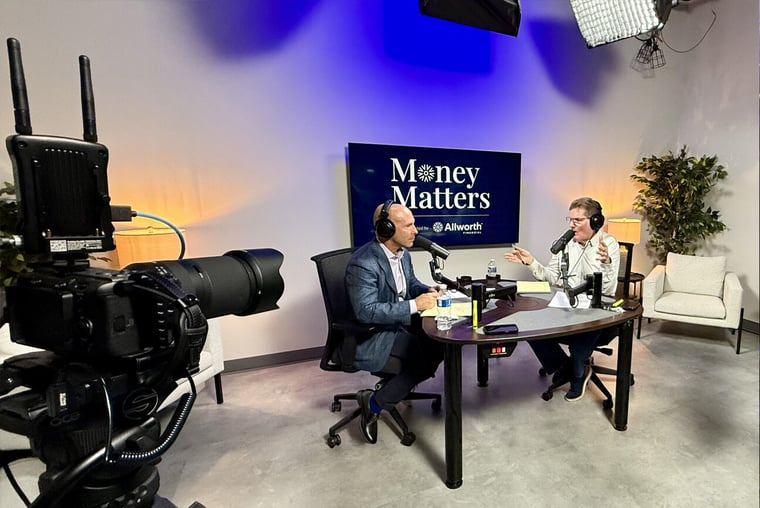
In this episode of Money Matters, Scott and Pat help a couple with nearly $8 million determine how much home they can comfortably afford after relocating to Florida, while another listener with more than $12 million asks whether Roth conversions still make sense given today’s tax rules and retirement tax planning environment.
They discuss retirement tax planning strategies, the dangers of chasing “popular” AI stocks, and how AI-powered scams are targeting investors and older Americans.
What You’ll Learn
• When Roth conversions can help lower future taxes
• How much house people can realistically afford
• Better retirement tax planning strategies
• How to invest more tax efficiently
• Warning signs of today’s most common financial scams
Join Money Matters: Get your most pressing financial questions answered by Allworth's co-founders Scott Hanson and Pat McClain live on-air! Call 833-99-WORTH. Or ask a question by clicking here. You can also be on the air by emailing Scott and Pat at questions@moneymatters.com.
Scott: Welcome to Allworth's "Money Matters". Scott Hanson.
Pat: Pat McClain. Thanks for joining us.
Scott: Yeah, glad you're here with us as we're talking about financial matters. It seems to me like summer's on.
Pat: Well, we are in California.
Scott: Kids are out of school for the most part. Isn't that most of the country? No, kids still in college? Seems like kids are coming from college.
Pat: My daughter graduated from law school. Got a job and everything.
Scott: It's amazing.
Pat: Everything. She got a job.
Scott: That's amazing that she could graduate. It just seems like the time went quick.
Pat: Oh, yes, yes. Congrats on that.
Pat: Oh, thank you. Well, she did it.
Scott: Obviously.
Pat: It I had nothing to do with it.
Scott: Yeah, but it's pretty...
Pat: I'm very proud of her.
Scott: I get it. I have four kids. You have little control over how they live their lives.
Pat: Correct, correct. I'm very proud of her. And I'm glad to have an attorney finally in the family. I've been able to cut some of our legal bills significantly.
Scott: Nice. Do you mean contracts? Uh-huh. Okay. Actually... Anyway, I wanna talk a little bit about, before we get to the calls, the markets. And it just... So, there was an article, I think it was in "The Wall Street Journal" a few weeks back. And it talked about these employees at OpenAI, and they all had a chance to sell out some of their shares.
Pat: Which is highly unusual for a pre-transaction company.
Scott: Part of their financing. A new financing round gave them an opportunity to sell out. There were 600 employees that took a little more than that. It was $6.6 billion collectively.
Pat: I saw that.
Scott: $6.6 billion for these 600 employees. The average employee, they were able to sell $30 million worth of shares.
Pat: And it probably wasn't even all their shares. Just a portion of those employees' shares.
Scott: It is funny. I was just looking at this chart. There's nothing that even comes close to comparing to this. I mean...
Pat: Historically.
Scott: It's even before a public listing.
Pat: Yes, correct. It was a new finance round. Or it allowed them to trade in the secondary market.
Scott: Yes, which is financing round.
Pat: There are firms out there that if you work for a closely held company and the company allows it...
Scott: If the company allows it.
Pat: If the company allows...
Scott: If the company allow it.
Pat: ...you can sell your shares in an open market. But it isn't publicly traded, it's privately traded. In fact, we do that with some of our clients. We have offices in San Francisco Bay Area and parts of Boston where there are...and for that matter, across the United States, because we have advisors that specialize in people that have pre-IPO or non-publicly-traded stocks that can trade these stocks privately. But the numbers were...
Scott: But this is outstanding.
Pat: They were phenomenal. But this isn't unusual, Scott. The amount of money that is actually being raised... I shouldn't say raised. It's the valuation. So, let's actually make a differentiation.
Scott: Well, according to this, this latest financing round valued the company at $852 billion.
Pat: Okay. So, that's what someone was willing to pay for the last stock, is what they actually... It doesn't mean that's how much people have put into the company.
Scott: Correct.
Pat: So, the difference between raising money and actually valuation...
Scott: It's just no different than Shark Tank.
Pat: I know, but we should explain it. We should explain it. If I go out and raise $10...no, I go out and raise $100, but I price my shares at $50 each, and I say, "I'm only gonna sell two shares, but there's 50 outstanding. My valuation is $2,500, but I've just sold these shares at $50. Does that make sense?
Scott: Yes, that's exactly what's very common.
Pat: So, it doesn't mean they raise the money. It just means that the last trade multiplied by the number of shares outstanding is the valuation.
Scott: But it also means that the investors believing that it's worth that...
Pat: Paid that.
Scott: ...valuation, and it's gonna keep going from there.
Pat: Yeah. And you wonder, are these just private equity or venture capital that are so flush with cash and they're just spreading it around just hoping for the best, or that they have firm beliefs on these companies? I have no idea.
Scott: Or both. But we do know that people can create financial models to tell them whatever they want to believe. And if you think back to before the financial crisis in the mortgage industry, like, after the fact, people say, how could anyone with...could think that this was a good idea in some of these products when it didn't take much of a downturn in sight of these products for these things to blow apart. But very brave people.
Pat: Remember the argument at the time was real estate prices have not fallen across the U.S. all at once.
Scott: That was the argument. Never has happened, so it's not gonna happen.
Pat: But they ignored the other part of the argument, which is they had never gone up. Or we never had this kind of government guarantee to the extent that we have with these kind of products.
Scott: Every time is different. So, this time, it just... They're not all gonna be winners. I think back at the dot-com era, there's the dot-com, but then there was also all the fiber that was being laid. Now, the overcapacity, right? Okay, all kinds of fiber is being laid to get the high speed internet. That was it. All kinds of fiber. And these stocks were bid up like crazy. Some did very well and are still market leaders today. Many others did extremely poorly. Go back to railroads. Same concept. All kinds of money flooded in. This is gonna be life changing. This technology is gonna completely transform humanity.
Pat: At one point in time, the Dow Industrial average had 11 stocks, and a 9 of them were railroads. That was the leading technology and the thousands of railroad companies across the United States.
Scott: And rail clearly changed the way man lived dramatically.
Pat: Yes. As did the internet.
Scott: As did the internet.
Pat: As did Starlink actually stopped the need for laying cable.
Scott: And the reason I wanna talk about... Not all these companies are gonna be winners.
Pat: Don't buy too much into the hype. Do not buy too much into the hype. But even the question now is, is corporate America, companies around the world going to actually benefit by AI in such a manner that it actually makes sense, at the end of the day, which is does the cost of the AI offset?
Scott: Of course.
Pat: That's just another way saying, does the cost of AI offset?
Scott: Well, that's how you look at any technology investment. The price is only relative to what kind of savings you're gonna get.
Pat: That's right. That's correct. You look at software or hardware or anything.
Scott: And typically, the more competition you have, the lower the prices for things.
Pat: Well, we shouldn't get all spun up on this.
Scott: Spun up in what way?
Pat: We shouldn't believe that the trees will grow forever. We shouldn't get over allocated in technologies or in micron-technologies because they have great benefit. When a couple of weeks ago, what the guys say on the show, "I've got all the popular ones." Did he say that?
Scott: Yeah, something like that.
Pat: Something like that.
Scott: All the popular ones. I like that.
Pat: All the popular ones.
Scott: I won't forget that one, the popular ones.
Pat: I've got all the popular ones. Which was a great way of saying, "I bought anything that's hot."
Scott: Yes, all the hot stuff. But it's hard to ignore it.
Pat: It's hard to ignore it.
Scott: I think there's gonna a lot of people that are gonna get stung financially in this.
Pat: Yeah.
Scott: I really do. Just because it just feels so reminiscent of the dot-com.
Pat: Of the dot-com. Yeah, it does, doesn't it? People aren't talking about it as much, or maybe I'm just not talking to people anymore as I've gotten older.
Scott: It's because were relatively young advisors living in it. Most people who are listening to this program right now didn't have much in assets back in the dot-com days. Let's say somebody 60 years old listened to the program 25 years ago. They didn't have that much in their 401(k). It's kind of a bummer, but it wasn't different than when you had just retired. You retired in 1999.
Pat: Well, we had clients back then wanting... I had a couple of clients that insisted that we push all into tech. Absolutely insisted.
Scott: I remember a client called me and she's like, "Shut me down. Scott, we're not even going to discuss this. This is what I'm doing."
Pat: And at some point...
Scott: She wanted a tech fund. I'm, like, I put a very small amount in her portfolio just to appease her.
Pat: Yeah. Remember when you told the one guy, he wanted to put all his money in tech, and you told him... And he had a house up in Alaska. Tell that story about the boat. Because it was one of my favorite stories reminding people about risk.
Scott: This was either '99 or 2000. And this guy had a house. His main home, I think it was the state of Washington. He retired though, retired. But he had a home up in Alaska, which is his happy spot where he spent, at least, six months a year up there. And he had a boat and he fished up there. And he would just love it. He would be there. As soon as the days would get longer, he'd be there until the days got short again, and then he'd come back to Washington. And so, he called me one day and he said, "Scott, I want you to move half my portfolio into the Qubes," QQQ. That was the NASDAQ ticker symbol, right? And I said, "Why? Why do you want..." "I just have a hunch. The way things are going, I just kind of..."
Pat: We're going. How they're doing.
Scott: And so, I said, "Look, Bill," I said, "we can do that. If that's really what you want to do, we can do that. And if this bet turns out to be proved out well, you can trade your boat in for a bigger boat." I said, "I don't have any idea kind of what boat you have, but let's say you have a $50,000 fishing boat, maybe you can buy a $500,000 fishing boat."
Pat: If it does really well.
Scott: If it does really well. "But if it doesn't do well, the boat's gone and so is the place."
Pat: Because you were just trying to show him the risk associated with that decision making.
Scott: And how it really implicate... How it turned out in his real life. Like, what does this actually mean? You have this portfolio for what?
Pat: Like, what's the reason behind the portfolio?
Scott: Right. And the risk, these, they were real risks. That was the risk.
Pat: And he did it close to the top of the market as when he wanted...
Scott: It was right at the top of the market.
Pat: Did he do it?
Scott: No, he didn't do it. And he thanked me for it later.
Pat: Did he?
Scott: He thanked me for it later. But I feel...
Pat: Well, that was kind of your job.
Scott: It's totally my job. That's why the greatest value we can bring as providers is to keep people from making mistakes from which they cannot recover. This market though, probably not a lot of our listeners, maybe some, but there are a lot of people out there that are highly weighted in a handful of hot companies.
Pat: Or tech in general.
Scott: I don't think it's going to end well for them.
Pat: It's not. It's not.
Scott: Anyway, let's...
Pat: Let's do some calls. Let's take a couple of them. But before we wrap up, I want to talk about AI and the scams. I've listened to a couple of podcasts about how scammers are using AI.
Scott: Oh my, it's going to get worse.
Pat: It will. And as we age, or we have parents or friends that as they age, how much more susceptible they are to it.
Scott: Yeah. All right. Well, let's go...
Pat: So, why wouldn't you stay?
Scott: Anyway, let's start off here. If you want to join us on the program, love to take your call. Questions@moneymatters.com, that's the address to send us an email, questions@moneymatters.com. We'll start off here talking with Jeff. Jeff, you're with Allworth's "Money Matters".
Jeff: Hello. How are you guys today?
Scott: Hi, Jeff.
Jeff: Hi there. Well, we recently retired. My wife retired a couple of years ago and I retired one year ago.
Scott: Congrats.
Jeff: We're both 67 and 68 now. Sold our house in California, moved to Florida, and now figuring out where we want to live. I thought I could just give you some numbers first, and then ask some questions.
Scott: Is your plan to stay in Florida?
Jeff: Yes, that's our current plan.
Scott: And do you have kids?
Jeff: We have two kids, yes. Both grown.
Scott: Where do they live?
Jeff: One in South Korea and one in Los Angeles.
Scott: And grandkids in Los Angeles?
Jeff: Nope, no grandkids, either one.
Pat: All right. We're just trying to determine whether you're going to be a bounce back. Like, if you're gonna chase your grandkids.
Scott: Or if there needs to see a second, you know... Yeah, okay.
Jeff: We don't know about that either, yeah.
Scott: Okay. We're going to stand on the numbers.
Jeff: Okay. My wife has a IRA that's about $1.4 million. I have one that's $1.9. She has a Roth IRA of $255. I have one, $213. mainly because of the sale of our house, we have cash on hand now about $1.3. We have a brokerage account. It's got about $1.5 in it. We have rental properties with equity. They're all owned outright equities around $1.4 million. And we have an HSA that's about $78,000.
Pat: And do you have pension?
Jeff: No pensions. My wife had an option, but we took the cash.
Scott: And are you taking Social Security?
Jeff: We are. Mine is about $4,100 a month gross, and hers is about $3,600.
Scott: Okay. And what's your question for us?
Jeff: Well, right now we're renting in Florida till we find an area that we like. And so, one question is, how much house can we reasonably afford? Whether we end up as snowbirds with a place down South and someplace else or whatever, what should our housing budget be? We have a...the daughter in LA recently lost her job, so we're helping her out with rent at about $1,800 a month. And she's considering getting an MBA. And just curious if you guys had any thoughts on the value of MBA in this world these days.
Scott: Well, actually, my thought on that is it really depends. If someone goes to a top school, they certainly have a lot more options and it'll help them land their first job, but there's also no guarantee. I don't have an MBA.
Pat: Actually, I talked to my son about this, and he was... So, we'll answer this question first. So, he was getting his CFA, which is chartered financial analyst. And he graduated from UCLA with a degree in economics and he was thinking of getting his MBA in... And he said to me, he said, "There's not nearly as much value given to an MBA as it was 10 years ago in the workforce." That's what he said to me. He went on to open up a company that he rents out toilets. So, there you go with your econ major from UCLA. And what are your...? How much income do you guys...? What were you guys earning before you retired?
Jeff: We were earning... Well, you know, take home or gross?
Pat: Either one.
Jeff: Gross?
Pat: Gross.
Jeff: Gross. I was about $175, and my wife was about $120.
Pat: That's $300. Okay. And so, your question... The MBA, so let's assume your daughter's thing is temporary and that she'll go back to work at some point in time. How much do you think you want to spend on a house?
Jeff: Well, we had always thought that whatever we netted out from the old house, that would be our budget for the new house. But the market's done well, our investments have done well, so we're in better shape than we were when I was doing all that planning. Our net worth right now is close to $8 million.
Pat: That's correct.
Scott: So, let's say, just as an example, you took $2 million. And I don't know the neighborhood your live. If you took $2 million for a house, that still leaves you with $6 million at a 4% distribution rate as kind of a ballpark, just rule of thumb kind of thing without doing any of the planning, that's $240,000 a year. You were at $300 before of which you were maximizing your 401(k)s and 403(b)s or whatever, right? And you were paying into Social Security tax...
Pat: And state income taxes in the state of California. So, we look at that number....
Scott: And you've got Social Security.
Pat: ...of $95,000 a year coming in right now. I'd be very, very comfortable spending $2 million on a house. I'd be comfortable spending $2.5 million on the house, recognizing, recognizing that a $2.5 million house costs more money to take care of...
Scott: Odds are.
Pat: ...normally than a $2 million house just because...
Scott: Just depending on the neighborhood or whatever.
Pat: Yes. But, yeah, I agree with that. And I'd start a distribution from the IRAs today. I was thinking right along Scott's lines there. I would start a distribution from the IRAs today at 4%.
Jeff: Why? I mean, we don't need that income. Why would you do that?
Pat: So, you'd spend it. No, no, no.
Woman: A man after my heart.
Pat: This is the reality of the situation, right?
Scott: It's a funny thing. You have these dollars.
Pat: And it's is a weird, weird thing.
Scott: You guys have worked. My guess, when you were married, you didn't have two knuckles rubbed together. You worked hard, you were frugal. All those years you were frugal. You still make sure the lights are off and the thermostat is down. I do. And that's why you have these dollars. And now, you have an opportunity to not be quite as frugal.
Pat: And start it with a 3% distribution off there of $150,000 a month or a year. And the goal here... I'll tell you a quick story.
Scott: What's the ideal house going to cost you? You probably have some idea, right? You look like, "Wow, wouldn't that be nice?"
Jeff: Yeah, the things we were looking at around $1.5 to $2, within that range.
Pat: There you go.
Scott: I would do it.
Pat: Yeah, yeah. And then start that monthly distribution. I prefer you do that rather than Roth conversions.
Jeff: Would you do that? Would you buy the house with all cash?
Pat: Oh, yeah.
Scott: Yes, cash.
Pat: All cash. Forget the most of...
Jeff: So, I'll pull money...
Scott: From the brokerage.
Jeff: ...out of the IRAs...
Pat: The brokerage.
Jeff: ...or out of the brokerage?
Scott: Yeah. Not the Roth. Don't spend the Roth.
Pat: And then start a monthly distribution on the on the IRAS. And take some of that money, and if your daughter decides to go to get her MBA...
Scott: And you want to help, you can have...
Pat: Was she a good student with her undergrad?
Jeff: She was. She's 38 now, so she's been in the workforce and took a new job and it didn't work out. So, now, she's been unemployed for six months or so.
Pat: I would...
Scott: I'm not sure if an MBA's an answer.
Pat: MBA is an answer at 38. Sounds like a little vacation time to me. Well, right?
Jeff: Well, she's having a hard time finding work, at least in her field. And so...
Scott: Well, I mean, I don't know the...
Pat: Yeah. Know her or the job market there. So, I would...
Scott: But as a dad, I know I wouldn't. It's disappointing, and I'm sorry for that. Because it's, you know...
Pat: It's hard.
Scott: Yeah, really hard, so I get it.
Pat: So, yeah. And then start at least a 3% distribution for the IRAs.
Jeff: Okay. Now, we do have a 529 that's never got used up for our younger daughter, the one in South Korea. So...
Scott: Oh, how much is in that?
Jeff: The balance is about $23,000. Over the last few years, we've moved about $21 into a Roth IRA.
Pat: Perfect, perfect. And she's got the income to show that actually allows that, correct?
Jeff: Yes, yeah.
Pat: So, she's filing a U.S. tax return.
Jeff: She's got to catch up on that, but, yeah.
Pat: Okay. Well, because the conversion from a 529 to a Roth IRA still has the income limits on it, just like a regular Roth. And in fact, it just takes the place of a contribution to a regular Roth. It's not in addition to.
Jeff: Okay. Yep. So, should we rename that 529 to the older daughter if she wants to do the MBA?
Scott: Oh yeah.
Pat: Oh, yeah. Yes, yes. Assuming that the younger daughter is okay with it, right?
Jeff: Well, we would then fund her Roth with the 3% that were taken out of her IRA.
Pat: Well, then I don't think it matters. You're just moving things around to move things around. I don't think that... Because the 529 does the same thing as doing the Roth, so what's the point? What's the difference between...? If you're moving the 529 into a Roth and you're doing it for your daughter, why not just give your daughter the cash and just call it a day? I mean, you're just moving things around and moving around. You end up at the same place.
Jeff: Yep, thank you.
Scott: Yeah. Agreed.
Jeff: Yeah. Okay. Next question. One of our rentals that's in Sacramento still is got an estimated value, my estimate of around $800,000 and a cost basis of $440. We've got a net income of around $60,000 a year. And now, I'm wondering, should we keep that, or...?
Scott: That's great. Yeah. how much does the rent on that?
Jeff: Well, our net is around $60.
Pat: Yeah. And it's got a value on it at $800. So, this is, what is it, 7%, 7.5% return on that?
Jeff: About that, 7.%.
Pat: Yeah, all day.
Scott: Is the rent $6 grand a month or something?
Jeff: Yeah, it's a fourplex.
Scott: Oh, got it, got it, got it. Keep that.
Pat: Yeah, yeah, keep it.
Scott: That's great.
Pat: Yeah, great. That's a good return. That's good return.
Scott: Yeah, don't give it up.
Pat: Scott is trying to figure out this math like, "What kind of..."
Scott: No, no, that's a good investment.
Pat: Yeah, that's good.
Scott: I wouldn't be in a harry to get rid of it.
Jeff: I was just wondering, I was just thinking, and now, if we sold the...
Scott: Unless you hate it.
Pat: And by the way, when it gets time to get rid of that, then I would move it into a Delaware statutory trust and turn it into income. And that way, you don't have to...
Scott: But you're not going to get the same yield as you're getting there.
Pat: Yeah, but it avoids income.
Scott: Yeah. You can do a 1031 exchange, and there's zero work to do. I've done it.
Pat: In a Delaware statutory trust.
Jeff: So, once the return...
Scott: Or you're sick of having it.
Jeff: ...we can get a return elsewhere.
Scott: Or you're sick of having it.
Pat: Or you're just fed up where you just say, "I'm just tired of these people calling me."
Scott: I had twoplexes. I got sick of them. Even though I had a property manager.
Pat: And then people talk to you and you're like, "I'm on the beach. I almost got hit by an Iguana, fell from the sky."
Scott: And now you want to talk to me about it.
Pat: And now, you want me to do...
Scott: We need to do a new toilet.
Pat: Toilet.
Scott: Okay, great.
Pat: All right. An air conditioner, great. When you're, when you're done with all that.
Scott: When you're done with that.
Jeff: Okay. And you don't think Roth makes sense for us? We initially thought we'd...
Pat: You can. I would prefer you just spend the money though. No, no, I'm sorry to interrupt, but, yeah, I can make an argument that you should be doing Roth conversions.
Scott: I'd go buy that. Find the house you want right now. If you guys are ready, if you know the neighborhood you want to be in, put your energy there. You can look at a Roth the end of the year.
Jeff: Well, my wife loves your answer of spending the money. So, we might go that way. All right.
Pat: Yeah. And we could look at a Roth conversion later on in the year, but let's do this first, and then... But I'd prefer you start the income and spend it, and then look at the Roth conversion.
Scott: You've got more money than you're gonna spend. We know that.
Pat: That's why you start the income, and then you do the Roth conversion to feel more comfortable. To top off to the top of the marginal tax rate. So, all right. Appreciate the call.
Scott: Wish you well.
Jeff: Okay. Thank you.
Scott: All right, thanks. We are in Florida now talking with Chris. Chris, you're with Allworth's "Money Matters".
Chris: So, I'm 63. My wife is 60. We're both retired, lifetime DIYers from an investment perspective. We own our home and have no other outstanding debts. And we're really kind of focusing on trying to make our portfolio tax effective, tax efficient. So, from an investable asset standpoint, we've got $2.5 million in pre-tax accounts, you know, traditional rollover IRAs. That's allocated about 24% in stock, 39% bonds, and 37% in treasuries and CDs. And then on the after-tax side, we've got $10 million, 57% in stock, 12% in bonds and preferreds, and 31% in treasuries and CDs. So, overall...
Pat: Can you give me the breakdown on the $10 million in the brokerage accounts?
Chris: Yeah, 57% stock, 12% bonds and preferreds, and 31% treasuries and CDs. So, overall we're sitting at about 50% stock, 18% bonds and preferreds, and 32% treasuries and CDs. So, last year... Oh, go ahead.
Pat: Fire away. Keep going.
Chris: Okay. So, last year I opened up a DAF, a Donor-Advised Fund, so I thought I'd have some room to do a Roth conversion. So, I did some modeling with both a $50,000 and $100,000 Roth conversion. But when I looked at the tax cost of doing it, the incremental cost was 31% or 32% for each of those scenarios. Because of the higher AGI, I lost some medical deductions, and then the net investment income tax since we...
Scott: Yeah. That's why you got to run the numbers. That's why I was talking about you got to run the numbers because you get these phase outs.
Chris: Yeah, exactly. So, I stopped and said, "Okay, well maybe, maybe it's not the right time to do it," even though I thought I had the room to do it. And so, my first question was, you know, do you agree conceptually with that stopping, or should I sort of pulled the trigger given kind of that...?
Scott: What's your other income?
Chris: It's all investment related. There's no other income other than the investment-related income.
Pat: And you're not taking Social Security?
Chris: Correct. Hold it off on that probably till 70.
Pat: And how much did you do in the Donor-Advised Fund?
Chris: $50,000.
Pat: And how much is in there now?
Chris: About the same. So, we just made one. So, what I don't have... It was a new fund, brand new fund.
Scott: Okay. Okay. All right. And your brokerage account, are these individual stocks or ETFs?
Chris: No, it's funds. Yep, mutual funds, predominantly. And they've been around for a long time.
Scott: And most of them have low cost basis and they're...
Chris: Yeah. Yes, yes, yes.
Scott: All right. Ones you wouldn't necessarily buy today, but it doesn't make sense to sell.
Pat: Exactly.
Scott: Yeah.
Pat: And those are the ones that you move those type assets into the Donor-Advised Fund.
Chris: Yeah, for the small [inaudible 00:31:02.497].
Pat: So, here's what I want you to do. I want you to actually get rid of all the stock in your IRA.
Scott: I was going to say the same thing.
Pat: And put it in the brokerage account. And then get rid of all your bonds... Or not all the bonds, but to get to the 50/50.
Scott: You want all your...
Pat: All your bonds in the IRA at the end of the day.
Scott: Because your IRA relative to your net worth is relatively small anyway, right? Have fixed. And if the market tanks radically and you're like, "Well, shoot, I wish I had more fixed income in my brokerage account," you can always sell some equities in your brokerage account and repurchasing your IRA at the same time. So, it's...
Pat: Yeah. So, this gets down to asset location. So...
Chris: Right, that was going to be my next question, it's do I move the stock that's sitting in the IRA or, you know, swap it out with that income.
Scott: That's right. Swap it out.
Pat: All of it. There shouldn't be any stock in the IRA whatsoever. And you get the [inaudible 00:31:59.035].
Scott: And do you own any munis in your brokerage account?
Chris: We do not. We do not. Some preferreds, but nothing beyond that. We do have... So, the only other issue is the bond portion that's sitting in the taxable account, of course, is tax exempt bonds. So, there's not a lot of bonds.
Scott: Oh, it is tax exempt bond.
Chris: Yeah. And in the 12% that's sitting in the after tax brokerage account.
Pat: They are munis then.
Scott: They are municipal bonds and tax exempt bonds.
Chris: Okay. Yeah. Okay.
Scott: Okay. Good. All right.
Chris: So, yeah, so those were really my two questions, was one, did I make the right call on the stopping the conversion? And then do I have the right location issue with that $600 in stocks? So, I don't move that?
Pat: I think you did.
Scott: What was your adjusted gross income last year?
Chris: Around... Oh, AGI. Hold on. $260.
Pat: And that that was all from the accounts?
Scott: Market account.
Chris: Yeah, because there's quite a bit sitting in cash and treasuries, but now, of course...
Pat: Yeah. That's gonna fix some of that.
Scott: Some of it.
Pat: It will fix some of that.
Scott: Just even dividends though on stocks are gonna add up.
Pat: Yeah. And I think I could...
Scott: But they're qualified dividends.
Pat: I would start Social Security if I were you, Chris.
Chris: Okay.
Pat: Only because, when this Social Security administration runs out of money, they're not going to cut benefits to poor people. They're going to cut benefits to rich people. And I got bad news, you're rich.
Scott: All those articles you read, the financial articles, that wait till 70, that's true for 90% of Americans.
Pat: Yeah. Yep.
Pat: But not fat cats like you. So, yeah, I would do that. And the Roth conversions, yeah, I wouldn't worry about it too much. I mean, I'd look at it every year, but I don't think you've got a lot of room. The only thing you could do is actually make this as tax efficient as possible in the brokerage account. I would even look at a tax overlay on this, Scott.
Scott: Yeah. Well, I mean, without looking at the other brokerage account, my guess is it can be managed more... I would spend all my energy on how to make that as tax efficient as possible, given whatever allocation you're comfortable with. That's what I would do.
Pat: And wherever you have it housed, they have, you know, all the custodial houses.
Scott: And I would run the numbers every year about converting to Roth, even if it's $20 grand, $40 grand.
Pat: But I would do it after I made sure it was a tax overlay on top of it.
Scott: Correct. Yeah, yeah, yeah, for sure.
Chris: When you say tax overlay, what do you mean by that?
Pat: So, where do you custody?
Chris: Vanguard, predominantly, and Schwab.
Scott: They'll have something that can...
Pat: Why are you custodying at Vanguard?
Scott: What do you mean?
Chris: It's where we started, you know, 20 years ago.
Pat: I know, but you can't...it's not a multi... It's all Vanguard stuff, right?
Chris: Yes. Other than for some of the stock, we moved some of that.
Scott: Can't you have a brokerage account? Can't you own other stuff?
Pat: I don't think you can own other stuff at Vanguard. It's a mutual fund company.
Chris: Well, we can't. Yeah, you can't. Well, we've moved some other funds from like American Century, so they're not holding the other fund.
Scott: Okay. Then they can't. They're a traditional mutual company. They're a mutual company. Yeah, they're an interesting structure.
Pat: I can't imagine that they have an open platform as much like Fidelity or Schwab or Pershing or...
Scott: I don't know.
Pat: I don't know if they would have a tax overlay or not at Vanguard, I don't know. It's an unusual place to leave that much money.
Chris: Okay. And about 70% of it is sitting there, but the rest is at Schwab. But honestly, the stuff that's at Schwab is just the cash and treasuries, that stuff, liquid stuff, and similar.
Pat: How much money do you have in cash?
Chris: Too much. $3.2.
Pat: Million?
Chris: Yes.
Pat: And when you say cash, what do you mean by cash?
Scott: And money markets?
Chris: Oh, no. Oh, treasuries, CDS.
Scott: Okay. I got it.
Pat: Okay. Thank you. Scare me.
Scott: Figured you would.
Chris: Sorry, sorry, sorry.
Pat: You scared me.
Scott: I would have been shocked if you said you're...
Pat: Yeah, I think I'd push these all into one custodian, quite frankly, and then I'd put the tax overlay on it.
Chris: And again, what do you mean by tax overlay? Sorry.
Pat: So, what happens is there's firms out there that work with the custodians that actually go through your portfolio on a week-to-week basis and look for any losses to offset gains. And you can set a tax budget on the portfolio.
Scott: There's a fund that you hate. Let's say you hate your American Century fund. Maybe we sell off a little bit each year. So, I mean, part of it, without looking at your situation, before you do the Roth conversion, it might make sense to trigger some tax liabilities by making your existing holdings more efficient.
Chris: Got it, got it.
Scott: You know what I mean?
Chris: Yep.
Pat: And I assume that some of your stuff, you're reinvesting it. I assume at Vanguard, you're reinvesting dividends and capital gains, so going back into the same funds.
Chris: I was until last year because we got rid of a lot of the international exposure that we had a number of years ago. And so, I'm re replenishing the international side with the dividends.
Pat: Okay. Okay. Yeah. So, the tax overlay. So, just ask any of the custodians. And like I said, I can't speak for Vanguard.
Scott: And they'll give you a proposal.
Pat: And they'll say, "This is how much we're going to charge."
Scott: And here's what it will mean to you.
Pat: So, charge 5 basis points or 10 basis points. And this is what it does. And you set a tax budget on it, right?
Chris: Got it.
Pat: So, it's what you should have been doing automatically. You should have been doing manually?
Scott: I'm going to come to circle back and say, my guess is the greatest value, it is not for you, is not determining how much Roth conversion to do each year. It's just determining how much tax you're willing to pay to improve your overall brokerage account by selling some of those old holdings.
Pat: I have one question before we go, Chris, how long has your portfolio been 50/50?
Chris: Not very long. Obviously, it was less stock, right? It's been improving to that 50/50 because of the last few years' results.
Pat: So, it was 40/60, let's say, a year ago.
Scott: A couple of years.
Pat: And what drove that? What drove that?
Chris: I wish I could tell you that I had a really sound basis for it, but other than being a really conservative person, no, I don't have any...
Pat: That's all I needed to hear.
Scott: All right. We appreciate the call. Thanks, Chris.
Chris: All right. Thanks. Bye-bye.
Scott: Hey, Pat, you had made mention, you want to talk about some scams.
Pat: Yeah. So, there's... And I bring this up because I've been hit by a couple of them recently, which is the four types of scams, investment scams, government imposters, which has always been an ongoing situation, romance scams. Never, never had anyone actually express any romantic interest in me.
Scott: I had a family member in the romance scam. It was complete... The guy did not exist. He was all phony.
Pat: Did they get...?
Scott: He was supposedly in a different state, and then he was in Cyprus on business. And he went to my family member to send some laptops because he couldn't get some laptops to Cyprus. And that's when she's like, "First of all, who's in Cyprus on business?"
Pat: Like, I mean, I know
Scott: Right there, he should have said Mexico city or something, Cyprus.
Pat: Yeah. And the last one are tech support scams. But I've read a couple articles and listen to a podcast about this, which is, it's hard to protect yourself from these because they come at you at a... So, if you don't recognize the email address or the phone number, don't pick up the phone. Do not click on anything that you don't recognize. Because if people are really needing to reach out to you, they will be able to reach out to you. Everyone still has a physical address that you can receive mail at. And so, people think that, "Oh, if it says urgent, I have to respond to it." If it's a governmental agency, they don't reach out via phone calls or emails. They use the U.S. postal service. If it is a banking or financial institution, they may use both of those methods, but they will always fall back on a mailing address.
Scott: I got a phone call. While we're sitting in the studio, Pat, I got a phone call from Amazon regarding my $1,100 iPhone 17 purchase they wanted me to call back on.
Pat: Jeff Bezos himself. Amazon will not call you.
Scott: Correct. Amazon's not going to call me. Their whole business model is designed so you don't talk to any humans.
Pat: That's right. That's right.
Scott: But, I mean, it's one of the things I worry about with my mom's stepdad.
Pat: You've got to be highly... And it's okay that you could put... If you have relatives or if you find yourself slipping, it is okay to involve your trusted children, friends, relatives, trusted, trusted to get copies of your or alerts. It doesn't allow them to make trades on your behalf, but it does allow them to actually monitor the situation, and that is okay. We recommend it for clients constantly.
Scott: Yeah. Hey, I want to let everyone know, this coming Monday, two days from now, Monday, June 1st, from 11:30 to 1:30, Pat and myself are going to be sitting in the studio taking calls. So, just taking calls, answering questions regarding your financial matters. If you want to join us, we'd love to hear from you. Again, Monday, June 1st, from 11:30 to 1:30, Pacific. Simply go... You got to sign up though. Send an email at questions@moneymatters.com, again, questions@moneymatters.com, or you can call us, 833-99-WORTH. That's all the time we have. It's been fun being with you. Scott Hanson, Pat McClain, Allworth's "Money Matters".
Automated Voice: This program has been brought to you by Allworth Financial, a registered investment advisory firm. Any ideas presented during this program are not intended to provide specific financial advice. You should consult your own financial advisor, tax consultant, or a state-planning attorney to conduct your own due diligence.
Insights for Complex Wealth Decisions
Join our email list for exclusive commentary from our Chief Investment Officer, early access to expert-led webinars, and your complimentary Wealth Planning Checklist for Complex Portfolios.
We take your privacy seriously and respect your privacy choices. By submitting this information you agree to our Terms of Use Agreement, Privacy Policy, and to receive important notices and other communications electronically.