
How Much Money Do You Need to Retire? Real Calls on Inheritance and Spending
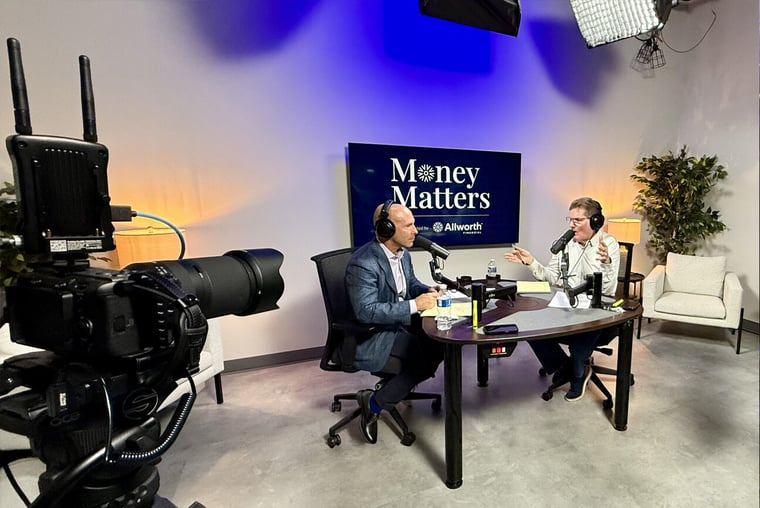
A good financial plan isn’t just about retirement—it’s about how all the pieces of your financial life fit together. In this episode of Money Matters, Scott and Pat talk with a caller who already has about $2 million and expects a much larger inheritance—but still struggles to spend any of it. They walk through why that happens and how a financial plan can help ease into actually using the money.
They also take a call from a high-income couple earning around $600,000 a year. Even with strong savings, there are still areas being overlooked, so Scott and Pat explain what a complete financial plan should cover—from retirement to insurance to college planning—and where people often miss.
It’s a reminder that a financial plan isn’t just about how much you have—it’s how everything fits together.
What You’ll Learn:
• Why having millions doesn’t always make spending easier
• How to start using wealth without feeling uncomfortable
• What high-income families often overlook
• How to think about retirement when income is strong
• What a real financial plan actually ties together
Join Money Matters: Get your most pressing financial questions answered by Allworth's co-founders Scott Hanson and Pat McClain live on-air! Call 833-99-WORTH. Or ask a question by clicking here. You can also be on the air by emailing Scott and Pat at questions@moneymatters.com.
Scott: Welcome to Allworth's "Money Matters". Scott Hanson.
Pat: Pat McClain. Thanks for joining us.
Scott: Yep. Glad you're with us as we talk about financial matters. It's funny, Pat, the other day I was talking to somebody, and they said, "How long have you been doing your podcast?" I said, "31 years." Like, "31 years?" Like, "Well, it was a radio show before, and now it's a podcast," but we've been doing this together.
Pat: And it's been nothing but a joy.
Scott: It's funny, my wife asked me the other day, how long do you think you can keep doing it before you're not relevant?
Pat: Wow.
Scott: And...
Pat: She was talking about the podcast.
Scott: Yes, as opposed to what?
Pat: Your relationship.
Scott: Yeah. And I thought, well, that's an interesting... Like, I thought maybe if I start having dementia at some point in time. I'm 59, I mean, I guess, at some point in time. Well, no one gets out here alive, so there'll be some point I'll no longer be able to do it. But I'm like, I said, in some ways, what's good about it, I have to stay up to date on what's going on in the markets, and what's going on in the wealth planning and financial planning.
Pat: I think the minute you quit enjoying it is probably when you stop. That would be my guess. I don't think the content is much as a driver is, the fact that...
Scott: That's probably a good point.
Pat: You choose to do it. Back in the day, when we started it, we just thought it was really great for business, and we needed to do it because we thought it would be good for us to get our voice out there.
Scott: And it was good for brand building in Northern California where we were, primarily.
Pat: Yeah. And it demonstrated who we were and the culture of our company. But I don't think that's the main driver today.
Scott: I would probably agree with you on that.
Pat: I enjoy doing it. I think it's great. I think it's good.
Scott: I guess. Well, to me, it's about... Someone said, like, "Scott, you're a good teacher." I'm like, "I don't think of myself as a teacher."
Pat: You were a terrible student.
Scott: Not when I wanted to be a good student. Particularly of a class that wasn't of interest to me.
Pat: That's right. I'm with you. You should have seen my grades in my non-business classes in college. They were terrible.
Scott: So, a couple of weeks ago, I was talking to a friend of mine. He's high...not high finance, but he...
Pat: High finance. What is this, the 70s? Were you talking over a high ball?
Scott: We were drinking high balls. CEO of a firm, a finance firm with hundreds of employees. And he went the very traditional route, near the top of his class in high school, top college, top MBA program. And so, we were having this discussion about meritocracy. And as we're having this conversation, well, I said, "There's another path that others choose to go." I said, "Look at me now."
Pat: Well, you didn't.
Scott: And I said, "If you look at most business founders that create these businesses, create industries oftentimes, they're not the ones that have followed this very traditional, narrow path of meritocracy. They went some other direction.
Pat: They color outside the lines.
Scott: That's how I like to do it. I wasn't that great of a student. But as an example, my oldest daughter was in college, undergrad. I'm saying undergrad because she got her grad.
Pat: Wow. Wow, look at that.
Scott: Just showing off. So, the classes she had no interest in. She would sign up for the junior college online course.
Pat: Just to get through them. That's smart.
Scott: It was pass, fail.
Pat: That's smart.
Scott: All she would need is 71%. And she graduated cum laude or whatever, like, on top of her class.
Pat: That's really smart.
Scott: That's what I thought. My wife had a very different opinion on it. She thought, well, she's kind of cheating.
Pat: She's smart.
Scott: She's taking a shortcut.
Pat: Really smart.
Scott: That's our view.
Pat: Your wife thought it was a shortcut.
Scott: She thought it was a shortcut. And I thought, "Yeah, it is a shortcut." She's like, "This isn't relevant in my life. And I'm just trying to get through this so I can move on and to my next thing."
Pat: Well, there is education for the sake of education, not because it necessarily, you know...
Scott: I do understand that. I had a class in college. It was The History of American Thought and Values. I would probably really enjoy that course today.
Pat: And then?
Scott: Not at all. I would skim the book, know just enough to pass the class.
Pat: Thought and Values.
Scott: I had no idea what the book was about.
Pat: The values part was completely lost on you when you were in college.
Scott: I was like 18 or 19. I didn't cheat. I lived, at least, get the...
Pat: You were living your values.
Scott: I guess I was living my values at the time.
Pat: Yeah, you were living your values at the time.
Scott: I didn't think that was relevant to how it was going to help me propel my future career.
Pat: That's right. That was it then.
Scott: Which is my primary motivation for being in college at that point.
Pat: That was, is to get a job when you got out.
Scott: But I took a class... And we'll get back to the calls.
Pat: Okay, how long is this life story?
Scott: Well, we were just talking about education for... Because this program is education focused. I took one of those executive courses at one of the top MBA program schools.
Pat: Yes, you tried to get me to take one.
Scott: I'll be nameless on it. I had a blast.
Pat: Which means it was probably Harvard.
Scott: That's correct. And then whoever did our social media put on my LinkedIn, Harvard Business School. I saw that and I'm like, "You take that down."
Pat: Oh, you can't say that. You can't say..
Scott: No, you can't say that. I went one week. Get that off that. But I did a week-long course there. I had so much fun. I, like, maybe in high school I should have actually turned to my papers and tried. Yeah, I probably would have enjoyed it.
Pat: You wouldn't have gone. You wouldn't have gone to in high school.
Scott: What do you mean?
Pat: It wouldn't have... You had side business, you had tree trimming business, you were doing other things. You would have never made it. I'm just telling you. I know you pretty well.
Scott: Actually, I didn't have the... It was a different financial. My parents didn't have the money to send me.
Pat: Yes, that's correct.
Scott: Student loans weren't quite the same. It's not like I wouldn't be able to just sit and ponder the big questions of life. I would have been working.
Pat: Yeah, this is right.
Scott: All right, let's go to the show. By the way, if you want to join us, we'd love to take your call. The best way to schedule a time, and we record every couple weeks, we'll sit in the studio, take calls so that we can schedule a time that's convenient for all of us, just send us an email, questions@moneymatters.com, again, questions@moneymatters.com. All right, Pat, let's go to some calls here. We're in Pennsylvania talking with Mike. Mike, you're with Allworth's "Money Matters".
Mike: Hey, guys. Thanks for taking my phone call.
Scott: Yeah. Glad you're joining us.
Mike: So, my wife and I are in a unique situation, and we'd love your point of view.
Scott: All right.
Mike: So, we are...
Scott: Are you guys in agreement on the path forward?
Mike: Oh, yes. Yeah, yeah.
Scott: Are we the arbiters plan?
Mike: So, we are both 36 and live comfortably on our $70,000 a year income. Due to inheritance, we have about $2 million in inherited assets and a paid off $500,000 house. I am also the sole beneficiary of my parents' estate. They're both in their early 70s. They won't get it, hopefully, for a long time. But right now, it's worth approximately $14 million. So, I have two questions. The first one...
Scott: And are you highly confident that you will get the lion's share of that?
Mike: Yeah. I'm the only child, and my parents still act like they make a quarter of what they have, so...
Pat: And you said you're 36 years old.
Mike: Thirty-six.
Pat: But they're not going to give it to the local library or something?
Mike: No, I see no one.
Scott: Okay. And really quick back to the $2 million in inherited assets, how many years ago did you inherit those?
Mike: My wife inherited hers. It was $1.1 when she inherited it 5 or 6 years ago. It's now $1.3. I inherited about $500,000 about a year ago, and it's now worth just under $700,000.
Scott: Did you commingle the assets or keep them separate?
Mike: They are separate. Hers is managed. She has a stretch IRA and a brokerage, and I have a brokerage. So, the questions are, with our salaries, there's no way we will organically learn how to manage the amount of money that we will be able to spend in retirement. And so, I'd like some resources, if you have any, on how to calculate that and how to be more comfortable spending money. Because right now, basically, our savings is just a black hole that we know we shouldn't touch. And then the second question...
Scott: You're not touching any of it?
Mike: No, we're not touching it.
Scott: And you said your family income is how much?
Pat: $70,000.
Scott: Between the two of you.
Mike: $70,000. Yeah.
Scott: Children?
Mike: No children. No plans to have children.
Scott: And what is it you want to learn how to do? How to be comfortable spending some of this?
Mike: Yeah. I mean, because we both... You know, she grew up low income, and I grew up from parents. And so, spending money, especially when it has two commas, makes us uncomfortable. And so, just we're never going to have a $300,000 income. And so, large purchases are kind of scary. And so, you know, just, I guess, how to think about spending money when we're so used to not spending it.
Scott: That's a really interesting question.
Pat: The certainty that you're going to inherit, you said, how much money?
Scott: $14 million.
Mike: Right now it's $14 million, yeah.
Pat: And you're 110% certain?
Mike: Yes. If I precede my parents' death, my wife will get half, and then the other half will go to charity.
Pat: And you've seen the trust or will?
Mike: Yes.
Pat: Oh, okay.
Scott: And you have $2 million now that you're not spending.
Pat: So far, all it's doing is complicating your lives because you've got taxes to deal with.
Pat: Are you using any of those proceeds to actually pay the tax on the earned?
Mike: I think my wife takes the dividends from her account, which is pretty tax efficient. So, you know, it's not a lot of money. And I just reinvest my dividends, not automatically, but I do put them back in.
Pat: And are you putting money into a 401(k) or IRA?
Mike: Yeah, just up to the employer match. And at the beginning of every year, my parents gift us a check to max out our Roth IRAs.
Scott: You are living a scarcity mindset here, right?
Mike: Yep.
Pat: I don't know what direction I would point him. Scott, I have like... I mean, this is...
Mike: Is it just a matter of, like, finding a financial advisor that'll, you know, tell us to spend more?
Scott: Well, that's part of it. So...
Pat: Well, I don't know if you should be spending more.
Scott: No. I think if I were in your situation, it's an emotional thing.
Mike: Right.
Scott: Right? And so, really, we're not counselors, but what's at the root of that? And then I would address... If I were in your situation, I would find a therapist or psychologist who has some experience in this. I'm just telling you what I would do. I would go as a couple and like, "How do we get past whatever this...? We have this mindset where we struggle on a..." You obviously can afford to do whatever you want within reason. But I mean...
Pat: But I agree, that wouldn't hurt, but why don't we take baby steps and actually just start a distribution out of 2% or 3%?
Scott: And have it drop in your checking account each time.
Pat: And have it drop in your checking account. If I were your advisor...
Scott: That's what you would do, for sure.
Pat: ...I would say to you, here's the deal...
Scott: Let's take a few thousand dollars a month, have it drop in your checking account, and let's see what happens.
Pat: And let's see how you deal with it. And by the way, you can't return it to me. Because I've had clients like you for my whole career, for almost 40 years, where, I mean, as I always like to say, I would tell them, they worry about running out of money. And I said, "If you run out of money, we're all pretty much toast. And second of all, if you run out of money, you can move in with me and my four children," is what I would tell them. To try to build confidence in the fact that they're not going to run out of money. But the first thing I would start with, in that famous Bill Murray movie, "Baby Steps", which is, let's just start sending you $2,000 a month.
Scott: Or $3,000 a month.
Pat: Or $3,000 a month, and...
Mike: I mean, because, you know, we are comfortable with our means, but, you know, $10,000 extra a year to spend would be meaningful.
Pat: Of course, it would.
Scott: And you can afford it.
Pat: Of course, it would. And you could afford it.
Scott: And then some.
Pat: So, I would start with a $2,000 a month. Well, what's happening with the money that's coming out of their wife's inherited IRA?
Scott: It's going to the brokerage account.
Mike: Yeah. Yep, it's gone back into the broker.
Pat: And how much money is that?
Mike: I don't know. Her money is managed. I know total it's $1.3 million.
Scott: You don't know how much of that's in an IRA?
Mike: I don't. I know it's a stretch IRA so she can stretch it out over her lifetime.
Scott: And did she inherit that several years ago so it can be stretched out over her lifetime, not a 10-year window like it is now?
Mike: Yes, yeah.
Scott: Okay. Yeah, exactly.
Pat: that's where I would start. And the therapy would help. It wouldn't hurt. I would start with real...
Scott: If you just took it a really high level, $2 million. And the fact that you've got this other inheritance coming, it's pretty dang sure, right? It's not $1.4 million that healthcare costs can eat. There's no way healthcare is going to gobble up $14 million, so you're going to get a chunk down the road. So, even if you said you've took 5% of $2 million, that's $100,000 a year.
Pat: You get $100 grand a year. But if we said it's sending you $100 grand a year...
Scott: $3 grand a month.
Pat: Right? That would be $8,000 a month.
Scott: You and your wife get together and say, "Look, let's..."
Pat: Let's start with $3 grand a month.
Scott: "$1,500 each, we're gonna throw into our joint checking account."
Pat: And see how it goes. And I'd start there. And then, you know, after 18, 24 months, I'd move it to $4,000 a month.
Mike: Yeah. That's a good idea.
Pat: And it's a start. It's a start.
Mike: Right. Okay. And that kind of answers my second question too, so...
Scott: And, you know, the funny thing is, and studies show, once we have our basic needs met, a roof over our head, enough food to sustain us, there's a huge increase in happiness between not having those basics and having those basics. But beyond that, material goods and material pleasures aren't...
Pat: Yeah, the marginal degree of happiness becomes smaller and smaller with each subsequent dollar. The other thing I would look at is, I would make sure that all the bond in the portfolio was inside the wife's IRA, and everything else out is super tax efficient. And even though it's managed... The problem is you have two different managers on these accounts. And my guess is there's not coordination between those advisors as to what the portfolio should look like.
Mike: Yeah. I don't have an advisor. But I'm sure her advisor would give us a financial plan, you know, factor in our heritance.
Scott: Yeah. And a good advisor, look, oftentimes, people have separate assets. That's not unusual.
Pat: That's very common, yeah.
Scott: So, do you have any, bond in your portfolio?
Mike: Not at all. Not right now.
Scott: Okay. All right.
Pat: You're 36 now.
Scott: Yeah. And you had a second question?
Mike: You guys actually kind of answered it. There's just kind of, you know, with that money coming, how should we start thinking about, you know, retirement funds and long-term.
Scott: You shouldn't. You shouldn't.
Mike: But, you know, stretching me out now just a little bit just to get comfortable with that, that's a good idea.
Scott: You know what? I would focus on your current careers. You have the luxury of doing something you really want to do. Work is kind of an optionality at this point.
Pat: He might love his job.
Scott: Well, that's...
Pat: Are you and your wife happy in your workplace?
Mike: Yeah. Yeah, we are.
Scott: I would think more of it along those lines than retirement.
Mike: Oh, sure. Yeah. Just enjoying the freedom that our assets allow us to have.
Pat: It's like universal basic income.
Scott: No, but it enables you...
Mike: You're right. It kind of is.
Pat: It really is.
Scott: I mean, this is a blessing because it enables you to really think, "How can I really be of service to others using my unique abilities, my superpowers?" As opposed to just, "I need to have a job to pay the bills." So, you've got that luxury to do that if that's something you want to do. So, all right, I appreciate the call, Mike.
Mike: Yes, absolutely. Yes. Thanks a lot.
Scott: All right. Thanks, Mike. And from the career standpoint, I've done this Venn diagram a number of times with our employees over the years. Three circles. One is your passion, right? Follow your passion. The other is your skillset, what you're good at doing. And the third, also very important piece, is what the market will pay for, right? What gets paid for. And ideally, we operate on the intersect of those three. Oftentimes, we go through life, it's not really our passions, it's what we're good at, and what's going to pay us to do that job.
Pat: And Scott, give an example, my son that has the portable toilet company, right?
Scott: It's his passion.
Pat: Well, we had this discussion. And he said to me, he said, "You know, Dad, I don't know how long I'm going to do this for because I really don't have a passion for portable toilets."
Scott: It's not the toilet.
Pat: And I said, "It's not the toilet." I said, "Your passion should either be the customer service or the development of employees to make their lives better, or to build a structure in which you're adding value to your employees, your customers, and your family's lives." I said, "The toilet is just an instrument, it's not..." I said, "So, you'll never find passion."
Scott: it's highly important if it's a wedding and at an outdoor venue, whether those fancy trailers show up or not, or people are using the bushes, that's a very big difference in the wedding experience for everybody.
Pat: It's very similar to the people in IT. No one really actually cares about them until something goes wrong, right? That's your IT people. I didn't say that out loud, did I? We love our IT people. But the point of the guy is in the AV booth, yes.
Scott: You're at a venue of some sort, and suddenly, the mic cuts out, and then like, "What are those guys doing back there?
Pat: So, the Venn diagram of those three things is important, but the passion part of it, you can define lots of different ways.
Scott: I would agree. And you can control that part. You can learn to be passionate about something and focus on... Now, why are we talking about this? I do like your son's toilet business though. I love businesses that there's nothing sexy about that.
Pat: He's using AI, but he won't be replaced by it, but he uses it.
Scott: Right. But it's not the kind of thing you're at some party and, "What kind of business you do?" "Oh, I have porta potties." Like, as opposed to, "I'm a tech investor," or something. You know what I mean?
Pat: Well, what he said was it's unusual because he was an analyst at a private equity firm before he did this. So, he said, "You know, when I'm visiting with friends and I meet their friends and they ask what I do," he said, "You know, I kind of sometimes I get a little bit..." I said, "You don't need to apologize to anyone." I said, "You could have gone the private equity route." I said, "You might do private equity at some point in the future. You don't need to apologize for what you do."
Scott: He feels bad about it.
Pat: Well, he says it's just a little awkward because people... You know, he's 28, people are flashing. You know, "I work for X, Y, Z. I worked for the corporate overlords and we oversee little businesses like yours," that sort of thing.
Scott: "And I work 90 hours a week and I can't really take many case orders."
Pat: Well, he does work. That didn't change much.
Scott: Oh, really?
Pat: No.
Scott: Well, that's interesting. All right, let's continue on.
Pat: All right, let's go.
Scott: Sorry, Danny. Danny's been waiting like, "Please, guys, shut up."
Pat: Danny's like, "Enough."
Scott: Danny, you're with Scott Hanson and Pat McClain.
Danny: Oh, hi. This is Danny. And my question was based on, like, what's the best way to calculate how much money you would need to retire depending on what age that you retire? Like, if it's 55 or 65 or 70, 75. And then the money that you need, like, how do you figure out, like, what amount of it would come from Social Security and what amount you should have in your bank or 401(k)s to draw down on?
Pat: So, you just asked us to describe a financial plan to you.
Scott: That's right.
Pat: But Danny, they're great questions. So, there's so many things that go into it. One is, what kind of debt do you have? What kind of responsibilities do you have for outflow money? Will you be taking care of an elderly parent? Will you be actually sending a child to college? Do you have any disabled children that you need to support in the future? Those all actually come into it. But the easiest thing to do is to work backwards and try to figure out...
Scott: And with that, there's software programs that are based upon assumptions and using an inflation consumption. But you can also look at, if I were to retire, how much would I need today? And that gives you an idea of what you need in 2026 dollars. And then you can kind of work from there what you might need to save for the future based upon an assumed inflation rate.
Pat: So, are you living a comfortable lifestyle today?
Danny: Very comfortable, yeah.
Pat: And how old are you?
Danny: I'm 40.
Pat: All right. So, you work backwards and you say, "Okay, how do I replace this?" So, the earliest that you could retire and receive Social Security as of today would be age 62. But you could pick a retirement date in the future, 55, and drive to that, right?
Scott: So, how old are you getting?
Pat: Forty.
Danny: Forty.
Scott: And what's your annual income, ballpark?
Danny: Between me and my wife, we make about like around $600,000.
Scott: Do you have any kids?
Danny: Yeah, we have two kids. They're pretty young, like, 4 and 6. And we are saving for their 529, like $4,000 per kid per year. So, we have been doing that since they were born. And we have, like, $70,000 in combined, 429 for them. I'm hoping it grows to a pretty sizable amount by the term they turn 18.
Scott: And what do you hold in other savings?
Danny: So, savings-wise...
Scott: Savings, retirement accounts, brokerage accounts, whatever, rentals.
Danny: The retirement accounts, together we have $1.2 million. Cash on hand/brokerage is about $0.6 million. And of that, a big portion of it is in cash. And then our property value in total is $2.4 million, but we owe close to $1.6 million, so $800,000 in equity for the property.
Pat: Do you own more than one property?
Danny: Yeah, it was just our current home and a condo we kind of started off when we had our kids. And then that condo is being rented to our elderly family member, which we're not making any profit off of it. That's not the goal.
Scott: And your mortgage low interest rates back in the day?
Danny: Yeah, it was like two point something, seven percent.
Pat: And how long have you made this $600,000? Is this something new or have you been making it in that range the last 10 years?
Danny: So, my wife just got her big doctor job at, like, age 33, so about seven years. And I've been making relatively consistent between $150,000 to $200,000 for the last 10-plus years.
Scott: And does she have a lot of debt from school?
Danny: No, because we stayed in that condo, we wiped off her debt in, like, two years, so she had her...
Scott: I don't think you need to worry about retirement. I mean, we can...
Pat: I disagree, Scott. I think that they need to save more.
Scott: Maybe it's only been a few years since they've...
Pat: When did you wipe out the debt?
Danny: Like, at 35. Like, she had a $460,000 debt that we wiped off right away, and two years after she got her big job.
Pat: Yeah, you need to save more. Do you have a disability policy on your wife?
Danny: Yeah, she does.
Pass: Okay. You need to save... The 529s are underfunded at $4,000 a year. That's just the fact.
Scott: But it's not going to be hard for you because your disposable income now is so much larger than it's been the most of your marriage.
Pat: Well, you would benefit from a professional financial plan. I mean, that's just...
Scott: Of course, yeah. "And here's how much we should save here and here."
Pat: Do you wonder, are their dreams of retiring early? What do they call that dink curve? What is that? Henry's?
Scott: No, you're thinking of FIRE.
Pat:. FIRE, yeah.
Scott: Financial Independence, Retire Early.
Danny: I'm hedging and telling my wife to retire at 70, but my goal is, like, 60.
Pat: You are a smart man. You would benefit from a financial plan.
Scott: For sure.
Pat: Even if you just paid someone a fee just to do it. Life insurance policies on both of you?
Danny: That's where I think we don't have and we need to get on it.
Pat: You don't have any?
Danny: Yeah.
Pat: Oh, yeah.
Scott: Oh. Term insurance is really cheap, unless you've got some major medical issue.
Pat: Your wife needs a minimum of $3 million or $4 million, and you need a minimum of probably $2 million.
Scott: And term insurance is really cheap.
Pat: It's very, very inexpensive. And I would make sure that the disability policy was adequate in both your situations. So, it's fun to talk about investing, but you have an obligation to your 4 and 6-year-old. I actually didn't stop my disability policy until I had ample resources that could support my family.
Scott: I just let my term life... I had a $2 million term life policy that I bought 20 years ago. I'm 59, so I was 39, roughly your age. It was $1,200 a year. Shows you my chance of dying during those years. Pretty small. $1,200. But then after the 20... I had it for a term, a period, where I had kids in the house. And I just let it lapse because I don't need it anymore. But...
Pat: Yeah, you have the income.
Scott: The challenge here, Danny, like, one of you gets hit and something happens, and it's so inexpensive.
Pat: You need to... You could do it online, but I could diagnose myself online too if I had a medical issue, but I don't just because I don't think it's smart. But there's a whole litany. There are 10 things that I would look at in your situation in a financial plan. There'd be, like, 10 questions that I would ask you. What happens if this happens? This? How old do you want to be when you retire? Is the savings adequate? The 529 plans?
Scott: How much do we want to have set aside for the kids' college? What kind of college school might want to send them?
Pat: We could answer the question. The good thing is, the hardest part is done, which is the income. Now, it needs to be allocated in the positions that actually make the most sense for a retiree.
Scott: And I think you'll be fine. Given the amount of assets you've saved, unless you tell me you inherited these...
Danny: No, this is all savings from me and my wife, and we...
Scott: And as she's going to school and all that, you paid off the debt. You guys pat yourself on the back.
Danny: We paid it off after she graduated and got her big job as a doctor attending. So, I've been working since 22 and saving and investing on 401(k), and that's why my balance is there. But she's quickly catching up.
Pat: Yeah, good savers. All right, appreciate the call.
Scott: Wish you well. And it's interesting, Pat, you said you did the hard part finding the income, right? And sometimes people look at guys like us, financial advisors, like, "Oh, my advisor is going to help me pick the right investments. I'm going to get wealthy off that." Wealth is created... If you're lucky enough to inherit it, which most people aren't, wealth is typically created through your career. Either you're highly skilled, you're a physician, you have a business, you're whatever. You're highly skilled, you make a lot of money, or you have a business, or you're lucky enough to work for a company that does phenomenally well and you're rewarded some restricted stock or stock options or something, and you got equity compensation and made a bunch of money that way. It's not in... You can save properly to maintain a lifestyle in your retirement years, but you're probably not going to have a massive increase in the lifestyle based on saving alone if you're not focused on your career.
Pat: Yeah, yes. I mean, people get lucky, right? People get lucky.
Scott: Yeah, well, yeah. You inherit it or you work for the right company.
Pat: Yeah, it's not by subscribing to a third guru that's actually going to... Because those programs are out there. How do you get rich with Bitcoin or cryptocurrencies? And they teach these courses.
Scott: They still have those seminars, weekend seminars. You can go to a weekend seminar.
Pat: Like Tom Vu? Don't you remember we were growing up, Tom Vu?
Scott: I'm sure he's dead by now. How many years ago was that? Tom Vu?
Pat: Thirty years ago. He was on the yacht with all...
Scott: I bet none of our listeners remember Tom Vu.
Pat: Oh, yeah. He was on the yacht with all those women, and he said, "You can get rich too with Tom Vu."
Scott: Yeah, and he would be on the back of a yacht, and he'd be, like, in a suit and their own bikinis.
Pat: Yeah, but now, you can actually rent those yachts just for photo shoots, and you can rent private planes just for photo shoots. They never leave the ground. They never leave the ground. You just go and do your photo shoot in front of the jet.
Scott: You know, it's funny, I saw on LinkedIn kind of a colleague. His picture was sitting on a private jet.
Pat: No.
Scott: I swear to you. And I thought...
Pat: He doesn't work for us, does he?
Scott: No, no, no. I thought, why would you put that on social media? I know why.
Pat: Yes, because he's insecure.
Scott: Anyway, all right. Hey, it's been fun being here with you, Pat. If you like this program, make sure you follow us. Hit the follow button on Apple, Spotify, or wherever you get your podcast, but that way, you're not going to miss any of these. And you can also subscribe to our YouTube page. And I was reading about podcasts. It's all shifting to video. Because I enjoy listening while I drive or while I run, and I don't want the video part. I just like the audio, like, to listen to a podcast.
Pat: I understand, but I guess, it's the same thing. You don't have to watch it when you're driving.
Scott: That's exactly right. But if you enjoy watching...
Pat: Then if you want to watch us for whatever reason, we have a YouTube page where we stream this, and it is fascinating.
Scott: Our program? The YouTube channel?
Pat: Yes.
Scott: Yeah. Anyway, Scott Hanson and Pat McClain of Allworth's "Money Matters". We'll see you next week.
Automated Voice: This program has been brought to you by Allworth Financial, a registered investment advisory firm. Any ideas presented during this program are not intended to provide specific financial advice. You should consult your own financial advisor, tax consultant, or a state-planning attorney to conduct your own due diligence.
Insights for Complex Wealth Decisions
Join our email list for exclusive commentary from our Chief Investment Officer, early access to expert-led webinars, and your complimentary Wealth Planning Checklist for Complex Portfolios.
We take your privacy seriously and respect your privacy choices. By submitting this information you agree to our Terms of Use Agreement, Privacy Policy, and to receive important notices and other communications electronically.