
Retiring at 55: The Tax Decisions That Could Shape Your Retirement
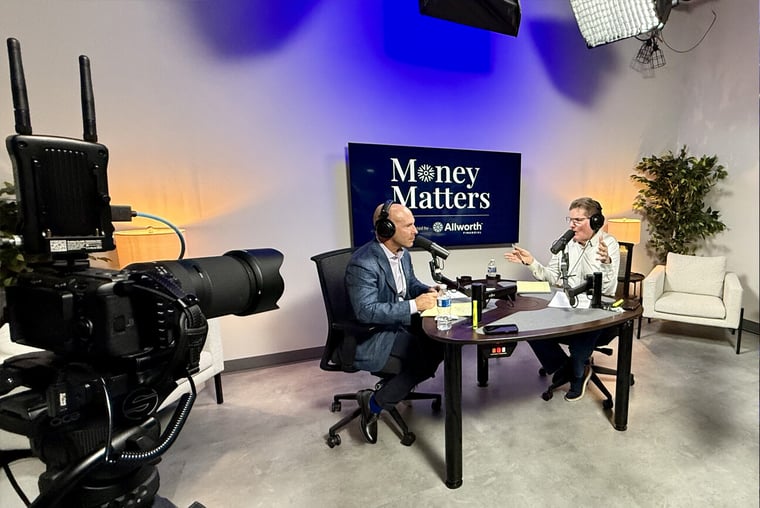
With December 31st fast approaching, should you plan strictly around today’s tax code, or brace for future policy shifts? In this episode of Money Matters, Scott and Pat break down probability-based planning for year-end deadlines—from shifting estate exemptions to solo 401(k) rules—and revisit a caller who retired at 55 with $3M facing a critical decision: harvest capital gains at 0% or execute a Roth conversion at 12%?
Plus, they dig into real caller scenarios:
Managing $4.5M With a $130K Pension: Vince and Samantha retired in their mid-50s and have been pairing large donor-advised fund (DAF) contributions with six-figure Roth conversions. Scott and Pat evaluate whether they're pushing themselves into unnecessarily high tax brackets and how to think through future RMDs and IRMAA tiers.
House Call: Early Retirement at 55: Robert checks back in six months after leaving his 30-year career with roughly $3M across his portfolio and an annual budget of $80,000. He asks how to navigate sequence of returns risk, whether a managed account is worth the fee, and if he should harvest capital gains at 0% or execute Roth conversions at 12%.
Join Money Matters: Get your most pressing financial questions answered by Allworth's co-founders Scott Hanson and Pat McClain live on-air! Call 833-99-WORTH. Or ask a question by clicking here. You can also be on the air by emailing Scott and Pat at questions@moneymatters.com.
Scott: Welcome to Allworth's "Money Matters," Scott Hanson.
Pat: Pat McClain, thanks for joining us.
Scott: Fun with finance.
Pat: Oh, that's it. Oh, speaking of...
Scott: Fun or finance? Or both?
Pat: Well, yes. Well, it's of great interest to me. But I constantly think about... Obviously, you think about money and asset allocation and asset location. And you've heard me...
Scott: Obviously, you think about that.
Pat: Yeah, obviously.
Scott: My wife and I were having that discussion over breakfast this morning. "Honey, pass the jam. And by the way..."
Pat: I think this step... If you've listened to this show at all for any period of time, you know how I feel about a step-up in basis at death. I just think it's the silliest thing. But then...
Scott: I would kind of disagree. But anyway, continue on.
Pat: Well, I just think that there's no relevance for it.
Scott: This is fun and finance. Continue on.
Pat: And then the other is, if you look at the exemption amount that you get to pass on at the first death and the second death, and then you can fund a...or you can use it while you're alive, it's different than it was.
Scott: Estate and gift is one and the same law.
Pat: And if you go back 20 years, it wasn't that. I mean, there were two different rules. And when I started in the industry, I think that the amount that was exempt was...
Scott: $600,000.
Pat: ...$625,000.
Scott: That was there in the early 2000s, right?
Pat: For years. So you go back 25 years, and right now, for 2026, it's around $15 million per person. So $30 million for a couple.
Scott: And it'll go up next year because it increases with inflation.
Pat: Yeah, by $400,000 or around there. So it turns into like almost $31 million.
Scott: That you can pass along without any estate taxes.
Pat: And so my clients actually have considerable...anything over, you know, $8 or $9 million. I have these discussions with them about, you know, "you're not going to spend it in your lifetime. We may want to get this out of your estate before a change in the democratic process of how rich people are being treated." Which, by the way, rich people right now are being treated relatively well, which is why the population continues to grow, but it won't always be the case. Your thoughts, Scott.
Scott: Well, look, we're here, coming near the end of 2026. So there's some year-end tax planning things to do, which we're going to talk about. And you're bringing up the question of, we can either do all of our tax planning based upon exactly what the code is today and have no thought whatsoever of what might come tomorrow...
Pat: Which is silly.
Scott: Okay. Or...
Pat: Or stupid.
Scott: ...we look at probabilities, and we try to measure some probabilities into the future when it comes to tax, which I know is complicated, and then we make some educated guesses based upon what we believe could or could not happen in the future.
Pat: Moving money outside of your state that you're not going to spend will not hurt you unless...
Scott: You need it.
Pat: ...you need it. Those people that you actually gave it to...
Scott: The exemption is unlimited for charity.
Pat: That's right.
Scott: So, to your point, let's say you have an $8 million estate and your plan is to pass $3 million to charity and the $5 million to your kids. Let me just throw an example out, it might not be the same as if someone says, "Whatever my estate is, all my kids combined, $5 million in total is what's going to go." I'm just throwing a number out. You might not have any need for more advanced plans.
Pat: I understand. But that number...
Scott: We don't know what it's going to be in the future.
Pat: Right. And we don't know what the definition of charity will be in the future. The right or the left could actually decide what...
Scott: They already did reduce it. You used to be able to get a dollar-for-dollar deduction, and now it's top tax rate, 37%, charitable deduction limited to 35%. And it's still after, what is it, 0.5% of your...
Pat: I did not know that. Wait, explain that to me again. I did not know that.
Scott: I think it was in part of The One Big Beautiful Bill.
Pat: It was the greatest bill ever.
Scott: Oh, you've never seen anything like it. It's unbelievable. I mean, just the name alone, The One Big Beautiful Bill.
Pat: It was big. It was beautiful. It was a big, beautiful bill. Okay.
Scott: Okay. So charitable deductions, the top tax rate is 37% currently, the federal tax rate.
Pat: Federal. Okay.
Scott: Which is lower than it has been at other times in history.
Pat: But the deductions aren't as much.
Scott: Correct. Well, the standard deductions are pretty large. The charitable deductions itemize...there's always been some limitations on that, 30% for non-cash, 60% for cash, I think it is today. But you don't get...
Pat: Against your income.
Scott: Yeah, but it's not a dollar-for-dollar any longer. So they give you credit only if you're at the 35% tax bracket, not the 37% tax bracket.
Pat: Oh, so you lose the 2%.
Scott: That's correct. You lose that 2%. In addition, you can't get the deduction if your charitable contributions are less than 0.5% of your adjusted gross income. So if someone made $1 million...
Pat: Oh, then everyone takes the 0.5 then, right? Is that how it works?
Scott: You don't get to take advantage of... A lot of people can't now anyway because of the way the standard deduction works. That's why donor-advised funds make sense.
Pat: And bunching.
Scott: Yes, bunching. Even people with substantial wealth that don't have high incomes tend to be smart planning, bunching.
Pat: Well, that was interesting, Scott. Thank you. But planning the future based upon probabilities of outcome is
Scott: And so what are those things? Because it's the year-end planning right now. You might want to be looking at some tax-loss harvesting, maybe some charitable contributions, maybe a Roth conversion. We don't have much time left for these things. Now's the planning time for these things, right? So if we're going to be doing those...
Pat: And the idea that Social Security is going to go away?
Scott: So things such as how much are we going to... If our income's high, assets are high, how much are we going to be betting that Social Security's going to be there? And if we're still trying to figure out, do we take it early or wait until 70?
Pat: What's that look like?
Scott: To your point, step-up basis. Maybe you're a real estate developer, and you've just been exchanging property to property to property to property, and you've...
Pat: Oh, yes.
Scott: ...you've got these massive... And you've been taking loans on the buildings to fund your lifestyle.
Pat: So you have this ghost income.
Scott: Correct. And what happens if that stepped-up basis changes? It could really hurt some of those folks.
Pat: Oh, that's true.
Scott: I mean, you're talking about decades of deferred gains.
Pat: So these are all things in the realm of...
Scott: The realm of possibility. But it can get us all too. If you have some securities or a family farm or a family business, that step-up basis, who knows what's going to happen. But what we do know is that the government...
Pat: Can change the rules.
Scott: Well, they're spending way more than they're taking in and they can't just suddenly balance their budget.
Pat: Well, at some point in time, we'll come down to it. In Social Security, you know, I read this thing. I thought that was absolutely... It wasn't even in the realm of possibilities that I thought, but in...I believe it was in Denmark, the age that you start your Social Security is predicated by the life expectancy at the time.
Scott: You're personal?
Pat: Yeah.
Scott: You do a physical?
Pat: No, no, no, no, no. Of that population. So it's 62, right? Because life expectancies have gone up. I just thought it was absolutely brilliant. So that they actually...
Scott: So when you are a young person planning retirement, you get to this retirement, the check is not as large. It's smaller because the life expectancy of the general population is.
Pat: You don't actually receive it until a certain age because of your life expectancy.
Scott: And that's based upon life expectancy.
Pat: So they take your life expectancy, let's say... It didn't actually go into it, and I should have actually asked the Google machine. They take your life expectancy and then say, let's minus 20 years. And that's when you start your Social Security benefits there. I thought it was brilliant. Did you know? It makes total sense.
Scott: No, I totally understand.
Pat: Because then it's a relatively defined timeline.
Scott: But the question is, I don't know how we get from where we are today with Social Security, that is just a handful of years from insolvency.
Pat: Most of the people listening to this show are not going to receive...their Social Security benefits are either going to go down or go away in the next 10 years.
Scott: Or they're going to take it from taxes. That's one of those areas that you're looking at, I think this is high probability.
Pat: Almost a certainty.
Scott: Well, not necessarily. I think they can eliminate the payroll tax.
Pat: Have you not watched what's happening in France? These people are throwing fits. Like, these fat cats.
Scott: They couldn't get the retirement age moved up from age 60.
Pat: Oh, they tried, and then they moved it back.
Scott: The yellow vest and all that.
Pat: Yeah, they tried, and they moved it back. It's not going to work. There's no way. And I agree with the 20-year-old. They're like, "Oh, this guy that's driving around in his motor home all over the country and watching satellite TV and drinking his imported beers, I'm going to have to pay for his retirement?"
Scott: This is years ago under George W. Bush. His first two years, Republicans controlled the House. I tend to be a fan of divided government. I think gridlock's a little... I'm a fan of some gridlock because any time one party has too much power, they make stupid choices. And this is when they came up with the prescription drugs for seniors. And I happened to be coming back from Washington, D.C., and I happened to be sitting next to a U.S. Congressman. And so we were having this conversation.
Pat: Wow.
Scott: We were both next to the bathroom in the back. So anyway, we were having this conversation. And Republicans are the ones that put forward this prescription drug plan for seniors. And I said to him, I said, "I understand we should have something for those that don't have any money, but for rich people, why do..." To your point, someone's got a high income in retirement, driving a motor home. "Why do we want our young workers to pay for their medications?"
Pat: And what did he say? He said those taxes...
Scott: He didn't think about it like that.
Pat: Those evil taxes and Democrats?
Scott: He might as well have. But it was one of those... I don't think he ever even thought about it that way. I'm like, I don't think... I mean, money comes from somewhere. There's nothing free.
Pat: That's right.
Scott: There's nothing free. We're going to pay for our deficits at some point.
Pat: So back to your financial planning. Try to actually broaden your scope of asset allocation, asset location, how to gift...
Scott: And have some diversification in your whole tax strategy.
Pat: Yeah. And how to gift, whether you should gift, charitable giving, bunching, Roth conversion.
Scott: But here at the end of the year...
Pat: Are we not a little bit afraid of Roth conversions at points in time?
Scott: Yeah. How big is the Roth before they say, "Hmm, excise tax?"
Pat: Because they did it on pensions.
Scott: That's right. Not that many years ago.
Pat: What was it, 125s? What was the name for it?
Scott: 415 limits.
Pat: 415 limits.
Scott: But there was excise tax, I believe, on lump sums greater than $850,000, $875,000. That's when I started the industry in 1990. There were excise tax on lump-sum retirement distributions. And now there's people with $10 and $20 million in their retirement accounts.
Pat: So at some point in time they could...
Scott: Between now and the end of the year, though, some things to consider doing. If your estate's large, you might want to make the annual gift to your children. Because once we hit 2027, we've lost that planning opportunity for this year. So that's one thing to consider. If you've got some...
Pat: And you don't have to be worth $10 million. You could be worth $3 million. If you don't think you're going to spend it, then get it out of your estate. Because this number will go...
Scott: Who knows where it's going to go. Consider doing it before. Charitable contributions. And maybe you've gotten your portfolio, you've got a couple of stocks that have just done phenomenally well, maybe this is an opportunity to trim some of the...take some small portion of that and transfer to a donor-advised fund. And then you don't have to give it away right now, but you get the deduction.
Scott: Qualified charitable distributions. If you're over age 70 and a half, you can take money directly from your retirement account.
Pat: Which is crazy because it's a different age than required minimum distribution.
Scott: But there's an opportunity to transfer to charity. Once we hit that December 31st, that's gone.
Pat: It has to go directly to the charity, cannot go to a donor-advised fund.
Scott: That's correct.
Pat: Again, crazy.
Scott: Obviously, the Roth conversion, you've got till the end of the year. Let's say you have a consulting business, like a one-person consulting business.
Pat: Set up a pension plan. You don't have to fund it.
Scott: A solo (k), they're called. They're simple to have set up. You can fund it until the time you file your income taxes as late as October 15th of next year, but it has to be established prior to December 31st of this year.
Pat: And many people still are using SEPs when the solo (k)s actually have higher limits on there and the same flexibilities.
Scott: That's correct. You might also consider... I think we talked about some tax loss harvesting. Look for some of those opportunities.
Pat: Oh, yeah. Absolutely.
Scott: And it might be that your income is at a point where maybe you look at harvesting some gains.
Pat: Well, I was just going to say. If you're doing some tax-loss harvesting, it wouldn't be a bad idea to actually look at gains. And remember, you could sell that position, you just can't buy it back for 31 days. After 31 days...is it 30 days or 31 days?
Scott: Well, you might be overconcentrated on one particular stock, and maybe there's some areas of your portfolio to generate some losses to give you an opportunity to sell.
Pat: There you go.
Scott: Again, this is...
Pat: This is his stuff.
Scott: December 31st, the time's up.
Pat: Yes. You've lost it.
Scott: Pretty much, this is the window to be thinking about those things. All right. We're going to take some calls here, questions@moneymatters.com will get you onto the program. And we're talking with Vince and Samantha. Welcome to Allworth's "Money Matters."
Samantha: Hi, Scott. Hi, Pat. How are you guys doing?
Scott: We're great.
Vince: All right. Yeah, so a question I have is, currently, we are taking about $200,000 from our brokerage account into a donor-advised fund to help offset a Roth conversion that we do every year. And we're doing, like I said, $200,000 from brokerage account, moved to a DAF. And then we do $240,000 in Roth conversions. And currently we're 57 and 55. We've been retired for the past two and a half years.
Scott: How many years have you been doing this strategy?
Vince: Doing this for about three years now.
Scott: Okay. And have you hit up the limits of the 30% adjusted gross income limits?
Samantha: Have you hit the limits of 30%?
Vince: What's that?
Samantha: Oh, well, can you repeat?
Scott: Yeah. So when we make a contribution to a nonprofit, whether it's a donor-advised fund or other kind of charity, not a family foundation, just a public charity, we are limited on what we can take in as current-year deductions to up to 30% of our adjusted gross income when we give non-cash assets, 60% if it's cash assets. So based on what you...
Samantha: Yes, we are at 30%.
Vince: And that's why we're doing that.
Scott: So my question is, have you exceeded that? Do you have...
Samantha: Yes. Just a little bit. We've actually discussed this with our tax-assessment person.
Scott: Okay.
Samantha: Yeah. We've been working with her about this.
Scott: Okay. Good. Because that was my first thought is, like, maybe you're doing more than you can get the deduction.
Pat: Okay. So what's your question for us?
Vince: So the question I have is that we know we're going to be paying...we have to pay taxes on RMDs when we hit 75. And we're just trying to minimize those taxes over the years. So...
Scott: Tell us about your overall net worth. How much do you have in IRAs, 401(k)s?
Vince: So total rollover IRA is $2 million. In a 457, we have a total of $1 million. And then in a Roth, we have $1.3 million. And then currently in our brokerage account, we have $500,000. And then we also have about $600,000 in savings and CDs.
Pat: And you are receiving pensions?
Samantha: Yes.
Vince: Yes, we do. Our pension we have is about $130,000 a year.
Scott: Combined?
Vince: Total, yes.
Pat: And so how much did you say you had in savings?
Scott: $600,000.
Pat: And you guys are retired law enforcement?
Samantha: No.
Pat: Wow. That's a big, huge pension at 57 and 55, even for two of you. Good for you.
Vince: Yeah, well, we retired 55 and 52. And that's why we've been doing this.
Scott: And what is your annual income needs? I mean, what are you spending?
Samantha: Oh, what are we spending?
Vince: We're spending... Obviously, we don't really track that...
Scott: Yeah, I get it. I know. What do you think you need in addition to your pension?
Vince: Let's just say our spending is about $130,000 based on our pension. We're kind of spending that.
Pat: And how much do you have in your donor-advised fund now?
Samantha: How much do we have in our donor-advised account?
Pat: What's the account value in the donor-advised fund?
Samantha: How much is in the donor-advised fund?
Vince: Donor-advised fund is about $200,000 right now.
Pat: So you've only done this strategy once?
Vince: Well, we've done it three times.
Pat: But not to this level because you told us that you were doing...
Scott: So you're not doing $200,000 a year?
Pat: You're not doing $200,000.
Vince: Actually, we've done the conversion... We've done the DAF twice, not three.
Scott: How much each time?
Vince: About $240,000.
Samantha: So each time is $240,000.
Vince: Oh, and then you've been giving.
Scott: Then you've been taking money out of your donor-advised fund and giving it to charity, is that right?
Samantha: Yes.
Scott: Got it.
Pat: Okay. And what's your question for us?
Vince: So the question I have is, so when I hit 59.5, when I could start taking my money out of the rollover IRA, should I start doing that as opposed to doing Roth conversions? And because Roth conversions, we can do more, I guess...
Scott: Let me ask you this question. If I said, Hey, Vince, if you can take $200,000 out of your savings and put it into a Roth IRA this year, would that be of interest to you?
Samantha: Take $200,000 out of your savings and put it into a Roth?
Vince: Would I do that?
Scott and Pat: Yes.
Vince: Yeah. Okay.
Pat: That's what you're doing with the Roth conversion.
Scott: So that's the same concept. So if you had no money in savings and little in brokerage, then maybe you'd say, just take some money out of your deferred plans, your IRA. But given the amount you've got in savings, I would definitely do Roth conversions and not just withdrawals. Because you can always pull the money out of the Roth down the road.
Pat: Well, and you're probably in, I mean, your tax bracket, you're in the 22%. So you can actually do...
Vince: Yeah, we've been kind of going into the 24% with these conversions because again, minimizing taxes as opposed to far and deep when we hit 75.
Pat: No, I got to tell you, I wouldn't drive myself into the 24% bracket and worry about my taxes 20 years ago. I wouldn't do it. I would do it at 22%, and then I would cap it there. I wouldn't take as much in a Roth conversion to drive yourself into a 24% bracket. How old were you when you retired, Vince?
Scott: 55, 52.
Pat: And who's 457 is it?
Samantha: It's both of ours. We both have a 457.
Pat: Well, you know you can get that money to spend it now. You've talked about age 59.5. The 457 is completely accessible without penalty.
Samantha: Yeah, we understand that. That's why we kept the 457.
Scott: It sounds like you guys have had a pretty good, clear understanding of what you're trying to accomplish. It sounds like you've got a pretty good plan. It sounds like you've had good tax counsel.
Vince: Yeah.
Scott: So how can we be of help?
Pat: It looks good.
Scot: It sounds like you're accomplishing... And frankly, I think that's...
Vince: It's more like down the road and the stresses we have, and it's easier to talk about things when you're not so stressed about it and just have it as a thought. So to keep on top of things and not all of a sudden get blindsided. And go...
Pat: The stress is never going to go away for you. Sorry.
Scott: I think you're thinking about this the right way. Like, okay, what's the most tax-efficient way for us to deal with our dollars? And it sounds like you're very charitable and charitably-inclined.
Pat: Yeah. You give away a lot of money.
Scott: Yeah. It sounds like you've got a brilliant strategy for doing that. And when required minimum distributions come in...
Vince: Well, I would like to say it's all of us. It's us, but we have actually consulted with financial planners, fee-based, you know, every three, every four, or five years just to kind of go over our stuff as we get older because we don't mind managing it ourselves. However, we do know that professional help is very important.
Pat: Yeah. Well, you used to hire them, and now you just call us for free. I like it.
Scott: You mentioned RMDs, but there's also the qualified charitable deduction. I mean, what do they call it?
Pat: Distribution QCDs.
Samantha: Yeah, we know to use the qualified charitable.
Vince: Yeah, $100,000.
Pat: Look, I like what you're doing. I wouldn't drive myself into the 24% bracket. They keep it all in the 22%.
Vince: It's touching just above it sometimes.
Pat: I understand.
Vince: It's not like we're going into the $400,000, $500,000. We're not doing that. It's just like a little phase event.
Pat: Yeah. And then you guys are doing great, and you're young, enjoy life. You're going to worry about this stuff forever. I wouldn't...
Vince: On that note also, should we even be concerned with IRMAAs? Because I'm not too concerned with the cost because I think Roth conversion, when we hit 63, Roth conversions is a better return to do that as opposed to worrying about going up for IRMAA.
Scott: Maybe, IRMAA, there's going to be a new formula, and they're going to, number one, look at how much you have in a Roth IRA. I'm just saying, we don't know, but that's 10 years out.
Pat: Yeah. Worry about it if you want.
Vince: Okay.
Pat: Yeah.
Vince: We'll call you guys in about four or five years.
Pat: Okay. Yeah. But yeah, you can worry about it all you want.
Scott: Yeah. Things will definitely change. And who knows. Like, I think when you go more than five years out, Pat, on some of these tax things, I think it's anyone's guess what's going to happen.
Pat: Oh, with life.
Scott: And if one party controls the White House and Congress in two years?
Pat: Scott, I mean, with life.
Scott: With life.
Pat: With life.
Scott: With life.
Pat: Right. I'm going in for open-heart surgery. And I...
Scott: I guess this is public now, so.
Pat: Oh, yeah, correct. But you think about this.
Scott: You want to share a little bit more about that?
Pat: Yeah. Yeah. When I talk about life, I get a little emotional. In the year 2025, I went for a bike ride. I got the chills afterwards, and I'm like, I don't feel well. And then I went to bed, and then I woke up a day and a half later in the ICU with sepsis with unknown origin. Imagine that. Like, oh, I go for a 40-mile bike ride, beautiful day, with your brother in spring. And then...
Scott: Your early sixties, right? Good health.
Pat: Yeah. Yeah. It was a 40-mile bike ride. No e-bike, by the way. Ride one now. And then with this disease that attacked my heart, and I have to go and have valves replaced. And I think back like two years ago, I'm like, I prided myself in being in pretty good shape with all my bad habits and all. But you just look at it, and you're like, this is crazy. And now I'm going to Stanford, and they're cutting me open and putting me on a bypass machine and replacing these valves. And I think, holy smokes, like, life, it's crazy, isn't it? So this guy's worried about IRMAA in six years.
Scott: You're thinking, "I'm going under the knife in a couple of days."
Pat: I think there's so many unknowns that you just play it as it comes.
Scott: Well, when you said life will change, like...
Pat: This too shall pass.
Scott: We're wealth managers, we've been doing this forever, right?
Pat: But for people.
Scott: And the reality, we've both seen... Pat, I think you often encourage people to increase your lifestyle. You've got the money, start flying first class if you're comfortable.
Pat: If you can. If you've got more money than you...and you're comfortable. If you can change your mindset.
Scott: But I think we've seen enough people that did so many sacrifices when they were younger to accumulate these dollars, they get to this stage, and they still have that same mindset.
Pat: And it's difficult. And that's okay as long as you're doing it intentionally. All right, so there we go. That was emotional.
Scott: I guess it's out now. And what valves are they replacing?
Pat: The mitral valve is absolutely being replaced with...they call it a porcine valve, which comes from a pig. And the aortic valve, they may or may not be. But I'm under the knife. The surgery itself is six hours long.
Scott: Yeah, you're on a bypass machine.
Pat: They put you on a bypass machine. I talked to a friend of mine that had it done a couple of weeks ago. He said he felt like he got hit by a truck, although I don't know what it feels like to be hit by a truck. But look, I'm not worried about the surgery at all, which I probably should.
Scott: Nah.
Pat: But I am not looking forward to the recovery. They cut down the middle of your chest, and they wire it together. And I'm like, I said, "If I go through at the airport, will I set off an alarm?" It's not that much wire. Anyway,
Scott: And I remember when you told me that you were having this surgery. You thought my response was weird because I said, "Good for you." And what I meant by that, it's like, thank God it's 2026 in the United States of America.
Pat: That's right.
Scott: Most of the world, you wouldn't have this option.
Pat: You wouldn't even...
Scott: You would have died from the sepsis.
Pat: Oh, 100%. That's why you can complain about healthcare costs. You can't really...well, you can complain about whatever you want. Anyway, so let's move on. This is one of my favorite parts of the show called House Calls. We copied this from Click and Clack.
Scott: By the way, if you're stealing from us, you're stealing twice. We don't have any new ideas.
Pat: We took it from someone else.
Pat: So we're gonna do this. This is where we listened to a call that someone called a while ago, and then we call back and find out if our advice was taken, not taken, good advice, bad advice.
Scott: Yeah. And this last March we spoke with Robert. He's not an Allworth client. He had planned on retiring at age 55, but he had a question on Roth conversions, and here's a clip from that original call.
Robert: I've got $2 million in 401(k), $23,000 in an IRA. My wife has $300,000 in an IRA. Brokerage accounts, we've got $315,000 in a brokerage $115,000 in a managed brokerage account, $50,000 in what I call a fun account and $125,000 in T-bills. It's a long list. I'm sorry.
Scott: That's all right.
Robert: $120,000 in an HSA, $17,000 in the bank and $20,000 in a 529 plan.
Scott: Who's the 529 plan for?
Robert: Grandson.
Pat: And how old is your spouse?
Robert: Fifty-one.
Pat: How old are you?
Robert: Fifty-four.
Pat: And will one of you or both of you be receiving a pension?
Robert: No, neither.
Pat: What's your family income right now?
Robert: $180,000.
Scott: And what do you feel you need in retirement?
Robert: Well, currently... So our home's paid off. Our expenses last year was $80,000...
Pat: And how did you determine those expenses?
Robert: ...including travel.
Pat: How'd you determine...
Robert: Going through checkbooks.
Pat: Okay. All right.
Robert: Doing the math.
Pat: So oftentimes when we ask people, you know, what are your expenses? What they'll actually do is actually make a little list of their bills. And then, but really what we're interested in is how much are you actually living on, which includes all the miscellaneous stuff that somehow doesn't seem to get counted.
Robert: Gotcha.
Pat: So $80,000. And why do you want to retire so early or your spouse? How do you see your life?
Robert: So, you know, since COVID, I've had several coworkers actually pass away. And I just feel like if I can do this, I've beat the game, frankly. Honestly, that's why. I've been with my employer for quite a long time and...
Scott: Look, if you're expenses are $80,000 a year, you can retire. I mean, there's always a choice. I've had this discussion with so many people over the years. Like, look, here's what your financial life will look like post-retirement. And I've had some people say, "Well, I can't really live on that. So I can't retire." I've had other people say, "I want to retire so badly. That sounds fantastic."
Pat: So is there a happy medium for you? Have you considered that? Would your job allow you?
Scott: Well, from a financial standpoint, let's just cover this real quick.
Pat: He can do it.
Scott: So if you think a 4% distribution, it's just a basic rule of thumb. There's some flaws in that rule of thumb, but I think it's a pretty good... The 4% rule says, I'm going to take 4% withdrawal from my portfolio day one. And as inflation creeps up, I'm going to bump that up by inflation. What happens in the real world is people tend to adjust given the economic cycle. So during the financial crisis, even people who could afford to live large, most people scaled back because they felt a little funny about spending money when their neighbors were broke. I mean, that's a bit of a reality. So if you think about, you've got roughly $3 million, a 4% rule, that's $120,000 a year. Even after taxes, you should be fine to net that $80,000. This is before your Social Security kicks in down the road too. So I think from a financial standpoint, you can pull it off.
Pat: Yeah, that's correct. The thing that you actually should consider though is when you retire over the age of 55 is how liquid your 401(k) is between the ages of 55 and 59.5 if you do not roll it into an IRA.
Robert: Right. I do realize that, and I wouldn't, and it is available to me at 55.
Pat: Yeah. Correct. And sometimes people will roll part of it into an IRA and keep part of it there. And that's what we would recommend under $2 million.
Scott: But I love the concept of doing some Roth conversions between now and the next several years.
Pat: Yeah. Especially if you have the income to pay for it. And you're going to be in a relatively low income.
Scott: What you got going for you is you've got great kind of tax diversification with all of your different types of accounts. So it gives you some flexibility. You can convert some, you can have income coming from somewhere else.
Pat: So here's the thing, in the real world, I would look to, which is people don't really want to quit working. They want control of their lives.
Robert: I would agree.
Scott: For the most part.
Pat: For the most part.
Robert: I work from home, and I feel like I'm on house arrest.
Pat: Oh, gosh. You know, my first job out of college, I worked from home, and it gave me anxiety cause I felt like I never could leave work. I would get up in the middle of the night and actually go into the office and work at 3:00 in the morning. It was not healthy for me. Can you work part-time? Could you go back to your employer and say, "Hey."
Scott: Or maybe you just need a break and figure it out.
Pat: Yeah, maybe.
Robert: Sure. I don't think I would do that with this employer. I'd probably just pick up, you know, a contract or something like that.
Scott: Okay. You've been great savers. You've been great savers. And I believe you when you say you can live on $80,000 a year. Maybe what you do is retire and, in all seriousness, take 80 grand and stick it in your account and say, this is what we're going to spend the next year and budget for that.
Pat: And start doing the Roth conversions.
Scott: And start doing those Roth conversions.
Pat: Does your spouse work outside of the home?
Robert: She did. Yes. For 15 years. And actually that was a big part of this. So paid off a ton of debt.
Scott: She doesn't anymore.
Robert: Sort of propped up the accounts. No, no longer.
Pat: All right. Yeah. You look great.
Scott: Okay. So again, that was this last March. Robert gave us the situation. Robert's with us now. Robert, thanks for joining us again.
Robert: Thank you for having me back.
Scott: Yeah. So what's transpired in the last several months?
Robert: Well, I suppose the only thing that has really transpired is I've rolled over half of my 401(k) to a rollover IRA to set the stage to do Roth conversions.
Scott: So you retired?
Robert: Oh, yes. I'm so sorry. Yes. The day after I turned 55. Minor detail, right?
Pat: You said nothing really other than I've left my career of 30 years.
Robert: That's funny. Yeah, the day after I turned 55.
Pat: Oh, good for you. Wow. That is really intentional.
Robert: Yeah. And I mean, it's not necessarily exciting what we've been doing financially because we've been living out of our brokerage account, sort of waiting for the end of the year to come around. You know, hopefully there will be a drop in the market, and I can take a little bit of advantage of doing a conversion.
Pat: Okay. Tell us about health insurance.
Robert: Oh, thank you for asking that question. That is actually covered by...most of it is covered by my employer. I've got a small monthly fee that the standard employee also pays. So I'm on the same plan that the employee is on.
Scott: It's not COBRA, retirement.
Robert: No, no, no, it's...
Scott: It's retirement.
Robert: I'm on my... Correct. Retirement medical plan.
Pat: So the rest of the listeners out there, COBRA provides a period of time where you actually have health insurance that you can buy at a discounted rate relative to market. But then it converts to what's called conversion. And then it has a tendency to go up. You want to get off COBRA as quickly as you possibly can, if you have other options. And Obamacare is one of them, but you have to limit your income because that's what drives the cost of that. So healthcare for you was not a problem. It was covered. And I'm sure that went into the calculation with early retirement as well.
Robert: Absolutely. It did. Yes.
Pat: Okay. And so you converted half of your 401(k) to a Roth IRA or just to a regular IRA?
Robert: No, no, no, no, no, no. To a rollover IRA so that I can start doing Roth IRAs. I mean, Roth conversions rather.
Pat: Got it. Got it. Got it. And you left the other half there just for liquidity purposes.
Robert: I'm going to start tapping that in January and stop living out of my brokerage account.
Pat: And how's your mental state? Just like...
Robert: You know, my mental state is wonderful. I do not regret this at all.
Scott: And how many weeks have you been retired now?
Robert: In two weeks it'll be six months.
Scott: Okay. Wow. No plans on going back to work?
Robert: Not currently. All right. Yeah, no. We started the process to volunteer in a hospice program.
Scott: Wonderful.
Robert: That's just sort of a personal thing for my wife and I. You know, I donate on a regular basis. But on a free week I got my wife into golf, so I get to golf more. She's loving that, fortunately. What else? I do have some questions for you if that's okay.
Scott: Yeah.
Pat: Sure.
Scott: Yeah, yeah.
Robert: You know, it's funny. Like, now that I'm sort of...I'm not in a groove per se, but I'm becoming more comfortable with the idea of being retired. I'm not checking my account balances constantly like before I retired.
Pat: That's good.
Robert: But I do have some sequence-of-return risk questions for you. Since I've got a long, a long, long runway for that, you know, how should I manage that brokerage account to sort of move that out when it occurs?
Pat: Got it. And how is it allocated now?
Robert: It's about 60-40, stock to bond.
Pat: And how long has it been 60-40?
Robert: Quite a while, actually, because I had...retirement was on the horizon, so it's been a few years.
Scott: And do you still have $125,000 in Treasury bills?
Robert: It's $160,000 now.
Scott: One what?
Robert: I moved some additional money into Treasury. $160,000.
Pat: And so the total...
Robert: I just like round numbers.
Pat: Yeah. What's the total account value in the brokerage?
Robert: Total account value in the brokerage is, well, across... You want me to include T-bills or no?
Pat: Yes.
Scott: No. No. It's $160,000 in T-bills. What else do you have that's not...investments, not retirement accounts?
Robert: Oh, I understand what you're saying now. Okay. Thank you. There's $272,000 and then another $124,000 in a managed account. And one I've got $46,000.
Pat: $46,000?
Robert: Yeah.
Pat: And it's 60-40?
Robert: Yes.
Scott: And I wouldn't spend a lot of time worrying about sequence of returns. You've retired now and...
Pat: Yeah. And the reason I ask you how long it's been like that is that that answers the sequence of return events.
Scott: And that just is the concept of, depending where we are in the market cycle, how that can impact different retirees. If you retire in the middle of a bear market and you can invest when things are low, you're going to have a different outcome than if you retire right at the peak of a market cycle.
Pat: But because it's 60-40 and it's been 60-40 for years, relatively...
Scott: And yet you're already retired.
Pat: And you're already retired.
Scott: Now it's just looking at probabilities of what the market cycles are going to be doing.
Pat: If this was a lump sum of, you know, $150,000 or $1 million at lump sum and it came from an unknown source like a settlement or a...
Scott: New capital you're talking about.
Pat: Correct. New capital.
Scott: But we're not dealing with that.
Pat: But that isn't the case. So you could worry about sequence of return events if you want, but it doesn't apply to you. I think you're perfect. I think...
Robert: I should clarify, because I'm not sure if I've got lost in conversation, but the 60-40 does include the T-bill numbers.
Scott: No, that's fine.
Pat: Yeah. I included that in my thought process.
Scott: I mean, here's what I look at it. You spend $80,000 a year. You've got almost two years of income just in Treasury bills. And I'm assuming that your 401(k) and now IRA, that's not 100% stocks. Is that correct?
Robert: Well, that's more aggressive, though. It is 80-20, 80% stocks.
Scott: I'm okay with your age. I would just make sure that you've got access to probably six years' worth of $80,000.
Pat: That's right.
Scott: Not counting interest and dividends that are going to accumulate.
Pat: That's right.
Scott: So just kind of a rule of thumb.
Pat: That you have $400,000 and $500,000 set aside.
Scott: Not in stocks.
Pat: Not in stocks. To weather a bear market. And then remember, when Social Security kicks in, you can actually lower your distributions.
Scott: No, I think you're fine. I think it's great.
Robert: Okay. So now I've got to... Can I keep going with the questions?
Scott: Yeah.
Pat: Yeah.
Robert: All right. So this is a tax question for this calendar year. So this is a weird year because I actually have employment income this year.
Scott: That's right.
Robert: Am I better off harvesting capital gains at a 0% while there's still room for me to do so or to do a Roth conversion at 12%?
Scott: I mean, I could give you my best guess, but in order to do that, I would have to run the numbers on the long-term projection and see what's the impact on your net worth over the next decade based upon these things. So I would...
Pat: I don't know if I would be chasing that. What's the...
Robert: See, that's the thing. I don't think there's a lot of benefit either way, frankly.
Pat: That's right. What's the IRA balance now in all the qualified money?
Robert: A million bucks.
Pat: All qualified money.
Scott: And 401(k).
Robert: Oh, okay. $1.4 million altogether.
Pat: I don't know if I'd be chasing a Roth conversion at that level with your distribution.
Scott: This year.
Pat: Yeah, correct.
Scott: Because you had income.
Pat: Yeah, I don't even know if next year I'd have to.
Scott: Of course, next year. You're gonna be in a low tax bracket. Hardly any taxable income next year?
Pat: But I don't know if I'd want to use up all the cash in the brokerage account. I mean, I didn't say I wouldn't do it. I don't know how hard I would chase it. I would probably split the difference.
Scott: You don't want to get down... If you got down eight years down the road and there's no money left in savings or brokerage, but you had a huge Roth IRA, you can just tap the Roth.
Pat: It's the same thing, yes.
Robert: Correct.
Scott: And I'd rather have money in the Roth than not have money in the Roth.
Pat: Would you chase it all the way to the end?
Scott: Well, he's gonna...
Pat: All right. I'm with him.
Scott: You're a poster child for Roth conversions.
Pat: Yes, yes, yes, yes, yes, yes. I wouldn't worry about it this year.
Scott: I would do that more than I would worry about the capital gains on your brokerage account.
Pat: That's right.
Robert: Okay. Okay. I have one more question for you. So this managed account has about $125,000 in it. And I'm curious if it... I don't necessarily believe that it's still serving me at this stage, since I'm trying to sort of limit my income. I'm actually considering just changing that to...just adding it to my standard brokerage account, if you will.
Pat: I don't know what managed account means. What are you managing for?
Robert: We gave a broker $100,000 a couple years ago. Now it's $125,000. He's like, "Oh, yeah. We'll do tax-loss harvesting for you and, blah, blah, blah, blah, blah." And frankly, I'm not really... I'm not active in the market. I don't have a ton of gains in our account.
Scott: These work well with the kind of strategies we're talking about, when you're working with an advisor who's helping with all these strategies, then sometimes, sometimes a managed account... And if you have a direct index, technically it's going to be in a managed account. So if you have... There are times that it makes some sense, but just like, here's an extra 100 grand. I'm going to go try this one guy, see how he does.
Pat: I wouldn't do that. It's silly.
Robert: Yeah, that was... To be honest with you, that was me negotiating with my wife. She wanted to do it. I didn't want to do it. So that was the number we came up with.
Pat: Oh, well, then...
Scott: No, no, no. Don't tell her that she was wrong.
Pat: Wait. Wait. Wait. In saying that, in saying that, if my wife wanted it, I would do it. I'm just... It doesn't matter that much.
Scott: Well, not only that, and if your wife wants to make sure there's a relationship, excuse me, with some advisor in case something happens to you.
Pat: I like that. I mean, if my wife said, this is what we're going to do, and it's not super material, that amount to the overall net worth as a percentage, even if it's marginal, I'd say, "Yeah, okay, honey, I love you. And then I'd do it." And then I'd ask her if I could do the dishes.
Robert: Well, there you go. You got done, but that did happen.
Pat: Yeah, yeah, yeah. No, no, I like it. I like it. Yeah, it's great. You're doing great. And you seem to be adjusting to retirement.
Scott: Really well.
Pat: Really well.
Scott: Yeah, no regrets at all.
Pat: Good for you.
Scott: Good for you.
Pat: All right. Appreciate the call.
Scott: Yeah, glad you called, Robert. Nice catching up with you and...
Pat: Good for him.
Scott: Yeah.
Pat: He's young.
Scott: Yeah. That is young.
Pat: Are you going to retire?
Scott: No.
Pat: Like, never?
Scott: I don't think so.
Pat: Really?
Scott: No, I don't think so.
Pat: I don't know when I am. But I don't want to...
Scott: I kind of do what I want to do now.
Pat: Yeah.
Scott: You know what? So it's the difference, like, if I worked for some big company that I didn't have any control... And frankly, we both stepped aside as co-CEOs from Allworth about three years ago.
Pat: I would have anyway.
Scott: The job demands were much different.
Pat: Oh, my gosh, it was awful.
Scott: As opposed to, I've had great flexibility with my schedule over the years as I do today. I enjoy what I do work-wise. I enjoy my play time. I enjoy family time and friend time. I feel like I've...
Pat: But if I worked for a big company...
Scott: There were definitely days. Yeah, I can't. Yeah.
Pat: Yeah, that would be... It would be... I could see the motivation.
Scott: Particularly if you had a manager you didn't like.
Pat: Yes.
Scott: Anyway, thanks for being part of our program today. We wouldn't do this show without you, frankly, because we need listeners. And so, anyway, glad you guys joined us. We'll be here again next week, same time we drop on Saturdays. This has been Scott Hanson and Pat McClain, Allworth's "Main Matters."
Announcer: This program has been brought to you by Allworth Financial, a registered investment advisory firm. Any ideas presented during this program are not intended to provide specific financial advice. You should consult your own financial advisor, tax consultant, or estate planning attorney to conduct your own due diligence.
Insights for Complex Wealth Decisions
Join our email list for exclusive commentary from our Chief Investment Officer, early access to expert-led webinars, and your complimentary Wealth Planning Checklist for Complex Portfolios.
We take your privacy seriously and respect your privacy choices. By submitting this information you agree to our Terms of Use Agreement, Privacy Policy, and to receive important notices and other communications electronically.