
Managing Millions: Helping Your Kids Financially and Using Charitable Trusts to Boost Retirement
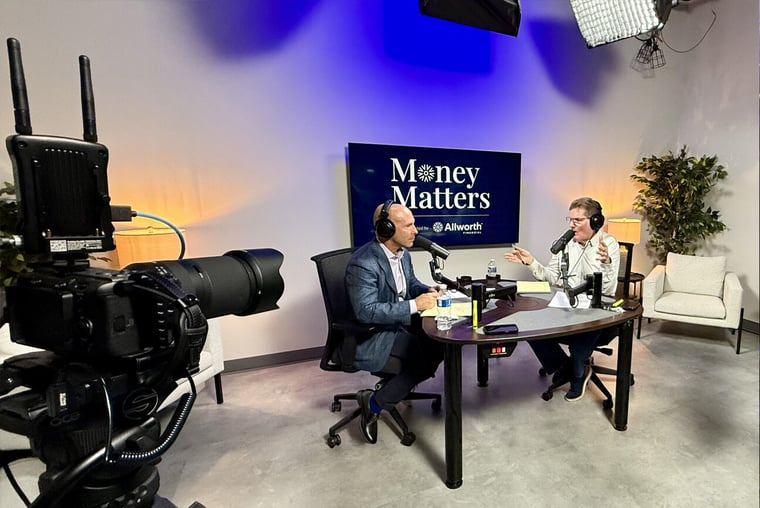
On this week’s Money Matters, Scott and Pat take a call from a listener sitting on a $9 million nest egg—$4.5 million in a taxable account, $3 million in Roth, and $1.6 million in a traditional IRA. He doesn’t need more growth, he’s not worried about his own retirement, and now he’s asking: Should we start helping the kids financially now, or wait? The twist? His kids don’t want the money—and he doesn’t want to mess up their independence. It’s a real-world conversation about smart gifting, capital gains strategy, and how to share your wealth without regret.
Then, a 62-year-old federal employee calls in with over $1 million in her federal retirement account, a pension on the way, and rental income—but she’s also stuck with a 7% mortgage on one of her properties. Scott and Pat explore whether she should draw from her savings, start Social Security, or consider a charitable remainder trust to maximize income and minimize taxes.
Join Money Matters: Get your most pressing financial questions answered by Allworth's co-founders Scott Hanson and Pat McClain live on-air! Call 833-99-WORTH. Or ask a question by clicking here. You can also be on the air by emailing Scott and Pat at questions@moneymatters.com.
Scott: Welcome to Allworth's "Money Matters". Scott Hanson.
Pat: Pat McClain. Thanks for being here.
Scott: Yeah, glad you are with us. We're talking about financial matters. And, yeah, good times, huh?
Pat: Yes, good times.
Scott: Yeah. We'll take some calls, also talk about some things on the market. I'm gonna kick off, Pat, with... And maybe this doesn't impact most of our listeners, but it does their family members. And adjustable rate mortgages are making a comeback. Ten percent of mortgages that have been issued recently were adjustable. If you look at from home builders, it's much higher than that. Because people buy...
Pat: Are they fully adjustable or just buy downs? Home builders oftentimes will buy down someone's mortgage.
Scott: No, these are like adjustable or five...
Pat: They're fully adjustable.
Scott: ....five or...
Pat: A five year...
Scott: ...a 30 doing 5, a 30 doing 7, and they're back. They're back.
Pat: They're back. And look, I did read an article about someone that bought a brand new home, and the builder had bought down the interest rate and then they couldn't believe that the, the payment went up by $2,000 a month in the second or third year.
Scott: Look, come on. Really?
Pat: Well, you gotta read that stuff.
Scott: Yeah. That's kind of important. But the problem with adjustable rate mortgages, I mean, they adjust. They adjust, and people might think, "Well, let's hope the rates go down," or, "Maybe I'll be able to refinance in the future when my job's better or the home has more equity in it, or the home has more equity." But it can certainly go the other way. And had you had one five years ago, oh, it would've been very expensive. Right now, suddenly your 2.5% is moving to 5.5%. You may not be able to afford the home.
Pat: Yeah. With an adjustable rate mortgage, there is no known outcome
Scott: Unless you plan on paying it off in five years or seven years, then it makes sense. Because why would you need to have a 30-year guaranteed rate if you know you're gonna pay it off in 5 or 7 years. But that's not how people are using them. People are using them because the rates are a little less
Pat: And they're trying to qualify to get into a home.
Scott: And I've always viewed it, look, that slightly higher interest rate, I view it as an insurance premium to ensure that that your payment's not gonna change.
Pat: You know the outcome. You absolutely know the... You're not going to lose your home because you can't afford the payment based upon something you have no control over.
Scott: If it was one of my kid's doing this, I would say... They do what they wanna do oftentimes. You're kidding. Don't quite have the control over them that I would've liked. Just kidding. Funny, huh? Well, I mean, you got kids. You know what to tell them.
Pat: Oh, I get it. I get it.
Scott: Also, before we go to calls here have you read the book, "1929"?
Pat: My brother and I were just talking about it. I have not. I plan on reading it this week.
Scott: I couldn't put it down. It reads like a novel. And, you know, 1929 is when the great stock market crashed, depression that soon followed. And obviously, we had studied it in financial classes. But it's all been like fact-based historical facts. The author did a lot of research to find out board minutes and conversations and letters that were passed back and forth. And so, he does a phenomenal job building these characters that existed back then.
Pat: And did they compare them to modern-day characters?
Scott: No. But my brother was. My brother and I were on a bike ride and he was explaining to me, like, JP Morgan is the modern day Elon Musk, is what my brother said. He said he was trying to take these historical characters and apply them to people.
Pat: Yeah. I didn't want it... I mean there, there's always leaders of industry in every society, right? In every generation.
Scott: Yes.
Pat: I think if you look back at that time, banks were loaning money. I mean, you only needed a 10% margin requirement. So, if you put in a hundred dollars, you can buy $1,000 worth of stock.
Scott: Which would have a huge cascading effect both up...
Pat: And down.
Scott: Which exactly what happened.
Pat: And down.
Scott: Yeah. So, the market wrote up. So, that was one major problem. And every little town had banks that were offering these loans to people. Everybody was
Pat: Margin. So, they're the equivalent of, you don't have to secure them with a portfolio, or you did?
Scott: Yeah, only 10% though.
Pat: So, very similar to...
Scott: They were selling to the everyman. So, the way to get the stock market up, all across the country, all these little towns that have banks there, "Hey, pat, put in $10, you can buy a $100 worth of stock."
Pat: But you pledge your portfolio.
Scott: Yes.
Pat: So, versus a margin, there are form of margins, but most margins people think of are actually, the lending is provided by the brokerage firms. This was being provided by the banks.
Scott: By the banks. They weren't separate firms. They were one in the same. Wow.
Pat: Wow, they did not have trust testing back then on the days.
Scott: There were none. There were one in the same. So, which is part of the problem. And then there's these stories where the banks themselves were unloading their shares to their customers. Super common. I mean, when you read this, you're thinking...
Pat: "How could this not end poorly?"
Scott: Yes. And, how did the this seem ethical to you at the time? I mean, we clearly learned a lot from it. Our industry has lots of...?
Pat: So, great book?
Scott: Fantastic book. And if you wanna learn something, I think you'll learn, not only about that history of time, but you'll learn something about how the markets work too. And some of that stuff hasn't changed a whole lot in the fact that you still get these big brokerage firms that do underwriting. Underwriting is a fancy term for helping people raise capital through the issuance of some sort of financial instrument, stock, bond, convertible, something, right, financial instrument. And then part of their job is to go out and sell those financial products, right?
If Allworth wanted to issue a bond, let's say, we can go to one of these banks, say, "Hey, can you help us issue a bond?" They say, "Great." And then we're like, "Okay, well we need to find some buyers for these bonds. Let's go sell them to Allworth clients." That's what still happens today, which is mind blowing. But they did separate the banks from the brokerage firms at that time, the Glass-Steagall Act. And they talked quite a bit about Senator Glass. And I think you'll find that very interesting reading.
Pat: Yeah, I've read a couple reviews and watched a partial interview with the...
Scott: Alan Russ Sorkin, I think is his name.
Pat: Sorkin, yes, Sorkin.
Scott: I guess he's a financial journalist guy. I don't watch much financial television, so...
Pat: I don't either.
Scott: Isn't that funny? It's mostly financial people in our industry that watch that stuff, too. I don't watch it. It just... And anyway, it's a good Christmas gift. Christmas coming, huh?
Pat: You're gonna give a Christmas gift about the stock market decline.
Scott: A great depression.
Pat: A great depression. What started it? What's wrong with you? You cannot give that as a gift.
Scott: I guess you could. I'm trying to think who in my life would even wanna read it. My son would be interested.
Pat: My son would be interested,
Scott: My son would be interested. My daughter would be not so much, my other daughters. The teenage ones, probably not so much.
Pat: Not so much?
Scott: Probably not so much. Not the teenagers. All of them. "Why'd I have to learn about this history stuff, dad? Why do I have to learn about something that happened 3,000 years ago?"
Pat: You know what's interesting? Back to the children, myself and three of my children share a Kindle account, so I actually see what they read and they see what I read.
Scott: What do you mean share a Kindle account?
Pat: We all have access to the same books that we buy on Kindle.
Scott: And do you pay for all the books?
Pat: I'm guessing, yes.
Scott: And do you get the emails like, "Hey, what's the Netflix password?"
Pat: Oh, yes.
Scott: Yeah, totally. And I'm like, "You're 29 years old, get your own Netflix."
Pat: Oh, actually I kicked her off. Because I didn't like getting the text, "What's the Netflix... They sent you a code. Can you tell me the code?" "What? Pay your own $14 a month or whatever?" Well, I find it best just to ignore those and not respond and wait for someone else.
Scott: Probably brilliant.
Pat: Wait for someone else in the family. As I talked about last week, I don't have a lot of expectations, and a lot of things I just ignore, and they go away.
Scott: Ignore your kids' text. "Eh, I'm just not gonna respond to that one." Anyway.
Pat: All right, let's go to the show.
Scott: This is a financial show.
Pat: Let's go to the show.
Scott: And to join us. We're gonna have your question answered by Scott and Pat. Send us an email questions@moneymatters.com and we will get you on the show. We're talking with Jay. Jay, you're with Allworth's "Money Matters".
Jay: Hey, fellas, how are you today?
Scott: Fantastic.
Pat: It's a good day.
Jay: Good. Thanks for taking my call. I enjoy the show a lot. I'm sitting here with a big grin on my face listening to your banter about kids sharing Netflix accounts with you and, man, can I relate.
Scott: What time do they get their own phone plan?
Jay: Well, it's funny, so there's that too, right?
Scott: That's my fault. That's on me.
Jay: Well, so it's funny because we have two children. In one case, the older child came to us and said, "Hey, I'm gonna start paying for my share of the phone plan that's in the..." And you know, we of course said, "Hey, that's fine. Just do an auto deposit monthly or Venmo us, or whatever you wanna do." And with the younger one, we haven't had that conversation, but we pay for her cell phone in exchange for the fact that she watches the dog when we go on vacation, she does some other stuff. And this kind of factors into my question because, neither of these kids really...they don't want overt compensation, if you will. And let's put that on a parking lot for a second. Because the nature of my question is really going back to, I think it's Pat who likes to say, you know, "Better from a warm heart than a cold hand."
Pat: Actually, that was a client that said that to me about three years ago when he started a gifting program with his children. He died six weeks ago. He died six weeks ago at the dinner table with his wife. He died.
Jay: Oh, my.
Pat: And it's interesting. So, we managed the second...
Scott: I assume he was older, like...
Pat: Both he and his wife were struggling with some health issues. But anyway. And fortunately, we managed the kids' assets too already, so it's making the transition easier. So, anyway. But that's correct. So, what's your question for us?
Jay: Well, so that phrase really stuck with me. And I think there's a lot of, certainly, you know, sort of intrinsic value to it and emotional merit, but when I started to consider our own situation and the fact that, you know, our kids are still young enough in their careers that they could probably use a few extra bucks here and there. And my wife and I both feel we'd love the joy of seeing them, you know, maybe take an extra vacation or whatever they want to do with the money. Then the practical me kicked in and said, "Well, wait a minute, if we give them each, pick a number, out of our taxable account, which may or may not eventually hit the lifetime exclusion limit." And that's important here.
Pat: Yeah, you're thinking about it the right way. Yes, you're thinking about it the right way.
Jay: And that's the question. Because let's presume for a moment that our asset base grows, but it doesn't hit the eventual lifetime exclusion limit. There's an argument, particularly with kids who, they're not coming to us for money. And in fact, when we try to give them money, they're a little sheepish about taking it. I think they like their independence. They don't feel like, you know, they want to need mom and dad. And I can fully respect that. I really appreciate that that's how they've turned out. On the other hand, you know, it'd kind of be fun to give them some money and, you know, let them go do something that they wouldn't ordinarily do otherwise.
Pat: What would the source of the money be? Would they be a cash, shares?
Jay: No, no, no. No, we'd give them appreciated shares. So, you know, we got some securities that are five X what we paid for them. And, you know, my idea is, particularly with the younger one who doesn't earn as much money yet, you know, her cap gains rate is gonna be a lot less than ours. So, you know, there's an argument that says, "Hey, before you cash those securities out, Jay, to pay for your lifestyle. Why don't you give them to the kids and they can cash them out and maybe be in the 10% cap gains or 0% cap gains bracket versus where you'd be," which is 20-plus.
Pat: Correct.
Jay: But, you know, the scenario that I keep painting in my mind is, okay, what if we give them $10,000 and I die the next day? They're gonna pay cap gains on that 10 K. Whereas if they'd waited 24 hours, or I'd waited 24 hours, they'd have gotten a step up in basis and avoided the cap gains exposure.
Pat: That's correct. That's how it works.
Scott: So, if you're planning on giving them assets that they're not going to spend, then that's the question. You might be better off just holding those securities and giving them cash. How old are you?
Jay: I am 62.
Scott: All right. You're still pretty young. I mean, and you're married, correct?
Jay: I'm married, and my wife is 58.
Scott: Okay. So, the odds are, it's 30 years before there's the state.
Pat: What you described is one way. But the other way to look at it is, you just said that you had an asset that was five X what you paid for it. Is it grossly overweighted in your portfolios, a percentage of your holdings?
Jay: It is not. And I rebalance twice a year, and...
Scott: So, it sounds like your big question here is, how much do we help the kids out financially?
Jay: That's exactly right.
Scott: If any, and do we do some now, or do we wait till later, or wait till we die? Those are not easy questions to answer always.
Jay: They're not. And particularly, when the kids, when we start to have the conversation with them... And we haven't had that much. I mean, we're talking about people in their early to mid-20s. Okay, so we have not had an estate conversation with them, won't for several years because there doesn't appear to be an impending need. But for example, the older child and her husband would like to buy a larger home. They own a house. They've since decided, "Hey, this is getting a little small. We'd like to buy a larger home." We stepped forward and said, "Guys, if you need help, let us know. We're staying out of it." But if you need help, let us know.
Pat: Perfect.
Jay: I can almost lay money that they would rather eat glass than ask for financial assistance from us,
Pat: You should be super proud. You should be happy.
Jay: We are. We are. But it doesn't make it easy to gift to them, okay? So, the way we end up gifting to them is, "Okay, so we're hosting Thanksgiving this year. We're taking everybody out Saturday night for a nice dinner." And I've already told them like, "Listen..." And I've used that phrase, "This is from a warm heart rather than a cold hand." You know, and they don't debate on who's picking up the dinner check. I watch their dogs for no charge. You know, so we, we gift to them in non-economic and economic ways. We're all going to the city we all lived in for several years.
Scott: Yeah, you're paying for vacation.
Jay: We're, we're picking up the Airbnb, all that kind of stuff. So, we're doing it in a more subtle way.
Scott: And is your net worth much larger than you need for your current lifestyle?
Jay: Yes. Yes.
Scott: Okay. So, it's gonna com compound on itself.
Jay: I know it is. That's my problem.
Scott: And you're gonna give it all, either while you're alive or at your death.
Jay: That's correct.
Scott: You can't take a dime with you, right? So...
Jay: Right. But I've got a resistant recipient.
Pat: That's right. But I wouldn't worry. If you don't have an impending estate tax problem, I would just defer anything. I'd defer it all. And then when I went to do it, I would actually sit down with the children... I did this, I sat down with the kids, and I walked them through the reasoning. Is I told them, "Look, I would help you if I could. I wouldn't gift much more if estate taxes weren't driving this decision." I mean, the reality is, they could pride. I don't know how I would feel if my dad actually had offered me money. I would be really, would've been really surprised.
Scott: So, I had a friend, and I've kind of co-opted this, he says he matches his kids' efforts, "I'm gonna match their effort." And so, like, my oldest daughter, she graduated with grad school right in the lockdowns. She really wanted to get her own business, had some ideas. I said, "Look, I'll keep covering your rent." I'm thinking, "As long as she keeps working at it, I'll keep covering," which I did for a couple years. And then she's got a nice business now for herself and she's self-supportive. And then I helped her with a pretty substantial down payment on her house. Now, she's one that every time she sees me, she asks for money, has no problem taking money from me. But it doesn't hinder her personal development and her desire to grow and to serve. It hasn't hindered that at all. And if I thought that my helping her with her rent would cause her to go screw around more, then I wouldn't give her a dime. Like, "You gotta go figure this out."
Pat: Oh, because you've seen it with many, many clients.
Scott: Of course.
Pat: Where they've ruined the child's life by giving the child assets.
Scott: Absolutely.
Pat: I mean, they've ruined it. You don't have that problem. So, you know, I wouldn't borrow trouble. If you don't have an impending estate tax problem, you know, don't do anything. Or start small. Just give them $5,000 in cash, that's easy, each year and tell them, "Look, this is because of an estate tax."
Scott: That's not a bad idea, Pat. Start out with just some smaller amount. Like maybe every January or something.
Pat: And don't make it complicated. Don't do it with stock. Just do it in cash. And then the next year...
Scott: See what happens.
Pat: ...see what happens. For the first couple years I got copies...
Scott: Maybe they'll come back and say, "We don't want it." And then, "Okay, well."
Pat: The first couple years, I got copies of my kids' statements when I would give them money. I wanted to see if they spending it or not.
Scott: Yeah, I get it. I wouldn't give a dime to my 18-year-old.
Jay: This is interesting
Pat: It's a great problem to have, by the way.
Jay: Well, and you know what? And I know that. And believe me, we're very appreciative of our blessings. There's not a day that goes by we don't give heavy thanks for that. But, you know, it does create its own set of considerations. That's all.
Scott: For sure, , now you have to steward these assets.
Jay: That's right. And, you know, as I said, I mean, we're not at a point now where we're gonna bump up against the lifetime exclusion. But, you know, this thing, meaning our portfolio, could...
Scott: You'll get there.
Jay: I use the term with my wife, it could run away from us, meaning it's snowballs. And now, you know, we have a real problem, and we're now beyond, you know, the point where annual is... We'd have to be gifting to kids and nephews and nieces, all of which we would do...
Pat: But Jay?
Jay: Yeah.
Pat: Let's just say, in the next presidential election cycle, right, the next presidential, that...
Scott: The pendulum swings back.
Pat: All the other direction. Then it would drive my decision making at that point in time, which is...
Scott: Because the estate exemption's very high right now relative to history.
Pat: Right, yes. And because there's a gap between elections and when they actually take office, it allows you to actually make decisions based upon what you believe is gonna take place in the future. So, this last election cycle, we were telling our clients, "We don't know whether you should gift or not." But a large part would be driven by what we thought the...
Scott: In November, the November election.
Pat: And so, we lined it up so that we could pull the trigger in the November election, whether they should begin this gifting program or using a part of their exemption based upon... And when it became clear that the Republicans took it, you're like, "Man, there's no hurry now," right? But that could change. So, whatever decision you make today, prepared to change that decision in the future based upon the environment.
Scott: And I just wanna throw one, it's unlimited what you can give to nonprofits. So, whether you do that now or at your death. You can have $100 million state. If it all goes to nonprofits, you don't have an estate tax problem.
Pat: I assume you have a donor-advised fund for security?
Jay: We do. Okay. Yeah, we, we have a, we have a DAF. And in fact, I was just kind of putting pencil to paper last night determining what year end contribution we want to add to it.
Pat: How much you're gonna contribute.
Jay: Yeah. And the way our asset base is, I mean, you guys would love the tax diversification, we got about just shy of $3 million in Roths. We have about $4.5 in taxable with a $2.6 basis, and about $1.6 in a traditional IRA. And the way we've earmarked that traditional IRA is that the one recipient of it, it happens to be my IRA. We've already fully converted my wife's IRAs. But when I pass, that IRA is going to our donor-advised fund, which will then disperse it.
Scott: Beautiful.
Jay: So, basically, well, if you do the math, I we're paying no tax at death if...
Scott: Well, you know what? One thing I'd recommend on that?
Jay: Mm.
Scott: And all this I've done for myself. I have my wife primary and my donor-advised fund contingent. My wife can always disclaim that and say, "Send it off to the donor-advised fund." It just gives more flexibility.
Pat: In the estate planning.
Scott: In the estate planning in a case something strange happens to the other assets.
Pat: That's a good idea.
Jay: No, I spoke to... Quickly, Scott. That's exactly... Forgive me. You're right. She's primarily, the DAF is secondary. That's right.
Scott: Perfect. Yes. And she can disclaim if she wants to, if she doesn't think she can...
Pat: Jay, one of the things that you might suggest to your children is that, let them know about how the donor-advised fund works, and then allow them X amount of dollars to actually direct to charity. How do you know...
Scott: Have you done that?
Pat: I've tried.
Scott: I've tried, too. I've given up.
Pat: I'm just gonna see if Jay can make it work.
Jay: No. Yeah, I appreciate the effort. Yeah, believe me, I started to. Well, and here's... Please, don't let me abuse your time, you guys, okay?
Scott: No, I find this all fascinating.
Jay: Well, so do I. And I could do this all day, but I won't. But it's funny, I mentioned our daughter's and son-in-law's dogs, both of which are rescues. They're wonderful dogs. And she has a heart the size of Manhattan. And she called me one day and said, "Hey, dad, you know that contribution you made to the shelter where we got the dogs in honor of my birthday?" I said, "Yeah." She goes, "How did you do that? Because I sit down every month and we're writing out checks to the charities that we give to, and that's one of them, and it just looked like you made it so easy." And I...
Scott: Oh, good.
Jay: So, I raised the... Right. So, the beauty was, she came to me, right? And...
Scott: So, here's what I'm like, we should be calling you. How old's your daughter?
Jay: 26.
Scott: 26, married, and her and her husband already have this charity plan where they, on a monthly basis, figure out which organizations they wanna support. Is that what I just heard?
Jay: Yeah.
Pat: Wow.
Scott: Wow.
Jay: Yeah, I think. Yeah. I know. The idea is we... Anyway, you know.
Scott: That's pretty cool.
Pat: All right, well...
Scott: That's pretty cool. Anyway, appreciate the call, Jay.
Pat: Appreciate the call. Keep it up.
Scott: You know this...
Pat: All right. Hopeful that helps him.
Jay: Thanks, fellas.
Scott: Thanks.
Pat: No, you said rescue. Years ago, I was at a soccer game with my kids. And I was just watching the game and this guy walks by with this little dog and it bites me on the leg. Fortunately, I had jeans on. And it bit me on the leg. And I'm like, "What the heck?" And the guy goes, says, "It's a rescue dog." And I said, "So, that makes it okay."
Scott: "Oh, it's a rescue dog."
Pat: It's a rescue dog.
Scott: "Sorry about your calf."
Pat: I said, "It still bit me." I don't care where...
Scott: And you're the rightful owner of it.
Pat: Yeah, you are the owner.
Scott: Absolutely. "And you took that responsibility, not me."
Pat: Yeah. Fortunately, there was no damage.
Scott: Yeah. That's kind of funny.
Pat: I just love the fact that he just went to... So, now anything that happens, I just say, you know, "It was a rescue."
Scott: We're in Colorado talking with Alicia. Alicia, you're with Allworth's "Money Matters".
Alicia: Hi.
Scott: Hi, Alicia.
Alicia: Thank you, and good morning.
Scott: Good morning.
Alicia: So, just to give you a background, I am a 62-year-old federal employee. I'll be retiring in four months. I have, I think, a lot of things in order. I have a trust set up. I have lifetime long-term care. And I have Lifetime Medical through the federal government. I have $1.4 million in my PSP. And I get rental income that basically covers my mortgages. And my investment property brings in enough money to cover expenses and mortgages. I refinance to take out money outta my investment property for cost runs for remodel of my primary home. My money I'm planning to leave to family members and a significant amount to charity.
My question is, should I start taking...? Eell, I was told by someone about Social Security optimization. And they suggested that I start taking Social Security at age 62, and then turn it off at 67 and take money outta my TSP if necessary. Then they said I should restart Social Security at age 70 to "maximize" Social Security. And I really don't understand how that's going to work. Because it seems like if I take Social Security for those years and start it early, it's still going to reduce the dollar amount...
Pat: It will.
Alicia: ...and the benefit that I receive at age 70.
Pat: It will.
Alicia: But if I did take Social Security at... And also, I wouldn't take it until 63 at this point. If I did take Social Security at this point, what I do is use that money to pay off the mortgage on my investment property early, which is at a 7% interest.
Pat: Okay. Well...
Scott: Seven percent.
Pat: Yeah. Let's step back for a second here. What is the value of your primary residence?
Alicia: I'd say at this point, it's a million.
Pat: And what do you owe on it?
Alicia: I owe $360, $370 maybe. I haven't looked at it in a while.
Pat: And what's the interest rate?
Alicia: It's 2.875.
Pat: Okay. And you have one investment property or multiple investment properties?
Alicia: Well, I rent out. My house is set up as a duplex, so I rent out my basement. And so, let's see, that brings in 27k per year.
Pat: Okay. And then your investment property?
Alicia: Okay. The mortgage is $1,736 per month, including property taxes and insurance. And it brings in $27,960, I think. Let me calculate that a year.
Pat: That's okay. That's close enough. That's okay. And what's the value of the property?
Alicia: It's worth, I'd say, between $500 and $550.
Pat: And what did you pay for it?
Alicia: I paid $79,000 as annual.
Pat: Okay, and what do you owe on it now?
Alicia: I owe $157,125. But I've been paying extra principal since I...well, even when I had the HELOC, because it had gone to 10% and it was interest only.
Pat: Okay. But it's not a HELOC now, it's a fixed rate?
Alicia: No, no. Now, it is a 30 year,
Pat: A 30-year fixed. Okay.
Alicia: But I brought that down by paying extra. I'm about 10 years ahead. So, what do you think of it?
Pat: Okay. And what money do you have in the bank?
Alicia: I have $43,000 in emergency fund.
Scott: And are you 100% confident you're not gonna work after you retire?
Alicia: Except for things that I lose money on. I'm kind of deal antiques. And I've made money one year.
Scott: Okay. Is that where you wanna spend your time though?
Alicia: No, actually, I wanna spend my time traveling and volunteering.
Scott: And how much will your monthly pension be?
Alicia: It's going to be... It's weird because I've had estimates. It's gonna be between $40,000 $45,000.
Pat: How much do you earn at your job now?
Alicia: Right now, I just got a bump and pay, so I earn $145,000, but I started at around $70,000.
Scott: What was your pay last year before the bump? I'm trying to get an understanding of what you've been living on.
Alicia: $141.
Pat: So, this is interesting. I'm running this thing through my head. So, the first thing I would look at is...
Scott: And how many kids do you have?
Alicia: None.
Pat: Oh, no children.
Scott: And you're not married.
Alicia: No, I'm not married, no kids. Basically, my money will all go to my nephew. But a lot of that, most of it is going to go to charity. I'll see that he's taken care of, you know, as far as paid off mortgage.
Pat: And obviously when you do that, you name the beneficiary of the IRAs or the Thrift Savings Plan.
Scott: What about a shared remainder trust with that rental house?
Alicia: I'm sorry,
Scott: I'm talking to Pat here. I'm thinking about... I mean, because you've got... One concept is you take that rental house and you structure it in a charitable vehicle where transfers to the charity. The charity sells. It avoids the capital gain. You receive an income.
Alicia: No, it is in the trust. Everything is in the trust.
Pat: No, no, no.
Scott: I understand that. Now, we're talking about something completely different. It's a charitable remainder trust, and it's a tax.
Scott: And there's different flavors of it. So...
Pat: Yeah. And you sound... The problem is, Scott, it's 400 grand would be this. And what'd you say you paid for it?
Scott: Nothing. $70, simply.
Alicia: $79,000.
Pat: Yeah. I wouldn't. The cost of administrating a, a charitable remainder trust over the next few years relative to the tax savings.
Scott: I don't know. I mean, and depending on how deep she is with nonprofit, she is, they could structure it all and take care of all the costs. There's no cost at all, and she suddenly gets a check every month, and doesn't have to think about it.
Alicia: Now, why would I get a check every month?
Scott: Well, because of how these charitable remainder trust are actually structured.
Alicia: Okay. I'm not familiar with those.
Scott: I mean, you have $400,000 of equity there. You could receive an income stream...
Pat: The question...
Scott: ...for the for the rest of your life. It's gonna be greater than what you have now, and you don't have to think about it.
Pat: That's right. Because you're only making a $1,000...
Scott: I mean, to your point, it's 400,000, not $4 million. And oftentimes, these are strategies used with larger states. But given your situation, you got a nice pension. You're gonna have Social Security. You got a million and a half bucks in your 401(k), TSP. I would think that... So, you're asking... I wouldn't take Social Security right away. You've got some other kind of planning, I think. You've got some other strategies to consider. I don't like the 7% mortgage on the rental.
Pat: I hate it. I absolutely hate it. I would look at actually taking money out of the thrift savings plan and using that money in the bank immediately to pay that down. And you say, "Well, I want the money in the bank for emergencies." You could get at the thrift savings plan as fast as you could get at the money in a bank. So, yeah, it's just a taxable vet.
Scott: The tax, you gotta care of that.
Pat: So, the 7% is what bothers me. And I would look at... Actually, Scott, I would say, why wouldn't you start Social Security? Why wouldn't you drain out some of that thrift savings plan in one tax year and start Social Security in the next in order to get rid of this mortgage. It's the 7% that crushes me. Is it an easy property?
Alicia: I was trying to pay about $60,000 at the beginning of next year, and using a significant amount of that to also, I was thinking of paying down the mortgage since I won't need all that money.
Pat: I would explore to the charitable remainder trust that Scott mentioned. It never even crossed my mind because of the size of it.
Scott: You could take that rental...
Pat: So, explain what a charitable remainder trust is and how they actually work.
Scott: And there's different flavors of them. So...
Pat: Lots of different flavors.
Scott: Yeah. You take a... Typically, it's a property or an asset that has a lot of gain in it that someone would like to dispose of. They don't wanna pay the gain, number one. Number two, they are highly charitably motivated. It doesn't work if you're not highly charitably motivated.
Pat: And it probably is, right? Because your yield on this for the amount of equity that you're actually in this house is...
Scott: Not much.
Pat: It's what, 2%?
Scott: By the time you have a repair or two, there's not a lot left.
Pat: Yeah, 2% percent.
Scott: There's a lot left.
Scott: And so, it's transferred to a charity. You receive a tax deduction, not of the full value because it's calculated. Because the charity actually doesn't get the proceeds until either at your death or at a period of time. You could structure for eight years and defer your Social Security. I mean, I'm just throwing things out, different planning ideas out. But with that, the charity then sells the property. They pay no capital gains because they're a nonprofit. And in exchange, they give you an income stream, a monthly income stream, either for the remainder of your life, charity remainder trust, or for a period of time. There's different ways to structure things.
And so, there's a lot of planning techniques. Your Social Security is one of them. And every once in a while you hear us talk about, like, the benefit of doing a true financial plan with a true financial advisor running through all these different scenarios. I think it's something for you to consider.
Pat: And by the way, many times, a financial advisor will recommend life insurance to actually replace...
Scott: But you don't need that.
Pat: But you don't need that. That's why it actually makes the most sense, is because you are gonna leave this to charity anyway. And what you're worried about is cash flow and tax implications. I think that charitable remainder trust...
Scott: Yes, you're a single woman. Relatively young at retirement. You got a great pension. You're gonna have Social Security as well. You got money saved in your retirement. The only thing we don't like in your portfolio is this rental with this high... You got a lot of equity that you're not getting any income, and now's the time in your life for income.
Alicia: So, do you have to have a... If to set up a charitable remainder trust, do you have to pick the specific charity?
Scott: Yes.
Pat: Yes.
Scott: There's pros and cons to them.
Alicia: What about a donor-advised fund?
Pat: What a donor-advised fund? Well, the donor-advised fund, you're not gonna get any income and you need income.
Scott: Yeah, you give it all away.
Pat: You give it all away.
Alicia: Oh, okay.
Pat: So, a donor-advised fund would make sense here if you didn't need income.
Scott: And I've advised people on transferring property, donor-advised funds, they could work great, but we're not...
Pat: You need income.
Scott: Yeah. We're not stating, giveaway this property today to some charity.
Pat: That's right. We we're saying, is there a...? And if you did...
Scott: It's a way to get rid of the mortgage and have more income off the 400 grand of equity you have in this house?
Pat: And if you didn't do that, it may make sense to sell the property.
Scott: There's a lot of different planning things to look at. It make sense.
Pat: It make sense to take money outta the thrift savings plan and pay it down. But even then, the yield...
Scott: Or even if you did an exchange to a lesser property, the boots taxable, you'd have some taxable implications there, but not on the entire thing. There's a lot of different planning techniques that I think Social Security is the least of your planning opportunities.
Pat: Yes, correct. So, I would, I would, I would explore the CRT. Thank you, Scott.
Scott: Yeah. And they're not used that... I mean, they're not that...
Pat: They're not that common.
Scott: I don't know you that well, we don't know you that, but given what you said thus far, it could be a pretty interesting solution for you. So, anyway, really glad you called, and hope you...
Pat: Enjoy retirement.
Scott: Yeah. And engage with a good financial advisor to run through some of these scenarios with you. Well, that's all the time we're doing here today. Pat, as usual, it's been great being with you.
Pat: Yes, nice seeing you again.
Scott: If you find this show helpful... It's a little kind of a different show. We had two very different kind of calls today. But I know, particularly those that have saved well, trying to figure out how much you give to the kids now, how much do you leave the kids in your estate plan?
Pat: Yeah, what's the tax implication?
Scott: Should you give to some charities instead? Should you give to some charity now? All these things. When you get to the point where you've got maybe more than you absolutely need for your lifestyle, it starts becoming a little more complicated.
Pat: Yeah, like the first call.
Scott: That's what I'm talking about.
Pat: Yeah, yeah. Well, the first call was most interesting because he had individual stocks that had done so well, and you're like, "Well, I would use that as a time to rebalance the portfolio using a gifting strategy." You don't have to necessarily sell to rebalance the portfolio.
Scott: That's true. Anyway, so if you think this program's helpful to you, do us a favor, share it with a friend. Pretty easy, just hit the little share thing, say, "Hey, listen to these guys." And also, make sure you follow us wherever you get your podcast so you get dropped...
Pat: Please.
Scott: ...automatically every week. And we'll see you next week. This has been Scott Hanson and Pat McClain, Allworth Financial.
Automated Voice: This program has been brought to you by Allworth Financial, a registered investment advisory firm. Any ideas presented during this program are not intended to provide specific financial advice. You should consult your own financial advisor, tax consultant, or a state-planning attorney to conduct your own due diligence.
Insights for Complex Wealth Decisions
Join our email list for exclusive commentary from our Chief Investment Officer, early access to expert-led webinars, and your complimentary Wealth Planning Checklist for Complex Portfolios.
We take your privacy seriously and respect your privacy choices. By submitting this information you agree to our Terms of Use Agreement, Privacy Policy, and to receive important notices and other communications electronically.