
High-Net-Worth Playbook: Portfolio Rebalancing, Executive Stock Strategies & Estate Planning Wins
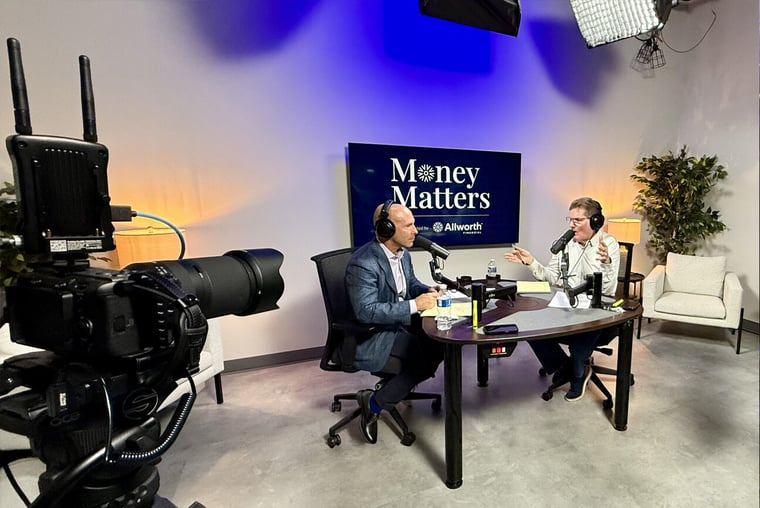
In this value-packed episode of Allworth’s Money Matters, Scott and Pat unpack key financial strategies for high-net-worth investors navigating today’s markets. From the overlooked need for regular portfolio rebalancing to smart planning for concentrated executive stock, they break down real-world scenarios with millions at stake.
You'll hear a listener case involving $7M in assets, HSA withdrawal tactics, and 529 planning for seven grandkids—all through the lens of tax-smart wealth transfer. Plus, expert insights from Allworth’s Head of Wealth Planning, Victoria Bogner, on avoiding massive tax traps with RSUs, ISOs, and stock options.
Join Money Matters: Get your most pressing financial questions answered by Allworth's co-founders Scott Hanson and Pat McClain live on-air! Call 833-99-WORTH. Or ask a question by clicking here. You can also be on the air by emailing Scott and Pat at questions@moneymatters.com.
Scott: Welcome to Allworth's "Money Matters." Scott Hanson.
Pat: Pat McClain. Thanks for joining us.
Scott: Myself and my co-host, we're both financial advisors, and we talk about financial matters, take your calls, talk about what's going on in the markets.
Pat: What is going on in the markets?
Scott: I was having breakfast with a family member this morning. And the question that he stated to me, he said, "Scott, do you know anything about this AI bubble?" That's what he says to me. That's what he said. "Do you know anything about this AI bubble?" And I said, "Well, you do know the industry I'm in, correct?" That's not AI. I'm like, well, I said, "You do realize we manage $35 billion for 25,000 clients," or whatever it is. Like, yeah, I kind of...Yeah, he got...And I didn't want to get into the discussion of whether we're in a bubble or not, because I don't know if we're in a bubble or not.
Pat: We don't know. That's the whole thing about bubbles. People say we're in them. Sometimes we're in them. Sometimes we're not. Sometimes you don't know you're in them until it's done. But if you've been a long-term listener of this show, we constantly, incessantly, overly harp, nonstop...How many different words can I use?
Scott: I know. I'm waiting for what are we talking about.
Pat: Of keeping your portfolio balanced.
Scott: And having the right discipline through all market cycles.
Pat: Which means at points in time you take gains, and at points in time you take...
Scott: You have losses.
Pat: You have losses. And you balance the portfolio, regardless of the marketplace, to whatever your investment thesis is.
Scott: That's exactly right.
Pat: Regardless, up and/or down.
Scott: I mean, it's funny. If you just go and look...look at your iPhone and do the stock ticker thing, and look at the S&P 500, just look even the last year. Oh, it's like a short-term blip, our downturn.
Pat: So let's say you start at a portfolio with 50% stocks and 50% bonds of cash 24 months ago. It isn't even close to that now.
Scott: Yeah, you're way out of balance.
Pat: You're way out of balance. Way, way out of balance. And most people...
Scott: Fifty percent...The only thing that's done better than stocks last couple years, I guess, has been gold.
Pat: Yes.
Scott: Which is an obscure...Whether it's an investment or not is another question, but...
Pat: Yeah. It's...
Scott: But I mean, commercial real estate hasn't done great. Residential real estate hasn't done well. But stocks have been on fire.
Pat: Yeah.
Scott: Historically, we have a 10% pullback once every 9 months. And we had one not long ago, if you just...Earlier in the year, we had a...
Pat: Was very short.
Scott: A correction. And they're very typical that we have these short-term pull. And we have a 20% decline of bear market about once every 3 or 4 years, depending on the time frame you wanna look at.
Pat: Yes.
Scott: They're very common, these market swings.
Pat: Most people are reluctant to rebalance a portfolio in an upmarket.
Scott: Or sell...Yeah. Right?
Pat: It's doing well. It's doing well. I can't tell you how many times in my career, it's doing well. And I always say, it did well. The mere fact that we can measure it means it's historical. It's not doing anything. From this point forward, your stock isn't doing anything. It did well.
Scott: And the only reason...The only thing that's gonna change the value is people's perception on the future of the company.
Pat: Correct.
Scott: Not what the company is doing today, what it did this last quarter. It's people's perceptions on tomorrow and five years out.
Pat: Yes. And so, we harp constantly about rebalancing the portfolio because it's a risk-adjusted rate of return is what you're interested in.
Scott: Well, I mean, I guess there's a couple of ways you can approach investing. One is you could have an investment thesis where you own a variety of different asset classes. You maintain a certain allocation of those asset classes. You rebalance. Maybe you have...Maybe part of your thesis is that you allow a little bit of flexibility in the rebalance, depending on some economic factors, but you don't bet the farm on it. Right?
Pat: Yes. Yes.
Scott: You don't take any risks that you can't recover from. That's one way to go, which is what we would subscribe to and have subscribed to for years. The other is, well, let's try to pick what's going to do well next. Let's get out of those things. Let's try to pick the best stocks, get rid of the worst stocks, or maybe we'll sell short the worst stocks. And then let's try to figure out when we should get out of the market entirely, and figure out when we get back in the market.
Pat: That is an investment thesis.
Scott: Correct. And I think a lot of individual investors live their lives that way for a period.
Pat: Yes. That is...
Scott: For a period until they get burned.
Pat: This, you know, it makes me laugh. I met with some clients last week. I think it was last week. And it was his birthday. So he came in, and someone had given him a lottery ticket. And he said to me, "I don't know if we really need to do any of this, Pat. I've got this lottery ticket in my pocket." And I said to him, "That is an investment thesis. I don't know how sound it is."
Scott: It's not going to work out for the vast majority.
Pat: And it obviously was all said in humor, but I thought to myself, there are people that believe that they somehow have a magical touch in picking something that is going to go to the...And you've seen them, and I've seen them, where people have bet the farm on something...
Scott: Yes.
Pat: ...because they have convinced themselves that they somehow can see something no one else can see.
Scott: Do you ever listen to the podcast, the "All In" podcast, the "All In" podcast?
Pat: I've never.
Scott: Oh, really?
Pat: No.
Scott: David Sacks and a couple other billion...And Chamath, I can't pronounce his last name, that Chamath...They're all venture billionaire guys. Extremely bright.
Pat: Yes.
Scott: And I actually think you'd enjoy it because it's a variety of topics.
Pat: It's called "All In."
Scott: The "All In" podcast. A variety of topics. Sometimes it's political, sometimes it's usually much more focused. They get deep in the weeds. But some of the things they bring up, and here's why I enjoy listening. I know my intellectual level. I'm fortunate to be maybe a little brighter than the average, but I'm not a genius.
Pat: I think we can all agree.
Scott: Okay. Well, I mean, part of being an investor is getting to understand, know yourself. And I listen to these guys, and sometimes when they have some of their guests on, I'm like, these guys are really bright. And I could not imagine taking an opposite side of a trade against these guys.
Pat: But even they...
Scott: But even though those guys understand...
Pat: Like if you talk to someone who's...
Scott: Okay. Let's talk about how foolish it is to sell short because he doesn't believe he can figure out the market cycle.
Pat: Right. And they will talk about some of their losses, I hope, at points in time.
Scott: Of course. Yes, yes.
Pat: Right. The best investor.
Scott: Yeah. If you listen to this week's, they would be talking about what the last couple of weeks were and the declines they had in their own stuff. But I was just thinking the other day, as I'm listening to these guys, I'm thinking the average person who thinks that they're going to be able to pick the best stocks and get rid of the worst stocks, they're competing against the brightest minds, the top mathematicians that are graduating from the top schools.
Pat: And computer scientists.
Scott: Correct. Right.
Pat: I mean, there's not just intellectual that goes in there. There's a ton of technology that goes into a lot of investment selection.
Scott: When you look at the numbers, like you look at professional managers, how many actually outperform their indexes, it's like 20%. And then if you look at the studies and say, okay, the guys who outperformed or the girls who outperformed...I shouldn't call them girls. I guess you can call guys and ladies, guys and gals. Gals and old...
Pat: How old are you?
Scott: I'm old enough to say gals.
Pat: Okay.
Scott: When I use the term every once in a while, my daughter teases me.
Pat: I know.
Scott: What? I don't know.
Pat: The Middle Ages called. They want their vocabulary back.
Scott: I'm not middle-aged, I think I'm beyond that.
Pat: No, I meant the Middle Ages, not you.
Scott: Oh, the Middle Ages.
Pat: Victorian England called.
Scott: You look at professional money managers, there's tons of studies out there, right? Professional money managers, the ones that are in the top quartile, so these are the top 25% of money managers, you look five years, the subsequent five years, a vast minority of them continue to be in the top quartile.
Pat: Which is why I always ask myself, do you attribute this to genius?
Scott: There are economists and finance professionals who completely believe it's 100% random and it's all just luck and there are some that say no, that skill's involved as well and...
Pat: And there's probably a combination of both.
Scott: There's probably a combination of both. There's some that think it's just luck. Look, you get 100 people in a room and I'll do a flipping-the-coin contest. Someone's gonna be like, wow, I can't believe what...You know how to flip 10 coins in a row, heads in a row, that's amazing, look at you. Same concept.
Pat: It's random. But goes back, if you haven't rebalanced your portfolio in the last 18 to 24 months, you really want to look at it now. Because even in this recent downturn...and we're recording this on Tuesday, whatever the date is.
Scott: Tuesday before the Saturday.
Pat: Okay. There's still lots and lots...Your portfolio is still out of balance.
Scott: Yeah. And even if just because we're down...I mean...
Pat: Not that far.
Scott: You go back and look where we were...
Pat: Just the day after day. It wears on people.
Scott: Well, markets tend to...They talk about markets climb a wall of worry. It's an old saying. Because there's always that bit of trepidation, like maybe the shoe's gonna drop, there's what bad news is lurking around the corner. Uh-oh, what's the employment report gonna say? The jobless numbers, the whatever, the GDP report, the inflation report. People are always a little worried that some news is gonna come out that's gonna cause the markets to decline. And it feels...I don't know, it actually occurs this way. The market pullbacks, daily pullbacks tend to be stronger, more pronounced than the upswings. So it's easy to have a 1%, 1.5%. It's more frequent to have that. Than it is to have on a gain of that day. We tend to climb a little slower and fall a little faster.
Pat: And I will add to this, especially if you're taking distributions from your account to live on, the market pullbacks feel a lot, lot worse.
Scott: Well, if you're living on your stash of cash, so to speak.
Pat: Yeah. That's why you want to set aside...
Scott: Yeah. And it's also, I think it's a good time. And if you are or nearing retirement, where you're gonna be dependent upon your assets, getting a good handle on how much money do you have that's not tied to risky assets? That should we go in another downturn in the stock market, a recession, that we're not forced to sell something? That we can just live off...
Pat: Off the money that we set aside because of the asset allocation, how I modeled the portfolio.
Scott: Yeah, 100%. And so if you find yourself nervous, like, oh, crud, where's this gonna lead? Maybe it's a good time to meet with your advisor and say, hey, how are we doing here? What are we actually...When would I be forced to sell some of my stocks, or what other riskier assets that you have? But look, over the long term, I always remind...I like to remind people, or at least our listeners, I don't know who else cares. You're listening because you care about this stuff. So here it is. When I started in this industry, July of 1990, the Dow Jones Industrial Average, what do we have today, 45,000, 46,000 whatever. It's approaching 50,000, whatever it is. The Dow Jones Industrial Average, July of 1990, was 2,600.
Pat: It's amazing.
Scott: That's a long period of time.
Pat: Yes.
Scott: Right? But look, if you're 60 years old, if you're a married couple 60 years old, there's a greater than 50% chance one of you are gonna be alive into your 90s.
Pat: Yeah. If you're in your 80s, there's a good chance one of you is gonna be alive...
Scott: In your 90s.
Pat: In your 90s.
Scott: And if you have more assets, more dollars than you're gonna spend in your lifetime, the time horizon for your personal investments are probably much longer than even your life expectancy is.
Scott: As they should be.
Pat: So it's normal.
Scott: Highly normal. No one likes them when the markets go down. I don't like it either. Actually, I like one or two days, but when there's multiple days, then I'm like, oh, this isn't...
Pat: What are you gonna do about it?
Scott: Nothing. I try not to...
Pat: Obviously, you don't react.
Scott: I remember, this was a number of years ago, the Dow was probably at 22,000 or something. A number of years ago, we're in a business meeting and with...It was a board member. I'll just come out...It was a board member. And the market was having a bad day. It was a period, it was a couple of days leading up to it. That day was particularly bad. And I was frustrated about someone who'd worked for the organization that wasn't doing what they were supposed to be doing. I was frustrated. It was a small...It was a minor thing, but I was frustrated. And the person says to me, he says, "Wait a minute, the market's down," whatever points it is today, "and this is what you're worried about?" And I said, "Well, I have no control over the markets. I think I have some influence over the people that work here. So I'm not gonna worry about the markets. This is what the markets do. If it's raining tomorrow, well, it's winter and it rains. This just happens."
Pat: There's nothing you can do about it.
Scott: Yeah. Anyway, but it would be so...
Pat: Oh, so good if you could actually...If you had that ability to know when it was gonna go up or down. And so many people actually say they have, but they never...You don't read about the times that they were out of the market.
Scott: Of course. I mean, we could point to the...In the Great Recession, the couple of people that were accurate in predicting things, John Paulson and...
Pat: And then you look at their trades afterwards.
Scott: Yeah, yeah, of course. And but how many other people had a different perspective that you never heard about?
Pat: That's right.
Scott: Because they were believing something different. So...
Pat: All right.
Scott: Anyway, it's all kind of noise. If you want to join us, you've got a question for us, we'd love to talk to you. Send us an email, questions@moneymatters.com. We'll set up a time to have a conversation. We're talking with Rita and Tim. Rita and Tim, you're with Scott and Pat of Allworth's "Money Matters."
Tim: Good morning.
Rita: Good morning.
Scott: Hi.
Pat: Hi.
Scott: Glad to have you both.
Tim: Yeah, we have two questions for you.
Scott: All right.
Tim: The first is that we have a fairly good-sized nest egg in our HSAs. And Rita wants to leave the money in the accounts and grow it tax-free and take out a big lump sum at a later date. And I want to take it out yearly to pay for Medicare Part D deductibles.
Scott: How old are you?
Tim: Seventy-one.
Rita: Sixty-nine.
Pat: Okay. And when you say big lump sum, everything's relative.
Scott: Let me take a step back. My guess is that whichever path you take is not going to have any impact on your lifestyle the rest of your lives. Maybe I'm wrong, but like, so part of it is...
Pat: Because the fact that their HSA is so overfunded, it probably means the rest of it is overfunded.
Scott: That would be my guess. Yeah. So tell us about your financial, you're 71 and 69.
Pat: So how much is in the HSA?
Tim: About $309,000.
Pat: Okay. And what else do we have?
Tim: We have $1.9 million in our brokerage account. Rita has $1.1 million in her IRA. I have $5 million. Rita has $820,000 in inherited IRA. I have $514,000 in my Roth. Rita has $141,000. We got about $40,000 in the bank. Our home's paid for in Indiana. We have a condo in San Diego, which we owe $250,000 on. And Rita's got some farmland in Illinois.
Scott: And have you guys been married for a long time, or is this a second marriage?
Tim: No, we've been married for 45 years.
Pat: Okay. So about $7 million in qualified money, both Roth and non...
Scott: And how many children do you guys have?
Tim: Four.
Pat: Are you gifting?
Tim: It's 529. That's our next question.
Scott: And your estate today, should you die today, what happens to that? If you both get killed in an accident today, what happens to your assets?
Tim: We have a trust and it goes to our children, 25/25/25/25.
Pat: Okay. And tell us the idea behind not taking the money out and taking it out in a lump sum. So Rita advocates for taking it out in a lump sum at a later date, and you're advocating actually using it to pay for medical expenses, correct?
Tim: Correct.
Pat: All right.
Scott: What happens when you die with an HSA, Pat?
Pat: It becomes a complete taxable event.
Scott: That's what I thought. Immediately?
Pat: Immediately. It goes to the beneficiary, and then it becomes a taxable event, which is...So this is why you want to use that up for medical expenses now.
Rita: Okay.
Pat: Is because if you die, it becomes a taxable event. If you use it while you're living, it is not a taxable event. It actually goes...you're paying for that medical care tax-free. So...
Scott: In a perfect scenario...
Pat: What's that, Scott?
Scott: Had you said your estate is 20% for each of the four kids, and then the rest, remainder goes to some nonprofits, we might say, well, let's just have the nonprofit be the beneficiary of this HSA and continue to let it grow.
Pat: And at that point in time, it wouldn't matter whether it was the HSA or an IRA.
Scott: Then we would say, let's look at the rest of the stuff. Yes.
Pat: Right. So...
Scott: But this is probably the...it's probably the worst asset to inherit.
Pat: Thank you. Thank you.
Scott: Because at least an IRA, you can spread it out over 10 years, the taxable...You have to distribute it over 10 years, a beneficiary would, a non-spouse beneficiary would.
Pat: So you want to use...In a perfect scenario, that HSA is completely used up by the day you die. And as it pains me to say this, Rita, Tim is right.
Rita: We do have a charitable trust though, so we can...
Tim: I guess you have me thinking about something else, and when you talk about it going to a charity, or can we send it to multiple charities?
Pat: Yes.
Scott: So this is where it all starts getting a little complicated, right? Sometimes something seems...It's funny, I read an article the other day about Roth conversions and...
Pat: Why you shouldn't do them?
Scott: No, it basically said...I don't even remember. Some academics did the study, but everything was in a silo. It's like that's the only thing they had in their life. And then what's the point? I thought the article was a waste of time and being...
Pat: Roth conversions oftentimes depend on what the tax...
Scott: So many things.
Pat: The tax rate of the beneficiaries are. So tell us about the charitable trust.
Tim: It's just a charitable trust through Vanguard.
Scott: Okay, they're donor-advised funds.
Pat: They're donor-advised funds.
Tim: Yeah. Correct.
Pat: Are you using that money out of the donor-advised funds to actually make gifts?
Tim: Yes.
Pat: You are? Okay.
Tim: Yes.
Pat: Because I've seen people stock donor-advised funds full of money and not actually use it.
Scott: And you could structure the donor-advised funds. You can say, hey, Vanguard, I would like...When I die, if you allocated some portion of your estate to that, you could say, distribute this over the next 5 years to these charities or the next 10 years to these charities. Or you could have a combination like that, and then you could say, I would like my four children or one of my children to decide how these dollars go to which nonprofits. It's almost like...
Rita: Right.
Scott: I mean, I use donor-advised fund. Like, setting up a family foundation, there is a few reasons to do it, but there's a gazillion reasons why you'd want to use a donor-advised fund.
Pat: Oh, a lot. A lot. I mean, number one is I've sat on many a board.
Scott: Simplicity.
Pat: Number one is I've sat on many a board where we actually just searched the local tax...searched because it's all public information to see who has money, then we go to them and ask them for money for the charity.
Scott: Anyone in the community know this guy or this gal?
Pat: Yeah. And then we go and ask them for money. So your HSA, you should start using it now. Well, why?
Scott: Yeah, I would.
Pat: Sixty-nine, 71. What's the downside? What's the downside that they end up using some of the money for IRAs for medical care? There's no...
Scott: It's such a rounding error. It's not even a rounding error. I mean, it's...
Pat: But in a 100% tax-efficient...
Scott: I would probably...Yeah.
Pat: See, you want to use that HSA.
Scott: I'm 59 and I have the same exact mindset you guys have had. Putting money, maximizing my HSA, investing the agents. And literally this year, I'm starting to question like, at what point do I need to start spending these dollars and stop contributing? I'll contribute because the tax...But at what point do I need to start spending these dollars? Because I don't want to accumulate a large amount and end up dying with it.
Pat: And the HSA is invested in equities, I assume?
Tim: It was until recently. I have a lot of mine in the money market now.
Pat: Okay, perfect. Perfect. That was my next recommendation is to start moving it away from...What's your family income?
Tim: It's going to be somewhere around $250,000. We have a lot of...You know, we get different money from farm trusts, capital gains, dividends, and that varies quite a bit.
Scott: And your IRAs, are you...Did you take a qualified distribution from it this year? Or are you planning on it for charity?
Tim: No.
Scott: Just the required minimum distribution? That'll be in a couple of years.
Tim: I did $1,000 out of charity, but that's it. We've mainly been using the donor-advised fund because it's much easier to dole the money out from that than it is to go in your...
Scott: Depending on your charitable intent, you've got the required minimum distributions coming up shortly, and they're going to be quite substantial, right?
Tim: Right.
Scott: And you can take a distribution this year, once you're 70 and a half, you can take up to, what, like $108,000 or $109,000?
Pat: $108,000.
Scott: $108,000
Pat: For 2025. I don't know what the number is for 2026.
Scott: And have it go to a non-profit, a charity, up to that amount.
Pat: Or multiple.
Scott: Or multiple. And it doesn't flow through your tax return. So it doesn't hit those other items that could...
Pat: So it is the most efficient way. Unfortunately, you can't move that to a donor-advised fund. It has to go directly to the charity.
Tim: Yeah. It's just been a lot more difficult to do 10 different checks...
Scott: Oh, I know. I know.
Tim: ...from Vanguard [crosstalk 00:25:39.048] donor-advised fund.
Scott For sure.
Pat: But I got to tell you, so just part of our planning with my clients is, this year, can you get me a list of your charities for next year so that we can actually...And we do it.
Scott: Yeah, yeah. And whoever's got your IRA should be able to facilitate that.
Pat: Before we go on, I'm just curious. Did you have a defined benefit pension plan at some point in time?
Tim: Yes.
Pat: You did. And so you were a doctor, a lawyer, self-employed, or a consultant in some form?
Tim: Yeah, I'm a family physician, and I work for a clinic that had a 401(k), and then we had a...
Scott: Top-heavy plan of sorts, whatever it was called.
Tim: Yes.
Scott: Okay, thank you. Because I'm like, this had to be because to get this much money in, you had to have another mechanism rather than a 401(k). All right. So...
Pat: Or work for the right company stock, just the right company. But it's much more likely that you've got a self...
Scott: Correct.
Pat: ...pension plan. So the answer to that is...And you want to consider Roth conversions too, depending upon the marginal income of your beneficiaries.
Tim: Yeah, I finally gave up on that because it was...Did the calculation, and it just didn't make sense to do it.
Scott: What state's your primary residence?
Tim: Indiana.
Scott: Okay. I don't know what the tax rate...Whatever it is, it's lower than California.
Tim: A ton lower.
Scott: Yeah.
Pat: Yeah. But you don't have as nice of weather in...
Scott: And where do your kids live?
Pat: ...Indiana as you do in San Diego. We're just gonna go with that.
Rita: They're all over.
Tim: Yeah. We have kids in Indiana, Michigan, Iowa, and San Diego.
Pat: Okay. That's the answer to that question. But I would revisit that.
Scott: And you're still relatively young in estate planning, right? You're not 10 years older or 15 years older.
Pat: That's not the theme. The theme is that in two circumstances, we asked Tim and Rita, have you considered this or to considered this? And in two circumstances, he said, it's too much of a hassle. You said that about...You did. You said it about the qualified charitable distributions. And then you said it about a...
Scott: Maybe it is.
Pat: It is for you. It is for you. But it isn't for a firm that actually knows how to do all these things that tells you...
Scott: And does it all for you.
Pat: They do it all for you.
Scott: Here's a DocuSign, click, click, click, and it's done. Yeah. Fair point.
Pat: And you discuss the general guidelines of what you're trying to achieve, and the other firm puts it into place.
Scott: My guess here...So it's funny. And you've consolidated probably as much as you can, right? But just the reality is, you end up with these different accounts. You have a brokerage account, an IRA, a Roth IRA, etc., etc. And you're probably looking at thinking, I don't wanna complicate my investment life any more than this, and it would be great to try to simplify things as time goes on. That's what I would be thinking, right? Just because, to what end? And so there are times you're gonna ask yourself, is this really worth it? Reality is you have more dollars than you're gonna spend in your lifetime. There's a trade-off we all make with dollars. We decide to go out to dinner somewhere. Well, we take money that we've had, and now we don't have those dollars anymore. We exchange those dollars for some experience. And we can have that same mindset, I think, even when it comes to how we allocate our dollars, our investment approach, and that sort of thing. So I don't always think that...I think there's times when I would agree with people like, it's not worth the hassle. You're gonna add this one thing or this one other investment, one more K-1 to deal with, one more capital cost, all those things, and sometimes it's just not worth it. You're looking at me like I'm crazy.
Pat: Yeah, because what he said was easy for a firm to do.
Scott: Oh, I love what he said. Yeah, fair. I was going on a different place.
Pat: Yeah. He went to a low-cost firm and was expecting...No, no, that's the reality. Look, I have a brokerage account at a major firm that is outside of our firm. I have it for multiple reasons, but...
Scott: Privacy, number one.
Pat: Privacy, one. And two is that it's not actively traded. It's not actively traded. And there's no strategy behind it. It's kind of a holding account. Today, I went to their office this morning before I came in the show to do a transaction. And I thought, what a pain in the butt this is. What an absolute...
Scott: And if you weren't the founder of this firm where others could have access to the...Seeing the account, it would be here. But that's why.
Pat: Yes. And a lot of it is I'm setting aside money for a large capital gain in the future, so it doesn't really need to...So my point being is you may wanna consider a qualified firm...And two reasons. One, you're going to become...Most likely, one of you is gonna become incapacitated in the future. And the other is to move the money downstream. I met with a client and their children last week so that we could do multi-generational wealth planning. And it's not uncommon to bring...Okay.
Tim: We did talk with an advisor, gave him a lot of information, and he kind of said, "Well, you don't really need us." But then what we wanted out of it more was a financial plan and to be able to ask him questions like, should we do a Roth or should we just put it into an account in our brokerage firm as we take it out so that it'll step up to our kid? And I think that that's the way...Rita and I kind of figured is that we would take it and put it into a direct fund and...
Rita: Self-direct.
Tim: Self-direct. And then...
Pat: No, assuming that...
Scott: And maybe the advisor didn't think that he or she had the personality to work with you, but...
Tim: Yeah. And I think he wanted to manage part of our money. And what we really wanted was a financial plan and then somewhere where we could bounce questions off of him if we needed to.
Scott: So, I'm gonna be totally transparent with you. You're gonna have a problem finding a really good advisor at that. Because I mean, you're looking at it saying, wow, these advisors charge lots of money. But you know what? That's what the best advisors charge, lots of money. You can find someone who will give you a low cost, hey, I'll charge you 300 bucks an hour, you can call me with your questions, but you're not gonna get a top advisor. That's just reality.
Pat: So let's move on to that. So you had another question. Earlier on, you said you had a question about 529 plans. You mentioned that briefly.
Tim: Yeah. We have 529s for seven grandchildren. And we would like a method taking inflation into account so that when they start college, we have about the same amount of money for each of them.
Scott: Yep. That's pretty simple.
Pat: And are you funding these lump sum or are you funding them on an annual basis?
Tim: Monthly basis.
Pat: And why are you not funding them lump sum?
Rita: They didn't all come together. And we have one that just got married.
Pat: I understand. No, I understand. Understand.
Scott: But you could look at the seven you've got now, you can do the calculation, use some assumptions, here's what they're gonna need at age 18, etc. And then work back how much net, how much capital do we need to set aside today, and just go ahead and fund them and be done with it.
Pat: So there's two ways...
Scott: That way the growth occurs in there instead of in your portfolio.
Pat: That's why I said, why are you not funding? So there's two things to look at here. Number one is you're funding a monthly. You don't need to fund them monthly. You could fund them each with a lump sum and remain the owner of them, I assume you're remaining the owner, and the grandchild is the beneficiary. So if you were sitting in my office, I'd say, why don't you fund them each with $100,000?
Scott: Or whatever the number is.
Pat: Yes.
Scott: Might be too much for some.
Pat: We don't know.
Scott: We don't know how old they are.
Pat: Run the numbers. Yeah, correct. No, but a brand new, a newly born child, you could fund them at $100,000, and then you could figure out...because you're looking for, to make it fair, whatever that means, among the grandchildren, you could figure out if you put $100 grand here and the other child is five years...
Scott: Or maybe it's $50 grand, whatever the number is.
Pat: Yes. And the, and the other child is five years older, this is what their account balance should be.
Scott: So they need more dollars.
Pat: So they need more dollars in order to get there. Does that make sense?
Tim: Yeah, I think it does.
Pat: And I would not do these on a monthly basis. I would just do them, at a minimum, annually. But I would, I would...
Scott: Because they grow tax deferred, right? Now, you've got...yeah.
Pat: And under the current rules, the fact that the beneficiary, as long as the account's been in place for 15 years and the beneficiary has been the same, I believe, don't quote me on this, I think for 5 years, these can be converted into a Roth IRA if they're not used for...
Scott: Only maximum, like $35 grand or something.
Pat: To a maximum of $35,000. At the same level, a contribution to a Roth IRA would take place. But you can change the beneficiary anytime you want. So you have it all earmarked for these kids, right? But you can change that beneficiary at any time to another child.
Scott: It's the one area that I know where it's a completed gift, but you still have control over.
Pat: Correct.
Scott: Usually, if it's a complete gift, you lose all control. And this, you still have control.
Pat: That's right.
Tim: Okay.
Scott: All right? There's a lot we talked about today.
Pat: There is a ton. There is a ton. That is a ton of information, but look, and I would encourage you to, I assume you're spending everything you want. When you fly from Indianapolis to San Diego, do you fly first class?
Rita: We drive.
Pat: Okay. Nice. Good. Good. When you fly, do you fly first class?
Rita: Once we have. We listened to you so we finally bought a first-class ticket. Yes. We bought...we only bid up on it when they came up for the bidding part. So...
Pat: Okay. Again, I don't...
Scott: That's why they have the money, Pat.
Pat: I understand, but Scott...
Scott: That is why they have the money.
Pat: But they've increased their lifestyle since they first...
Scott: There's no way you can spend all this money in your life.
Pat: That's right.
Scott: In your lifetime.
Pat: That's right. They don't have the ability to, but I would encourage you to fly first class. You know why? When your beneficiaries get that money, they probably will. Right? I mean, you worked...Think about it. When you entered medical school, you guys were poor as church mice. My guess.
Tim: Yeah.
Pat: Right?
Tim: Poor.
Pat: So, you know, you've changed your habits since then. You never imagined you'd own a house in San Diego, I guess, when you started your practice. My guess was you never imagined, I would have a second home in San Diego. Right?
Tim: No.
Pat: So you are capable of changing some of your habits. Right? And if it makes you happy to fly first class or eat in a nicer restaurant or stay in a nicer room, the things that you consume, you have the permission. You should give yourself the permission to do that. That's the reality.
Tim: Rita can change her habits. I'm always going to live like a resident.
Pat: Okay. All right.
Scott: Wish you guys well.
Pat: Take care. Yeah.
Tim: Thank you.
Rita: Thank you.
Scott: Pat, I'm halfway through the book "Die Broke." Have you read the book "Die Broke?" I don't agree with all the premise but...
Pat: It's my family history.
Scott: It didn't say live your whole life broke. "Die Broke." And it's essentially trying to encourage people to enjoy life through as you go through the journey, as opposed to accumulating everything for your older years. But obviously it's a tricky balance because we need to plan that we're going to have enough money to...But it's...
Pat: So what did you learn from "Die Broke?" Did you get your kids in a room and say, you know, "All those things we talked about, now Mom and Dad are spending it all?"
Scott: When you're at the stage, like just Rita and Tim, the reality is they've got a responsibility. These dollars are theirs now, right? So they've accumulated these, and either they make some decisions on what happens to them during their lifetime or someone else will upon their death. If they make no decisions, then the state comes in and says, all right, who should we just divide these amongst? They make some decisions. They can have some control, and they can look at it like, we're going to go and spend these dollars as fast as we can. And if someone wants to do that, it's their money, they can do what they want. If someone else says, look, we have an opportunity...there's some particular social issues that we care about and we want to get really deep in these particular nonprofits, they've got a phenomenal opportunity to do that or somewhere in between.
Pat: So I'm going to tell a quick story, Scott. I do not like working out at the gym. There's almost no part of it that...
Scott: You didn't need to tell me that. I'm kidding.
Pat: But I know it's good for me. So I hire a trainer, and why do I hire a trainer? First of all, it's really efficient. This trainer can do to me in an hour what it would probably take me three or four hours walking around the gym. I mean, just like a hard workout. And the other is it gives me the discipline...
Scott: Of course. You're going to wake up. You're like, whatever the dollar amount is, like, I'm not going to flush those dollars.
Pat: That's right.
Scott: No one likes to waste money.
Pat: And I've been doing this for 20 years. And the reason is, look, I know it's good for me. And I used to be super, super busy and it was just really an efficient use of my time,. But I was working out and I was on the...
Scott: And that's an expense. I mean, you calculate on an annual basis, it adds up.
Pat: There's no question.
Scott: And you didn't do it when you were young and broke, church mice?
Pat: Church mice. So I'm on the treadmill doing a light jog, and then someone sits on the treadmill and they say, "Just out of curiosity, what are you training for?" And I said, "What do you mean, what am I training for?" And they said, "Well, you use that trainer. You're obviously training for something." And I said, "Life." I said, yeah, I said, "I'm training..."
Scott: Was that a young person?
Pat: About my age. And they said to me, "You're not training for like a race or anything?" I said, "No, I want to stay in shape." And they said to me, "Well, that is the biggest waste of money I think I've ever seen."
Scott: Are you kidding me?
Pat: That's right. And I said, "Well, first of all, it's my money." So, first of all, it's my money. And second of all, it's really none of your business. And then, in all restraint, I knew that this person sold wine for a living, and I'll call it like that. But I said nothing. And I walked away thinking, look, it's my money. If my clients want to blow their money on X, Y, and Z...
Scott: Their prerogative.
Pat: It's not my decision. They want to give it all to their kids, and their kids blow it all, it's their decision, right?
Scott: And I think, Pat, a good advisor, will help someone get...or maybe a couple, help them get clarity on what's important to them, not what's important to the advisor, right?
Pat: Yes.
Scott: And I think about clients all over the spectrum. Some are like, "I don't want my kids to...they're not getting a dime. I helped them get raised. They've got fine lives. Let them figure out the struggle. I think the struggle is good for them." I've got those clients, and I have other ones like, "Why wouldn't I want to bless my kids?" And everywhere in between. And I think a good advisor is to help a client or a couple to get some clarity about what's important to them with these dollars, and then develop the plan around them. And oftentimes, those decisions that we make on how we want to use these dollars are going to have implications on our financial planning. Do we spend down the HSA, or do we not spend all that stuff? Do we do the Roth conversion, or do we not do the Roth conversion?
Pat: That's right. Do we actually leave the IRA to, right, a charity or not a charity or...?
Scott: You could take three couples with the same exact portfolios and have three different strategies.
Pat: Vastly.
Scott: Even if the risk tolerance and whatnot with this, just based upon how they want to see their estate distributed. That's right.
Pat: And that's the benefit that's actually from a good advisor.
Scott: Yeah. We're going to turn now to...rather than take a call, we're going to talk to our head of wealth planning, Victoria Bognar. And Victoria has been...she's been on this program a few times over the last years, and I do some webinars with her, and she's always great. And so Victoria, thanks for joining us today.
Victoria: Yeah, happy to be back.
Pat: And she's got a bunch of initials after her name. A bunch.
Scott: Yeah. You know, like early in the program, Pat, I was talking about those people that are like really smart.
Pat: Yes.
Scott: That's Vicki.
Pat: You just dress well. Scott just dresses well. Vicki's just really smart.
Scott: I know how to surround myself with really smart people.
Pat: Yes. Yes.
Victoria: Well, dressing well goes a long way, too.
Pat: Yes.
Scott: So tell us about a client situation, a financial planning issue that you dealt with.
Victoria: Yes. So this comes up often. I would say multiple times a week we're talking with clients or prospects about this particular issue. And this gentleman, I'm going to call him Daniel, he works for a blue chip company. So he's not, like, working for an Nvidia or Apple, but just a company that has been around for a long time and they've done really well. And he's an executive and you know what that means. That means he's gotten paid every flavor of equity compensation that you can think of, right? So he's got a mountain of RSUs, which means restricted stock units. That's what that stands for. He's got a ton of ISOs, and those are basically stock options, right, that he got when, of course, the stock was cheap. And then he's got this employee stock purchase plan money to go along with it as well.
Pat: What was the last one? What was the last?
Scott: Stock purchase plan.
Victoria: Employee stock purchase plan. So he's been also participating in the employee stock purchase plan.
Scott: Not an ESOP. You're just talking about the stock purchase plan he bought at 10% to 15% discount.
Victoria: So he's got the RSUs, the ISOs. I know, it's like alphabet soup this morning, but this applies to so many...
Scott: And no idea of his cost basis in the stock purchase plan.
Victoria: No clue. So he has a net worth of about $5 million, but 40% of this was tied up in his company. So it's not only a huge tax liability, it's just a financial liability if this company...you know, something goes sideways, not only do you lose your job, but you lose a lot of your net worth.
Scott: And how old?
Victoria: He's in his mid-50s.
Pat: Okay, thank you.
Victoria: Yes. So he's worked for this company for a long time.
Scott: And it's the time in your life, most people at this stage in life are less concerned about becoming wealthier and more concerned about going backwards.
Victoria: Yes. And I feel like people at this stage in their life, their career is going well, they're still a ways away from thinking about retirement. And so they're not necessarily thinking about how to be proactive with their financial planning, and especially tax planning. They're just letting life happen to them as far as finances go, right? So that's what was happening to Daniel. He has these RSUs that are vesting. And when RSUs vest...and by the way, when I talk about taxes through this story, none of this is tax advice, okay? We're just doing tax planning. So I want to put a pin in that. But when you have RSUs that vest, in the year that they vest, that's ordinary income on your taxes.
Scott: And for the rest of the listeners, what amount is ordinary income? So you get some restricted stock, they vest over a period of time. How is that ordinary income calculated? The value of the grant?
Victoria: It's basically the value of it that vests in that year. So if you've got, you know, so many units of restricted stock, you know, 5000 units, and 1000 of it is vesting, and the stock price is $100 a share, then you take $1,000 times the $100 a share, or what did I just say?
Scott: Yeah, yeah, yeah. Okay. We get it.
Victoria: The $100 a share, and all of that gets added to your income. So it's like $100 grand of ordinary income on your taxes.
Scott: Which is a challenge.
Victoria: Which is a huge challenge. And then in addition to that, you've got these stock options that let's say that you were granted the optionality, basically, to buy the stock at $10 a share, and now it's trading for $100 a share. And they're going to expire soon, so you want to actually exercise these options. Well, the issue is, if you exercise those options, then the spread between that $10 and $100, however many shares you decided to exercise, that is basically a paper gain. You don't actually realize that gain, but it goes toward alternative minimum tax calculations. So if you're not keeping all of this straight, okay, if you're just letting your financial life happen to you, instead of being proactive and understanding the impact of all of these different employer compensation packages, then not only are you potentially paying alternative minimum tax, you could also be paying what we call NIIT, which is net...gosh, I'm blanking. It's N-I-I-T. Net investment income tax. Thank you. There's so many acronyms. So if you're tripping both of those, you could be paying tens of thousands of dollars in tax that you could have avoided if you were just a bit more intentional about how these pieces fit together.
Scott: And it's things like that...And I mean, the ISOs, because when you exercise your option to purchase the stock, you can come up with the cash to purchase the stock, and then if you hold the stock for, I believe you need to hold it for a year for it to trigger long-term capital gain. And so, I mean, I've been around long enough to see people exercise the right to buy the stock. They want to wait a year to turn short-term gain into long-term gain, and then the stock craters.
Pat: And then, right? And they have less value than...actually, I've seen it where they've had less value than the tax they actually owed on the stock.
Scott: I have too.
Pat: Because they didn't put it [crosstalk 00:49:51.192]
Scott: And then they end up with a tax bill of...The NQs are the ones that can bite you, too.
Pat: So what did you do to help this person?
Victoria: Yes. So what we did is, first of all, sat him down and said, "What is it exactly that you have?" Of which he said, "I don't know." So we went into his Fidelity account and got a list...
Scott: And a bit to his defense, I mean, accumulators, good accumulators, this is often the way they go. Because, like, I want to ignore those dollars. I don't want to be tempted to take those dollars and convert it into current lifestyle. So I'm going to pretend like they don't even exist.
Victoria: Correct. Correct. So first of all, it's just getting an accounting of what in the world are we working with here? So we have RSUs that have different vesting schedules. So we need to figure out when are these RSUs going to vest so we know exactly what the impact on ordinary income is going to be? Then we have the ISOs. So we need to know what are the exercise prices of all these ISOs, all these options, and when do they expire? Because that's the piece that you can control when you want to exercise those ISOs. You can't control when your restricted stocks vest. You can control the ISOs, and then you can control when you sell your employee stock purchase plan stock.
So Daniel is also very charitably inclined. So this is a trap that sometimes I see people fall into is that they think, oh, well, I'll just exercise my ISOs, sell the stock...or no, pardon me, they'll donate the stock. So they'll say, well, I'll just take that and I'll put it in my donor-advised fund right away. And that's a big mistake because what happens is when you exercise that ISO, that amount, that phantom gain goes toward your alternative minimum tax calculation. But that particular stock that you donated to a donor-advised fund because you held it less than 12 months does not come back off of your alternative minimum tax calculation. It comes out of your ordinary income tax calculation. But the way that the tax code works is that you actually have two different taxes that are separate, two different tax calculations. One's your ordinary income tax, and one is alternative minimum tax. And you pay whichever is bigger. So if you're donating stock that doesn't come off of your alternative minimum tax balance...
Pat: Because you haven't owned it for 12 months.
Victoria: ...and that's gonna be the bigger one, that's the one you're going to pay.
Pat: Yeah. And the reason it doesn't come off is because you haven't owned it for 12 months.
Victoria: Correct. That's right.
Scott: That's the quirk in the law. I mean, they created a...Right, there's two tax levels.
Pat: And Victoria, the alternative minimum tax, we didn't see it for a couple of years because of the changes in tax law, but now it's starting to rear its head again.
Scott: Yes.
Victoria: Yes. Yeah. And then it becomes even more complex because when you pay alternative minimum tax on like that phantom paper gain from your ISO being exercised, then in future years, that becomes a credit for you when you're paying ordinary income tax. So every year you want to make sure you're working with a financial advisor and your tax professional to figure out, when do I want to strategically exercise these ISOs and when do I not? So I'm not just building up a bunch of alternative minimum tax credit that I'm not using because in order to use that credit, your ordinary income tax bill has to be bigger than your alternative minimum tax bill.
So I'm saying all of this because it can get very complex very fast. And many executives that have these RSUs and ISOs and all these moving parts have no...really don't understand how all these pieces move in tandem together, and they get their tax bill at the end of the year. And they're like, "Holy cow, my entire bonus went to paying taxes. Why is that?" Well, it's because you didn't understand how these pieces work together and how to be strategic around charitable giving, when to exercise the ISOs, and how the RSUs are impacting your taxes.
Pat: And what did you do about his 40% exposure to a single company?
Victoria: Well, what's great about this particular client is that for accredited investors, and those are ones with over a million dollars in net worth, investable net worth, there are more options open to accredited investors than those that are below $1 million. Of course, most executives that have this problem fall into that accredited investor bucket. So there are ways in which we can diversify folks with a concentrated stock problem very quickly while deferring capital gains at the same time. And then also we were able to look out several years so that we could see when the RSUs are vesting, and in the years where he doesn't have much that's vesting, we can exercise some ISOs. And then, since he's very charitably inclined, take some of the RSUs and donate those, not the ISOs we haven't held for more than 12 months. So that's also taking down his exposure in this particular stock.
Pat: And can you spend a minute talking with our listeners about these investment pools where someone would...
Scott: What strategy were you talking about?
Pat: Yeah, well, you talked about where you have a way of actually mixing them in the pool.
Victoria: Yes. There are a few.
Pat: And do the investment pools, they can turn down the...They have the ability to say, no, we don't want that particular stock. Do they not?
Victoria: They do. If it's a very common stock, like one of the common mega cap stocks, they might turn it down.
Scott: So these are exchange funds, right, you're referring to?
Victoria: They're exchange funds.
Pat: All right. Explain to us kind of the basic concept behind it, please.
Victoria: Yes. The basic concept of an exchange fund is very similar to like an exchange-traded fund that I'm sure you're very familiar with on the stock exchange. It's just that these aren't publicly traded. They are exchange funds in which you give over your concentrated stock position. And in exchange, you're given a pro rata slice of what everyone else in that exchange fund has contributed of their particular concentrated stock position. So you can see why they wouldn't want all Apple contributions, right? Because they're trying to diversify this exchange fund for everyone that's participating.
Scott: So it would be like the three of us get together. I own ABC stock, Pat owns XYZ, you, and we all say, let's come together.
Pat: And we form a little pool, and I throw mine in, you throw yours in, Victoria throws hers in.
Scott: It's not a taxable event when you do it.
Victoria: It's not taxable. And in exchange, we each get a third pro rata of what was contributed, right? So you're instantly diversified, but you've deferred your capital gains.
Scott: And how long is the holding time on these exchange funds in order to get favorable capital gains?
Victoria: Generally, it's seven years is the average. So this isn't a short-term strategy. It's something that you need to hold for a while. Now, there are exchange funds out there that have much shorter hold times, but in general, seven years. And then at the end of that seven years, you get a basket of all of those individual stocks, and your cost basis is spread equally among them pro rata, so that then you're fully diversified and you can be very surgical in which ones you decide to sell.
Scott: It just blows my mind. Because Congress comes up with this convoluted tax structure, right? They put a bill, they sign into law, and then the attorney says, all right, how can we structure something to accomplish what we want to accomplish and still be in compliance with the tax law?
Pat: But think about when you entered the business. I've been doing this for almost 40 years. When I entered the business, the idea, I mean, these were in their infancy, but they were not sophisticated. They were super expensive because there wasn't technology that could drive it. Right? And so you look at it now, and look, our industry gets a bad reputation.
Scott: Because we sell kinds of crap.
Pat: But there is so many good things as the industry matures, as the industry matures. There are more tools available and the sophistication.
Scott: Well, the industry on the fiduciary side, I mean, we're fiduciary independent advisors, a little different than...We don't manufacture stuff.
Pat: That's right.
Scott: We find the best solutions for our clients as opposed to, oh, this other department that we have has the strategy that...
Pat: It's got you thinking about 15 years ago, before we actually started bringing these other firms into our fold. There was no way we could spread this sort of sophistication across our own client base. You had to get to scale from a business standpoint.
Scott: For sure. It just wouldn't have worked in a little tiny independent advisory.
Pat: How do they compete?
Scott: They don't. At a conference...I talked to an executive yesterday at Schwab. It was a conversation we had, high up at Schwab. And he just reached out. He says he'd like to talk to founders every once in a while and get their view on where the industry is at. And I thought that's pretty smart of him. Not that I had any good ideas.
Pat: I know. But then did you call Charles Schwab afterwards and say I like to do the same?
Scott: Chuck himself?
Pat: Yeah.
Scott: Chuck would be like, I'm probably out of the business by now. But the whole concept of how in the world is a small independent advisor...? One person can't keep up with all this stuff.
Pat: That's right.
Victoria: That's absolutely right.
Scott: We have specialists internally on these various techniques to work alongside our advisors. Because you can't expect one CFP to implement all these things.
Pat: But this has turned into a little bit of a commercial about our firm.
Scott: Correct. Yes, of course.
Pat: But...
Scott: Not just our firm.
Pat: It's just not our firm. There are large firms across the United States that do similar techniques.
Scott: There's probably 30 or 40 of them.
Pat: Yes. So did you put them in a pool? Did you use any other instruments to put some downside protections on these RSUs or ISOs?
Victoria: Yes. So this particular gentleman isn't an insider, so he doesn't have to be subject to windows, although we do work with a lot of executives that are. But in his case, we were able to use what's called a collar strategy in which we put guardrails around the stock. And it's actually cost-neutral because we put a cap on how much that stock can go up. But usually the cap's pretty generous, like 15% or 20% in a 12-month period.
Pat: So you sold that.
Victoria: Yep. In order to buy what's called a put option, basically, the option to be able to sell the stock at a certain price below what it's currently trading for. Because that means that we know we're only going to take, let's say, 10% downside risk. And then after that, we're completely covered so that then if the stock, for whatever reason, craters or the economy goes sideways, we know exactly how much risk we're taking with that particular stock. And it's so important, too, is that you don't you don't want to let the tax tail wag the investment dog. Right? You don't want to feel like, I'm just going to hold the stock forever because there's this huge tax time bomb. But there are so many different strategies to be able to divest of this stock and diversify you properly without feeling like you just have to sell it all and blow up your tax bill. They really go hand in hand.
Pat: The client to understand these strategies, did it take a number of meetings? Was it pretty clear to the client? It's how the advisor presents it too, oftentimes with graphics, to help understand the machinations behind what we're actually doing. How quickly was the uptake from the client? Or not this specific client, let's say the normal client, how long was the understanding, like the aha moment?
Victoria: I think a normal client, a typical investor, probably takes maybe three meetings. And then you've got the folks that are like, "You know, sounds good to me, if you say so." Of course, we want everybody to do their own due diligence. You are the one that is ultimately in control of your financial life. We're coming alongside to give you fiduciary advice. But we do have a lot of tools in the toolkit to be able to make it so you're not just forking over tens of thousands of dollars in tax that you just don't need to because...
Pat: Which is the...We get client stories, and I got one this morning. So the sales, the marketing department, which actually helps us generate people that are interested in our firm. I mean, that's what we do.
Scott: We love what we do. We think we provide a lot of value, and we'd like to do it to more people. And we think more people are better served here than the vast majority of other financial firms.
Pat: So I received this client story this morning that said that someone had watched yours in Scott's webinar and had said that they thought that the advisor was only a stock picker basically and that there was very little value added in the rest of the relationship, which isn't...I mean, there isn't a time that I've never...I mean, I was driving into the show this morning looking forward to speaking with you because every time I do, I'm like, wow, I didn't know that. And I've been doing this a long time.
Scott: Well, Victoria, thanks for taking some time to be part of the program today.
Victoria: Yeah. Absolutely. My pleasure.
Pat: Yeah, I'm your number one fan. Number one fan right here.
Scott: Yeah. Thanks.
Pat: Scott, if you ever want to drop off the podcast at some point in time, Victoria, you're welcome to join me.
Victoria: I'm here. I'm always here for you.
Scott: All right. Thanks. Hey, just another cautionary tale on this, Pat. Over my career, I've had two executives forfeit their stock options. One, there was a severance package. The company was downsizing, severance package. He was near retirement age. So for him, he was looking at retirement, and there was a couple of different packages he could take, and the one that he took, because it wasn't part of a retirement offer, it was just a severance package, the way his company structured it, these stock options that he had...
Pat: Oh, they accelerated.
Scott: He missed the boat. He wasn't unable to...He forfeited them. He resigned...
Pat: Did he miss the date? Could he have accelerated them?
Scott: No. He could have exercised him before he quit.
Pat: Yes.
Scott: But he thought he had till the date...He took a severance package, terminated an employment, and they paid so many months of additional and paid some medical. So he just thought that, oh...because they expired in like three months time after his exit date from the company. And it was...
Pat: Oh, no.
Scott: He was actually on vacation with his wife. They were in North Carolina. They were going to go furniture shopping.
Pat: Which is probably a good place to go.
Scott: They didn't buy any furniture after this. Yeah. That's how...It was a lot of money. I had another person, an executive, and what happens is you get these grants and the next year another grant, and then they kind of stack up, and he missed a window, and they expired, and he didn't exercise them. I mean, no one in his company told him.
Pat: They're not required to. I think it might be a little bit more sophisticated now.
Scott: I'm hoping. And there's other tools and stuff. But that's just something to keep an eye on as well. Anyway, we're out of time. I think it's been a great program. By the way, if you like this show, give us a rating, hit the follow button so that you can follow the show. And if there was something on here today, this particular podcast, you're like, my friend is dealing with this, I think this would be beneficial, please forward it on to him. It would be helpful. And anyway, we'll see you next week. This has been Scott Hanson and Pat McClain. It's Allworth's "Money Matters."
Man: This program has been brought to you by Allworth Financial, a registered investment advisory firm. Any ideas presented during this program are not intended to provide specific financial advice. You should consult your own financial advisor, tax consultant, or estate planning attorney to conduct your own due diligence.
Insights for Complex Wealth Decisions
Join our email list for exclusive commentary from our Chief Investment Officer, early access to expert-led webinars, and your complimentary Wealth Planning Checklist for Complex Portfolios.
We take your privacy seriously and respect your privacy choices. By submitting this information you agree to our Terms of Use Agreement, Privacy Policy, and to receive important notices and other communications electronically.