
Asset Allocation vs. Asset Location: How to Keep More of Your Returns
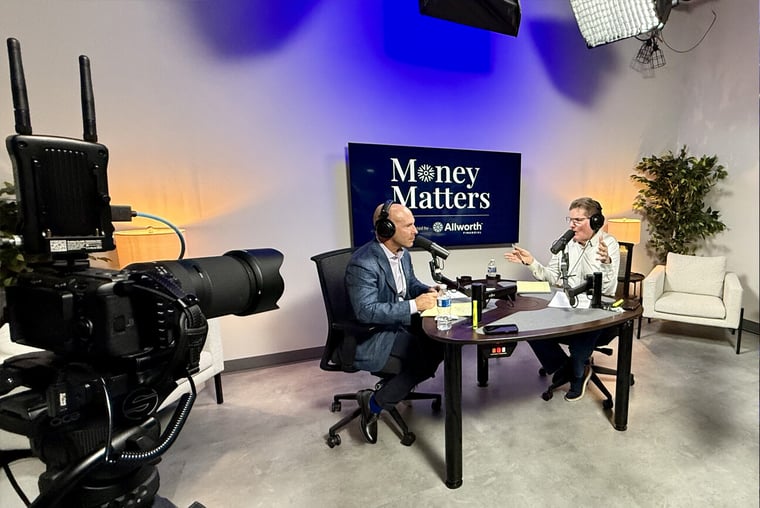
Most investors spend hours perfecting their asset allocation but completely overlook asset location—and that mistake could be costing you serious returns in taxes. In this episode of Money Matters, Scott and Pat dive into the practical side of wealth management and answer real caller questions about annuities, Roth conversions, and tax efficiency, including:
Asset Allocation vs. Asset Location: Why where you hold your investments matters just as much as what you buy, and how strategic placement creates tax alpha.
The 30-Year Annuity Dilemma: A caller with a multi-million-dollar portfolio asks what to do with an old, highly appreciated variable annuity ahead of required minimum distributions (RMDs).
Roth Conversions: Timing Is Everything: When does converting pre-tax dollars make sense—and when could doing a conversion actually cause you to voluntarily overpay the IRS?
Retirement Relocations & Second Homes: The reality behind moving for tax reasons versus lifestyle and why test-driving your dream location first might save you from buyer's remorse.
The Evolution of Wealth Management: Why comprehensive tax and estate planning are moving front and center for modern advisory firms.
Join Money Matters: Get your most pressing financial questions answered by Allworth's co-founders Scott Hanson and Pat McClain live on-air! Call 833-99-WORTH. Or ask a question by clicking here. You can also be on the air by emailing Scott and Pat at questions@moneymatters.com.
Announcer: Whether it's a decision you're facing, something you've been wondering about, or you simply want another perspective, send it to questions@moneymatters.com for a chance to talk it through with Scott and Pat on an upcoming episode of "Money Matters." Because when it comes to your money, sometimes one question can uncover a whole lot more. This is Allworth's "Money Matters."
Scott: Welcome to Allworth's "Money Matters." Scott Hanson.
Pat: Pat McClain. Thanks for joining us.
Scott: Yep. Glad to have you with us. We've talked about financial planning, investment advice, all that kind of good stuff. And it's funny, Pat. I chatted with a buddy of mine yesterday who I've known for, I don't know, 40 years, maybe 35, long-time friend, and he says to me, "Oh, I listened to your podcast. I listened to a few of your podcasts. That was great. I learned a lot. You guys are really funny." And I said, "Is that the first time he listened to the show?" He says, "Well."
Pat: Thirty years?
Scott: I think he was in the studio, like, 20 years ago to watch us live, but I guess it didn't stick. It didn't feel like...
Pat: Well, there are lots of podcasts to choose from.
Scott: There are lots, and lots of financial ones.
Pat: Oh, yes.
Scott: Yeah. Why don't we hit the phones here? And as usual, we'd love taking your calls. If you want to join us with a question, just send us an email, questions@moneymatters.com. We are talking with David. David, you're with Allworth's "Money Matters."
David: Hey, Scott and Pat. How are you doing?
Scott: Fantastic.
David: That's good. I have a question. I have an annuity, and it's worth about $235,000. And the cost basis was $25,000.
Scott: You've had this 30 years or so?
David: Yeah, I think it was from the '90s maybe.
Scott: Okay. Well, look, back then, I mean, I think of a client who's actually got something similar to this, because back then, when capital gain tax rates were equivalent to the income tax rates, they made more sense, tax-deferred annuities, than they make today. So continue on. So you have this annuity, $235,000. Almost 100% of it is taxable.
David: Yeah. And I just want to know. I really don't want to annuitize, and I just want to know what my options were.
Pat: What's this look like as a percentage of your overall investment assets?
David: Probably about 3%, 4%.
Pat: So your investment assets are, just based on that math, 8 million, 9 million?
David: Yep.
Scott: And how old are you, David?
David: Sixty-nine, married, about half in 401 and half in brokerage accounts.
Pat: This is interesting.
Scott: And if you and your wife were to both pass away today, whether your trust's up to date or not, where would you like all your dollars to go?
David: To two kids.
Scott: Any charities in there?
David: No.
Scott: Okay. And the reason we ask, I mean, if you even said 3% to charity, we'd say this is the perfect vehicle for it because you could pass that onto a charity. They would avoid all that income tax on that. But that's not the case.
Pat: But you did the IRA before that?
Scott: That's fair.
Pat: Even though it's de minimis because it's $25,000 versus $235,000.
Scott: So this will be, either you're going to pay the tax or your kids are going to pay the tax on this.
David: Okay. So when they inherited it, the cost basis doesn't recalibrate?
Pat: That's correct.
Scott: No, it does not receive a step-up basis.
Pat: And why don't you want to annuitize it?
Scott: Why would he want to annuitize it now? He's got the requirement of distributions that are going to be kicking in here in a few years.
Pat: Five years. So, why wouldn't you annuitize it now over a five-year period? What's your income like?
David: Dividends and Social Security.
Pat: Yeah.
Scott: What is your tax...what's your adjusted gross income?
David: About 200,000.
Scott: And what is the income of your children?
Pat: Ballpark.
David: My daughter probably makes about 200,000. My son, a lot less.
Pat: Are you doing any Roth conversions?
David: No, I haven't, because I had some deferred income after I retired.
Pat: In a non-qualified deferred compensation?
David: Yeah.
Pat: And does that run out?
David: Yeah.
Pat: When did it run out?
David: Last year.
Scott: Are you considering Roth conversions this year?
David: I haven't.
Scott: So the question, Pat, is, like, what are we better off deferring?
Pat: Right?
Scott: The tax-deferred annuity or the IRA?
Pat: Oh, I would just...
Scott: What state do you live in?
David: Florida.
Scott: And what about your children? Where do they live?
David: Pennsylvania and Maryland.
Pat: Okay.
Scott: Wow. So there's some...they have state income tax. I don't know if they're taxing, but I know both those states are taxable. They have state income tax there. Florida, you do not.
Pat: Are you giving any money to charity?
David: We're thinking about...we haven't yet, but we're thinking about, you know, donating, leaving some. If I gave that to charity, nobody would pay taxes.
Scott: At death. Not during your life.
David: At death. Yeah, at death.
Scott: At death. The question is, could he transfer it to...? I mean, here are your options. You can ignore it, let it continue to grow. So if it grew 10x in the last 30 years, you know, maybe in the next 25, 30 years, it's going to go another 10x, right? Who knows? But let's assume. Maybe it could be worth 1 million, 2 million bucks down the road by the time both you and your wife pass on, which is going to be all taxable as ordinary income. But if you withdrew them...our issue is if you withdrew the money now, you're gonna have to put it in something taxable, and secondly, you've got roughly $4 million, it sounds like, in qualified 401(k) type assets that you're going to have required minimum distributions on. So, yeah, you called us with the wrong question, right? Because you've got in...was it 74, I believe, is when your requirement distributions kick in for you, if I'm not mistaken.
David: Yeah, 73. Yeah.
Scott: Okay. And you're going to have to take out roughly 4%.
Pat: So here's what. I would ignore the annuity.
Scott: I would just keep letting it grow tax-deferred.
Pat: What kind of annuity is...what's the name of the company it's in?
David: It's Fidelity.
Scott: Okay. And it's a variable annuity, I'm assuming, based on the growth. Yeah.
David: Yeah. Yeah.
Scott: And I imagine it's pretty low cost. They have some very low-cost annuities out there.
Pat: I would start on the Roth conversions right now. And I would consider gifting. Do you have a lot of money in cash or bonds?
David: A fair amount.
Pat: You're not spending this money in your lifetime.
David: Yeah, probably not.
Pat: Well, if you planned on spending it in your lifetime, you're not doing a very good job of it.
Scott: When did she retire, David?
David: Seven years ago.
Scott: Okay. It's been a while.
Pat: And do you have any highly concentrated stock positions in your brokerage account?
David: Yeah, we...
Pat: From the company?
David: Lily [SP].
Pat: Do you have any highly concentrated stock positions from the company you retired from?
David: Oh, no, no.
Pat: Okay.
Scott: There's a lot of planning opportunities here, but a lot of it comes down to, what is your ultimate objective with these dollars? And it's not that uncommon, right? So I imagine you and your wife, when you were first married, you didn't have two necklaces rubbed together. You worked your tail off. You grew in the organization. And here you are.
David: Well, it's our second marriages, so we're...
Scott: Okay. Well, then my story is completely wrong.
Pat: Well, you should start Roth conversions.
Scott: Do you have children each other's previous marriages?
David: I have two, and she doesn't have any.
Scott: Okay.
Pat: And do you have a life estate set for her in terms of the trust?
David: Well, right now, we haven't. If I pass, my kids get half, and she gets half of mine. Because we have about equal estates.
Scott: Okay. The reason we're asking is because sometimes we see kids get disinherited by accident.
Pat: So I would ignore this annuity, and I'd start on Roth conversions.
Scott: I would do some Roth conversions. And I would do some planning to see where this estate looks 5 years from now, 10 years from now, 15 years from now, 20 years from now. And I mean, you can just let the estate continue to grow and grow and grow, and then your kids get this massive inheritance upon your death, or you can do something else.
David: Yeah. Probably, once it grows, we're gonna have some donated, and that's how much I need, really.
Pat: Yeah, or gift to your children.
David: Yeah.
Scott: Yeah. But I would ignore the annuity.
Pat: I would ignore it too.
Scott: And then start on the Roth conversion. I'd start...
Pat: Because you've got that...
Scott: You've got this window.
Pat: That $4 million is going to have required minimum distributions. It won't be ever distributed when you're fully distributing your lifetime because of the way the formula works. The denominator keeps getting... It adds a little to it each year you live, subtracting a year. But you're always gonna have that required minimum distribution issue during your lifetime, and it'll continue on after you pass away, for that matter.
David: Yeah.
Pat: But this annuity, we don't have to deal with it until your death. And let's assume, when you left that annuity to your kids and you died today, they each can make an option on how they wanna receive that, either in a lump sum, have it paid out over 5 years, have it paid out over 10 years, and then it's only taxable to them in the year in which they receive that distribution. So they do have that opportunity to spread it out. But given everything else you have, they would have that along with this massive IRA that they're gonna have to distribute in 10 years.
David: Yeah. So, I guess, would you put the annuity in 100% equities?
Scott: Oh, yeah. Yeah,
Pat: Yeah, yeah, yeah.
Scott: A hundred percent.
David: Okay.
Pat: Yeah, I wouldn't think anything other than that. But right now, we appreciate the call, but the Roth conversions, you've got this window. I mean, we can deal with this annuity in five or six years, but what you don't wanna do is actually use up any of those tax brackets for an annuitization here.
Scott: Particularly in Florida.
Pat: Yeah.
David: Yeah.
Pat: Yeah. And by the way, I mean, your kids, because of the state they live in, assuming they live in the states when you die, are so much better off inheriting a Roth IRA than they are a regular IRA.
Scott: Because you have an opportunity...
David: So I don't have to get rid of it in 10 years?
Pat: Well, yeah, but they have to pay taxes on the state in which they live, not in the state in which you lived. So because you're in Florida, there's no state income tax, right? So think about this. In Pennsylvania, I don't know, I think the tax rates in Pennsylvania are relatively high. Let's say it's 9% or 10%, right? Every dollar that you convert to a Roth, right...
Scott: It's a flat tax rate of 3.07 according to...
Pat: Where? In Pennsylvania?
Scott: Yeah, for individuals.
Pat: Oh, okay.
Scott: I'm moving. I'm in California.
Pat: But still, it's over a 3% savings for every dollar you convert to Roth in Florida versus the state of Pennsylvania, where they inherit it and have to take the money out. So if we did a timeline over the next 30 years and said, "Okay, when David dies..."
Scott: They do have an inheritance tax, Pennsylvania.
Pat: Is that if you die in the state of Pennsylvania or if you receive it in the state of Pennsylvania?
Scott: I don't know. I'm not an expert in Pennsylvania.
Pat: So the idea being is that you're in a zero-cost state income, and every dollar that you take out and convert now, it saves them whatever the marginal tax rate is in the particular state in which they live and inherit the money.
David: Okay.
Pat: So if we were to draw a timeline over 30 years and say, "We want to keep as much of this money as possible and less to the tax man," you would say, "Well, Roth conversion absolutely makes sense." And then, after that, we can deal with the... Until you start required minimum distributions, I'd kick this annuity down the...
Scott: Indefinitely.
Pat: Yeah. I wouldn't worry about it.
David: Okay.
Scott: Yeah.
David: All right.
Scott: All right.
David: Sounds good.
Pat: And how is Florida? I read an article last week that people are actually moving out of Florida.
Scott: Who's moving out of Florida?
Pat: People.
Scott: Based on the weather?
David: Yeah. The hurricanes. It's pretty expensive to live here.
Pat: Yeah, that's what they said.
David: And the politics and the whole bunch of stuff.
Pat: Well, we don't have any political problems out here in California, unfortunately.
Scott: No. No. I like to say I came to California for the values, and I stay for the taxes. You know what's interesting, though, he made some comment about expensive to live there and tax. And I know there's, like, a lot of people who left California due to the taxes, and I get it. The top rate here is 13.3%. You have some guy who's worked 20 years building a business. He sells it. The state of California takes 13.3% of it. And without the itemized deductions, it's no longer subsidized by the Fed. So it ends up being a pretty big tax bite, and he's like, "If I'm in a different state, I can avoid that." But, like, one of the things about having some money, accumulating some wealth, is to give you options.
Pat: Yeah, you decide.
Scott: Isn't it? I mean, it's really... I think some people's pursuit of money is not really about money. It's more about having some freedom. So if you have enough money to choose where you want to live, maybe you're going to choose to stay in that state with the high taxes.
Pat: Yes.
Scott: My wife and I went through this about 10 years ago because I was frustrated and about ready to leave.
Pat: And where were you going to go?
Scott: I don't know. I don't know. That's the problem. I love where I live. I've been in the same community for 30 years.
Pat: But if you think about Florida, in Florida, the supply and demand actually says that, at some point in time, prices were going to go up there.
Scott: Homes are still much less expensive for most parts of Florida, unless you want to get one of those mansions on the water or something, which I don't. It's interesting, this last caller, David, there was a couple of things that came to mind. One is if you have an old annuity like this sitting around, there are some no-load type annuities out there available, and there are some that you can have an advisor help you with and manage this. So there's options. You can do what's called a 1035 tax-free exchange. Exchange it into something newer.
Pat: Without tax implications.
Scott: Without any tax implications.
Pat: Tax-free exchange.
Scott: And so sometimes you see these old policies that were sold. They have really high expenses in them. It gives you an opportunity to move them to something lower cost.
Pat: And you can move an old life insurance policy into an annuity as well.
Scott: You can. You can. So anyway, I always find it... I think of someone like that. Large estate, sounds like he's done everything on his own over the years. And from a financial planning standpoint, you just look at it, and he's like, "There's so many different planning options."
Pat: Oh, your head spins. You wonder if the brokerage account is tax efficient. My guess is it's possible.
Scott: Not as tax efficient as it could be.
Pat: Yeah, my guess is.
Scott: Well, there's a lot of opportunities now to do some...
Pat: Well, most of his bonds should be in the IRA. Most of his equity should be in the brokerage account, especially easy if you've got a portfolio that's half and half. He's got $4 million in his IRAs and $4 million in his brokerage account. You could...
Scott: Yeah.
Pat: There's lots of ways to Rome.
Scott: And even if you say you want to spend it... I worked with somebody last year, nervous about the market. They had a huge amount in their 401(k), and they had a large-size brokerage account, but not a lot of cash. And they wanted to have a little more cash. So I said, "Why don't we just sell off a little bit of stock in your 401(k), keep that in cash. And then if the markets tank and you need the cash, you've got options." "Well, then I have to pay tax pulling out of the 401(k)." I said, "No." I said, "At that time, what we do is we simply sell some stock in your brokerage account."
Pat: Replicate it.
Scott: And replicate it in your 401(k) in the exact same day. We've sold nothing.
Pat: So it's the difference between asset allocation and asset location, right? And so people spend all kinds of time on asset allocation and very little time on asset location. And asset location is where you get the tax alpha. There's so much tax alpha.
Scott: A lot of the value that we add is in that tax alpha.
Pat: Yes.
Scott: That's a good advice.
Pat: Scott, before this show is over, I want to talk about this study I read from BlackRock that talked about the services advisors are offering their clients today versus years ago.
Scott: Wow. If you're not staying tuned for that, that shit is teasing them all the way through the show. All right, let's continue on. Let's talk with Rhonda. Rhonda, you're with Allworth's "Money Matters."
Rhonda: Yes. I had a question. As a general rule, is it better to take from the Roth IRA or traditional for supplemental retirement income?
Scott: Traditional.
Pat: Maybe.
Scott: As a general rule, she said.
Pat: Okay, as a general rule. As a general rule.
Scott: Not even have to think about it.
Pat: Yes, I agree. As a general rule.
Scott: But it depends.
Pat: It depends on where your tax brackets lie. It depends on where your income is.
Rhonda: What if one spouse will be reaching retirement, retiring at 70, and the other spouse working, probably about 58? I'll probably be about 58 by then. And we'll still be supplementing children. I know one, possibly two. One will be in college, and the other one, I'm not sure, you know, at that point. We might still be helping that one.
Pat: So your spouse is 70, and you're 58. Did I get that right?
Scott: Do you mind sharing some of your finances? Because that's what is going to drive this.
Rhonda: Well, I'm saying, the plan is for him to retire at 70 because of the age difference. We have about 13 years difference in age. So whenever I retire, obviously, I would have to take the higher amount, because he does make more money than I do. I work part time. Right now, he probably makes about 115. He will have a military retirement as well. He and I are both occupational therapists. I work part time, maybe make around 72,000, 75,000 a year. We have... He has, so far, probably about 1.3 saved so far.
Pat: I'm sorry, Rhonda. Is that in IRAs?
Rhonda: So that would be 50-50 Roth and IRA. So it's pretty much split up.
Pat: Okay.
Rhonda: And then I have probably about 850 saved so far, 850,000 saved so far.
Pat: And how is yours allocated in terms of Roth, for instance?
Rhonda: Mine's now 50-50 and pretty much... We both do index, Vanguard, Fidelity-type funds. And then, also, we have a brokerage account that we have, I think, about 500 in.
Scott: And historically, have you contributed to your 401(k), half pre-tax, half Roth? Is that how you've gotten to this 50-50 split?
Rhonda: Well, they just started offering within the last year or so. So I've been switching it out because I felt like it would be better to have more of the Roth.
Scott: So, how did you end up with this large...? Yeah.
Pat: You converted.
Scott: You converted over the years.
Rhonda: Yes. Yes. Right.
Scott: And how much, ballpark, did you convert per year?
Rhonda: I have no idea.
Scott: Okay.
Rhonda: I know I have a roughly about...there might be not quite half, but getting there.
Scott: So, historically, your income, just on your wages, have been about 200,000 a year. I'm assuming the military pension's been coming in over the years on top of that. And then you've converted to a Roth during that income period. Now you're moving into a period where your income is going to be $115,000 less.
Rhonda: Right.
Scott: So it would be...you'd come to the opposite conclusion.
Rhonda: Okay.
Scott: I mean, I don't know. Yeah.
Pat: So, yeah, what was the driver?
Scott: The thought process...
Pat: What was the driver to convert to Roth? Was it just a feeling?
Rhonda: No, my brother's financial advice. He suggested that we switch more towards the Roth.
Pat: Did you run a pro forma tax return to see what the marginal rate was that you were paying on the Roth conversion versus not? I guess no.
Rhonda: No, we did not.
Scott: Because if you take out a Roth IRA, take money from your Roth IRA today, what you essentially have done is have voluntarily paid the IRS more than you needed to on those dollars because you converted in years when you had higher income and chose to pay tax at a higher rate. And now, in retirement, the choice would be to take income at a lower rate.
Pat: So the answer...
Rhonda: So I got myself in [inaudible 00:23:36].
Pat: No. No, no, no. It's probably a push. It might be a little bit. We're going to be as optimistic as we can here, Scott.
Scott: Do not take any money from the Roth.
Pat: That's right. And don't do any more Roth conversions.
Rhonda: Okay.
Pat: Right. Don't. Because they're going to be taking income.
Scott: Yeah, yeah, yeah. And there's not that much relative...
Pat: And how much is the military pension?
Rhonda: It's not a lot. It's, like, only maybe about 2,500, 3,000 a month.
Pat: Okay, 36,000 a year. And then, how much...? And I assume your spouse is taking Social Security now. He's 70.
Rhonda: So, no. I'm talking about, hypothetically, when he does turn 70. When he is 70, I think it will be, based on what I looked at, it's at about 4,000 a month.
Pat: And when does he turn 70?
Rhonda: So he still has six more years to go.
Pat: Oh, wait a minute. Now I'm confused.
Scott: Okay.
Pat: You're 52. You're 52.
Rhonda: Yes.
Pat: Okay. All right. Okay.
Rhonda: I'm thinking about future. I'm thinking about future.
Pat: Okay. Got it. Got it. Got it. Got it. Well, you are a planner.
Scott: We are both on she turned 70 today, and that's everything we've been going on.
Pat: Yeah. So here's what you want to do, is don't do any more Roth conversions. And I actually wouldn't make any more Roth contributions.
Scott: I'd run the numbers. You got to run the numbers.
Rhonda: Okay.
Pat: It's a general rule of thumb based on...
Scott: Correct. All right, the numbers are probably...
Pat: If you're calling a talk show with someone that just knows obviously very little about you.
Scott: And we're not running the numbers in front of us either.
Pat: But my guess is that you would be better off not making any more Roth.
Scott: That'd be my guess as well.
Pat: You have enough in the Roth.
Scott: Because you're in a pretty high tax bracket, relatively. What state are you in?
Rhonda: South Carolina.
Scott: And are you going to stay in South Carolina?
Rhonda: I'm trying to talk my husband into moving to Georgia to the lake. So we'll see.
Scott: And where do your...well, who knows where your kids are? One's still in college and still young, so you don't know where they'll settle.
Rhonda: Yeah. Who knows?
Pat: So, no more Roth conversions.
Rhonda: Okay.
Scott: And make 100% of your contributions into your 401(k)s or 403(b)s or 457s, whatever you may have. In fact, you said you're an occupational therapist. Do you work for a nonprofit?
Rhonda: No, I don't.
Scott: You work for a hospital?
Rhonda: I work for a home care agency.
Pat: Okay.
Pat: Okay. All right. I was looking to see if we could double up on our contributions. So, yes. So make them all pre-tax contributions to your 401(k).
Rhonda: Okay.
Pat: No more Roth conversions.
Scott: Yeah. Because the way you're structured now, you will actually be in a lower tax bracket at retirement.
Rhonda: Right. Okay.
Scott: And you've already got a lot in Roth.
Rhonda: Right.
Pat: Yeah.
Rhonda: Okay.
Pat: And the answer to your original question is, as a general rule of thumb, you take money from the IRAs first.
Scott: General rule of thumb.
Pat: Rule of thumb. But you know, you've got a lot of...
Scott: Money that you're going to spend.
Pat: Yeah. Yeah. You've got plenty of room. For six years out, you've got plenty of room for this to grow.
Scott: And I assume you have no mortgage on your house.
Rhonda: No. Our cars are paid off. Our house is paid off. We also have some land in Florida that I'm hoping that we can sell it and do a...
Pat: An exchange?
Rhonda: Yes, exchange to buy the lake property is what I'm hoping, to rent out before we retire, hopefully, there.
Pat: Great idea.
Scott: That's a great idea.
Pat: Great idea.
Scott: Technically, you can't have the intent for personal use, but you can buy the...exchange it for the lake house to rent it and then have it changed.
Pat: Convert it to primary.
Scott: Change, yeah. And then rent it part time and use it part time. And I think that's a brilliant idea before you go to retire so you can see if this is really where you want to retire.
Pat: Yeah.
Rhonda: Right.
Pat: Yeah. So, yeah.
Rhonda: Okay. Okay.
Pat: And you said you were pushing your husband to get that place in Georgia.
Rhonda: Yes.
Pat: Have him listen to this. Tell him how brilliant we thought you were.
Scott: You'd be foolish not to. I'm joking.
Rhonda: I'll have him listen to you all.
Scott: With what we know about your situation and considering you've got this rental, it sounds like a good plan to me.
Rhonda: Okay. All right.
Scott: All-righty.
Rhonda: Well, I appreciate y'all so much.
Pat: All right, Rhonda.
Rhonda: Y'all give a wealth of knowledge.
Scott: All right. Well, kind of you, Rhonda.
Pat: Thank you, Rhonda.
Rhonda: Thank you so much.
Scott: Appreciate that.
Pat: Why are the women in the South always so polite? Bless your heart.
Scott: You know, it's interesting, she's talking about...
Pat: Wait, not to point that the rest of the country, they're not. That was the implication.
Scott: Yes.
Pat: Okay.
Scott: As a general rule. We were talking about general rules. That's what she started with, as a general rule. You know, it's interesting when she was talking about how she wants to retire on the lake. And Pat and I have been in this industry 30, almost 35 years.
Pat: Thirty-five years.
Scott: Helping people. And a lot of it is helping people accumulate enough dollars to work as an option. Then you see people go into retirement. And I can't tell you how many times I've seen people move. They've got this dream of living on the lake, living in the mountains, living near the beach, living somewhere better than where they are. They move as soon as they retire. And two years later, they're back.
Pat: Oh, yes. Oh, Scott. I have a house in the mountains next to a lake, fortunately, I mean. And it's in Nevada, which is a... And people ask me, "Why don't you live in Nevada?" And I said, "Because it would be like...me spending the winter up there with my wife would be like 'The Shining.'" I would be like Jack Nicholson. And we don't have a big house like that, but it made it even worse.
Scott: Or what was the movie when the writer got in the accident and...? Anyway, the mountains. That is correct.
Pat: That is correct. But people have these images, and then they get there, and it's just not...
Scott: And so we're not encouraging people to go buy a second home before they... Unless your finances... Vacation homes tend not to be the best investments, even if you rent them out. They just tend not to be the best investments. But if your thought is, "Hey, this is our dream place we want to go," maybe you rent somewhere, maybe you lease a house for a couple of years, spend some time there.
Pat: Maybe try it on.
Scott: Because life is so much about relationship. Unless you're very much a loner, life is about relationships. And you go somewhere else, and it's all new relationships. Maybe it's great for you, but...
Pat: Yeah, you're a loner, and you want to be a loner. A lot of loners don't really want to be loners, but it's why things turn out.
Scott: That's right.
Pat: So, anyway. Hey, before we go, I wanted to talk a little bit about this article that came out, which is, I had mentioned it earlier, which is... This was in "Wealth Management," which is an industry periodical, but it was a survey that BlackRock, which is an asset management firm that sells services to people like ourselves as well as many other things, but they do sell services, and it talked about the percentage of investment advisory firms that are now offering tax services to their clients, especially high-net-worth clients, and estate planning. And it was interesting that the vast majority of advisors, 92%, say high-net-worth clients often ask them about tax planning. Only 17% view their primary driver as tax and portfolio construction. And it's what we talked about earlier, which is there's asset allocation and asset location.
Scott: That's one piece.
Pat: That's one piece.
Scott: One driver, yeah.
Pat: High-net-worth investors tend to be concerned about capital gains taxes, estate planning, tax-efficient investment management...
Scott: As they should.
Pat: ...and income tax liability.
Scott: Most of them, of course, they should be concerned with those things.
Pat: Among other related tax issues. While 80% of surveyed advisors use tax loss harvesting, which 100% should be. Fewer than 63% use things like tax-efficient vehicles and taxable accounts, as well as tax-exempt investments.
Scott: You understand. I mean, a lot of these big wirehouses, the big banks, they state right on the thing, "We do not provide tax advice."
Pat: But this leads me to what you and I have been talking about for 10-plus years. There will be a time that these services, tax and estate planning, were only offered in what they call family offices.
Scott: That's right.
Pat: And now they're being offered in high-net-worth clients. But firms like ours and a number of others are bringing estate planning and tax planning in-house with their own estate planning attorneys. And sometimes they charge for it, right? So there are certain clients that we will charge for taxes, and depending upon consultation...
Scott: Nothing's free.
Pat: And estate planning as well. I would make the prediction in 10 years from now that the well-matured investment advisory firms in the United States will all offer tax and estate planning...
Scott: Yep. It's all part of it.
Pat: ...under one roof.
Scott: Well, here's what's interesting. I saw this article the other day, Pat, and my number is going to be slightly off. But it was roughly... And so we're talking about independent wealth management firms, okay? So these are not the ones that are affiliated with the big banks. These are investment advisors that are independent. And we've seen this shift. Like, we started as a registered investment advisory firm in 1993, where we were pretty early to the game. We used to be mocked because we weren't part of the big banks, right? But we're at a point today where over half of wealth management relationships are with independents. So there's been this massive shift, migration, because people like the concept of the fiduciary responsibility, the independence, so you're not pushing your own products, that sort of thing. But these independents today, roughly 82% of all the assets at wealth management firms are with firms that are worth 10 billion, have 10 billion or more under management.
Pat: The vast majority of the market.
Scott: Even though the majority of independent firms have less than 100 million under management. So what we're seeing is, just like with Allworth, we've had all these great partnerships, 40-some odd partnerships that have become part of Allworth. It's the best way to get talent, right? We've got phenomenal advisors all under one... And there's roughly 15 or 20 firms like Allworth today. There's a lot of great... And what I'm really pleased about, it's just seeing where the market's going, right? Because to your point, it used to be just the family office. "Okay, you had $500 million. Great. You can get all these services." Then it was $100 million. Then it was $50 million. Now it's $5 million.
Pat: That's right. And you can get it for less than that, right? From certain firms, they're just going to charge you for it.
Scott: That's right.
Pat: But the point being is if you're working with a firm that isn't offering this integrated approach...
Scott: And we're not trying to pitch Allworth.
Pat: No, I'm 100%.
Scott: That's why I said there's 15 or 20 of us out there.
Pat: No, I'm 100% pitching Allworth.
Scott: Oh, okay. Let's not get this wrong.
Pat: There are other firms out there, but this is the one I know.
Scott: Fair enough.
Pat: Right? And so if you're working with a firm that isn't offering an integrated approach to your wealth management, consider it. Tax-efficient investing, tax preparation, high-net-worth services, alternatives, estate planning, the whole bit. Charitable giving is a big thing too.
Scott: Yeah. This has been Scott Hanson and Pat McClain of Allworth's "Money Matters." We'll see you next week.
Announcer: This program has been brought to you by Allworth Financial, a registered investment advisory firm. Any ideas presented during this program are not intended to provide specific financial advice. You should consult your own financial advisor, tax consultant, or estate planning attorney to conduct your own due diligence.
Insights for Complex Wealth Decisions
Join our email list for exclusive commentary from our Chief Investment Officer, early access to expert-led webinars, and your complimentary Wealth Planning Checklist for Complex Portfolios.
We take your privacy seriously and respect your privacy choices. By submitting this information you agree to our Terms of Use Agreement, Privacy Policy, and to receive important notices and other communications electronically.