
$4M Portfolio: Can Your Retirement Survive a Tech Bust?
When markets reach new highs and tech stocks lead the charge, it’s tempting to let winners ride. But if you have accumulated significant wealth, when does high concentration stop building your future and start threatening it?
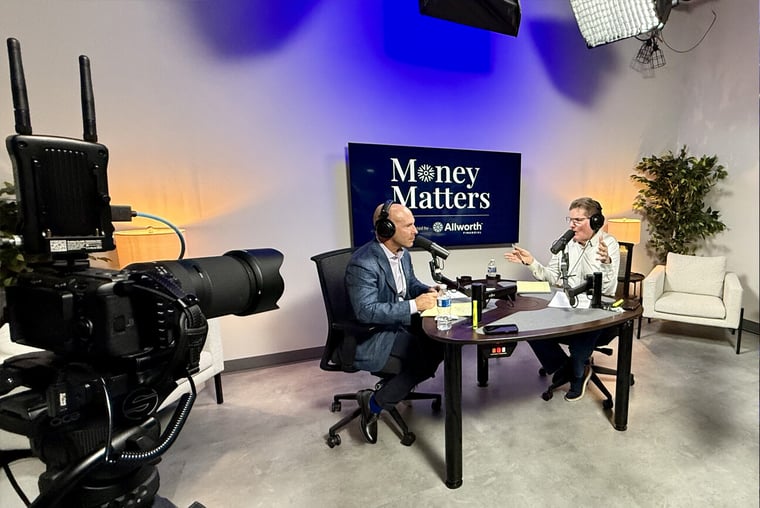
In this episode of Money Matters, Scott and Pat break down why the S&P’s massive tech weighting could leave near-retirees vulnerable, why rebalancing feels so emotionally difficult, and how to insulate the next 5 to 10 years of your cash needs from an extended market pullback.
Plus, Scott and Pat take listener calls:
The $800K Inheritance Dilemma: A son asks how to invest an unexpected lump sum for his father in his late 70s—balancing immediate income needs against a long-term legacy for the grandkids.
Retiring with $4M and Tech Exposure: Two retired educators with healthy pensions and nearly $4M in equities wonder if they need fixed income—and why learning to spend down wealth is harder than saving it.
Dollar-Cost Averaging vs. Lump Sum: Why waiting on the sidelines rarely enhances returns, and how to build an unemotional entry plan.
Join Money Matters: Get your most pressing financial questions answered by Allworth's co-founders Scott Hanson and Pat McClain live on-air! Call 833-99-WORTH. Or ask a question by clicking here. You can also be on the air by emailing Scott and Pat at questions@moneymatters.com.
Scott: Welcome to Allworth's "Money Matters". Scott Hanson.
Pat: Pat McClain.
Scott: Glad you're joining us. We're talking about financial matters. And the old adage, it's different this time. In some ways, it always is a little different, and it's always a little the same.
Pat: All right, tell me why.
Scott: Well, just with the amount of money that is being spent and raised, and circular financing going on in the whole AI trade.
Pat: The interconnected liability structures where they just pass money around. Where it's a big circle, where it's a big circle.
Scott: It's head-scratching.
Pat: Well, actually, Scott, my brother, my older brother sold software. He was a VP at many software companies over his whole career. And we were talking about this and he said, "Oh, yeah, we did that all the time. We would sell software..." And he worked for big, big, like, the biggest software companies. He said, "We would sell software to XYZ, and then in return, we promised to purchase from XYZX," like, these systems.
Scott: That's exactly...
Pat: And that's what's going on now.
Scott: There's two things. There's that.
Pat: NVIDIA is selling, like, they're underwriting.
Scott: That's right. The chips and all that. There's that, "If you buy from me, I'll buy from you." And there's also, "Can you buy from us?" "Well, I don't have any money." "But that's okay. We'll loan you the money.
Pat: That's right. Because we have better credit. And we set up a third party company actually so it stays off our balance sheet. So, we set up a kind of a credit facility where we give some money to that. They take a loan. But the reality is these chips have value...
Scott: Of course.
Pat: ...to not only the company that's purchasing, they have terminal value, which means they can run for years and years and years. But where would the capital go otherwise? I had this talk. Sounds like the only thing I ever do is talk to my family about money things. I was talking to my son about...
Scott: You are in the finance business. And it is a bit of sport for you, too, as it is for me.
Pat: That's right.
Scott: I don't sit and read the stats on weekend sports, but I do quite a bit on the stuff from Wall Street because I find it fascinating.
Pat: Well, yeah, I know that.
Scott: Or Silicon Valley or whatever you wanna call it.
Pat: Because years ago, you told me who you were voting for in the Super Bowl.
Scott: Super Bowl. By the way, speaking of voting, we're not going to have any discussion about the election.
Pat: Oh, thank you. But that capital would have gone to someplace else if it had not gone into AI. Would it have not?
Scott: Well, there's some out there that are stating that it's going to lead to higher interest rates because it's crowding out capital for treasuries. The Treasury auctions, they're having trouble with their auctions.
Pat: Yes, but so...
Scott: Government borrowing, right? So, government borrowing is at an all record borrowing.
Pat: But so has AI started having... They've driven their own interest rates up, because as the risk increases, the interest rate increases.
Scott: Correct. And some are really high spreads right now. But to your point, like, where's the...? There's capital out there.
Pat: It would have gone somewhere else. That's the discussion I...
Scott: On both fixed income, on the loan part, right?
Pat: Correct.
Scott: The debt part, as well as the equity investment.
Pat: Yes. And in saying that, do you think stocks are very attractive right now relative to growth stocks because of the AI? I was thinking about...
Scott: They've been relatively attractive, Pat, for 25 years.
Pat: Will you explain to the listeners the difference between growth and value?
Scott: And this is the danger of those who look and say, "what was the best performing mutual fund the last five years?" Or, "I'd rather not own the total market. Which areas of the markets are doing better? And I'm going to do that." Or, "Let me get an ETF that focuses on a very narrow sleeve, as opposed to being broad."
Pat: Which is very popular right now.
Scott: It's craziness, I think.
Pat: Yeah, but I didn't do any of that. I put all my money in tokens.
Scott: Crypto. Okay, yeah, for sure. Well, if you think about it, stocks are kind of in two broad categories. One is called growth stocks. These are companies that tend to have higher growth potentials. They're growing faster. Their futures a little less known because you're kind of betting on what's going to transpire in the future.
Pat: The NVIDIAs of the world and AI would be considered growth stocks.
Scott: A hundred percent. Value stocks, on the other hand, are companies that have been around for, typically, a long time. They've got repeatable revenue. Their growth prospects aren't quite as great, but typically, you can buy those for less as far as on an earnings basis than growth stock.
Pat: Coca-Cola or McDonald's.
Scott: Yeah, Procter & Gamble.
Pat: Procter & Gamble.
Scott: Value companies. The huge customer base.
Pat: Unilever.
Scott: They're not going to triple in three years.
Pat: But there's not...
Scott: They're not going to half.
Pat: As much foreseeable risk.
Scott: Because that's such a broad base of customers, right? And such a broad base of product and everything else. But value stocks, other than the last couple of decades, they have tend to outperformed over long periods of time.
Pat: Other than the last couple of decades.
Scott: That's why I threw that out there. And there's some advisors that have been recommending their clients to stay heavily focused on value. That has not been a great play the last couple of decades. But to your point, at some point, that will flip, and the value stocks will outperform growth stocks. It's particularly because it's been so long. Things have a tendency to revert back to their means.
Pat: And in index funds, remember, right, there are weighted funds. So, when you buy the S&P 500, it's not equally distributed among the S&P 500. It's based upon their capital, their market value.
Scott: So, 40% of your money is going to the top...
Pat: Tech.
Scott: Yeah, tech. I think it's about 40% today of the S&P. It does make some sense right now. We're not market timers, so we don't know what's going to happen in the markets. But when you think about financial planning, a lot of it is, "Okay, let's have money and risk your assets," however you want to define riskier. "But first of all, let's make sure we've got the proper kind of diversification so that we're getting compensated for whatever risk we're taking. But then let's make sure we have a long-time horizon for that particular piece of our portfolio." So, if you're, let's say, retired, you wouldn't want to have 100% of your retirement in stocks if you were taking income from it, unless you could live on the dividends only.
Pat: If you were going to need this money in six or seven years.
Scott: Yeah, you would want it outside of the markets. So, I think it's important time for people to look at their own situation. Like, what is your time horizon with your various pools of dollars? How much of your capital will you need in the next 5 to 10 years? How do we structure that in such a manner so that, should the AI trade go sideways...?
Pat: It will.
Scott: Well, at some point in time, it'll go through...
Pat: An adjustment.
Scott: ...an adjustment of some sort. But whether that's a big one or a little one, we don't know.
Pat: Yeah, as did railroads, telecommunications.
Scott: Well, when you think about all these other big buildup times, right, of new technology.
Pat: Yes, yeah.
Scott: So, those dollars that you may need in the next 5 to 10 years, have those in much safer places. And then the money that you are...
Pat: Which would include value stocks.
Scott: Which could include value stocks because there's not the same kind of risk profile. And if you look during other major periods of times, they tend to hold up a little bit better, quite a bit better.
Pat: Yes. Which was my question to you. Do you think value is going to come back in the style?
Scott: Because, like, if you look at Nasdaq, in the year 2000, the Dow Jones Industrial hit $10,000. Everyone's all excited, "We're at $10,000." The Nasdaq had grown, I believe it was 85% in 1999.
Pat: That's right. That's right.
Scott: But from peak to trough, it was about an 80% decline.
Pat: And it was how long? It was eight?
Scott: two and a half years.
Pat: But to regain its high...
Scott: Oh, my gosh.
Pat: ...was it eight, eight years?
Scott: Nasdaq was longer than that.
Pat: Ten years? Harry Dent wrote the book, "The Booming 2000".
Scott: Oops. Might have been wrong.
Scott: It's the last decade they called out.
Pat: Yes, yes. So, the portfolio, the structure of your portfolio really, really matters. And rebalancing your portfolio, which, by the way, most average investors don't do. The average investor does not rebalance their portfolio.
Scott: For a couple of reasons. One, they don't have any automated process set up for it.
Pat: And two?
Scott: When they look at it, they're like, "Why would I want to reduce my stake here?"
Pat: It's an emotional process. It's an emotional process.
Scott: Not only that, you think, "Well, why would I want to reduce my exposure to NVIDIA right now?"
Pat: It would be hard.
Scott: Anthropic's is about to go public. I want to make sure I can participate in Anthropic's public offering.
Pat: Well...
Scott: SpaceX is he's going to take over the universe. Like, I want to make sure I've got some exposure there.
Pat: Oh, he's trying. It's a strange job.
Scott: I do think now is an important time to really take a good look at your portfolio. You have the right structure going forward? And we think a lot about risk mitigation because...
Pat: Well, you said it earlier, you're being properly compensated for the risk you're taking.
Scott: That's right. And most of the clients we work with, Pat, let's be frank here, have accumulated wealth throughout their careers. Maybe through a business they've owned. Maybe they worked for a great company. Maybe they were great savers. Odds are they didn't inherit it, but maybe they did. They've got wealth now and a certain lifestyle. And for most people, they're more concerned about protecting the $4 million life savings as opposed to, "Can we get the $4 million to $40 million?
Pat: Oh, look, Scott, I'm 64. I can't believe I'm actually going through this process myself, right?
Scott: Not your risk... And your portfolio is not nearly what it was, because you've always been peddled to the metal guy.
Pat: Oh, 100%.
Scott: I during the...... I mean, yeah, you are always...
Pat: Oh, yeah. I borrowed money during the financial crisis to push more into equities in the portfolio.
Scott: I remember that. You were peddled to the metal.
Pat: Because I just thought...
Scott: You were young.
Pat: Yeah, I got time. So, because I've had some health problems and because I love my wife and my family, I used an adviser at Allworth and sitting down with them and go through the process. I was thinking about it as drive in today. What a strange, strange concept it is for me to be on the other side of the table. And it's no longer a fear of...
Scott: At a different stage in life.
Pat: That's right, right?
Scott: Yeah. And now for you, as for most people at 64 or whatever, right around those age, like protecting what you have is goal number one. Growth is goal number two.
Pat: Tax mitigation, Scott, is the biggest driver of a lot of my decision making. I know what the asset allocation is and I know what I want it to be and how it should look and how the money is going to go downstream. I can't tell you how much time the advisers and myself spend on tax mitigation. I just think it's crazy.
Scott: Oh, because it's such a huge chunk of your returns.
Pat: Oh, that. And then I think about really rich people that don't... And when they say, the really rich people don't pay much in taxes, relative as a percentage of their income, Bernie Sanders says it all the time, they're right. They are right, right?
Scott: It's because they don't sell their asset. They just borrow against it.
Pat: Which is just the craziest thing to me.
Scott: That is one area I'm thinking, like, just doesn't sound right. If you start a company, you're Zuckerberg, he can have a phenomenal lifestyle with never selling a share. He just takes a loan against it.
Pat: Takes a loan against it because of the step up in basis.
Scott: He's got so much Facebook stock. He can get a loan at a very favorable terms. And it's a lot less than the taxes.
Pat: And as long as that stock actually grows faster than the cost of the money, let's call it 7%, 6%, seven%...
Scott: Even if it doesn't, you can run the numbers given the tax consequence. That's another.
Pat: That and the fact that when people sell their primary residence, that they have to pay taxes on it, but the day after they die, the family could sell it and not pay any taxes.
Scott: There's all kinds of crazy things.
Pat: This step up in basis makes no sense to me.
Scott: All right. Now we're starting... But, Pat, circling all back here, now, I do think, who knows what's going to happen with all this? And artificial intelligence is changing so quickly. RSI now they're talking about, right?
Pat: Oh, yeah, where it actually just teaches itself. It carries on a constant conversation with itself that makes it...
Scott: Self-improvement.
Pat: Smarter, yeah.
Scott: Regenerative self-improvement.
Pat: Regenerative, that's it.
Scott: Right. So, it's creating its own. It's really very quickly. Whether or not this is going to be really good to the average investor or not, we shall see.
Pat: Well, if someone has to consume products and if people don't have jobs, there's no one to consume. If you concentrate wealth in the top. All right, let's go.
Scott: Well, this is circling back, I think now's an important time to take a hard look at your portfolio, revisit your goals. What is your objective here? Because it's hard.
Pat: How long has this bull market been running?
Scott: Exactly.
Pat: I mean, it is... What is it? How many years now? Well, we have had less than...
Scott: We almost had a bear market in 2022. We were down 19% top to bottom.
Pat: Okay. But it was so fast.
Scott: Correct. And then before that was COVID, which was, you sneezed, and you missed it kind of, pan intended.
Pat: Well, that's a terrible... But rebalance your portfolio.
Scott: But that was super short lived as well.
Pat: And actually, using AI, using AI, you can actually pull up a statement and take a picture of your portfolio...
Scott: Well, you might want to do this in a closed system or make sure you redact some things before you throw it in the public tool out there. And work with a known tool, I would say, or an... I mean, we have, obviously, used artificial intelligence quite a bit.
Pat: In a closed system.
Scott: Yeah, closed system.
Pat: And know the difference between large, mid, small growth value.
Scott: Pat, if you remember, we hired a data scientist at Allworth 12 years ago, 13 years ago. We were relatively small. We hired a data scientist, like, we need to make sure that we can collect and protect all of our data, everything, so we can learn from it as, and grow from it. You remember that?
Pat: I don't.
Scott: Oh, you don't?
Pat: I have no recollection of that whatsoever.
Scott: When we were down in Sacramento, we had...
Pat: Oh, yeah, Chris?
Scott: I don't know the person's name. We have a whole team now. But early on, we started with...
Pat: You have a much better memory than I do. I have no recollection of it. It sounds like something we would do.
Scott: I mean, I think it's one of the things that have been highly beneficial for us because we were so early in that, in our industry. But anyway, we're going to take some calls.
Pat: And quit reliving the old days.
Scott: I'm not reliving the old days. I'm talking about, it's all garbage in garbage out still.
Pat: Oh, correct, correct, correct. But the portfolio construction still matters. And asset location...
Scott: Also matters a great deal.
Pat: ...every bit as important as asset allocation.
Scott: Yeah, agreed. And the whole tax strategy throwing in.
Pat: Yeah. It's crazy.
Scott: All right. Hey, if you want to be part of our program and have us answer your questions or concerns, whatever, we'd love to hear from you, questions@moneymatters.com. We'll get you onto the program, questions@moneymatters.com. We're talking with Michael. Michael, you're with Allworth's "Money Matters".
Michael: Hi there. Thank you very much for taking my call.
Scott: Yeah. Glad you joined us.
Michael: And I'm hoping to get some advice. I appreciate it. I'm calling about a situation for my father who's been asking me for kind of financial advice, so I thought I'd ask somebody else to get their opinion. So, he's come into...
Scott: How old is your dad?
Michael: Late 70s. You know, doing reasonably well. Able to pay for all of his daily expenses. And he came into a lump sum of money from a settlement, about $800,000. And his plan for this money is to use some of it to supplement his lifestyle, probably about $20,000 a year. And then the other goal for this money is to invest it and pass it on to his grandchildren down the line, you know, in like a 10 to 20-year time horizon, kind of to help them. You know, from a lot of the conversations you guys had, you know, about real estate and all that stuff, to help them down the line.
Pat: How many of them are there?
Michael: Three.
Scott: Three grandkids?
Pat: Okay. What are their ages?
Michael: Eight to sixteen.
Scott: And probably no more grandkids coming.
Michael: No more grandkids coming.
Pat: Okay. And what are your or his thoughts?
Michael: So, my thoughts would be, one, I guess I was calling to see if you guys had any like tax or estate advice on this. I know it's not your specialty, but if you could give me something that I should be looking into or researching. My...
Scott: Well, we do employ CPAs and we do employ a state attorney. So, yeah, it's definitely the stuff that's all under our purview, but we're not attorneys, but that's for sure.
Michael: Fair. My initial advice, but I'm happy to be corrected, would have been to take three to five years of those expenses he wanted, put them into a money market fund, and then just to invest the rest in some form of asset allocation. Simply, could just be something like VTI or a different asset allocation, and then over time, replenish the three to five years of a money market for those annual expenses that he wants.
Pat: Okay. And then how about with the grandkids?
Michael: Say that again.
Pat: How about with the grandkids, the money that was going to go to the grandkids, would that be held in his name or someone else's?
Michael: That is a question I have, but I was initially thinking, just hold it in his name. You never know what can happen. And just hold it his name and put it in VTI or some other form of an asset allocation.
Pat: Is his home paid for?
Michael: Yes.
Pat: And does he own an IRA? Is there money in an IRA?
Michael: No.
Pat: What's the rest of this financial situation look like?
Michael: You know, usually just living off of a pension and Social Security, small investments in a portfolio, no IRA.
Scott: And so, he has not had a lot of experience as an investor. Is that correct?
Michael: No, not at all.
Scott: So, here's always one of the challenges, I'll be very transparent, as an advisor, it's been very hard to work with somebody who comes into a lump sum that hasn't had experience investing. Like, to the point where...
Pat: Terribly, terribly. Sometimes you don't take them as clients.
Scott: Correct.
Pat: You could say it, Scott. You're just like, "Oh, I know how this is going to end."
Scott: Because anytime we move away from a CD, we're going to have volatility. And so, like, as an example, you said, "What if we took $100,000 of the $800,000 and put it in money market?"
Pat: Which would be five years of that $20 grand.
Scott: And then the other $700,000 and VTI, what happens if that $700,000 is worth $550,000 one year later? How's your father going to react to that?
Michael: Probably will hurt, but I guess we could just tell them that it's a 10, 15 year investment and it'll come back, but probably will hurt in the moment.
Scott: I don't know your father like you know your father.
Pat: And that will be for you to own, you personally, Michael.
Scott: And historically the stock market has fallen 20% or more about every four years.
Pat: But I do like the idea.
Scott: I like your concept. I just saying here's...
Pat: Correct.
Scott: We're talking about Thanksgiving time, Christmas time, birthdays, the conversations that take place around the table.
Pat: Without the investor, the investments would be easy. Without the emotion, it would be easy. So, I think that I would probably fund 529 plans with for the kids.
Michael: So, I have the 529 sort of kind of taken care of and pretty well funded. So, it's not something I would want him to do.
Pat: But the idea that you can convert these things to Roth now after 10 years is appealing to me, right?
Michael: Yeah. Between the three, I probably have about four $400.
Pat: Okay. All right.
Scott: Okay. All right. Here we go.
Pat: All right, now we go.
Michael: I feel like I have that, that kind of...
Scott: Good for you.
Michael: Or maybe $350 or something.
Scott: Here's what I like about your strategy. I think you're thinking around the right way, right? You're saying, "Okay, Dad wants to increase his standard of living. Let's make sure that we've got some money outside of the stock market, outside of all total investments that he can live on." And then you're looking at it for the rest of the part, well, this is long-term money. Even though he's in his late seventies, these are for his grandkids.
Pat: He's not going to spend it.
Scott: Yeah, it's long-term money.
Pat: I mean, if you take $20,000 a year and you look at the return against $800,000...
Scott: Pretty easy to do that.
Pat: Yeah, it's pretty... It's 2.5%.
Scott: And I liked the concept of using some ETFs.
Pat: For the tax efficiency.
Scott: Yeah. And I'm contemplating that a direct index make sense, but if he's got nothing really else going on in his financial life, he has no need for generating any capital losses.
Michael: Yeah, I don't think so.
Scott: And that doesn't...
Pat: I like your idea. I like your idea.
Scott: I don't think I would... I personally would not be that aggressive though.
Pat: What do you think you would do by itself?
Michael: You would not do VTI by itself? You would do a different asset allocation?
Pat: Oh no, I certainly would do a different asset allocation than all VTI. I mean, I think there's enough money there. You can spread it around and the cost doesn't increase significantly by using things other than VTI. You have...
Scott: Which is total market.
Pat: Yeah. You lack international exposure there as well.
Michael: So, can I ask about adding international exposure? If you're in like a 10 or 20-year timeline, I get that it decreases volatility, but does it maximize return in the 20 year time by adding international?
Scott: It depends what 10 or 20-year period you're looking at.
Michael: Sure, okay.
Pat: You know, that's really interesting because I had this discussion with my wife.
Scott: Because she's probably like, "Why do we have international in our portfolio?"
Pat: Yeah, she...
Scott: Actually this has been a good year for international.
Pat: Yes. And she's like, "Why?" And I said, "Well, it makes sense to smooth the returns. It is not a return enhancement technique. It's the smooth."
Scott: It has been in other times.
Pat: Understand, but over long periods of time, it doesn't significantly enhance returns, it just moves return.
Scott: That's right. But valuations on most international markets are much lower than U.S. They're the stock. The companies are just a lot cheaper.
Pat: Yeah, that's correct. So...
Scott: So, I have international, I would advise in international.
Pat: Back to my question to you. What would your allocation be if this was your father?
Scott: Because it's $20,000 a year growing with inflation and maybe he wants more than $20,000.
Pat: He's 70. It's not going to grow with inflation that much.
Scott: Probably fair.
Pat: Is, people age, they have a tendency to spend a lot.
Scott: Look, he might have a health issue that's going to require...
Pat: Okay, all right. I'll go with that. Yeah. So, let's say...
Scott: One thing you could do is buy an immediate annuity that's going to generate the $20,000 or $25,000 a year, and take the rest and distributed to a trust for the grandkids today so it's not in his estate. So, he should, he need some long-term care... Don't know the value of his home. I'm just saying that we're looking at all different...
Pat: Yeah. Okay, okay. I'm tracking you.
Scott: It's probably not what I would do if it was my father.
Pat: But what would the allocation be? Just 60/40.
Scott: I'd be more of a 60/40.
Pat: I think so, too.
Scott: And have some fixed income, and rates are pretty attractive today.
Pat: Yeah, I think so. I think so.
Michael: 60/40, the 40 would be international, or you're saying?
Pat: No, 40 bond.
Scott: No, no, fixed income. Money market, CD. I mean, treasuries right now are just under 5%.
Pat: Yeah, they're not bad.
Scott: With no... Yeah.
Pat: And you think that's too conservative to go to 70/30. I would not go 90/10. And I probably wouldn't go 80/20. I'd be very comfortable with 70/30 or 60/40 or somewhere in there.
Scott: It really depends on your father.
Pat: Michael's bright enough that I think he can manage his father's emotions. Do you think?
Michael: Maybe, maybe.
Scott: I mean, come on, it's a parent-child relationship.
Michael: I'll figure.
Scott: Michael's still a kid. He's his kid. What does he...?
Michael: Can I add one other question?
Scott: Yeah, fire away.
Michael: We're always talking about, or you guys, I'm a regular listener, and we're talking about the current state of the markets, and are we at a bubble on AI and all this stuff? When you have this amount of a lump sum, would you kind of dollar-cost average over some timeline or would you just make one payment tomorrow? Like one, just get it all in tomorrow, or would you just...?
Scott: I'm always nervous about the markets just because that's my nature. But I also can set that aside and say, "All right, what is rational here?"
Pat: I want to hear what you have to say, Scott.
Scott: Well, historically, the dollar cost averaging strategy does not enhance returns. It minimizes risk and it lowers returns over periods of time. So, if that's what you want... If it works so well, once you dollar-cost averaged in, you should pull the money back out and then start that process over again if that's in...
Pat: So, yeah, it's not a return. It's more of an emotional...
Scott: Correct.
Pat: I would probably break it into thirds, and I would do it six months. That's it. And that's just me emotionally. But anytime the market...
Michael: Is that because of the current market or all markets?
Pat: I think there's so much volatility in this market place.
Michael: Yeah, I agree.
Pat: You could look at how the Dow does relatively, Nasdaq, on a daily basis. And the difference between those two, just percentages are relatively high. Scott's looking at me like I'm crazy.
Scott: No, no, no.
Pat: But if the market fell more than 10% I'd push all in.
Scott: My whole... As I was thinking there, if you're going to do a strategy like that, develop a strategy, like, whether it's a third every six months, or whether you're going to do once a month, over 12 months. But then I would also have, to your point, some trigger. If the market drops below a certain point, you're in.
Pat: Oh, if the broad markets dropped or the S&P had a 10% decline from top to bottom, I'd push all in.
Scott: But doesn't mean that the markets are going to stop at 10%. It could continue to decline and you could sell them a five year period of negative returns.
Pat: I'm feeling pretty good about myself. All right. Did that help, Michael?
Michael: That helped me tremendously. I really appreciate your time.
Pat: Are you an engineer?
Michael: No, I'm a physician.
Scott: All right. Kind of an engineer, just in a different thing.
Michael: My undergrad was an engineer.
Pat: You know, I gotta tell you. So, I was talking to a client of mine, and I would consider him a friend, who's a retired doctor, and we were talking about the state of medicine in the United States. And he made a really good point to me. He said, "Everyone gets care. Everyone."
Scott: Of course.
Pat: He worked at a university hospital. He was a professor. He said, "Everyone gets care, and oftentimes, it's free." He said, "You can complain about the cost of healthcare, but you can't complain about healthcare."
Scott: Of course.
Pat: Right? Your thoughts, Michael?
Michael: I would agree. I think everybody gets care and we all pay for it. And so, I'm a proponent of kind of a more universal plan because I think the system pays for it already, and the system we created creates a lot of bureaucracy in the system.
Scott: Well, you know what I find interesting?
Michael: We're not denying care to people based on their ability to pay. So, someone's paying for it, and that means the rest of us are.
Pat: That's right.
Scott: Right. And things are based kind of Medicare sets the thing. And then they need to make the money from somewhere else because Medicare doesn't pay enough, and so they get it from the rest of us. But it's funny, I was looking at, like, the nicest buildings that are being built, they're typically medical.
Pat: That's right. Right. Anyway, I appreciate the call, Michael.
Scott: Yeah, we...
Michael: All right.
Pat: They are. I mean, they are, yes.
Scott: There's just a lot of money they're slashing there.
Pat: But remember, it's an aging population. It is an aging population. That's what happens. Is we all get older, we consume more healthcare. It's just, you know, when we are younger, we consume skateboards and...
Scott: Of course, I get you. Yeah, I know. And I get the annual physical now and all that.
Pat: Do you think...? I was thinking about this the other day. Because used to believe that one of the ways to propel economic growth in a society is with increased populations with childbirth and...
Scott: Of course, immigration.
Pat: But we said, of course, but...
Scott: Productivity gain.
Pat: ...because of the world of AI, I don't believe that actually holds true anymore.
Scott: Maybe we need to start exporting people. We don't need as many laborers.
Pat: Well, I think we have. I think we have. No, do you think that still holds true?
Scott: I don't know. It is a such a strange time right now.
Pat: It used to be that you had to actually have an increase in population if you wanted economic growth, but I don't know if that's...
Scott: And it's one of the things that have helped the United States.
Pat: Oh, there's no question, immigration.
Scott: And you get the brightest people that come over here.
Pat: Well, that's the hope.
Scott: And the most industrious, historically.
Pat: Well, that's the hope.
Scott: Someone who's 15 years old is like, "I'm getting to get on a boat and go to the U.S. and see what I can make of myself." It's pretty cool.
Pat: That's how my great, great grandfather got here. He was 15. Came over from Ireland.
Scott: We'll get back to call here. I saw it when... My mom was born in a little town called Harlan, Iowa, not far from Council Bluffs, not far from Omaha.
Pat: Oh, everyone knows where that's at.
Scott: And so, I went back with her several years ago and saw the house. That that town's 5,000 people, same exact population as when she was born.
Pat: Okay, wow.
Scott: But I saw the farmhouse that my great, great grandfather had, a great, great, great farm. And...
Pat: Was it like a sod house?
Scott: It was the classic immigrant boy ends up marrying farmer's daughter.
Pat: Like, I would like to know the whole story here, but, yeah.
Scott: By the way we've got a YouTube channel. If you're not a subscriber, I would encourage you, we would encourage you to subscribe to YouTube. I mean, the stuff that we talked about in this program, you'll find little clips in YouTube channel as well. We talking about some retirement issues. We talk about asset location, state planning, taxes, etc.
Pat: Involving second generation and how the money is going downstream. Extremely important. In fact, those types of calls are becoming much, much more prevalent than they have in the past. So, it's worth your time to subscribe to the YouTube channel.
Scott: We're talking to Roshna. Roshna you're with Allworth's "Money Matters".
Roshna: Hi Scott and Pat. How are you?
Scott: Wonderful.
Roshna: Well, my original question, I think I've already come to the conclusion of, so I've got a new question now. My original question was about Roth conversions, which I know you're probably tired of talking about.
Pat: And what did you decide?
Roshna: We decided we really just need to do them in years where we have some losses on the rentals because we'll never have those golden years, whatever they're called, after retirement, because we both have pensions.
Scott: Yeah, but the losses on the rentals, the Roth conversions can make it such that you can't claim the losses.
Roshna: It could. And so, we'll have to... Tax planning is going to be a huge part of it. Because I don't see us leaving California, at least, in the foreseeable future.
Pat: It's such a beautiful place. It really is.
Scott: I know, golly.
Pat: You're just...
Scott: And the weather's so good.
Roshna: It is.
Pat: I know it's awful.
Scott: I go to other places.
Pat: It's awful.
Scott: I'm getting on a plane this afternoon to fly to Orlando. I gotta be in Orlando three days.
Pat: Really?
Scott: The weather looks horrible. It's raining.
Pat: For a conference?
Scott: Ah, a board thing, non-profit.
Pat: Businessman's jail. Businessman's jail.
Scott: It's a non-profit.
Pat: Okay. So, what's your question?
Scott: I don't want to go to Orlando. No offense to anyone in Orlando listening. Great city.
Roshna: You're a little late on that, Scott. So, my husband's here, too. So, we're... I'm retiring. He's retired 60, 62. We've got about $2.7 million in tax deferred. And pensions have about $210,000 annually. And what we really need to know, because we're going to be moving that money out of our employer, is how should we invest it?
Pat: How is it invested now?
Man: Equities.
Roshna: All equities. We have the pensions and we also have rental income, net about $175,000.
Pat: Will you, will you use any of that, the money in the IRAs?
Man: Not at this point. It's not at this point. I mean, there's nothing we're taking it towards.
Pat: It's probably making up, what, 60%, 70%. Your pension and Social Security, is it making up 60% to 70% of your income?
Roshna: Oh, yes. And the Social Security is non-existent, correct.
Pat: Okay. So, you worked for a governmental entity.
Roshna: Yeah. We were STRs. We both taught college.
Scott: So, I mean, I just said, how much money would you need, assuming even you can earn an 8%, to generate $210,000 a year. It's roughly the same amount that you have in your tax deferred. You've pretty much have a 50/50 portfolio right now.
Pat: Oh, so if you look at your pension like it was fixed income...
Scott: Which it is by definition.
Pat: ...and you looked at your equities on that side, then your portfolio is 50/50, which is a relatively conservative, but that's an easy to talk about.
Scott: That takes aside... What's the idea behind it? What are you going to do with the $2.7 million? Have it grow to $4 and $8, $12.
Roshna: Yes, yes, yes. I mean, we saved it because my husband was always concerned...
Scott: Prudent, yeah.
Roshna: ...that pensions may not be there someday, you know? And so, we saved as if to some degree.
Scott: By the way, you're better off getting to retirement and having more savings than you need than the other way around. So, kudos to you.
Roshna: Absolutely. Thank you. And then we have another $1.2 in brokerage.
Pat: Okay. And how's that allocated?
Roshna: Equities, a lot of tech.
Pat: You know, I would push some fixed income into that IRA.
Scott: Just some.
Pat: Some. I'd go with 70/30.
Scott: What do you have as far as cash? If you need a new car, you want her to go on a nice trip, what do you have as far as cash?
Roshna: About $165.
Pat: And how's that allocated? Into a high yield?
Roshna: It's in a money market, high yield, yeah.
Pat: High yield money market.
Roshna: Which is really hard for me, I must say, to not have everything fully invested. But at the same time, I understand, that's why I can never feel wealthy, right?
Scott: I understand that.
Pat: Well, you show me someone that doesn't worry about money and I'll show you someone that doesn't have any.
Scott: In full transparency before we started the program today, Pat and I were both talking about her finances. We've been working together for 30-some years.
Pat: Thirty-five years.
Scott: And I made the comment, Pat, I said, "I still worry about money, and I don't feel that wealthy. And I've got more money than I would have ever thought I would have." And it's just part of it is that mindset that drives you to save and invest.
Pat: Yeah. It's instinctive. It's a sense of...
Scott: Security.
Pat: ...security. And you wear it like a blanket.
Scott: It's a real... It's more than a sense of security. Part of it is a sense of security when you have more than you need, but part of it, if you don't have money, it's pretty hard to have any security.
Pat: Yes. So, I would put... So, don't beat yourself up over not having fully invested. I think I'd probably push a little bit of bond into the IRA.
Scott: I would, too.
Pat: And then, you guys...
Scott: I mean, Treasuries, you can get roughly 5% there.
Pat: ...you haven't retired yet. You're ready to, correct?
Roshna: My husband...
Scott: But really quick bet. Let me circle back to the fixed thing. I would be really conservative on that portion, right? Because you've got... Everything's essentially,
Pat: You mean conservative in terms of you wouldn't be reaching for yield.
Scott: Fixed income. I wouldn't be saying, "Hey, what is some private credit we can get," and try to get a 12% yield on the... I think, on your point on fixed income, like, just taking some...
Pat: Yeah, and go government bond.
Scott: Or whatever, or something equivalent.
Pat: So, when do you retire?
Roshna: So, my husband's been retired for a year. My retirement date is May of 2027.
Pat: And you travel, or do you like to travel?
Roshna: Yeah, we just got back from a five-week trip to Australia, New Zealand.
Pat: Wow.
Roshna: Yeah, and I got back from Europe, and thank God I missed the riots. I was with my daughter on the 30th at a wedding, so...
Pat: Good for you. Did you think Australia was like America and England had a baby?
Roshna: We literally were sitting in Sydney and we were like, "I feel like I'm in America."
Pat: And then you're like, "But I feel like I'm in England because of the..." So, here's what I would, if you were my client, I would encourage you to set a travel budget every year.
Scott: If this is what you enjoy doing. I would agree with Pat.
Pat: That's what they enjoy. Actually, based on the assets and the brokerage in the IRA, I would encourage you to set a travel budget of $80,000 to $100,000 a year after tax.
Roshna: Oh, my God.
Pat: That's right. That's right. And it's a budget. So, you take it and you set it aside and you're like, "Okay, this is where we're going with... We're going to go on a safari. We're going to go to the Galapagos. We're going to go do this, that, this." And then when you map out the trips, maybe it's only three or four trips a year, but they're really, really, really nice trips. Because you're going to find yourself having a hard time consuming this without...
Scott: Yeah. And it's going to be a decade from now, and the numbers are going to be double if not more.
Pat: Yes. And that's why I would set aside a budget to do it. And this is a...
Scott: And I think, Pat, to your point, it's, I would spend as much time, you and your husband, of what do you want these dollars to do for you or whoever, as much time with that as I would with, "Do we do the Roth conversion or allocation?" Because you're not going to spend all this in your lifetime, particularly the way you're living now. I mean, if you start traveling first class, eventually, maybe you could start putting a dent in it.
Pat: But setting aside that budget for whatever. Like, it could be charity, it could be travel, it could be all that, anything.
Scott: That's right. That's right. That's my whole point.
Pat: But the point being is that you've got to allow yourself the permission to do it. And the only way to do it is to be really, really conscious and deliberate about that. Actually, your...
Scott: You don't have to. You can just keep letting it grow.
Pat: You don't have to do anything, yeah. But they're college professors. I mean, my hope, you think about things internally. I don't know. Maybe. Well, I went to Sac State.
Roshna: You know, and just saying that number, like, kind of freaked me out, that $80,000 to a $100,000. But on top of that, then do we have to pull it out, and then are we paying taxes on it?
Scott: It will be taxed somewhere.
Pat: Well, someone's going to get taxed somewhere along the line, either while you're living or dead. You're better off taking the money from the IRA and spending that and allowing the brokerage to continue to grow.
Scott: No, I'd say, do the Roth conversion, spend down the brokerage some.
Pat: Combination of both.
Scott: Yeah, probably a combination of both. You might model it out.
Pat: Yes, yes.
Scott: But I think to Pat's point, you've got $200,000 in pensions. You've got Social Security that's going to be coming.
Pat: They don't. No Social Security.
Scott: Okay. But then you've got 4 million bucks in savings that you're not touching.
Pat: And $100 grand a year is 2.5%. So, even if you took that out, you're still have...
Scott: It's still growing.
Pat: ...considerable growth over that. So, that's, you've got to be intentional about it. All right, I have some questions for you. What did you teach and what did your husband teach? I'm always curious.
Man: I taught finance.
Pat: Oh, you did?
Scott: Oh, nice.
Roshna: And I taught business management, marketing, etc.
Pat: Oh, my gosh. And...
Scott: We could have had both of you guys help us out as years gone. Thirty-five years ago, we started working together, it would have been nice to have your help.
Pat: I absolutely hated college until I actually got into my business major.
Scott: I did too. In fact, I was a distraction. I was too busy working.
Pat: I was actually on academic probation until I got into my major of business, and then I was on the Dean's honor list the very next semester.
Scott: Part of the challenge when you get an 18, 19-year-old kid. I mean, I'm fascinated with history, all kinds of things I'm fascinated with today that I wasn't when I was that age.
Roshna: Yeah, no, absolutely. And we both... This is my 35th year doing this.
Pat: Good for you.
Roshna: And I will say that, one of the nice things is, as you get older and you get a little experience, the student, they make for a better student because they've got some things to connect it to. When you're 18 or 19, the concepts are just theoretical.
Pat: That makes sense. And I have a pretty close friend that became a college professor, and I think the reasoning was wrong because he told me it was the only job that he could think of that he didn't have to get up out of bed before 10 a.m.
Roshna: Or yours, you know, either way.
Scott: Anything else?
Roshna: No. So, what you're saying is do Roth conversions.
Scott: Yes, absolutely.
Roshna: And because we also have a rental income that comes in for about $127,000.
Pat: You guys are fine.
Scott: How much, how much in rental income?
Roshna: $175,000.
Pat: There we go. Yeah, go spend. Go spend.
Scott: No, and I said it before, I'll say it again, I think your bigger issue is, what's the purpose of these dollars?
Pat: Your intent.
Scott: You did a great job accumulating. Now, you accumulated these, you can just keep going and die with tons of money.
Pat: When you went to New Zealand and Australia, Europe, did you fly business class?
Roshna: We did.
Scott: Good.
Pat: Very good. Thank you.
Roshna: For the first time. My husband...
Pat: Oh, keep doing it. Yeah, that's it.
Roshna: ...we'd flown to India like five years before that. We flew economy and he said, "I'm never, ever, ever doing this again."
Scott: You're not 20 anymore either, right? Like, you can buy...
Pat: And you got the money. And you have children?
Roshna: We do. We have two kids that are grown, independent, similar to the ages of your kids.
Pat: All right. Just remember that though, when they get the money, they'll fly business class.
Scott: Absolutely, they will, without thinking about it. All right, I appreciate the call.
Roshna: Okay. Thank you.
Scott: That's pretty funny. That is kind of the reality though. I was reading an article the other day about the Vanderbilts, right? Vanderbilt was one of the wealthiest in the world, 100 and whatever years ago, five generations now.
Pat: Gone.
Scott: All the money's gone. It's all gone.
Pat: Oh, yeah. The guy on TV is...
Scott: Anderson Coopers.
Pat: Yeah, he's a descendant of the Vanderbilts.
Scott: Yeah. But the family wealth's all gone.
Pat: Yeah. Yeah, it was a good time.
Scott: It was a good time. I'm sure they chopped life. They had a good time.
Pat: It was a good time.
Scott: Hey, before we go off, I want to let them know, we've got a year-end tax planning workshop. It's a webinar for those with $2 million-plus portfolios. And this webinar, we're going to be covering things like strategic tax loss and tax gain harvesting, and how that can help unlock some really kind of better tax efficiency for your portfolio. We're going to talk about some sophisticated charitable giving strategies, and not just write a check to a charity, but how you can do some pretty creative things and some tax advantages that are often overlooked. And depending on your situation, there are times, it's almost like an 80% match, depending on what's going on transaction wise.
Pat: And if you do it right.
Scott: If you do it right. And sometimes it's bunching them and stuff. We're also going to be covering how current tax bracket influences the decisions you make really before the end of the year. So, taking a look at those things. A lot of people don't even know what tax bracket there is. The difference between their average rate and their effective rate.
Pat: Oh, yeah. With a relatively progressive tax structure.
Scott: Also what to consider before making Roth conversions on retirement distributions and some other income decisions. And why even a trusted CPA may not be seeing your full financial picture.
Pat: And who's given the workshop?
Scott: Brent Walker. He's one of our partner advisors. He's out of, I think, our Indianapolis office, a sharp guy. It's going to be helpful. November 11th, November 12th, November 14th. That's when the webinar is. It runs about 45 minutes. You need to sign up for it, allworthfinancial.com/workshops.
Pat: So, if you're a subscriber to this podcast, you obviously have an interest in this sort of thing. This digs into the minutia behind it.
Scott: Yeah, a little more than we do just with chit chat.
Pat: Not as much chit chat.
Scott: They're not gonna be talking about their pets. All right. It's been Scott Hanson and Pat McClain, Allworth's "Many Matters". We'll see you next week.
Automated Voice: This program has been brought to you by Allworth Financial, a registered investment advisory firm. Any ideas presented during this program are not intended to provide specific financial advice. You should consult your own financial advisor, tax consultant, or a state-planning attorney to conduct your own due diligence.
Insights for Complex Wealth Decisions
Join our email list for exclusive commentary from our Chief Investment Officer, early access to expert-led webinars, and your complimentary Wealth Planning Checklist for Complex Portfolios.
We take your privacy seriously and respect your privacy choices. By submitting this information you agree to our Terms of Use Agreement, Privacy Policy, and to receive important notices and other communications electronically.