
$1M+ Retirement Strategy: How to Build Sustainable Income
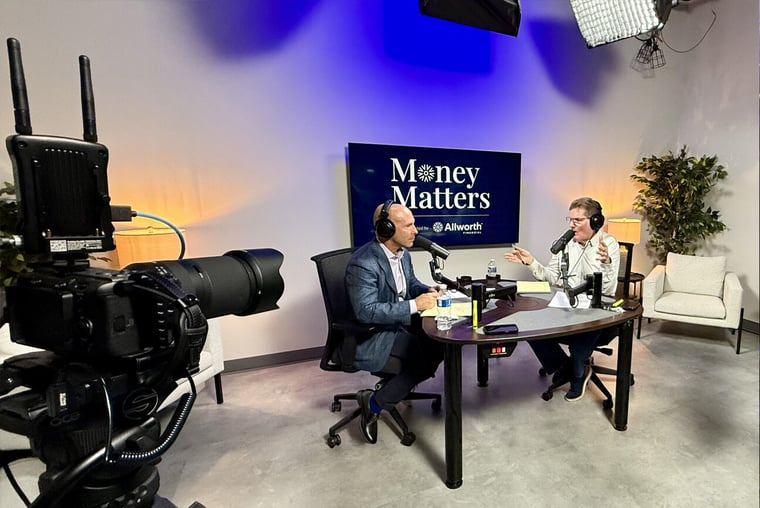
How do you turn a lifetime of saving into reliable, tax-smart retirement income? In this episode of Money Matters, Scott and Pat break down what investors with $1M+ need to know when transitioning from building wealth to generating income in today’s market.
In this episode, Scott and Pat tackle real listener situations:
- Caller Case Study 1: Retiring with a 401(k), a solid pension, and a paid-off home—how do you stress-test your plan against inflation and potential Social Security shifts?
- Caller Case Study 2: Buying a second home in Texas while keeping California property—which accounts (cash, taxable gains, Roth, or traditional IRA) should you tap first to avoid costly tax traps?
Plus, macro insights & portfolio strategy:
- Stocks vs. Bonds: Why equity markets and bond yields are sending conflicting signals, and what record highs mean for your rebalancing plan.
- The Psychology of Selling Winners: Why trimming top-performing assets is the hardest—and most critical—discipline for wealth preservation.
Join Money Matters: Get your most pressing financial questions answered by Allworth's co-founders Scott Hanson and Pat McClain live on-air! Call 833-99-WORTH. Or ask a question by clicking here. You can also be on the air by emailing Scott and Pat at questions@moneymatters.com.
Scott: Welcome to Allworth's "Money Matters." Scott Hanson.
Pat: Pat McClain. Thanks for joining us.
Scott: Yeah. Talking about financial matters. Myself and my co-host here, Pat, sit down periodically and record this program, take some calls from you. We are recording this on Tuesday, October the 6th, and it will release, I believe, on the 9th or the 10th.
Pat: Just as we talk a little bit about the markets.
Scott: Right, because there could be some major event that happens between the time of recording and...
Pat: We could have a war in Iran or something like that. Oil prices could go up.
Scott: We could have diesel prices go high.
Pat: They could go down. Interest rates on the 10-year treasury could go haywire.
Scott: I tell you what, every financial market is different than the previous one, right?
Pat: Yeah, every day is different.
Scott: Every day is a little bit different. Some things repeat themselves, but then some things are new. But when you look at what the markets are doing right now, it's a tale of two stories because the bond market is telling one thing, signaling one thing, and the stock market is signaling the opposite.
Pat: And it's perplexing to me only because as the cost of borrowing goes up, corporations borrow lots and lots of money, but it doesn't seem to affect the price on a negative...
Scott: They're stuck.
Pat: Yeah, correct. Correct. And the equities, it doesn't...
Scott: Well, the major indexes...The magnificent seven, particularly this last month, is what pulled the S&P higher, but as of the recording today, the S&P hit new highs, NASDAQ hit new highs, and treasury prices have hit...
Pat: Twenty-four-year highs, 25-year highs? It's a long time.
Scott: The reality is, at some point, investors say, huh, why should I take risk when I can get this kind of return risk-free? So if the treasuries were yielding 10%...
Pat: Would you go and buy equity?
Scott: [crosstalk 00:02:33.580] 100% in treasuries.
Pat: Yes.
Scott: And if treasuries are zero, which they were not that long ago or close to it, you would have more of a penchant to go with a riskier asset. But right now we're seeing interest rates go higher so that fixed income is becoming more and more attractive, but investors continue to pile money into the stock market.
Pat: I don't understand it. I've only been doing this for 35 years.
Scott: I know. But corporate profits are way up.
Pat: They are.
Scott: Substantially.
Pat: Do you think that's AI-driven? Or do you think it's just price elasticity where large corporations are actually realizing the consumer?
Scott: Yeah, that's where inflation's coming from.
Pat: Correct. The consumer will...
Scott: I just saw the numbers a couple days ago, consumer spending is up like 4.6% or something? And they showed it against a graph with consumer sentiment.
Pat: I saw that.
Scott: And I thought...
Pat: Consumer sentiment's almost at a record low. Consumers saying this economy stinks, and yet people are spending like crazy.
Scott: Well, not all people.
Pat: This is a K-shaped recovery. This is a K-shaped recovery.
Scott: Is it a recovery? Economy.
Pat: Economy. Well, it could be a recovery depending on what side of the K you're on. Right? Because if you own assets, you've done well. And even if you're not liquidating the assets, psychologically people will spend more.
Scott: Big time. I mean, I think back even during the financial crisis, Pat, people that had ample assets and could afford to do whatever and they just cut back on their standard of living, they felt funny about it. They didn't feel as wealthy.
Pat: Because the asset prices were down.
Scott: And they thought, well, it just doesn't feel like a good time to be spending. I don't know how many times you heard that.
Pat: Oh, I did a lot.
Scott: Yeah, that it felt funny about going on a nice trip somewhere or whatever.
Pat: Yeah. Because...Well, Scott, this...So last night, I was reading quite a bit about France, which is...it starts slowly and then it happens all at once. This has been going on for 50 years. And then I think, then I started doing...
Scott: What's been going on?
Pat: The overspending in France, the lack of fiscal...
Scott: Like every other Western country.
Pat: And then I started comparing it. I went to ChatGTP and said, "Okay, compare this from France to the United States."
Scott: It's not that different.
Pat: And it's not that different.
Scott: What, their debt's 120% of their GDP and we're 100 and...
Pat: I don't know.
Scott: Well, it depends on how you measure it, but say anywhere from 105% to 125%.
Pat: So we're not that far.
Scott: We're not.
Pat: But you know what? Then I started thinking, the problem with democracies, truly the problem with democracies is that the short-term incentive for the politician is different than the long-term stability of the economy and the people that live in that economy, where they'll promise, oh, more stuff, more stuff, more stuff in order to get elected. And sometimes they get the more stuff and sometimes they don't. But sometimes when they get it, it just adds to the overall deficit and, therefore, debt of the overall economy. So you're just kicking this stuff downstream to your kids. I mean, I just thought...But given the alternatives, I'm pretty comfortable with the democracy.
Scott: Yes, big time.
Pat: Given the alternatives.
Scott: But they clearly have some instability right now.
Pat: Oh, France?
Scott: Yes.
Pat: Yes.
Scott: Yeah, that's some other issues.
Pat: Do you think at some point in time it's going to land in the United States like it does in France?
Scott: Well, when you've got an economy where the top 10%, 20% are doing very well...the top 10% particularly, right, they're doing very well. The top 1%, crazy.
Pat: Yes. Yes.
Scott: And go up from there, even crazier, right? That's why we've got...California's got 200 billionaires that they're trying to tax on the ballot this November. Clearly those people are...You can't spend a billion dollars, on consumption anyway.
Pat: Yeah, you end up giving it away.
Scott: On lifestyle. It's impossible. On the one end, you've got these people that...it's unbelievable the kind of lifestyles they can live. And you look at some of these luxury brands like Four Seasons and Ritz-Carlton and all those sort of things, they keep raising their prices and people keep doing it. Now they have these smaller yachts that people spend a fortune on. So you've got that going on, and then you've got people that one medical bill and takes 'em out.
Pat: And that creates political instability.
Scott: Well, it's not healthy long term, that's for sure.
Pat: No, no, no.
Scott: Anyway, we're not going to solve that on this program.
Pat: What will we solve, Scott?
Scott: Well, hopefully help people make some good choices with their personal finance. And avoiding mistakes from which they cannot recover.
Pat: Which is the biggest thing.
Scott: And the danger now is the market's frothy. It's very challenging to sell off your winners, to rebalance. Diversification is not about getting richer, it's about protecting what you've got.
Pat: So it's difficult to sell off the thing that's done well and reallocate to something that has not. Especially if you look at returns for bonds recently, you'd think, why would I buy this if you don't understand how a bond works? Right?
Scott: Of course, because the short-term return looks bad.
Pat: Yeah. If you look at the total return, but what you're really looking at is the yield, the interest payment on the bond.
Scott: Yeah. But it's hard...And look, this whole AI bet might be highly profitable for everybody and it might not be.
Pat: Yes. The amount of money...
Scott: I saw one article that showed, some economist did this extrapolation based upon what we're spending now and what all the estimates are, companies would be spending...no, individuals would be spending more on AI than they spend on food to actually get to the earnings of where all the investments are going right now.
Pat: Because of the total addressable market, is that...?
Scott: Because if you extrapolate out the hundreds of billions of dollars that are being invested to build out these data centers, these hyperscalers, and all that other stuff.
Pat: In order to get a return on that.
Scott: To get a return on that. Money's got to come from somewhere. Yeah. But I think you'll see companies short term...and to your point, we were talking about earnings being up. I think short term, companies can take that increased productivity and keep it for themselves.
Pat: For a while.
Scott: They will. Yes. And then until a competitor lowers the price, takes that productivity and says, let's increase our market share by lowering price, and then they're going to have to follow suit with lower price and...
Pat: Very similar that happened in almost any other industry. Railroads.
Scott: Everything. It's how markets work.
Pat: Telecommunications.
Scott: It's how markets work. If there's an area where there's excess returns, capital goes into that area like, whoa, why don't we invest in that area? Look how much money people are making. And it drives down prices.
Pat: And we're an hour and a half from Napa Valley, and there is no better example than where capital chased an asset than in wine, in a grape, and just...
Scott: Those are rich people toys, right?
Pat: They are rich people toys.
Scott: Or apartment buildings. That's not a...Yeah, that could be every day. Those are really challenging.
Pat: Are getting hammered. Hammered. Right? Especially in the Sunbelt.
Scott: Yeah, they're overbuilt, and then interest rates are high.
Pat: Yeah, and numbers are coming up to refinance the debt.
Scott: Most commercial property, including apartments, don't have the same kind of mortgages like a home does. They're not 30-year loans that our interest rate's fixed for 30 years. There's oftentimes...maybe it's amortized over 20 years, but the interest rate might be fixed for 5 years, or 7 years, or 10 years...
Pat: Ten years.
Scott: ...and getting reset. A lot of that is going on right now.
Pat: Yeah, in which case the economics change dramatically.
Scott: Yeah. All right, well let's take some calls. If you want to join our program and have us answer your questions, you can send us an email, questions@moneymatters.com. And we're talking with Jim, you're with Allworth's "Money Matters."
Jim: Hey, good morning, gentlemen. How we doing?
Scott: Good, how you doing?
Jim: Good. Hey, thanks for taking my call. I talked to you guys back in 2024 about my retirement plan because I was nervous that...I didn't have a lot of confidence in my strategy, mainly because my 401(k) balance is pretty modest.
Pat: Did we have confidence in your strategy?
Jim: Well, yes, you had more confidence than I did. So, my bigger retirement income picture was that I have a pension, Social Security, and the potential to withdraw from my savings. But at that time I told you, just more rough numbers, that my Social Security...and I'm single, planning on retiring at the end of 2027. My Social Security, I projected at $4,000 a month, also projected my pension right around $4,000 a month. In addition to that, I have retirement medical. And at the time I was projecting I would have a 401(k) balance of over $500,000. So, I called you because...Oh, and one other thing I'd listed was that my home would be paid off. So, I called to give you some real numbers this time, and then I have a question about Social Security.
Scott: All righty. How old are you, Jim?
Jim: So the real...I'm sorry, what did you say?
Scott: How old are you?
Jim: Oh, I am 66. I will be 67 when I'm retiring.
Pat: Okay.
Jim: So, at this point, my projected balance for my 401(k) at retirement date, which would be end of 2027, using the average scenario, not overly optimistic or pessimistic, is $620,000. My actual Social Security right now is projected to be at $3,806, and the pension payout...and that's per month. My pension per month would be $4,252. So, doing a little bit better on the 401(k). My concern at this point is that I understand that there's legislation pending for Social Security to address a budget shortfall in 2032 and that my cost of living adjustments for Social Security may be at risk, and I was planning on those cost of living adjustments to offset the fact that my pension purchasing power over time is going to degrade.
Pat: How much do you make now?
Jim: In 2026, I will make $230,000.
Scott: And how much do you put in your 401(k)?
Jim: Sixteen percent. I'm maxing it out.
Pat: And how much do you have in savings?
Jim: In just cash?
Pat: Yes, or stocks, or anything outside the IRAs.
Jim: No, no, the only other...all I have is about $15,000 in cash, outside of my retirement.
Scott: What do you owe on your home?
Jim: I'm making my last house payment this month.
Scott: Nice. How much is that payment?
Jim: Yeah. Well, right now I'm paying $4,700 a month because I'm doing $2,500 a month of extra principal.
Scott: Okay. And how long have you been doing that?
Jim: I did that extra principal for four years.
Scott: Okay. So I'm trying to figure out, like, what are you actually living on today.
Pat: Yeah, what we're trying to do is find out how much income do you need to replace. Not how much...because that's what the whole idea is.
Scott: And the best way to look at it is not write down what you think you're going to be spending, but what are you actually spending? So kind of a high level is like, all right, what's your gross income while you're working, how much do you pay into Social Security, how much do you pay into your 401(k), and what other expenses do you have that are going to cease at retirement, which is the $4,700 a month? So you're making $230,000. We don't need to replace $230,000.
Jim: Of course, because I don't spend anywhere remotely close to that. Just to put it in perspective, after I make that massive house payment, my, I guess, disposable income for the month after that is only $3,700 a month, and I do just fine on that. So I'm not spending very much money. I'm stuffing it all the way into retirement and into house payment to plan for retirement. So I've been living...
Pat: What's your question for us?
Jim: Oh, so a question for us is, am I still in the ballpark? And what's the impact of this possible changes in Social Security? Do I need to discount what I think I'm going to have as monthly income because of potential taxation of my Social Security or loss of [inaudible 00:17:43.839] adjustment?
Scott: Yeah, so the Social...Who knows, right? So the way it's structured now, come 2032 or 2033 when the funny accounting that the government does with this supposed Social Security trust fund, when that's depleted, there's going to be a mandatory cut across the board. So...
Pat: They say.
Scott: Well, that's current in statute today.
Pat: It's not going to happen.
Scott: It's probably not going to happen. And Congress is going to make some steps to try to shore up Social Security. Those can come in many different forms. And one right now that's actually probably going to happen is increasing the payroll tax, the cap on the payroll.
Pat: Yeah, or it might be a combination of three or four things that happen all at once.
Scott: Most likely. And it'll be a little bit of pain for most people in different kind of areas. And I've seen somewhere that, do we use a different kind of cost of living adjustment for Social Security? But nobody knows at this point.
Pat: So what are the four things that are basically...?
Scott: Increase the payroll tax so that have current workers pay more to support the retirees.
Pat: Very, very difficult. Very, very difficult to suck that down for the 35-year-old worker that's paying for a Bill Gates to get Social Security.
Scott: I understand. But politically, they might get that through. There's a talk now above $400,000. So that's one. Who knows, right? A second thing is to...
Pat: Oh, wait, by the way, wait, wait, wait, so it's not necessarily an increase as a percentage. It's an increase in the bracket that they actually collect Social Security on. Because right now it stops at $189,000 or something like that. They might move that to $400,000 or $500,000 or a million.
Scott: Or unlimited. But there's some talk now it's maybe there's a gap and then...So who knows? That's one way to get additional revenue. So you either get the additional revenue, I guess they could increase from 6.2% to...Plus the employer pays 6.2%.
Pat: They could increase that by 2% on both sides or whatever the number is.
Scott: They can reduce benefits across the board or means testing.
Pat: Or lower the cost of living adjustment.
Scott: Or lower the cost of living adjustment.
Pat: Or a combination.
Jim: That's my question is...
Scott: Or tax you more. And to Pat's point, it's probably a combination of many of those.
Jim: So should I plan for a reduction in benefits?
Pat: No.
Jim: Okay.
Pat: I wouldn't. The reason is, if your income...When we look at your income in Social Security, it is going to be $8,096, or $125,000 a year or so. Assuming we're taking a 5% distribution on the IRAs.
Scott: Well, I don't think you should take a 5% distribution on those.
Pat: Let's assume. I'm making assumptions here.
Jim: Yeah, I wasn't planning...
Pat: Maybe we take a 3% or 2% distribution. But the reality is, if they're going to cut benefits, the question is, who do they cut it to? And you're not making a million dollars a year. You're making around $100,000.
Scott: If your 401(k) was $6.2 million, not $620,000, then maybe we'd worry about it.
Jim: I would have less worries if my 401(k) was $6.2 million.
Pat: Jim, I'm just curious. I'm just curious. You as a person, are you an engineer or a software designer or something along that line?
Jim: I have an engineering background. I'm in a heavy civil construction industry.
Pat: Okay. You do some planning and engineering work where everything has to be perfectly aligned, I assume.
Jim: That's correct. I've been accused of that before.
Pat: Which is hard when it comes to financial planning because it's...
Pat: It's really difficult.
Scott: You're more confident now because your 401(k) has outperformed what you thought it would be now at $620,000. And so you're like, "Oh, I got some room there." But on the downside, there's 401(k)...your Social Security. You can run spreadsheets until the cows come home, it's not going to matter. If you're really worried, continue to work...
Pat: Well, yeah.
Scott: ...until the day you drop dead. Then you don't have to worry about it.
Jim: Probably not a good solution.
Scott: Are you planning on taking distributions from your 401(k) or are you going to just live off the pension system?
Jim: I wasn't because I ran a retirement expense calculator and I can live on just my Social Security and my pension. So my plan was to allow my 401(k) to just sit there until the time that I have to take requirement minimum distributions, because by that time, inflation will have eroded my pension a little bit and I may need to supplement it.
Scott: Yep. I totally agree with you. I think that's a good plan.
Pat: Yeah.
Scott: And look, if your home is paid off and you've got almost $100,000 of income and you're a single person, you can certainly make that work.
Jim: I've never spent that much money in my life.
Pat: I think you actually have. You're living on it now.
Scott: Your salary is pretty good.
Pat: You make $230,000.
Jim: Right. But I don't spend that.
Scott: Yeah, you do.
Pat: You do. You'd have more money in savings if you didn't.
Jim: Yeah. Fair enough. I have spent it on retirement savings and paying off a house. So fair enough.
Pat: All right.
Scott: All right. Wish you well, Jim.
Pat: Appreciate the call. And try not to worry so much, please.
Scott: Well, it's funny, he said...I said $6.2 million instead of $620,000, he said, "I wouldn't worry as much." I'm thinking, yeah, you probably would. It would just be maybe some different things you're worried about.
Pat: You'd worry about taxation or confiscation or...
Scott: I mean, when I was a practicing advisor, I had a client for years and she was always nervous about the markets. And a great saver and, I forget, a couple million bucks in her 401(k), or 3 million bucks, whatever it was, and she was always really nervous about the markets. I remember saying, "Susie, like, if we put another zero behind this, your worries wouldn't change at all. It's not really about the money here."
Pat: And what'd she say?
Scott: Well, she says, "You're right." Like, and we're trying to get the core. What's the core here?
Pat: But it didn't make any difference on how she felt about the portfolio, even though you had the conversation.
Scott: That's probably accurate. That's probably accurate. But that was just kind of her nature just to kind of worry about things. And the markets go down, you extrapolate and, uh-oh, market's down 15%. At this rate, I'm going to be broken the next 4.2 years. I've had those conversations with clients. They extrapolate. Our emotions, look, they're real. And it's easier right now when markets are doing really well. There'll be a time when they're not and...Anyway.
By the way, we've got a YouTube channel. If you're not a subscriber, I would encourage you, we would encourage you to subscribe to YouTube. We've got...I mean, the stuff that we talk about in this program, you'll find little clips on YouTube channel as well. We talk about some retirement issues. We talk about asset location, state planning, taxes, etc.
Pat: Involving second generation and how the money is going downstream, extremely important. In fact, those types of calls are becoming much, much more prevalent than they have in the past. So it's worth your time to subscribe to the YouTube channel.
Scott: Let's talk with Dale. Dale, you're with Allworth's "Money Matters."
Dale: Good morning. How are you doing?
Scott: Great. How you doing?
Dale: All right.
Scott: What can we do for you?
Dale: [crosstalk 00:25:54.785] Well, I want to know about buying a house for myself in Texas so that it can go to my son when the time comes.
Scott: You sound like you're from Texas now. No?
Dale: Well, pretty near, from Louisiana.
Scott: Okay. How many children do you have?
Dale: One. And he's a disabled vet, so his income will never really increase. So he'll be living in an apartment for the rest of his life.
Scott: Okay. So tell us about your situation. You own a home now?
Dale: I'm buying it with my girlfriend. It's valued around $500,000 and we owe $118,000 on it, something like that.
Scott: And then, you're thinking about buying a home in Texas for your son to live in now?
Dale: Well, no, he's going to stay in his apartment. I'm going to go down there and get out of this wonderful State of California.
Scott: And what about your house that's in California?
Dale: We'll keep it.
Scott: Why?
Dale: There's a lot of issues going on in the background.
Pat: Okay.
Scott: Okay.
Dale: So anyway, we'll probably get rid of it within two years. Something like that.
Pat: All right. So walk us through the numbers. How much would this new home cost?
Dale: $300,000 to $325,000.
Pat: And who will own it, you and your girlfriend or just you?
Dale: Just me. That's my main question is I was going to cash out my Roth and just pay for it. And I'm just wondering, is that the best way or should I get a loan?
Scott: How old are you, Dale?
Dale:I'm 76.
Scott: And tell us about the rest of your finances. Do you have a pension and Social Security, that sort of thing?
Dale: I have a Social Security at $35k a year, pension at $41,000, and both of them are inflation adjusted. I have medical insurance through the pension and that's also inflation adjusted. [inaudible 00:28:30.792]
Pat: How much do you have in IRAs and how much do you have in Roths or 401(k)s, that sort of thing?
Dale: Okay. My IRAs are $420k. My Roths are $433k.
Scott: And do you have any money in a brokerage account or mutual funds or ETFs?
Dale: I have $475,000 in a brokerage account and I have $140,000 in cash in a high-interest savings account.
Pat: So what do you think about, do you plan on living in the house in Texas or just your son living in the house in Texas?
Dale: I plan on moving there.
Pat: And living in there and then leaving it to your son?
Dale: For over six months a year. Say again?
Pat: So you plan on...And the reason is...let me tell you why this is important. If the goal was to purchase a house with your son, I'd have to do more research on it. But my guess is the best way to do that would actually be gift your son some money and then he use programs that are set up by the federal government for disabled veterans to purchase homes.
Scott: But that's not the objective here. I think the objective is for Dale to go to Texas the majority of the time and longer term move there, and then when he passes for his son to take the house.
Pat: Which one is it?
Dale: The latter so that he gets a markup of the basis.
Pat: I don't know if that would be a driver for me, but okay.
Scott: Yeah, is the primary motivation for you to be in the house and then when you die your son can move in?
Dale: Yes.
Scott: Okay, so you're not going to have the son move in prior to your passing?
Dale: No, we couldn't live together.
Scott: Okay.
Dale: We all know that problem.
Scott: I do. I said some things to my daughter maybe I shouldn't have yesterday, and then she's upset with me, and so we've been talking, so I get it.
Pat: Yeah?
Scott: Oh no, we have so much fun together, but we also butt heads quite a bit.
Pat: Oh, that's your oldest daughter.
Scott: Yeah, we'd kill each other if we lived together.
Pat: Oh, yeah. Yes, yeah, it's always fun to watch. My third child, my wife always says it's like watching you argue with yourself. You and Jessica arguing is probably like watching you argue with yourself.
Dale: The main thing is that I would be around him and we could do things.
Scott: Yeah. Well, go ahead.
Pat: Do it.
Scott: I think this is great. By the way, you've got the assets and I think...
Pat: Yeah, 100%.
Scott: ...this makes sense. Don't let...Now you're just trying to figure out the most efficient way to do this, right? So...
Pat: What's in the brokerage account?
Dale: Oh, stocks and ETFs.
Pat: Mostly equities? Mostly stocks?
Dale: Yeah.
Scott: So everything as if you sold it they would all be gains to consider?
Dale: Wishfully, but...
Pat: Well, that's the big question here because we would want to use the cash in the bank...If you laid out where the money's coming from, we'd look at the cash in the bank first, then we'd look at your brokerage account, then we'd look at your Roth IRA, and then we would look at your IRA and your marginal income in order to determine which to take those out of, if not all of them, if not all of them. So the gain in the brokerage account is super important as to decide where this money comes from. Because you could get to that Roth without [crosstalk 00:32:19.756].
Scott: Yeah, maybe you have $100,000 in your brokerage account that you can get without any tax consequences.
Dale: Okay.
Pat: And then most of the $300,000 would be done. So to go with this, Dale, think about this, the cash in the account first, the brokerage account second, as much as you could get to, then you have to look at your marginal income rate to see whether taking more money out of the IRA makes sense than your required minimum distribution or whether it makes sense to take out the Roth. Ideally, the Roth is the last thing...
Scott: Last dollar you spend.
Pat: ...you spend, but it may not be in this particular situation. My guess is it's going to be a combination of all four.
Dale: Okay.
Pat: That would be my guess. But until you actually open up that brokerage account and see how much cash you can get to...In your Roth IRAs, is there bonds or is it in equities?
Dale: It's in equities.
Pat: And your IRA is all in equities as well?
Dale: Yes.
Pat: Okay. So you mostly have equities except for the $140,000 in cash.
Dale: Yeah.
Pat: Yeah, you can you can pull this off easily.
Dale: Okay.
Pat: Easily.
Pat: Have you spent...?
Dale: The other thing is the house is going to be vacant. I mean I have to buy all the furniture and fill it. So that [crosstalk 00:33:50.596].
Pat: Yeah. Okay. You can pull that off too.
Scott: Yeah. But to Pat's point, as far as where's looking from the cash, I mean one thing, you could just say, all right, it's $325,000, I'm going to take $325,000 out of the Roth and pay for it. I don't think it'd be in your best interest, particularly if you're thinking about what's going to be left down the road when you end up passing along. Just like Pat, I'd pay through the cash and factor in how much you're going to need to spend on furniture and all that kind of stuff. And then the brokerage account, and there might be more that you can get out of there than you think. And with capital gain tax rates and if you're a lower tax bracket, you can pay 5% capital gains.
Dale: All right.
Scott: You got to factor in California too. And then even when you're moving to Texas, it's not just how much time you spend in Texas.
Pat: It's whether you establish residency there.
Scott: It's kind of like the home is where your heart is. That's kind of what they try to...
Pat: The State of California is very good at auditing people that move out of state. Especially if you continue to own a state in the State of California.
Scott: Own a home.
Pat: Correct. Own a home, not a state.
Scott: Particularly if it's your primary residence you have not sold.
Pat: So what they look at is, where do you start in vacations? Where do you spend Easter? Or whatever religious holiday you spend, where do you spend those?
Scott: Yeah, when you're on vacation, where do you go back to?
Pat: Yeah, do you go back to California? Do you go back to Texas? When you go on vacation, where do you leave from? Where do where are your cars registered? Where do you [crosstalk 00:35:26.848]?
Scott: Isn't this crazy?
Pat: Yeah, they call it a domicile.
Scott: I know, but you just think about it, it just seems insane. Here's these states that somehow manage without any income taxes at all. And...
Pat: Well, okay. Well, let's just see if this 5% billionaire tax goes through what it does. I mean Gavin Newsom, Scott, is 100% right where if all the states had a 5% billionaire tax, it would be okay. But just having the 5% in the State of California will drive wealth from the State of California.
Scott: Well, yeah...
Pat: But this is back to Dale. Let's just stick on Dale for a minute.
Dale: Yeah, I don't have that wealth.
Pat: Yeah, so you're fine.
Dale: Only in my dreams.
Pat: So let me ask you another question. Do you have a living trust in place?
Dale: Yes, I do.
Pat: And is is your girlfriend accounted for that in the living trust? Like, do you have a life estate set up for her?
Dale: She's not a...No.
Pat: Is she living with you?
Dale: We kept everything separate.
Scott: And what happens to the house that you're buying...you called it buying with your girlfriend, house that you own together, she'll receive that when and if you pass?
Dale: We have it set up that one of us will buy out the other at that time and that...
Pat: At death.
Dale: ...money will go to the spouse, I mean [crosstalk 00:36:57.226].
Pat: Okay, you've addressed it.
Scott: You've potentially got it...
Pat: You've addressed it.
Scott: Yeah, you're fine. You're fine.
Pat: I think it's a good idea.
Scott: Yeah. And where in Texas?
Dale: Georgetown.
Pat: You got me there.
Dale: It's a 55 community.
Pat: Very nice.
Dale: It's right outside of Austin, north of Austin.
Pat: Well, enjoy, we're gonna miss you.
Scott: Yeah. Well, I think it's a great idea, Dale, and appreciate the call. I think it's gonna...You know, Austin's one of those real estate markets where kind of overbuilt, particularly during the COVID era. It's got a just a red-hot real estate market and all kinds of...
Pat: For a while.
Scott: For a while. And rents are down dramatically and home prices are falling. There's a handful of markets, but I think that might be...
Pat: You know, Scott, it's interesting that these higher interest rates haven't really started showing up in home prices yet, but they will.
Scott: Well, I think they are. I mean, you've talked...home sales continue to decline, [crosstalk 00:37:55.172] homes.
Pat: The prices haven't started falling as rapidly as I would have thought.
Scott: It's a really interesting time in the real estate market because you own a home that you bought years ago that's got a 3% mortgage on it and maybe you're thinking like Dale, I'd like to go move somewhere where it's maybe a 55 and older community, but you're like, well, I don't want to give up my 3% mortgage. Right now my payments are 1,600 bucks a month and if I go there,my payments are going to be $4,100 a month, or whatever the numbers are, right?
Pat: Yes. [crosstalk 00:38:29.182]
Scott: So there's not the typical supply that we would see, which I think is what's propped the prices up some.
Pat: It helped, and the fact that how they're taxed. Well, we talked about this, a 70-year-old doesn't want to sell their house in the Bay Area because they know they'll get a step up in basis at death and, therefore, it's going to stay there until their dying day for economic reasons when they really want to move to Texas to...
Scott: Yeah. You mean like a $3.2 million home in Menlo Park that's 1400 square feet?
Pat: I was down in Palo Alto, driving through a neighborhood in Palo Alto, Scott, and I was...
Scott: Which is the epicenter of Silicon Valley, right?
Pat: It's mind-boggling what some of these homes...and just these little like 1500, 1600-square-foot homes...
Scott: Going for 3 million bucks.
Pat: Ah, it's crazy. It's absolutely nuts. No wonder there's a home crisis.
Scott: Anyway. We're not going to solve that. But hey, well, we do have a great webinar, our October webinar, it's Engineering Income for the Next Chapter, and it's really wealth distribution and tax strategies for investors with $2 million or more in savings. This is Quinn Carlson, one of our advisors, is going to be doing the presentation, and he's done some other webinars in the past. Yeah, he's got really a sense of expertise in income and distribution planning for investors that tend to have more complex financial lives. He advises high-net-worth clients on the tax sequencing, withdrawal timing, and also that kind of investment coordination that is kind of needed for sustainable income. So you're going to learn why the 4% rule is only a starting point for complex portfolios, not a strategy. How tax consequences, I'm sorry, tax sequencing and withdrawal timing interact and why getting the order wrong can have a pretty big and costly mistake.
Pat: And Quinn is giving this workshop?
Scott: Yeah, how to factor in concentrated holdings, charitable intent, and legacy goals without sacrificing income flexibility and why siloed advice across investments, taxes, and income planning leaves money on the table, which is why you see so many firms like Allworth and other firms or similar kind of type that are combining those into...
Pat: Tax and estate planning and the whole...But Scott...
Scott: Let me give the date.
Pat: Wait, wait, wait. Okay.
Scott: Yes?
Pat: Okay, you give the dates and I'm going to talk about my wife and I sitting down with Quinn this last week.
Scott: October 14th, 15th, and 17th is when it's going to be. It runs about 40 minutes or so, and you can sign up, now I'm curious, at allworthfinancial.com/workshops. So you and your wife met with...
Pat: Quinn and another advisor at Allworth. And I've been a financial advisor for 40...I don't know, long time. And so we're starting to turn over some of the financial advice and [crosstalk 00:41:40.573]...
Scott: Responsibilities.
Pat: ...and responsibilities over. And someone was asking me, "Why would you do that? Like, what would drive that sort of decision making?" I said, "Well, two things. One is it's ease of administration. The other is...well, there's a number of reasons. One is continuity if something happens to me. I got really sick last year and it was touch and go, and my health is relatively fine now, but I realized, you know...
Scott: No one gets out of here alive.
Pat: Yeah, this wouldn't be a bad...
Scott: I think it's roughly 9 out of 10 marriages the man goes before the woman.
Pat: Goes where?
Scott: Dies. Who knows.
Pat: That was always a question, where do they go?
Scott: Okay, well, that's a different...
Pat: And so Kathy [SP] and I sat down with Quinn and another advisor, David Chower, and we said, "Okay, look, am I missing anything?" Another set of eyes. And they came back with strategies that were different than mine, very similar how you and I have a conversation on this program where we talk about different strategies.
Scott: Your point is Quinn Carlson is one that you trust with your own finances.
Pat: Yeah. My point is even if you think you know everything, you may want to engage...
Scott: That's right. Well, and because that's...The call earlier with the engineer type and financial planning is different because there's lots of unknowns in the future, and it's about having the right kind of strategy, not just an investment diversification, but a diversification in your whole approach to taxes and withdrawals, etc., so.
Pat: Yeah, asset location and distribution.
Scott: Yeah, and you could go to allworthfinancial.com/workshops to sign up for that workshop, and it's called Engineering Income for the Next Chapter.
Pat: Just sign up, go to the Zoom, see if you like it. I promise you you're going to learn something.
Scott: I don't know if it's on Zoom. I don't know where they do it.
Pat: It's not in person.
Scott: No, it's a webinar.
Pat: Okay, they do it in some sort of Zoom fashion.
Scott: That's right. Anyway, appreciate you taking some time to join the two of us. This has been Scott Hanson, Pat McClain, Allworth's "Money Matters."
Man: This program has been brought to you by Allworth Financial, a registered investment advisory firm. Any ideas presented during this program are not intended to provide specific financial advice. You should consult your own financial advisor, tax consultant, or estate planning attorney to conduct your own due diligence.
Insights for Complex Wealth Decisions
Join our email list for exclusive commentary from our Chief Investment Officer, early access to expert-led webinars, and your complimentary Wealth Planning Checklist for Complex Portfolios.
We take your privacy seriously and respect your privacy choices. By submitting this information you agree to our Terms of Use Agreement, Privacy Policy, and to receive important notices and other communications electronically.