
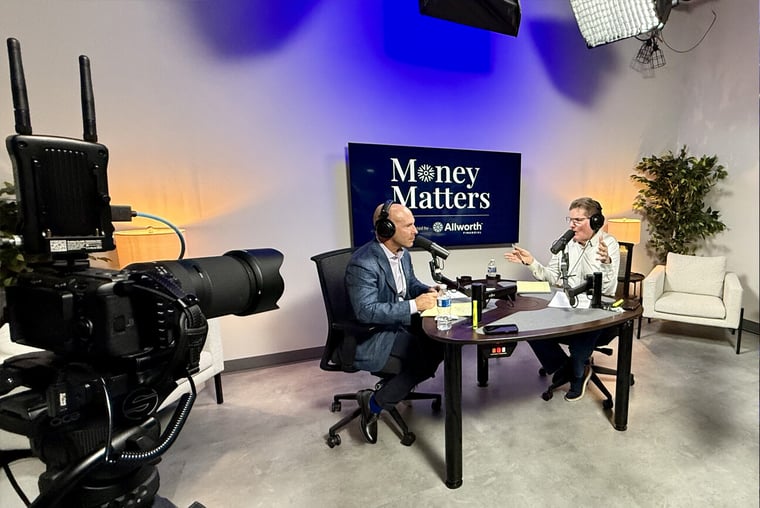
Direct Indexing vs ETFs: Fixing a $1.8M Portfolio
When your retirement savings cross the seven-figure mark, the simple strategies that got you there might actually cost you money in taxes. In this episode, Scott and Pat explain why a high earner with a $1.8M portfolio needs to move beyond basic target-date funds and ETFs into direct indexing—plus when to pay off low-interest debt, how to pass down wealth, and when you can finally afford to spend more.
Scott and Pat also cover:
The 3.25% Mortgage Dilemma: Should you accelerate payoff on low-interest debt when Treasuries yield 5%?
Transitioning from Saving to Spending: A 36-year-old father with $1M saved asks if it’s safe to ease off contributions and start spending more.
The "Bank of Mom and Dad": The financial and family dynamics of gifting or loaning money to adult children for high-cost home down payments.
Real Estate & Tax Traps: Navigating capital gains, Delaware Statutory Trusts (DSTs), and term life insurance rules.
Join Money Matters: Get your most pressing financial questions answered by Allworth's co-founders Scott Hanson and Pat McClain live on-air! Call 833-99-WORTH. Or ask a question by clicking here. You can also be on the air by emailing Scott and Pat at questions@moneymatters.com.
Pat: Welcome to Allworth's "Money Matters". Scott Hanson.
Pat: Pat McClain. Thanks for joining us.
Scott: Yeah, glad to have you as we talk about financial matters. Both myself and my co-host, we've been financial advisors for 35 years.
Pat: I don't know, a long time.
Scott: And been doing this program for 31 years.
Pat: A long time.
Scott: So, we're gonna talk about some of it.
Pat: It used to be terrestrial radio, but it's now all podcasts. I don't think we run on any station.
Scott: No, we don't. You know, it'd be interesting to see what's happened with... Terrestrial radio is still out. I listen to it very little anymore. Almost none. Radio, almost none. If I needed to get news or weather, I get it, it's in my pocket. If I want to listen to something, music.
Pat: Go to it.
Scott: Yeah, and I can do Spotify for that.
Pat: Yeah. I used to have the satellite radio SiriusXM and...
Scott: I wonder how those guys are doing.
Pat: Well, you know, it's my...
Scott: Why do you still need that?
Pat: When I bought my last car, I just... And they sent me a refund for the unused Porsche, but my kids, my children were making fun of me that I'm the last subscriber.
Scott: You wonder. We'll take some calls. And by the way, if you want to join us, questions@moneymatters is the best way to join us. But I was at... This week, I spoke at an event in Tucson, Arizona, of all places. Allworth had hosted an event for business owners.
Pat: Oh, thank you. I got that invite. And I said, "Well, Steve, Scott said..."
Scott: I was happy to be there. But there was, I don't know, 40 or so business owners. It was all about all the things to consider as you plan the sale of your business. And I spoke and we had an attorney speak. But I was talking to the head of private wealth at Allworth, who was there and kind of emceed the thing. And we were talking, she was interesting, she says, "Most of these opportunities don't exist with our kids." And I said, "What are you talking about?" And we were just talking about how in a lot of these professional services organizations, the opportunity for our kids is different this generation.
Pat: Why?
Scott: Well, that's why I'm bringing this up. So, we started having... I think it's different, but it's still there. And so, she spent her whole career working with a lot of business owners. She says that they're disappointed in their children because their children aren't them. And as we're having this conversation, I said, "Well, you think about the unique..." First of all, maybe 5% of the world is entrepreneurial. Not everybody is entrepreneurial. You can take courses in entrepreneurship, but you have a certain kind of wiring, screw loose, I think, a bit. But then there's also, you've got to be in the right place at the right time. There's hard work, but then there's a little bit of luck, right?
Pat: Oh. Yes.
Scott: So, it's right to have this conversation. I think a lot of people that have been relatively successful in life financially, their kids, typically, aren't wired the same way they are. Maybe there are opportunities, but the reality is if someone's sold their business for 25 million bucks, their kid does probably not have the ability to build a business with $25 million.
Pat: Well, yeah. Yes.
Scott: Statistically. I just...
Pat: Yes.
Scott: And so...
Pat: In fact, even the people that start businesses, most of them can't grow them to that sort of...
Scott: That's right. That's right. Of course.
Pat: Like, 98% of the people that start a business can't grow to that level.
Scott: That's more... That's got to be more than...
Pat: Yeah, 99% can't.
Scott: Yeah, it's pretty...
Pat: Small.
Scott: It's pretty home run if you can get $25 million or more for a business to start. But then we're just talking about the challenge... And where I'm going with this is purchasing a home. And it's different today than when we were young.
Pat: It's quite difficult.
Scott: So, I graduated college in 1990. I was married in 1992. We bought a house the month we were married. We borrowed, I don't know, it was like $20 grand or $18 grand from my parents that we were able to pay back over a few years, and the house was 200,000. Now I know my income was much less then. But even on a comparative basis, homes are so much more expensive today. And the only way that most people can afford a home is having their parents help them out in some manner. Whether that's... And it's probably not borrowing a 10% down payment like I did. It's probably more than that. And it might be a substantial amount to help them, particularly if they're in an expensive city.
Pat: I see it with clients all the time, all the time.
Scott: But we're in California. Sacramento area is a little bit less expensive, but it's still...
Pat: It's not Kansas or Iowa in the middle of the state.
Scott: I mean, a modest home is still $800?
Pat: $800.
Scott: Probably, right? I mean, for...
Pat: Yeah. And in the San Francisco Bay Area, it's $2 million.
Scott: Triad?
Pat: Yeah.
Scott: For a modest home?
Pat: Yes. So, it's pretty normal. Actually, it's not abnormal to see relatives, it doesn't have to be parents, sometimes it's grandparents, sometimes it's aunts and uncles, lend money. And by the way they...
Scott: Or give money.
Pat: Yes. But most time it's a loan, most times it's a loan, and the expectation is it will be paid back.
Scott: Yeah, but it's not always with all your clients. It's not always a loan.
Pat: Most times, but not all of the time. Sometimes it's just an outright gift.
Scott: Yeah. And I think the reason I'm bringing this up...
Pat: Before you go to that, Scott, and the reason being is most people have multiple children. And so, if you give money to one child...
Scott: Yeah, yeah, yeah. You kind of have to do it for the others.
Pat: ...you have to do it to the others. So, it's not really...
Scott: Not always 100%, but...
Pat: Yeah, if you gift one child $50,000 for a home...
Scott: There's an expectation.
Pat: Yeah, and I will tell the clients, "Well, we can do this in multiple fashions." And they're like, "Well, how do we make it equal?" And I say, "Well, we put a return on the money." So, if you gift Kyle, perfect name for someone who's in their 30s, Kyle, $50 grand, then in five years, if you gift Sarah that amount of money, it won't be $50 grand. It might be $65,000, whatever an assumed rate of return on that money, so that it's an equivalent in today's dollars or net present value.
Scott: Or inflation.
Pat: Correct, correct, correct.
Scott: Yeah, which is how I keep track with stuff I've done with my kids.
Pat: Do you?
Scott: Because, I mean, it's the... But I think if you find yourself later in life with more money than you're going to spend, you know you have more money than you're going to spend, and you've got kids in need... And I'm not talking about kids that don't want to work.
Pat: Yeah, you still want to make sure that the child's responsible.
Scott: Yeah. I think it's probably a good thing to do to help the kids.
Pat: So, I came across this statistic, Scott, 2.6 million parents in America have given approximately $26.6 billion to support 3.7 million adult children. So, there's the ratio, 2.6 million parents helped out 3.7 million adult children. So, the ratio isn't quite two. It's about one and six tenths.
Scott: Whatever.
Pat: $26.6 billion, which would be equivalent to $100,000 or so per child.
Scott: That's a median, though. I mean, some families it's $5,000, some families it's a million bucks for a house or whatever.
Pat: And they expect that number to go up as interest rates go up.
Scott: Well, it's... How else does a kid afford to get to start with a million dollar house?
Pat: Crypto.
Scott: Oh, of course. I'm sorry. Silly me.
Pat: How did you not know that?
Scott: Silly me.
Pat: How did you not know that?
Scott: Or trading meme stocks.
Pat: I was thinking about the trading the other day I was on a bike ride. And for whatever reason, I was thinking about my own children and a nephew and how at one point in time they were all into trading.
Scott: They don't talk about it anymore? Never comes up?
Pat: Never. Never.
Scott: What's your thoughts? This last week, Elon Musk's going to give a share of SpaceX.
Pat: Oh, I think it means absolutely nothing because he didn't say what type of share it is. I think he'll give a share, but he might create a new class of shares and some dollar figure that he has in his mind and then issue each one of them. It doesn't have to be, as we know, a publicly-traded shares. Meta just did the same thing in order to keep Mark Zuckerberg in California.
Scott: They created another...
Pat: They created another class of shares.
Scott: There was an interesting article on that.
Pat: That was very, very interesting.
Scott: Yeah, and a little back story there. There's proposition on the ballot in California. I think everyone knows about it by now. Five percent one-time tax to billionaires retroactive to January 1st of 2026. So, some people left the state in 2025, and turns out that the way Zuckerberg tried to protect his interests is by creating a second class of shares. Because the challenge is with this proposition, it's not just the value of your shares, it's your controlling interest in the organization. That's what you're taxed on. So, it would wipe out some of these billionaires if it actually was enacted.
Pat: That's right. They would lose control in these publicly-traded stocks.
Scott: They could be wiped out financially because their tax bill could be worth more. Like the founders of Google, Alphabet.
Pat: Yeah, they moved to Nevada. Was it Nevada?
Scott: I don't know. They all seem to go to Texas or Florida or whatever.
Pat: Yeah, they can go anywhere they want. They're billionaires. That's the thing. Unless there's a national wealth tax, it won't work.
Scott: You know what's interesting? So, I've lived in California my whole life, as have you.
Pat: Pretty much.
Scott: We've discussed leaving the state, but I've got family. I love it here. It's nice. And I don't like paying the taxes, but I can afford the taxes. So, the reason I'm telling this story is... Did I tell this last time we were together?
Pat: I don't think so.
Scott: So, my neighbor who moved to Idaho, so I had a neighbor move to Idaho...
Pat: Have they moved back yet, or...?
Scott: This is just months. They've only been there months. And they have two kids still in school. And they had their house up for sale. And they transferred all their furniture to Idaho. And their house isn't selling. And one of their kids absolutely hates... Now, they haven't survived a winter yet. They haven't been there for a winter yet. He likes to golf all year long and stuff. They haven't survived a winter yet. But they've decided, because their house hasn't sold yet, they're actually buying some more furniture so they have somewhere to come back to as they're visiting California. And I'm having this... I bumped into him. I'm like, "Why are you leaving?"
Pat: What did he say?
Scott: He's got some business he's maybe selling in the next year or two. And I'm like, "Isn't part of the benefits of having some money is giving you some optionality in life?" But it's like one of the key issues.
Pat: Why are you messing with his plan, Scott? Let him live in this nirvana land. What are you doing messing with the poor guy's plan?
Scott: What do you mean, what am I messing with his plan?
Pat: Why are you sowing doubt like that? This guy had a plan in his mind.
Scott: He already has doubt in his mind. I think the reason I'm bringing this up, one of the things about money, it gives you optionality.
Pat: That's right. And you know it's more expensive to live in California than it is in Idaho, but that's a choice you get to make.
Scott: Look, if you end up in retirement and you barely have enough and you're like, you know, "If I move to Arizona outside of Phoenix somewhere, Yuma, whatever, my cost is going to be less. I could have a better retirement." Well, that might make a lot of sense for you. But if you've got plenty of money...
Pat: Then why?
Scott: ...and you just don't like paying the tax because you'll have an extra million or whatever the number is.
Pat: So, what's he doing?
Scott: I don't know. I just thought it was pretty funny
Pat: Is he a good neighbor? Do you want him to come back?
Scott: He's a nice guy. Even if he wasn't, what am I going to say? Just in case someone listens to this, "Hey, were they talking about you? Well, I mean, the guy's a real jerk." If he was a jerk, I would have said, "Oh, you don't want to come back to California." Yeah, got a nice family. Anyway, why don't we take some calls? We're starting off here in Michigan talking with Tanmay. Tanmay, you're with Allworth's "Money Matters".
Tanmay: Yeah. Hello. Hey, Pat and Scott. How are you?
Scott: Wonderful. How are you doing?
Tanmay: I'm good, good. How are you?
Scott: Good, good.
Tanmay: Yeah. Thanks for all your podcasts. I learned a lot from you guys, so thank you.
Scott: Oh, good.
Tanmay: So, I have a few questions, two main questions, actually. It's better to pay my house off going forward, not taking from my savings, but paying it off going forward from my salary. And also, whether or not to do like a Roth or traditional 401(k), me and my wife.
Scott: Okay, how old are you?
Tanmay: I am 39 and my wife is 39 as well.
Scott: And do you have kids?
Tanmay: Yeah, we have two kids, 10 and 6, yeah.
Scott: And what's the ballpark family income?
Tanmay: So, together about $650 to $700. Yeah, me and my wife. So, mine is about $550. My wife is about $100,000. And my benefit package is pretty good. So, probably with all the benefits and everything, probably $700, $750.
Scott: Why do you want to pay the house off?
Pat: What do you owe on it?
Tanmay: So, my house is worth about $560. I own about $430. And I sort of get rid of it. I mean, the interest rate is really low, 3.25%. I got it during COVID, '21.
Scott: Tell us that interest rate, what's...?
Scott: Three and a quarter.
Tanmay: 3.25%.
Scott: Tell us about what other assets you have, savings, brokerage, 401(k).
Tanmay: So, I can run through.
Scott: Please.
Tanmay: Yeah, so I can run through everything. So, my 401(k) is $590 with about $170 Roth. My wife is $130 with about $30,000 Roth. Our HSA is at about $70,000. My wife's Roth IRA is $100,000. My Roth IRA is $65,000. And our brokerage is about $800,000 to $900,000. And we have... Sorry.
Scott: Keep going. 529.
Tanmay: Yeah, our kids 529, so my son, it's about $118,000 with ours and grandparents together, and my daughter is about $100,000.
Pat: How much term life insurance do you have on yourself?
Tanmay: So, mine is about $2 million. Yeah, it is $2 million for 30 years. And my wife is $1 million for 15 years.
Pat: You have a 30-year term?
Tanmay: Yeah. I mean, I got this stuff. My life insurance, I got it a while ago because I was literally sold full life policy. And then I learned about it and I got rid of it, and got a 30-year term after that. So, yeah.
Scott: Well, you need to double the life insurance policy.
Pat: I would agree.
Scott: And you probably only need life insurance for another...
Pat: Ten years.
Scott: ...10, 12 years, that's 15 years.
Pat: Fifteen years. So, I would double yours. Your wife's isn't quite as important just because of the difference in the income.
Scott: Income, yeah. I would agree with Pat. So, on the house, I mean, it's such a low interest rate.
Pat: There's no reason to pay it off. There's absolutely zero.
Tanmay: Yeah. That's why I was like, I'm just debating whether or not. Because I see a lot of money since, I mean, for our 401(k), so for at least for my work, we are a private group, and they put in up to $73,000. So, like, IRS max as a non-elective contribution. And my wife gets a match and we, like, max those out. And my work puts in HSA as well, so we don't put anything from out of pocket. So, I mean, we are saving almost, with then doing back door Roth and HAS, is like $120,000. And I put in brokerage almost $120,000, $130,000. I'm like, if I can just lower that a little and pay it off, I sort of get rid of it. That's all.
Pat: The 10-year treasury is...
Scott: I would make an argument if you owe $430,000 on your house, if you want to pay it off, take $430,000, put it in treasuries, you're going to earn 5%. If you want to match maturities, you can build a treasury ladder to have it slowly pay off mortgage.
Pat: But his income is so high....
Scott: Correct. I would agree. It's a rounding error.
Pat: ...it doesn't matter. How is the brokerage account invested?
Tanmay: Everything VTI, 100%.
Pat: Everything? Have you considered...?
Tanmay: I mean, I have about $200,000 cash in there for our, like, money market.
Scott: Emergency.
Tanmay: Yeah, emergencies.
Pat: I'm waiting to hear what Scott's going to say because I think he's going to say the same thing.
Scott: Direct index.
Pat: A hundred percent.
Scott: I would not add a dime to that ETF.
Pat: Yes. You should use... A hundred percent of it should be direct indexing. And how much gain do you have in that VTI?
Tanmay: So, I mean, I started everything in '21.
Scott: You got good gain.
Tanmay: So, most of it is... Yeah, I mean, I would say, about $300,000 is gain, $250,000, $300,000.
Pat: I was just wondering whether we should sell some of that. Although we should sell some of it maybe. In order to start a direct indexing, you have to go through the shares to see what you have gain or loss on. But there's part of that if it's...
Scott: Maybe.
Pat: Maybe.
Scott: It's been such a bull market, so you're probably all gain. But that's okay. But I would, look, going forward... I mean, it's a modern index strategy, frankly, rather than using... An ETF's the low cost way to go. So, anytime you're in like a qualified plan, a 401(k), an IRA, unless you're trying to exclude certain companies or industries, using an ETF makes the most sense. But individually, we're seeing a big rise of people using individual securities and building an index out of individual securities. And then you can dial in different tax loss harvesting strategies.
Pat: And you could underweight or overweight certain sectors in the market as well.
Scott: That's right. Whether that's going to be beneficial or harmful to you, that's another question.
Pat: So, how are the monies in the 401(k) and Roth IRAs and IRAs invested?
Tanmay: So, both of our... My wife's, yeah, like, 401(k)s are in Vanguard and they're, like, target date fund. I try to keep it simple. And then Roth... Sorry, go ahead.
Pat: Okay. So, target date funds in the 401(k)s, and what else?
Tanmay: And for Roth IRAs, VTI again.
Pat: Okay. So, here's what... When you look at this portfolio, if you were sitting in any of our offices at Allworth, we'd look at it first from the investment standpoint, second of it from a tax standpoint. And I would say, okay, we're going to do the direct indexing going forward in the brokerage account.
Scott: In the brokerage only.
Pat: And then the other things is we're going to clean up around the edges, because the VTI doesn't hit all the market that you particularly want, right? So, you're not getting the international exposure there that you want. And you may...
Scott: And those target date funds, they work great for a $40,000 401(k). They're, like, a great vehicle for $40,000.
Pat: But you don't have $40,000. This is a lot of money. And so, you don't want to use the target date funds in your Roth IRA or your 401(k)s, you want to use individual securities.
Scott: I would totally agree with that.
Pat: Be it mutual funds or ETFs.
Tanmay: Okay. Thank you.
Scott: And they probably still have some element of fixed income in there that you probably don't want it at age 39.
Pat: Thirty-nine in that kind of income.
Tanmay: Yeah. Sorry. I try to change it to whenever the new one comes out, like the 2020 or 2075 target date fund. So, I try to stay on top of it. But I'll look into it. Yeah, the individual securities, definitely. Thank you.
Scott: Yeah. Even if it was... And I'd probably have... Well, I wouldn't say I would, because I do have 20% in international.
Pat: Correct. And you don't appear to have any international exposure, to speak of.
Scott: And I know you can look at, like, a lot of the globes doesn't have the same kind of growth, but the prices of those securities are oftentimes a fraction of what we're paying in the U.S. for the same kind of earnings.
Tanmay: Yeah. Okay. Yeah, thank you.
Scott: You're a great saver though.
Tanmay: I mean, yeah, that's how I was brought up. And, yeah, my wife doesn't spend anything, thankfully.
Scott: And I would, like you asked about Roth... So, you're doing the backdoor Roth. Your company's contributing more than the match, it sounds like, some sort of profit sharing. Is that right?
Tanmay: Yeah. So, it's called a non-elective profit sharing. So, that's, like, whatever the IRS max of $47,000, $46,000.
Scott: And that's a pre-tax, right?
Tanmay: Yeah.
Scott: I would put everything else in on the Roth.
Tanmay: Okay, yeah, that's...
Scott: Because in a perfect world, Tanmay, is you get to retirement age or when you're not working, whatever that is, your tax strategy is as diversified as your investment strategy. So, you've got some money in pre-tax IRAs, 401(k)s. You've got some money in Roth. You've got some money in a brokerage account. Maybe you have some other kind of real estate or some other alternative type investment as well. And then you've got a lot of flexibility and optionality when it comes time to, well, you need to buy a new car or you're going to go on a trip or you have your monthly income you're replacing, it just gives you a lot more flexibility.
Tanmay: Thank you. Thank you.
Pat: So, we answered all your questions. Pay off the house.
Scott: Don't pay off the house.
Tanmay: Don't pay.
Pat: No, no. The question was, do I pay off the house?
Scott: Yeah, I wouldn't pay off the house.
Pat: Do not pay off the house. Use a Roth for part of it. Increase the term life insurance. You didn't ask that. That was a suggestion. And then put diversification into the portfolio using both the 401(k) and the IRAs and Roth IRAs.
Scott: And look, if you hate that mortgage, and let's say you're 39, you want to plan on retiring at 55, just throwing it out there, then amortize it over the remaining whatever time you want it paid off and pay a little extra. It's not going to make any difference in your net worth long-term whether you do that or not do that. I mean, it'll be a rounding error. But if you feel better about it, then do it, but I wouldn't at the interest rate.
Pat: Wouldn't be in a hurry.
Scott: No.
Tanmay: Yeah. Thank you. Thank you. Appreciate it.
Pat: Yeah. And I love asking these questions just because I'm always curious. What type of industry are you in, and what was your educational background?
Tanmay: I'm a physician.
Scott: Okay. Because you said group, something about your group.
Tanmay: Yeah, so we are a private group.
Scott: I figured some sort of professional services, is what I thought it was, but, yeah.
Pat: And what specialty are you in?
Tanmay: I'm a pathologist. So, I work in the lab, basically, like, cancer diagnosis.
Pat: Nice.
Tanmay: So, my schedule is really great. I know the benefits have been amazing.
Pat: And tell us what AI is doing to your industry.
Tanmay: Nothing.
Pat: Nothing?
Tanmay: I'm not worried about it. Nope. Definitely helping in certain areas, but, yeah, I won't. In my lifetime, I really don't think it will take my job away, no.
Pat: But are you using it for diagnosis at all, or...?
Tanmay: No, no. I mean, we are a small group, so there are challenges. But there are FDA-approved programs out there especially for prostate cancer and breast cancer. Those are the two, but even that, they require you to, like, recheck everything, look at every stage.
Pat: Oh, yeah. That's natural. Anyway, well, appreciate the call.
Scott: Yeah. Wish you well.
Tanmay: Thank you. Thank you. Have a nice day. Bye.
Scott: Thank you so much. Yeah, interesting. I had...
Pat: He didn't mention student loan debt at all, which is interesting. But he's 39, so it's probably all paid off.
Scott: It's gone. Yeah. As much as he's a saver, obviously, he doesn't have any more. But I had a chat with a physician recently that worked for a big hospital group. He said he had 100, 2,200 patients on his role, the primary care physician, and he just went out to create like a concierge type thing.
Pat: How many does he have?
Scott: Two-fifty. And he says he just couldn't. He got burned out. He just like, "I felt like I couldn't give the kind of care I wanted. I didn't have the time. I was just overwhelmed. I couldn't remember who's whose, which is way too many." And he's like, "I'm loving it now."
Pat: So, he created a private pay with a reinsured act stop.
Scott: He's 100% private pay. He's not even dealing with the insurance.
Pat: He just refers out then? Then if there's... labs.
Scott: He has labs, you can get... Yeah, figured it out. Yeah, it's interesting having a conversation with him.
Pat: This is what... With socialized medicine in other parts of the country, it created a whole new layer of medicine, which is private pay on top of a socialized medicine.
Scott: And our medical system's getting more and more complex and more expensive.
Pat: And this is, what he did is exactly the same thing. And we're not even to socialize medicine yet, but people are like, "Oh, I've had enough." So, those of me say, "Well, I'm not going to actually work in this program anymore with the insurance company. I'm going to use this guy as kind of my gatekeeper, my day-to-day. And if there's something catastrophic, then we go back to the insurance."
Scott: So, you had asked this last caller about AI. I had breakfast this morning with a friend of mine. He had created a technology company, sold, and then he's devoted the last few years to helping nonprofits. He's just got a big hard, created a bunch of things. And he's super excited about AI. And so, he was just telling me all the things that he's been doing. He says, "Well, such and such organization, they had a renewal, it was $15 grand to renew their CRM." He says, "In two days, with these tools, I built them a new CRM."
Pat: Vibe coding.
Scott: And he's doing this. He's actually, he's gotten together, he says he has 400 people in the greater Sacramento region, employees that have said they're going to donate some hours to help nonprofits using AI tools to reduce their software expenses and create better systems for them. And he says, "Scott, because I've created software for a living," he says, "things that you should take me 10 months, I can do now in a week."
Pat: I see that. I mean, you know, so this is displacement. It happens in every industry. And that's why when everyone gets so excited about these NVIDIA chips and warehouses and AI, that it's not going to change. It will change. We just don't know. So, this is what made me think. So, I went with my brother and two of my sons, and we bicycled...well, I didn't bicycle, the whole way because some of the days were pretty crappy, but from...
Scott: Weather wise?
Pat: Yeah, yes. And the trail was pretty rough. From Pittsburgh, Pennsylvania to Washington DC. And it's called the great Allegheny passage, and then the CNO the Chesapeake and Ohio canal. And this is where they built a canal, dug it from the Chesapeake Bay to Ohio in order to open up the frontier with commerce. But no sooner did they get it done, than it was replaced by railroads.
Scott: Railroads
Pat: I thought, this has been going on forever.
Scott: That's been replaced by Amazon delivery vehicles.
Pat: Well, the railroads aren't even really operating.
Scott: I know.
Pat: Well, there are a lot more railroads back there. But so I think, ah, they spent all the years and all this capital investment and they had 70 locks in there and there's families that live by each lock in order to open and close them, so these canals. And the horses, they drag the barges.
Scott: It was great technology at the time.
Pat: It was... And then, no sooner they get the thing done, then all of a sudden, this guy shows up with a steam locomotive, he says, "Oh, watch this." And they go, you know, "You guys did a pretty good job of clearing this path. Well, why don't we just build the railroad right next to this antiquated technology?
Scott: Because there's all the land. They already have them.
Pat: Yeah, they have the right away. And I just thought, you know, where will it take place? So, we're seeing it in software, which by the way, the software companies have felt it in their share price.
Scott: Yeah.
Pat: And they're seeing it in other areas, too.
Scott: Well, and the question I have is, who's gonna reap the gains of the productivity savings?
Pat: Is it the...?
Scott: Companies will for a while because they can maintain their high prices, but then if it truly increases efficiency, there's a cost for your tokens and all that stuff. But if it truly increases one's efficiencies, a company's efficiencies, well, either they lower the price to the consumer, whatever the product or service they sell or, or their competitor will, and they'll be forced to.
Pat: Yeah, it will take the same cycle as the railroads.
Scott: Every other technology. Yeah, I mean, I think about even from, I look at it like, the industry that I know well, wealth management, that I have been in my whole life. Started in 1990, as you did around the same time. Back in those days, there were people still using a little tickler system papers to keep track of Rolodexes and then a little system to figure out...
Pat: Follow-up, yeah.
Scott: ...who you're supposed to call that week or whatever. And we had a CRM early on, and then we had other tools. Well, my point is, today, the typical advisor has to serve two or three times as many clients as they did back then.
Pat: Yeah, it's the marketplace. But the technology helps.
Scott: There's no longer a front loaded commissions on mutual funds of 8.5% like there was, right? So, the consumer ended up winning.
Pat: They did. And as the industry got more competitive, the product got better. Anyway, before we move on, Scott, we should probably do our house calls. And this house call was the thing where we check in on someone that has called in the past just to see if our advice was halfway decent.
Scott: See what they're doing, yeah.
Pat: Totally ignored or somewhat adhered to.
Scott: Yeah, this past February we spoke with Chris in North Carolina. He's not at Allworth client. And at the time, he needed advice on whether to sell his wife's rental property in California. And here's a clip from that original call.
Chris: The cash flow is not great. And we know it's not in the long-term plans. And I guess in the broader scheme of where we are with retirement savings, etc., there's, like, this level... Again, I heard you guys talk several times about, like, I think, and just kind of being done with rentals in the past. But it's like there's a level of, like, easy button, would love to just sell this thing, take the hit, not do a 1031 exchange, and throw it to a brokerage, and let it rise for the next, you know, 20, 30 years and until we're ready to tap into it.
Scott: What's the value of the house?
Chris: Yeah. Rentals, roughly $900. We owe $475 on it. Got one of those primo COVID interest rates at 3.5%. So, you know...
Scott: What does she pay for the house?
Chris: Originally, it was, like, just over 5, and that was back in 2016. There's a refinance in 2021.
Pat: And what and how much income does it generate net after expenses, everything? And that includes the new water heater, the gutters on the home.
Scott: And it actually should include some sort of sinking fund for capital expenditures, like when the roof needs to be replaced.
Chris: So, annually, we're at, like, a $3,500 net, which is, basically, one month's rent.
Pat: Okay, $3,500 net. Okay. Well, obviously, that is a terrible...
Scott: A terrible cash flow.
Pat: Yeah, but we're gonna talk about a Delaware Statutory Trust here in a second, explain what an option is for this.
Chris: Yes. As far as, like... Because really, where I'm at is, like, I want to make sure I'm seeing the forest for the trees because it's like there's this level of, like, easy button, let's just be done with this, throw it into a brokerage. Because I think, in the broader context of, like, where I'm at with 401(k) savings, I think we've kind of got the room to kind of just do this and be done with it and sets, at least, a portion of things on autopilot. But, yes, so cash flow is $3,500 a month...or excuse me, that'd be nice, dollars $3,500 for the year. But, yeah, the idea would be...
Scott: And is this rented out to family members or friend?
Pat: It's not, no.
Chris: It's not.
Pat: But the family members are involved in managing it somehow.
Chris: Correct, yes. So, that's been the easiest part.
Pat: Just to test the relationship.
Chris: Oh, of course.
Scott: Are they getting any economic benefit as a result?
Chris: None. It's a unicorn scenario. There's no fees or anything. It's just out of the goodwill of their heart.
Pat: So, Chris, before we go on, how old are you?
Chris: I'm 35.
Pat: Oh, okay. And how old is your spouse?
Chris: Thirty-seven.
Pat: And do either of you have children from a previous relationship?
Chris: We do not.
Pat: Okay. All right.
Chris: We got a little 2-year-old. So...
Scott: Oh, congrats. And you own your home in North Carolina, I'm assuming?
Chris: Correct.
Scott: And what's the mortgage balance on that house?
Chris: We're $325.
Pat: What's it worth?
Chris: Also $900.
Scott: Okay. Just out of curiosity, and I don't know where in North Carolina you are at, but set a picture of what the house is like in the Bay Area for $900. These are equal priced homes. What's the house like in the Bay Area, and what's the house like you're living in in North Carolina?
Chris: I see where you guys are going with this. North Carolina's purgatory, for whoever's listening. It's so hot, homes are much smaller than the Bay Area.
Pat: Don't come. Don't come here.
Chris: Don't come. Keep that pipeline for Colorado and Texas alive. But, no, yeah, we're in the suburb of Charlotte, I mean, literally just right outside of Charlotte.
Pat: Beautiful.
Chris: And I think we're like 3,600, 3,700 square feet home. And I mean, so much of this is timing. We bought 2020, and it just rode the wave of equity up, so...
Scott: So, here are your options with the rental. One is you can just ignore it, I mean, keep it as it is and hope for the best long-term, right, which is what you've done the last several years. Secondly, is you can just sell it, bite the bullet, pay the capital gain taxes, of which you're going to incur 20% federal capital gains tax rate. Plus state of California, because it's in California, you'll end up with 10 point something percent or so on capital gains for California. And then you're gonna bump up to also to the Obamacare tax, the 3.8%.
Pat: So, you mentioned a refinance. Did you take money out of this property?
Chris: Yeah. She or we did pay her parents back for helping buy. So, yeah.
Scott: Worked out good. Well, you have four options. The third option is to sell this and maybe buy two rentals around where you are. You can do that. You can do 1031 exchange. You gotta essentially keep the same loan balance and the same kinda equity balance. So, if you either reduce your indebtedness, or the value is less, it becomes a taxable event, taxable boot, they call it. And then the fourth option is to do what's called a 1031 exchange, tax free exchange, into what's known as a Delaware Statutory Trust, DST, and they've been around for years.
Think of them as partnerships that tend to be commercial type endeavors. So, maybe it's senior housing or it's apartment buildings or its commercial or whatever. It could be a variety of different things. But you can exchange this into... You've got about a 50% debt rate, so you'd have to find other properties that had similar debt or more in order to be a completely tax-free event. But if you structure it properly, you could exchange it into that. And I forget if it's 721, there's another rule, that if it's structured properly, those can be converted into the securities of the real estate investment trust that manages these properties. So, you end up diversifying away from a single property, or you could do a couple properties in this situation, into the REIT itself, and then you can sell portions of it at a time and incur capital gains, spread the capital gains over a period of time.
Pat: And, Scott, because of the indebtedness on this and the amount and his age, is it worth the hassle?
Scott: I did one for myself. I took a residential rental and converted it into senior housing, senior living.
Pat: You didn't have debt on it, though.
Scott: No. But I chose to have a property that had some debt on it to, basically, increase the risk exposure. Myself, personally, that's what I wanted to do at the time, to your point. And the challenge with doing that, it's not like the universe of investments are open to you. There's a handful of companies that are sponsors in these Delaware Statutory Trusts, and your limits are, what properties, what syndications are open currently?
Pat: And not only what syndications, which ones are worth investing in? Because there's lots of real estate syndications that are garbage.
Scott: That's correct. And so, you could end up exchanging something that has a poor rate of return the next... But then I also look at... I mean, the stock markets that is... What would you do? Pat is saying that...
Pat: Oh, I'm just thinking I would just...
Scott: Those are your options.
Pat: Those are the options. I wouldn't mess with the Delaware Statutory Trust. He's 37.
Chris: I shouldn't. I...
Pat: His wife's 35. He's got a 2-year-old at home. I assume you're employed.
Chris: Yep, I'm employed. Yeah, it's sort of like there's a level of... I haven't heard of the Delaware Statutory Trust, but I'm going to look it up. But, yes, like there's a level of easy button and I was like, you know, nobody enjoys paying taxes, but it's like there's a level of, why don't we just eat the taxes now? I was assuming maybe $300 we would take to the bank, and otherwise put in a brokerage and let it ride.
Pat: That sounds about right.
Scott: That's probably about right.
Pat: That sounds about right, three and a quarter. Yeah, that sounds about right.
Chris: And so, that's where I was like... And I think in the context of our broader puzzle, it's like, I think we're okay with that, but it's like I wanted to make sure we're...
Scott: Yeah. And it could be not just a brokerage, but maybe you look at, "All right, maybe we figure out what the 529 should be funded at for the 2-year-old," right? Those sort of things.
Chris: Yeah, I feel like with each year, my Grinch heart grows a little bit. But we...
Scott: Your Grinch?
Chris: Yeah, my Grinch heart is growing each year with...
Scott: Grinch, what does that mean?
Chris: I think my wife and I grew up very differently. And I had to pay for school. And you can go down the list, and there's very much a Yin to the Yang. And so, right now, where we are with 529 is like, when baby number one right now has got $30,000, and the goal would be, it's in a total market fund and just grow that. And then once baby number two pops out, that will put another $30,000 in and let it go.
Scott: All right, well, we have Chris back with us now. Chris, welcome back to the show. And we're curious to see what you guys decided to do with the rental.
Chris: Yeah, no, thank you. Yeah, appreciate you having me back on. Yeah, so you guys probably know how it is. I have an idea. Share it with the wife. And, you know, it's like, "I don't know about this." And, you know, we, you know, talk to you guys and she heard it back and it was just like the light bulb went off. And so, yeah, we have not sold it yet, but the renters that are in there are going to be the last renters. Lease comes up kind of mid or early mid-2027. And otherwise, the plan is it will be kind of done and moved over to a brokerage. So, we really appreciate the help and guidance there. Like I said, you know, coming from my mouth, not so much, but once you guys said it, it was like, "Oh, of course, why wouldn't we do that?"
Scott: So, the plan is you'll just sell it, pay the capital gain taxes, and move on.
Chris: Yep.
Scott: All right.
Pat: Did you look at the Delaware Statutory Trust, or...?
Chris: Yeah, we did for a little while. I think it was at least on my end. It was just kind of, I was calling it on the call, that easy button of just kind of eating the taxes and just putting in the brokerage. But we did look at it though.
Pat: Okay. Yeah, and actually, that's fair, that's fair. The Delaware Statutory Trust...
Scott: There's tradeoffs with everything.
Pat: Understand. It's more restrictive than just paying the tax and moving to a brokerage account.
Scott: Of course, much more restrictive.
Pat: Yes. But I got to tell you, I think, my opinion, that we're going to see a softening real estate nationwide because of these higher interest rates, but I don't believe that the Bay Area is going to see as much of a softening.
Scott: Who knows?
Pat: Well, there's so much capital moving into the Bay Area with the...
Scott: To your point, even if AI suddenly there was some downdraft in prices on these, the values have been so high that there's still so much capital.
Pat: There's still so much capital in the Bay Area that it's probably a little bit isolated from some of the market conditions on the downside.
Scott: Maybe not. Maybe it's already priced to perfection. I don't know.
Pat: Well...
Scott: It's impossible to... Just like saying what the stock market's going to be, nobody knows what the real estate market's going to be in the middle of next year.
Pat: But the number of multimillionaires that are coming out of some of these IPOs or even pre-IPOs is they're trading in the secondary market.
Scott: Yeah, and bidding up these homes.
Pat: They are bidding up these homes.
Scott: To my point, maybe the homes already bid up to the maximum price.
Pat: Point that... Could be. We won't know.
Scott: Maybe today is the peak of home prices and it might go through a trough and it might be eight years before we hit new highs again. I don't know. We've had periods like that before. And it's impossible to predict.
Pat: Well, for someone who didn't know, you were awfully specific on your time.
Scott: I'm just... Okay. But as you know, that is not unrealistic.
Pat: Oh, no, not at all. Not at all to see to see home prices down for multi-years, or any asset class for that matter.
Scott: Because to extrapolate what happened yesterday into the future is a fool's game.
Pat: Yes. All right, and so, I'm glad that we were able to give a second opinion, Chris, to your wife.
Chris: Yeah. So, we were just greatly appreciative of it, so...
Pat: All right. We're here for any other marital concerns as well.
Scott: Yes.
Chris: Yeah. Well, even the back half of the call in February, you guys you figuratively greenlit the moving of her CalSTRS pension over to an IRA that happened earlier this summer. So, it's been an otherwise, I'll call it, a good year. And then we actually had a baby number two last month.
Scott: Congratulations. Wow, amazing.
Chris: So, yeah, it's trenches right now, but, you know, it's fun. And so, I...
Pat: Just remember that some of the days will never end, but the time passes so quickly.
Chris: And it does.
Scott: Yeah. It's coming from an old man.
Pat: I know. I feel that way. My oldest son is having this...we're going to have the first grandchild in the family here in December. And so, I'm like, "Holy smokes."
Scott: Pretty exciting.
Chris: That's awesome.
Scott: All right, Chris, we wish you well.
Chris: Yeah, actually, you guys got a couple of minutes for a couple of questions?
Scott: Sure. Fire away. Sure.
Chris: Yeah. So, this year, really helpful to just kind of getting things in motion for what I'm calling autopilot for us. And so, fast forward next year, home, the rentals sold. And I think both of us are going to be like combined looking at somewhere around a million dollars save for retirement just across all the mediums. And I think we've kind of self-reflected and identified as like, we've been really strong savers for the last decade plus. And just in the context of what we spend, we're trying to work on actually starting to spend more and save less just because I think we're at a good spot.
Not quite, we're not really following any of those like fire Coast FIRE philosophies, but I think we're kind of like a Coast FIRE almost or Coast FI, but we're still going to keep contributing. But I wanted to get your thoughts on Trump accounts. In our original plan, we were wanting to help out in the boy's, you know, in the early 20s, whenever they otherwise couldn't contribute a ton to retirements. And we have a brokerage account that we were just planning to transfer stock to them, you know, over each year. But since these Trump accounts have come out...
Pat: Wait, why would you want to transfer money?
Scott: He's talking about 20 years in the future, correct?
Chris: Correct.
Pat: Okay. I thought you were going to start putting money in your kid's name today. I wouldn't do that.
Scott: No, no, he's talking about 20 years in the future.
Chris: Yeah. So, and that's where I was like, yeah, originally, it was 20 years in the future. And since these Trump account has become available, I am incredibly intrigued by it. And I'd love to get your thoughts where... Like, I love that there's, you know, no income requirements in my mind. It's, you know, 10 to 15 years more of compounding versus, like, you know, waiting for the custodial Roth. And, I mean, it's not perfect, but I like the simplicity of it where it's like, I'm not transferring anything and it otherwise can just sit. And so, the idea was to put, you know, 15 to 20 grand in each of these accounts over the next few years and just let it go for years.
Scott: Perfect. I agree.
Pat: Perfect, perfect. We would agree with that.
Scott: Perfect.
Pat: How much term life insurance do you have on yourself after the second baby?
Chris: Yeah, so that was my...You guys, so this was my next question. So, through work, we've got, or I have... It's just me working right now, but through work, it's five times, and it's, like, $200 a year. And so, I have not looked externally. But, at least, you know, listening to previous callers and shows, it's like I'm feeling like that might be on the light end versus recommendation.
Scott: Yep. Correct, correct, correct. I would do 10X.
Pat: How much do you think you should have? I think 10X.
Scott: I would do 10X.
Chris: I mean, yeah, it's as far as... I feel like the 10 number. And so, it's like, if I were to look externally, like, would you recommend looking for 10, or would you...?
Scott: That's probably conservative.
Pat: In a minimum, 10X at your stage, especially if your wife is not working outside the home. And you should have some on her as well.
Chris: What would you...?
Pat: If you asked me, "Okay, what's the ideal number?" Hers would be five times... Well, we'd have to pick a number, but five times what her previous salary was before she left the workplace. And for you, it'd be about 13 times. Because if 13 times, so you look at that, and it's paid out tax free, and then if I received a return of 6.5%, then that would replace the income, 13 times, if that makes sense. That was just some quick math in my head.
Scott: And if it's 6% assumption, then you need 14 times, 5.5% or whatever.
Chris: I mean, I'm 36 now. So, I mean, is that just like kind of through the term standpoint? Through the kids being in school, college, or...?
Scott: Yeah, yeah, yeah. Get like a 20 year level term. Or actually, because you have some through work, which is if for some reason you moved on or lost that job or something, that may or may not be portable, I would get a 20 year level policy.
Pat: That's right. And typically, when you'll...
Scott: You'll need less as you get closer, because you'll have more money saved and the kids are older.
Pat: And then typically what happens is that is portable at your employees, but because it is adverse selection...
Scott: It's expensive.
Pat: It's very, very expensive once you leave.
Scott: If you leave, yeah.
Scott: Because the people that have a tendency to keep it are the ones that actually can't get it. And therefore, the pull becomes more difficult for the insurance company, so...
Chris: Yeah, makes sense. Related, I guess, kind of similar to, we don't have a will. And if you were to point us in a direction of, like, what would otherwise be table stakes for establishing a will or what it would cover, like, any high nails there that you would just kind of, well, there's the biggest things.
Pat: Well, there's...
Scott: The biggest, it's two issues. Who is going to take care of the kids?
Pat: And who's going to take care of the money that surrounds the kids?
Scott: For the kids. That's right. Those two things. That's the big... I don't care about probate really. I mean, the biggest issue is guardianship. Otherwise, the state's going to decide.
Pat: There is no reason in the world. You do not have a will or a trust, none.
Scott: You could have one by the time the day is over with technology today.
Pat: Yes, there's no reason. You should not go to sleep tonight without a will or trust. It's that easy and that inexpensive.
Scott: I don't know about a trust.
Pat: Now, is it going to be perfect?
Scott: Well, it depends.
Pat: You don't need a perfect state. You don't need perfect.
Scott: The odds of you guys both dying are just, like, come on, super slim. But if it happens, you want a document that's going to say, "I want these people to take care of my kids and these people that take care of the money for my kids."
Pat: And typically...
Scott: Maybe it's the same, maybe it's not.
Pat: And sometimes it's different. So, when my kids were minors, someone else was going to take care of my kids, but Scott Hanson was going to watch the money and vice versa, I believe.
Scott: Yeah, that's correct.
Pat: So, there's no reason in the world, you don't... And depending upon the state in which you live, a will might do it or trust might be appropriate. We don't know. But you could go to any... There's 20 services right now that you can go online. They're going to ask you a bunch of questions. It's going to take about an hour and 15 minutes and boom, you're done, all right?
Scott: All right, Chris.
Pat: Appreciate it.
Scott: Wish you well.
Chris: Appreciate you guys again. Thank you very much.
Pat: Congrats on the baby.
Scott: It is funny, Pat, the thing that we worry the most about is what happens if he dies, right?
Pat: Yes. Well, because it happens. Oh, yes.
Scott: We just had a close family friend, 30-year-old was just killed in a car accident.
Pat: Was awful.
Scott: I know. I mean, it happens. And you don't want to be one of those stories that they're raising money, "Can you please help out?" Sometimes I think, I'm like, "Why didn't he have life insurance or why didn't she have life insurance?" Unless they had some medical condition.
Pat: On the GoFundMe.
Scott: Before we, before we wrap up today, I got kind of a... So, this call reminded me about it because it's talking about putting money in your kids' names. And typically, you want to control those financial assets until you are confident that the child is of adult and making the kind of choices in life that you would agree with, good use for the money.
Pat: And oftentimes, that has nothing to do with their age.
Scott: That's correct. But sometimes kids, teenagers are more concerned about car catalogs than college catalogs, right? They'd always spend the money. So, the reason I'm telling this story, have you heard of a Rock IRA?
Pat: Rock?
Scott: Rock IRA. We've discovered there's such thing as a ROC IRA. I have a good friend who had put money into his child's Roth IRA. First job they had, he kind of matched whatever he can put in that year, saved up several thousand in this IRA. The child is now early 20s. The IRA is depleted. The money went to rock concerts.
Pat: Okay, Rock IRA.
Scott: You can't make this crap up, literally.
Pat: R-O-C-K.
Scott: Several thousands dollars, completely drained. Kid loves going to rock concerts. And so, he's telling me...
Pat: And the parent couldn't tell a thing about it.
Scott: He didn't know about it until after the fact. The child wasn't honest with him about it either. And I'm telling this story, because I think they're 21 or something. It could have been set up in a manner till they couldn't get till 24. But it's...
Pat: Well, which is, by the way, will cloud every judgment the parents have about giving money to the child in the future.
Scott: This?
Pat: Yes. Will cloud every...
Scott: Well, not only that, I think it's done some damage to the relationship because the child was lying about it and said that they hadn't until they...
Pat: Until they found out?
Scott: Yeah.
Pat: What concerts did they go to though? That's probably the most...
Scott: Well, it might have been worth it, you know.
Pat: That's the most...
Scott: Metallica is at The Sphere right now, so, you know. Got transportation costs.
Pat: He's just thinking, hotels aren't cheap and...
Scott: You know how much a drink is at The Sphere? Anyway, glad that you were with us today. This has been Scott Hanson and Pat McClain of Allworth's "Many Matters". We'll see you next week.
Automated Voice: This program has been brought to you by Allworth Financial, a registered investment advisory firm. Any ideas presented during this program are not intended to provide specific financial advice. You should consult your own financial advisor, tax consultant, or a state-planning attorney to conduct your own due diligence.
Insights for Complex Wealth Decisions
Join our email list for exclusive commentary from our Chief Investment Officer, early access to expert-led webinars, and your complimentary Wealth Planning Checklist for Complex Portfolios.
We take your privacy seriously and respect your privacy choices. By submitting this information you agree to our Terms of Use Agreement, Privacy Policy, and to receive important notices and other communications electronically.