
Elections & Your Portfolio: What History Really Says
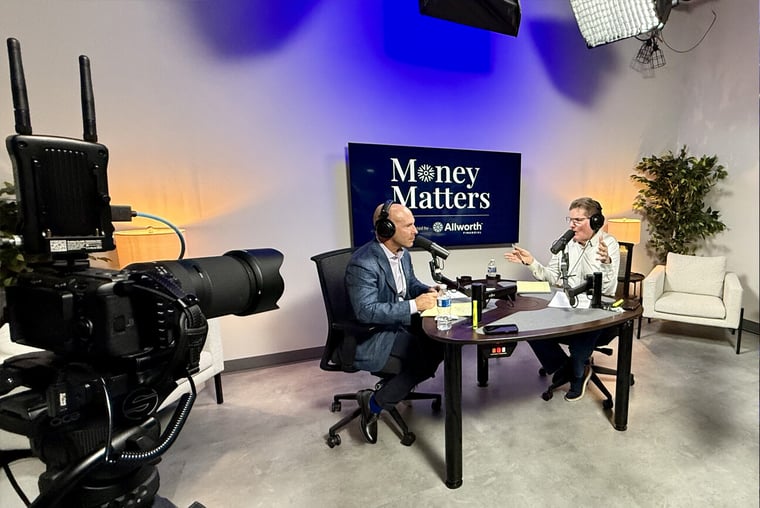
Worried about how the upcoming election will impact your investments? In this special bonus episode of Money Matters, Scott and Pat are joined by Apollo Lupescu, Vice President at Dimensional Fund Advisors (known as the "Secretary of Explaining Stuff"), to look past the political noise and examine what decades of market history actually reveal.
In this episode, they discuss:
Emotions vs. Evidence: Why politics triggers strong emotional reactions, and why successful investing requires separating those feelings from portfolio decisions.
Midterms & Market History: What typically happens to the stock market during election months—and why the data going back to 1950 might surprise you.
Presidents & Returns: A look at market performance across multiple administrations, from Nixon to Biden, and why policy is just one small ingredient in long-term corporate growth.
The "Single-Party Control" Myth: The surprising return statistics behind periods when one political party controlled the White House, the Senate, and the House of Representatives.
Staying the Course: How having a financial plan and an objective advisor can protect your long-term wealth from short-term election anxiety.
Join Money Matters: Get your most pressing financial questions answered by Allworth's co-founders Scott Hanson and Pat McClain live on-air! Call 833-99-WORTH. Or ask a question by clicking here. You can also be on the air by emailing Scott and Pat at questions@moneymatters.com.
Scott: Pat and I thought it'd be a good idea to have a bit of a podcast here with the elections looming and people are concerned about what's going on with what might happen to the financial markets depending on how the elections go. So, Apollo Lupescu is joining us. He's been a guest with us before. Apollo is a vice president at Dimensional Fund Advisors, and he's really known as the secretary of explaining stuff. I think that's...
Pat: And so, that's why we love having him on the show.
Scott: Yeah, because he's really good about taking what seems to be kind of complex issues and boils them down in terms that the everyday person can understand, which means, I can even understand them.
Pat: And I love the fact that he cites statistics in order to prove his point. And so, this time of year, every election cycle, we get these phone calls, well, what happens if the Republicans take it? Or what happens if the Democrats take it? Or what happens? Or what happens? Anyway, that's why we wanted to have you on.
Apollo: Well, first of all, thank you so much for the invitation. It's always been great fun talking to you. So, I appreciate the call, and I'm looking forward to this dialogue. Because as you said, there's a lot going on right now. And this is on people's minds. We're not far from the actual election day, so it's very timely.
Scott: Yeah. So, I'm sure you guys are good. Like, what's happened historically? Because my experience, Pat's experience, we've been advisors for three decades, after every election, there's always a client or two that calls concerned. I don't care which party it is. They're concerned because the Republicans won, the Democrats won, whatever it is, "Maybe we should get out because it's going to be bad." So, give us a little perspective there.
Pat: Actually, someone called me when Trump was elected to office that had been out of the market all four years of the Biden administration.
Scott: That's what I said. That's what I said. I hate him or love him, still it was a good four years.
Pat: And this was a family friend and I said, "Well, look, we can address this issue, but the bigger issue is actually you, not the administration."
Scott: So, give us a little color here.
Apollo: Well, I think the place to start is to recognize, whether it's your friend or somebody else, that politics in general, they do touch our deeply held beliefs. They're almost our core identity as individuals. And because of that, they trigger some very strong emotions. And I think it's perfectly fine to have these emotions because that's what makes us human. On the other hand, what I'm here to tell you is that really successful investors, and I've seen this over and over and over time, they are able to acknowledge these emotions, and at the same time, disentangle them from investment decisions. And whatever investment decisions they make about their money, they are not be based on how they feel, but much more pragmatically on data and evidence.
So, that's kind of a really good place to start because whether it's your friend or somebody else, I can tell you that a few weeks from now, about half the country will be very disappointed, and you will see things very darkly, and the other half will be cheering up and feel very good about the future. And that's just not necessarily the data speaking, but it's the emotions, and they're real. And again, it's perfectly fine to have them, and it's perfectly fine to act upon them the right way.
You know, go vote, go get involved in a campaign if you really feel like it. That's a great way to do it. It's just when it comes to your money, you have to be much more pragmatic. And I think that's kind of the place that I want to start because, to your friend, that emotion was real. And I think that then in his mind, he wasn't making a foolish decision. He was just driven by emotions. And frankly, a lot of times make decisions on emotions. I married my wife, not because of spreadsheets, because of emotions. So, we do make some emotional decisions, but when it comes to money, it's a little bit different.
Scott: It's a lot different. And that really applies not just to the markets, but in investing in general. It's like, we have the emotions for a variety of reasons, but we have to step back and really look at, what is the data? And my guess is, even with your spouse, you did look at some other factors besides just some date. There was some data, probably.
Pat: So, Apollo, how do you separate yourself from that emotional aspect? I mean, it's easy for us to sit and talk about not having emotions.
Scott: Yeah, but the election is going to happen, and there's going to be, to your point, half are disappointed, half are happy. How do you separate yourself?
Pat: Yeah, and with the data.
Apollo: Okay. So, to kind of answer Pat's question first, I think it's incredibly hard to do it without a financial advisor. You need to have a sounding board. You need to have somebody who listens to you and empathizes, and ultimately, it's not telling you what to do, but it's putting a perspective. It kind of makes you maybe see things a little bit differently. And if you're by yourself or ,just, basically, it's an echo chamber with your friends and you watch the same news channel, that's going to be hard to do. So, the first thing is that you need to have a financial advisor. And that's why you've been doing it for so long. And that's why Allworth and you guys have been so successful, is because you have this ability to coach people through this. Otherwise, it would be very hard.
When it comes to data, let's just take, like, the first piece of data, you know, this idea of the election. And I also think there are different layers of data, but let's start with the midterm election that's coming up. And look at, what have we seen historically when it comes to these midterm elections and how the market does? And if you look at the midterms, they happen every two years, and we looked at data going back to 1950. And if you go back to 1950, you see there were two instances when Congress form from being Republican to the Democrats. There were two instances when it stayed Republican. There was one time when he went from being Democratic to Republican. Quite often it stayed Democratic, and then there was also a split.
So, you have all these different scenarios that you can examine and ask the question, when you look at the data, not emotionally, you look at the data... Let's start with the month of November. Because quite often people say, well, the month of November is special because there's additional uncertainty, and somehow the market supposedly don't like uncertainty, and that's not going to be good for the market. So, what happens in that month of November when we have a midterm election? And you have all these different scenarios that you can look at. And what's fascinating is that when you actually look at data, what you see is, in all but two years, the market was either flat or positive in the month of November. The only two years that the market went down, 1974 and 1994, but the rest of the time the market went up in November.
Scott: That's pretty interesting when you think about it because it's what, second Tuesday of every November when the election is happening?
Pat: Exactly.
Apollo: Yes. Or every other November. Yes, exactly right.
Pat: So, there's no statistical significance here in the numbers.
Scott: Not at all. Not at all. I mean, you know, if you're in...
Pat: You're like, okay, so this is like an old wives' tale.
Apollo: I know.
Scott: If you look at the data...
Pat: The market goes up more in November than the average.
Apollo: Exactly right.
Scott: But the market goes up more in average than any other. So, in November, it has more positive months than the average month has a positive month.
Apollo: Yes. But again, I mean, you can parse the data any way you want. I think that when I looked at the data, rather than try to make a prediction or try to make people feel good or bad about the election, to me the very simple point is this, when I look at data, I don't see a big warning sign that screams at me, "Oh, my gosh, in the month of November during a midterm, I typically see a bloodbath in the market." I don't see that at all. In fact, all, but two years, the market was flat or positive. So, in that respect, it's more about, "Do I see something there that gives me some anxiety about what might be coming next?" And the answer is no. I have no idea what's going to happen this November. It's just that when I look historically, going back to 1950, I don't see that big downturn coming in the month of November. And in fact...
Pat: Apollo, excuse me, do you think psychologically it's because when people are looking for bad things, they will find bad things?
Apollo: Absolutely. I mean, and they want to find...
Pat: If all the news is just filled with doom and gloom, that's what I'm gonna be able to see, is doom and gloom.
Apollo: Exactly right. Exactly. And I'm going to look for the simplest explanation that sort of aligns with my view of the world. And that's what people are going to do. And that's the trouble. But when you look at data, you actually can get a bit of a perspective. Because when I saw this, it's like, well, there's a bit of reason for optimism rather than pessimism. But let's fast forward 11 months so we can complete the year. So, what happens over the next 11 months in the market, because that's also interesting because that's when we're supposed to have policies come into effect and so forth. And if you do that, what's really interesting, Scott and Pat, is that when you fast forward those 11 months, there's not a single negative period in every single period following the election on the 11th.
Scott: Well, it means we're doomed.
Apollo: We're doomed. I mean, this is harder to see the doom in...
Scott: The podcast is over.
Pat: That is pretty amazing, actually. Thank you, Apollo.
Scott: When you look at... Because historically, the stock market loses about one out of every three and a half years, right?
Apollo: Yes. One in four, yes.
Scott: It used to be. So, what you've got, 100% of the time going back to 1950, we've had a positive return the 12 months following midterm election, that's pretty amazing.
Apollo: Absolutely. And I have no idea. The point of this is not to predict that that's what is going to happen. The point is that, if you're going to be a pessimist, even now, you're going to have a hard time saying, "Well, I see clear reason for pessimism." If you're an optimist, maybe you see more of a reason to be optimist. All I'm saying is that it does not appear to me that a midterm election is a great cause for concern looking at data. And even, you know, remember the two months that the market went down in November, it was 1974 and 1994. Only turns out those are also the only 11 months periods when the market actually went up over 30%. And if you got scared and say, "Oh, market went down in November, I can see this is a precursor for what's going to come next," it was exactly the opposite.
So, over and over, I think that the message that we want to send to investors is it's emotional. I think you have to stay steady, you have to stay calm, and you have to be pragmatic because when you are pragmatic, what you're seeing is that the election does not appear to be that red flag warning that watch out, there's trouble coming down the road. Not at all. Nobody knows what's going to happen over the next year. I can tell you in the data historically, I don't see reason for panic.
Pat: And the same goes, the same truth holds whether it's a Republican or a Democrat in office. So, when I talked about earlier my friends staying out of the market for all of Biden's years, they hired an advisor at Allworth, and they sent me a thank you note six months later saying how great it was.
Scott: Really?
Pat: Yes, this was so great. And I thought, the advisor didn't do anything special. All they did was just able to manage your emotions around your portfolio.
Scott: And have a plan backed by data. On that point, Apollo, so when you look at the data, do we have empirical evidence that shows that an investor, when given the data, are able to control their emotions better and have better outcomes as a result?
Apollo: I don't believe. I don't think there's data that I've seen. I just also don't believe. Look, look, there's plenty of data to show you that smoking is bad for you. And people still do it. I mean, they know it's bad and they still do it. You know there are a lot of things that you ought not be doing, but people still do them. So, I don't know that the data will necessarily persuade. I've come to realize that the only way... Nobody can change my mind and I cannot change your mind. You're the only one who can change your mind. I'm the only one who can change my mind. And quite often, what I found is that the way to change my mind is for somebody to ask me the right question, and I then question my own beliefs and then I open my own mind. So, to me, it's less about persuading somebody with data. In my opinion, it's much more about ask yourself some questions, or have somebody ask you some questions that ultimately makes you open the door to maybe a different view.
Scott: Yeah, that's a good point. Like, what's the likelihood you'll need these dollars in the next five years?
Apollo: Exactly right.
Scott: So, you're 48 years old and they were talking about your 401(k) or whatever it is.
Apollo: That's exactly right, exactly right. And you can look at data. Let's say, look at presidency, to your friend, the person who had the issue. I mean, we look at the presidents to see, is there something that having a Republican or Democrat in the White House makes sense? And I'm born in 1969, so I just took my lifetime. And the average market growth over this time period in the S&P 500 has been roughly about 10%. So, let's use the sort of the yardstick, the bogey. And if you look at the first president when I was in the White House, it was a Republican, and there was President Nixon for about five and a half years or so in the White House. And on average, the market dropped by about 2.9% for the time that he was in the office. And then his vice president came along for about three and a half years, and the market skyrocketed at over 20%. And quite often, people are saying, "What about President Carter? How did I do?" Well, it turns out that during the four years of President Carter, the market went up a little bit above average, 11.7%. And then...
Scott: You know what's actually interesting about that because people refer to the Carter years as hyperinflation, slow economic growth, and the market was...
Apollo: Exactly. And I've done enough events when I asked people, who do you think is a president in my lifetime during which the market had the worst performance? And I can tell you that number one pick across the country happens to be President Carter. I don't know why, but everybody kind of points to him.
Pat: Was him?
Apollo: Look at President Reagan, eight years in the White House, the market goes up above average 15.8%. His vice president, George H. W. Bush comes in four years, 13.9%. And then we have President Clinton, 17.6% on average for eight years. And then we had Bush v. Gore, President George W. Bush comes in the White House, and on average during the eight years that he's in the White House, negative 4.4% per year. Followed by President Obama at 16%, President Trump 15.2%, and President Joe Biden at 14.7%. So, you know, if you look at this, to answer your question....
Pat: But, Apollo, none of this means anything. And the reason I say that is because it takes so long for capital formation to work itself through a marketplace. The president that makes it up before them might be...
Scott: They may have a lot of power, they may have limited power, too.
Apollo: Well, to your point, that's exactly right. It's looking at a president and trying to make a decision about how the market's going to deal, what should I do with my money, to exactly that point, it's a fool's errand. Because if you look at George W. Bush, President George W. Bush, he was extremely business friendly. In fact, he cut taxes specifically to investments. And you can look at the number and say, "Well, he was not good for the market. He was there for eight years and the market dropped by negative 4.4%." Now, to your exact point, he came in exactly as the dot-com was going bust, something he had nothing to do with. And then 9/11 happened 9 months into his term, and then he walked off at the very bottom of the financial crisis that's been brewing forever. So, to me, is it fair to say, "Oh, we should blame him for not being a good president for the market?" No. And on the other hand, President Clinton happened to walk in just as these tech giants start taking off, something that the White House didn't have much to do with. And talk about market timing.
Scott: This all depends on your persuasion.
Apollo: And that's before he turned...
Scott: Because if I'm a Democrat, I'd say, "Just look, obviously, we need the right kind of Democratic leader." And if I was a Republican, I'd say, "Well, clearly it's not fair to give W. the blame for it."
Pat: Well, all you just said was success has 1,000 fathers and failure is an orphan.
Apollo: Exactly right. And you want to believe what you want to believe. If you want to believe something, I won't change your mind. I just think that when you look at data... And I did ask this, and I asked this in the south and in the northwest, everywhere across the country, and I asked that when you look at this data, when you look at this visual, and you look at the numbers, is it a clear evidence that having a Republican or a Democrat in the White House is better or worse for the markets? And I can tell you, people across the political spectrum, pretty much everybody that I've asked, nobody was able to say, "Yeah." No, no, nobody said that. Everybody's saying, yeah, it doesn't seem to be related. So, to me, it is really interesting that people want to believe that, but when you look at data, it's not there. And even policies, you know, you look at president...
Scott: I know we could also look at this. I'm sure you've got them, but we're not going to take all the time to do it. But you can look at, say, all right, what happens if the same party control both houses and the White House, what was the return like there? And you're going to find the same randomness.
Apollo: Well, it's interesting because it's exactly what I got asked back in 2020 when President Biden got elected, because people were a little concerned about at the time having the Democrats in full control, the unified government, which doesn't mean holding hands and singing "Kumbaya", but the single party control. So, back in 2020, I did get that question. I did run some numbers back in 2020 that looked at the periods when the government was actually controlled by one party, the single party control. And I think what's interesting about this is that it's almost an ultimate way to look at, how good is a party for the market relative to the other? Because there is no place to hide. You control the White House, the Senate and the House. So, at that point, boy, you know, if you control everything, that's a clear sign of the impact of that political party on the market.
So, when we ran the data going back to 1920s, what we found is that the Republicans actually had this unified single party control for 13 years, all just different time periods. And when you do an average of these 13 years, what you see is that the market went up quite nicely by 14.52%. So, we had a nice growth during the Republican unified single party control. The Democrats turns out they also had this, but not 13 years, rather a lot longer. It was 34 years. And the question is, how did the market do during these 34 years of Democratic control? And the first time I showed the data, somebody actually walked out because they said, "You're going to try to show me that one party is better than another. I don't want to know." Because, like, listen, I get it, it's very emotional. I get that. And I'm not here to tell you that one party is better than the other. This is just data speaking. So, when you look at the average of the 34 years when the Democrats had full control the White House, the Senate and the House, the average for those 34 years is 14.52%.
Scott: That's crazy.
Apollo: It is identical to the second decimal. It's identical to the second decimal.
Pat: And this goes back to starting in what year? This is?
Apollo: 1926.
Pat: '26 through the year 2000.
Apollo: 2020.
Scott: Okay, all right. We got to wrap this.
Pat: That's amazing.
Scott: What we have determined...
Pat: It's pretty good.
Scott: ...from this, Apollo, is okay, I'm not voting. I'm not going to vote.
Pat: Well, if we said 14.52%, 14.5%, what we determined is that the long term markets has nothing to do with the politics.
Apollo: Exactly. I mean, listen, and I'm not here, just to clarify. I'm not here to tell anybody. Because people are going to say, "Well, are you telling me that politics really has nothing to do with companies, business?" I'm not saying it at all. What I'm saying is something much more fundamental, is that, you know, when you invest in the market, you buy ownership into a company. And the value of the ownership depends on how much money that company is going to make. And if you think of any company out there, you know, the election and the policy certainly matters. It's just it is not a primary variable. There's so many other variables that matter, like their products, their strategy, how they execute it. And this is one of the many, many, many variables. It's just not a primary one.
And the way I thought about it is that if you make some cookies, and every once in a while I make cookies with my daughter, and when you put in the eggs, the sugar, the flour, the butter, you mix everything, you put in the oven, after the cookies baked, then you break it apart, you can't really point and say, "Aha, I recognized the egg yolk in there." No, you can't. It's mixed in with so many other ingredients that it becomes indistinguishable. And I think the good news is that it's the egg yolk in a cookie, it's not the garlic in a cookie. It doesn't stink it up enough to recognize it, but rather, it's one of the many, many, many ingredients that goes into the market performance, is just what the data is saying that it is not a primary one. It is not one that drives performance. And because of this...
Pat: Companies are made up of people and people respond to marketplaces that are most advantageous to them.
Scott: Absolutely.
Pat: And if you show me the incentive, I'll show you the outcome.
Scott: That'd be right.
Pat: It's that easy. And so, if one party puts up more roadblocks, they will figure out a way around it. That's just how... Show me the incentive, I'll show you the outcome. That's what drives price of stocks, is the incentive to grow a company on a profitable, long-term base.
Scott: And people are quite creative at navigating whatever's thrown at them.
Apollo: Absolutely.
Pat: Any way, Apollo, as always...
Scott: Thank you for taking the time.
Pat: ...thank you. And look, the best thing about this election coming up is that the emails and phone calls and texts will stop the very next day. The best thing about the election.
Scott: I appreciate it very much. We'll see you.
Apollo: Bye-bye.
Automated Voice: This program has been brought to you by Allworth Financial, a registered investment advisory firm. Any ideas presented during this program are not intended to provide specific financial advice. You should consult your own financial advisor, tax consultant, or a state-planning attorney to conduct your own due diligence.
Insights for Complex Wealth Decisions
Join our email list for exclusive commentary from our Chief Investment Officer, early access to expert-led webinars, and your complimentary Wealth Planning Checklist for Complex Portfolios.
We take your privacy seriously and respect your privacy choices. By submitting this information you agree to our Terms of Use Agreement, Privacy Policy, and to receive important notices and other communications electronically.