
Can You "Die with Zero?" | Spending Down Multi-Million Portfolios
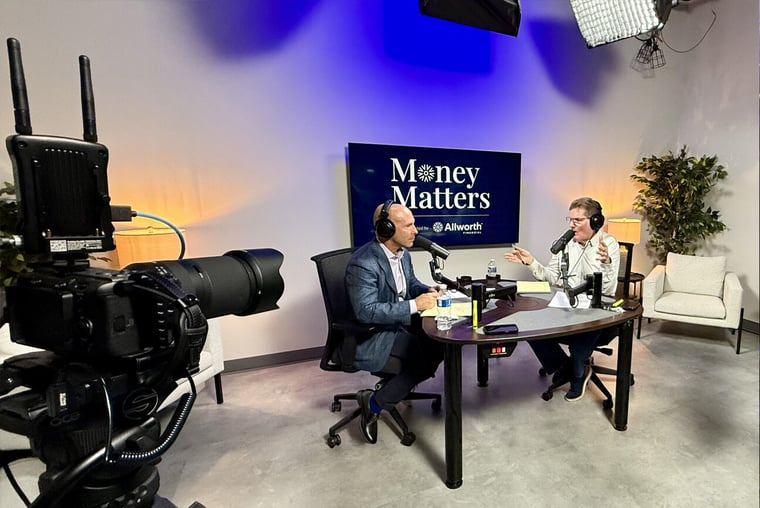
Can you truly "Die with Zero" when you’ve built a multi-million-dollar portfolio? On this episode of Money Matters, Scott and Pat dive into real-world retirement scenarios covering aggressive tax strategies, spend-down plans, and smart estate transfers.
In this episode, Scott and Pat cover:
The "Die with Zero" Strategy: A 49-year-old entrepreneur with $5.5M in savings wants to know how to safely spend down assets without jeopardizing long-term security.
Solo 401(k)s & Roth Conversions: Navigating tax-efficient withdrawals alongside non-qualified brokerage assets and ongoing business income.
The Short-Term Rental Tax Trap: Can buying an Airbnb offset Roth conversions via bonus depreciation?
Estate Planning & 529 Strategies: Partner Advisor Mark Shone joins to discuss IRA distributions, tax-efficient legacy planning, and funding 529 plans for grandchildren.
Join Money Matters: Get your most pressing financial questions answered by Allworth's co-founders Scott Hanson and Pat McClain live on-air! Call 833-99-WORTH. Or ask a question by clicking here. You can also be on the air by emailing Scott and Pat at questions@moneymatters.com.
Scott: Welcome to Allworth's "Money Matters". Scott Hanson.
Pat: Pat McClain. Thanks for joining us.
Scott: Glad to have you with us as we're chatting about financial matters, answering people's questions, talking a bit about the overall economy and the markets.
Pat: Yes, and some planning ideas, financial planning. And in fact, later on in the show, we're going to have our senior advisor in both age and seniority at the firm join us to talk a little bit about a Roth conversion combined with a distribution strategy to create cash flow. And if that doesn't keep you to the end of the podcast, I don't know what will. It's a Roth conversion and a distribution strategy for increased cash flow.
Scott: It is complicated.
Pat: It can be.
Scott: It can be. You don't have any assets in retirement. It's pretty simple. All you have is Social Security. You realize the majority of retirees receive the majority of their income from Social Security. That's the majority of retirees. And I know anyone listening is like, "It seems hard to believe," because we all live in our own certain bubbles, right?
Pat: Yes, yeah.
Scott: And your friends are of similar economic, maybe a little different, but somewhat similar social economic systems.
Pat: Yes. Yeah, life is hard. And the K-shaped recovery is not helping.
Scott: Pat, we were talking before the show, just the amount of wealth that's been created the last decade for so many, it's been quite incredible.
Pat: Asset. It's all asset wealth.
Scott: Business owners, stocks.
Pat: Real estate.
Scott: And real estate hasn't been so much the last few years.
Pat: But it's...
Scott: Depending, yeah.
Pat: Depending on where you're at.
Scott: Very much depending. By the way, I was reading an article about Malibu. You know, they had the fires.
Pat: And then they got washed to sea. Is that the same place?
Scott: Yeah, same place. But people are moving out. You can understand. So, if all your neighbor's houses burned down... So, apparently, there's quite a bit of inventory. Things are selling for... It's a pretty cheap time to buy if you want to buy in Malibu. You can understand it, particularly if you have that kind of wealth, to have a waterfront home in Malibu, you're maybe like, "Maybe I should go somewhere else in the Southern California region to have a waterfront home. If Malibu, I'm going to be dealing with the construction forever."
Pat: The rebuilding and the whole... Yeah, and you can't rebuild the same way because the building codes from 1950 no longer allow you to just throw some telephone poles into the sand and hope for the best.
Scott: That's right. So, those investments haven't done so well, any. But it's been, to your point, the whole K-shaped recovery.
Pat: It's real. And even if you look at millennials, half of them are doing really well and half of them are doing quite poorly.
Scott: I mean, I know a lot of younger people, 30-year-olds that are making a couple hundred grand or more. And I know a lot that are still a barista.
Pat: Waiting tables.
Scott: Yeah, yeah. It's really interesting. Anyway, why don't we take some calls? Let's start off here in New York with Rich. Rich, you're with Allworth's "Money Matters".
Rich: Yes, how are you guys doing?
Scott: Fantastic.
Rich: Good. Nice to talk to you. I'm calling today from beautiful Saratoga Springs, New York. And I think...
Pat: Where is Saratoga Springs?
Rich: Yeah. Saratoga Springs, state, New York.
Pat: Saratoga Springs.
Rich: Yeah, North of Albany. Just north of Albany.
Pat: Oh, very nice.
Scott: Probably is pretty this time of year.
Rich: Yes, it's beautiful. I think...
Pat: Yes. Enjoy the last few weeks of niceness in your neighborhood.
Rich: Right, right. Today, I think is the last day in the 70s, essentially.
Pat: Yes. But it is beautiful up there. What can we do for you?
Rich: Either turning... Yeah. So, thanks for taking my call. I appreciate it. It's great to talk to you guys. I'm a new fan. I just stumbled across your podcast a few weeks ago, and I've really enjoyed it. I've been binge listening to all the ones that have been done in the past.
Scott: All right. You can see why we don't make a lot of predictions about the future.
Rich: Yeah. Very interesting, again, coincidentally, I'm from Sacramento. I'm born and raised.
Scott: Oh, really?
Pat: Really?
Rich: Yeah.
Scott: What are you doing in upstate New York?
Rich: Yeah. So, my wife and I, we split time. So, we're here May through Halloween, basically. And then we come back to Sacramento when the temperature is cold.
Pat: That makes sense.
Scott: Quite nice winters in the Sacramento.
Pat: And you went to elementary school in Sacramento?
Rich: I did. Elementary and junior high and high school.
Pat: All right. Where'd you go? Just out of curiosity.
Rich: Yeah. So, I went to Callen Fundamental. And then Arcade and then El Camino.
Pat: There you go. And it was a fundamental school as well.
Scott: All right, what's your question for us?
Rich: So, I wanted to get you guys' opinion on where my wife and I are at financially, and then particularly ask you about spending through our retirement. Our goal is to use as much of our assets as practical before death, whether it's gifting it to our kids when we can see them use it or just enjoying it for fun stuff. So, we're not interested in building a big asset bank to just die with a large bank account. It's kind of "Die with Zero" is a book we read and we really liked it. And we know you can't really die with zero, but it's kind of like...
Scott: Lots of people do though. The ones we were just talking about. Anyway, how old are you, Rich?
Rich: Yeah, I'm 49 and my wife is 48.
Pat: And do you work?
Rich: No. So, we both have built businesses independently. So, they're separate businesses. I sold mine four years ago. And so, we're both kind of like entrepreneurs and workers. We can't stop. So, we don't really see ourselves retiring. So, I'm working on something else right now. She's continuing to work her business.
Pat: So, she's not retired. You're retired.
Scott: No, he's working on a new business.
Pat: Yeah, correct. But you've got no income coming in, but you sold your cash flow for capital.
Rich: Yeah. So, I sold my cash flow for capital. I do have some income coming in through new biz. And she has income coming in through her business.
Scott: Okay. What's your family income that's coming in?
Rich: Yeah. So, let's combine that. So, let's see where my note's at. So, she's at $12,000 a month, and I'm at $10,000 a month. And then we have a little rental income, $2,500 a month.
Pat: Okay. So, you're at $288,000 a year.
Rich: Yeah. And I don't know that it would matter for the conversation or not, but we both should be getting Social Security, should be.
Pat: Yeah, you're not going to get any, but keep going.
Rich: Oh, that's bad. So, sad.
Pat: And what did you sell your business for?
Rich: So, roughly just north of $6 million.
Pat: And what did you get net tax?
Rich: Yeah, that's a good question. I'd have to go back and get all the math, the feds, the state.
Scott: Yeah, whatever. It's four years. What do you have now? Tell us about your financial situation today then. That's your income. What are your assets?
Rich: Sure, sure, sure. So, we have the house in Sacramento. It's $2.5 million. We owe $400,000 on it. It's a 3%, so I've just been leaving that alone. The New York house is $1.5 million. It owes $700,000, 5.5%. We have a portfolio. I guess after tax or taxable, so all the money was put in after it's been taxed. That's at $5.5 million. Life insurance, like cash value life insurance, $180,000. Cash, $160. And then we have a bunch of other stuff, like we have a small airplane, cars, boat, all kinds of stuff.
Pat: Yeah, disposable.
Rich: Yeah, that's like a million bucks. And then my new biz, I mean, I think it has a valuation today of $2 million.
Pat: Oh, good for you.
Rich: Yeah, thank you. I think in seven years, it's probably like a $7 million exit, maybe north. It's something that is saleable. And then the wife's business, not too sure on the valuation, e-commerce. So, she kind of downsides it, but it still puts off a nice monthly profit.
Pat: And so, what's your question for us?
Rich: Yeah, so the main question is, you know, being that our goal is to deplete most of our assets before death, how do we go about adjusting spending annually while leaving a margin of safety? I feel like we have a little bit longer runway than most. I was listening to somebody on another podcast saying we're going to live to 120, so that's another worry. But how do you...?
Scott: Maybe I should be listening to that podcast. I mean, I've seen some... And who knows, with future medical, right? I mean, there are some pretty interesting breakthroughs and discoveries over the last few years.
Pat: Do you have any money in IRAs?
Rich: No.
Scott: Okay. So, how much are you spending?
Pat: Do you have employees?
Rich: No.
Pat: Does your wife?
Rich: No, not anymore.
Pat: And how much are you spending now?
Rich: So, we're at $20,000 a month right now. And there's a little room in there, so we could get it tighter, but...
Scott: I think you're spending more than that. Between your two houses, the property taxes on those, the insurance on those, the cost of maintaining the airplanes, I think you're spending more than... Which is fine. I just think...
Pat: How many kids do you have, two?
Rich: Well, we have three kids. They're all out of the house, and they're all out of college.
Pat: Okay.
Scott: Wow, good for you.
Pat: My gosh.
Scott: I still have a 16-year-old at home, so...
Rich: Well, the baby's in her last year, and she's going to graduate in June, so I guess it's coming up, but the older two are out. You know, and the... I mean, we bought each house for a million bucks. I mean, I'm looking at our spreadsheet right here, and, you know...
Pat: I think you might be spending more than that, but I'd be comfortable.
Scott: It's fine.
Pat: I think it's absolutely fine. I'd be comfortable spending 3% to 4% of that brokerage account on an annual basis. I don't know. I kind of wonder if they should not be setting up a defined benefit pension plan.
Scott: I thought that or just a...
Pat: A profit sharing or some sort of a...
Scott: The pension.
Pat: How is the brokerage account invested?
Rich: So, the brokerage account... Let me run through that with you guys. I looked at that. So, U.S. large cap, 30%.
Scott: Are you individual securities or ETFs or what?
Rich: Yeah, so it's just a whole mix. It's in a private client services, like $2 million or more to enter. It's, you know, described as I'm in the... I don't know what you're most interested.
Pat: A big bank.
Scott: Are they individual securities or ETFs?
Rich: Yeah, so it's individual... I mean, I look in there, and I see, you know, Meta, and I see NVIDIA, I see Amazon.
Scott: And is there any tax lost harvesting?
Rich: Yeah, they are doing that, but I haven't had the need for that, apparently. I mean, I haven't touched a thing.
Pat: I understand, but they should be doing it anyway. So, you've got 30% in large cap.
Rich: Yeah, and then U.S. mid cap, 13%. U.S. small cap, 7%. International developed markets, 20%. International emerging markets, 9%. Real estate, 5.5%. Commodities, 2.5. Fixed income, 10%. Cash, 2%.
Scott: Very aggressive.
Pat: Yes. I don't know if that's bad, though. And you're not taking any income from it.
Rich: I haven't touched it.
Scott: I was just as aggressive when I was that age with my savings.
Pat: Yeah, and he's not done.
Scott: You're not done. Yeah, correct, you're not done.
Pat: The hardest part was trying to figure out the business the first time. The second one is easier. The third one's easier.
Scott: I mean, that's what I... I mean, I think I'm looking at this way, like, I mean, I could picture you 10 or 20 years from now. You have a lot more wealth than you have today.
Pat: Yeah, you're going to die with a lot of money, unless you get a bigger plane.
Rich: And so, we want to bucket it, and we want to use it in our 50s, right, when we still want to get on an airplane and all that stuff.
Scott: Well, you probably will in your 60s and 70s, too.
Pat: And even 80s.
Scott: Depending, yeah.
Pat: Yeah, I'd be comfortable spending 3% to 4% of that brokerage account. And I would make sure that they're doing some tax loss harvesting on that.
Scott: The last thing you want is a tax bill from your brokerage account. You'll have some, but if it's managed properly, you should be able to generate some losses so when you or your wife sells a business in the future, you've got some capital losses you can use to offset those gains.
Rich: That makes sense. But if you spend 3% to 4% of that brokerage account, I mean, it doesn't seem like we're going to spend the principal ever.
Pat: That's right. But you're not spending any of it now. So, let's start with a number, and then we can move it up if we feel comfortable.
Rich: Okay. And that's kind of where...
Scott: But look, but I don't think you want to be... If I were in your situation, I wouldn't want to be spending that principal. Like, what happens if you become disabled tomorrow?
Rich: Yeah, I mean, I have an insurance policy for that, but, you know...
Pat: You have a disability policy?
Rich: And I get it. What's that?
Pat: You have a disability policy?
Rich: I do.
Pat: How much do you have in disability insurance?
Rich: Oh, gosh, I think it pays like $12,000 a month or $10,000 a month.
Scott: You must have bought this years ago.
Rich: I did, yeah.
Pat: You're very disciplined. I don't know. I don't know. I would make sure I...
Scott: I think I dropped my disability at that round...
Pat: I did. I dropped mine as soon as my net worth was high enough to actually cover the income.
Scott: I did too. I did too.
Pat: I would read that policy to make sure it covers you for... Did it cover you when you were self-employed?
Rich: I don't know.
Pat: I would go back and read that policy, because there may be caveats in there that actually replaces income that you no longer actually have from your business because you sold it. So, that's the first thing I'd do, is I'd go back and read that policy. I'd be very comfortable taking 3% to 4% out of that brokerage account. And it...
Scott: Just have them send you a check each month.
Pat: Yeah, and you may not even have to pay taxes on it.
Scott: If it's structured right, it shouldn't be terribly. I mean, you'll have some taxable dividends, but they're qualified dividends.
Pat: Correct. And then I wonder, I actually don't know. I'm torn whether I would put in a retirement plan in place or not. I'd have to think about that.
Scott: I would.
Pat: You would. Why? You're pretty confident. I'm torn. You're confident. Why?
Scott: Because of the tax deduction they can get off of it today. Although you're not that high of a tax bracket relative to your net worth right now, particularly at your age.
Pat: Yeah. And so, if we really believe he's a serial entrepreneur, which it sounds like you might be, your next business probably won't be your last one. Scott and I together have... And I hate the word entrepreneur just because everyone calls themselves that.
Scott: We've had a few businesses.
Pat: We've had five. We only talk about three of them.
Scott: Okay. That's true. And someone said to me, "Scott, you seem like you have the minus touch. Everything you do..." I said, "Nah, you don't hear about the things that don't do well."
Pat: Yeah. And fortunately, the ones that don't do well, we pulled the plug on early. I mean, it was a concept that we tested, and it didn't work. And when I pull the plug, before you get too deep, don't chase something that's not going to work. Yeah, if you were my client, I'd start a 4% distribution to tell you just to enjoy life. I'd make sure it was super tax efficient. And then maybe I'd start easy with just a Uni-K for the wife on qualified money.
Scott: I mean, you have obviously made a decision in the past not to contribute to retirement accounts, IRAs, Roth IRAs, because you can do a Roth Solo-K as well.
Pat: That's right. I actually kind of like that idea. I like that idea.
Scott: You can do it for both of you.
Pat: Yeah, I would do a Solo-K.
Scott: And it's flexible. And if you set it up...
Pat: Even if you drained your brokerage account to fund it, I like that idea.
Scott: Absolutely.
Pat: Because it's much more tax efficient.
Scott: You put what? $70, $75 grand in or something this year?
Pat: Yes. Do you have a...? You shouldn't be calling us
Scott: He's got a private client.
Pat: Yeah. You work with a big firm like a Merrill and Morgan or something like that.
Scott: If he had $10 million, it'd be the super-duper private client.
Pat: The red carpet private client. So, I would actually look at Uni-Ks for both you and your spouse, Roth contributions, and a 4% distribution. And I'd go back and read that life insurance policy. When you say you have $160 grand in cash, is it in cash, or do you have it in, like, cash-like securities? Is it paying?
Rich: It's like 4%.
Pat: Okay, perfect. I got it.
Rich: I call it a checking account, you know.
Pat: Okay, perfect. Yep, that's what I do. Does that help?
Rich: So, yeah, it does. I just... Not to beat a dead horse here, but at some point, it's like I think I need to start really... We want to chew this stuff up. So, take your advice here, and the...
Scott: What are you missing out on now?
Pat: Yeah, if you had more money, what would you do with it?
Rich: Well, you know, we want to allocate not just this minute, but in a couple of years, probably the kids are going to want houses, right?
Pat: Yeah.
Rich: And do some big chunks like that. You know, what about the massive family vacation super high-end, right? I don't even know the price tag on that yet. But, you know, with a 4%... Go ahead. Sorry.
Pat: By the way, just start something now.
Scott: If you didn't have these other businesses, we'd both be like, eh, you know what I mean? You're kind of young, but, you know, $5 million of savings is pretty good. But the reality is you both have these businesses. You could have chosen not to work and spent this money already, but you have not. Not only that, you haven't touched it. You sold your business, paid the tax, took the money, invested it somewhere else, and then started another business.
Pat: Yeah. And so, you haven't spent any of this $5.5. So, let's start with baby steps and start a 3% distribution. That other stuff will come. Look, I have four children, Scott has four children, it will come. And in fact, the idea of the vacation, it's funny, these kids, you know, they love going on vacation, but, man, they're busy. You put a nice vacation in front of them...
Scott: They show up.
Pat: ...they show up.
Scott: Well, you know, it's funny. Pat and I were just talking. We both, our oldest kids are just 30. We each have four kids. And I was talking to Pat. I always pay for my kids to fly home to see me. I don't care when it is. If they want to come home, "Hey, can I come home tomorrow night?" "Great. I'll pay for your flight." I don't care because that gives me a chance to see them.
Rich: Absolutely.
Scott: And it's a big expense if I add it up on an annual basis, but I can afford it and it's important to me.
Pat: Yeah, so just start with the 3%, read the disability policy, and then...
Scott: I do think a Roth Solo-K for both you guys before the end of the year. You can funnel a bunch of money in. And I know your plan is to die zero, but just from a tax planning standpoint, I mean, you can imagine if that $5.5 million was in a Roth as opposed to in a brokerage account, it would be much better for you.
Pat: It would be so much. And this is just a way that you actually bleed it over from the brokerage to the Roth without affecting your income.
Scott: I would look at that portfolio. I would actually say, "I want to see how this exact portfolio - give me an index similar to this and see how it's done relative to the index." And you might be better off with just using a direct index approach as opposed to having some money managers there. But I guess this is SMA with some money managers doing this. I bet there are teams making decisions.
Pat: Well, the only way we know it is if we looked at this statement.
Scott: I'm just guessing that's...
Pat: You might go for a second opinion, Rich.
Scott: Someone on a private client. I mean, you realize, Pat, you know this, these big firms, that's another profit source for them.
Pat: I also know that he comes to Sacramento for six months out of the year and we have five offices here. So, there you go.
Scott: You pitched last week. You can't pitch every week, Pat. It makes it sound self-serving.
Pat: Well, everyone's a little bit self-serving.
Scott: Actually, this makes no difference in your life whatsoever if he becomes a client or not, but it has a big difference, yeah.
Pat: But I'm doing it for him. I understand.
Scott: All right. Appreciate the call.
Rich: Thank you, guys, so much. Appreciate your time.
Scott: All right. Good luck to you in the future, too. I just think it's...
Pat: Actually, this is...
Scott: He's not going to die broke. He's going to keep working in some sort of business until forever.
Pat: Yeah, he's gonna do something. You did one.
Scott: Die broke?
Pat: No, you started another business.
Scott: You brought that up a couple of weeks ago, and technically, I haven't launched anything new. So, am I working on something in my future? Yes, I'm working on something in my future.
Pat: I've got your book in front of me, "The Private Equity Advantage", Balancing Price, Terms and Legacy When You're selling your business. Here you go
Scott: It's actually doing... I've gotten quite a few good reviews and stuff. I feel pretty good about it.
Pat: I wrote one.
Scott: A review?
Pat: Yeah, I don't remember where.
Scott: Oh, thank you.
Pat: Oh, no, I made a comment on LinkedIn.
Scott: Oh, write a review on Amazon. It's helpful for me.
Pat: Oh, I could do that.
Scott: The more reviews, the more I get near the top. I was number one in Private Equity.
Pat: What, four or five books? How many books are in Private Equity?
Scott: Two. No, I don't know.
Pat: Okay, I'll go to Amazon and write a review.
Scott: There's kind of a whole way to kind of...
Pat: Yeah, then pump the things up.
Scott: Yeah, yeah, yeah.
Pat: And by the way, that self-serving, is this not the time in the history of the United States where self-serving is kind of the same meeting?
Scott: Oh, my God.
Pat: Ask the Witkoff. Ask the Witkoff how it's going.
Scott: Crazy.
Pat: Crazy, crazy, crazy. Ask the Russian oligarch.
Scott: It is a...
Pat: Ask the Russian oligarch that paid for Don Jr.'s...
Scott: We try not to. Oh, my gosh.
Pat: I'm going to say it. Ask the Russian oligarch that paid for Don Jr.'s...
Scott: What he's getting in exchange.
Pat: For his party after his wedding.
Scott: I know.
Pat: It was crazy.
Scott: Yeah, two days. It was a very nice wedding.
Pat: And this is in a bash on... I like a lot of the stuff Trump does, but you can't deny reality.
Scott: My guess, Pat, even if you're a hardcore MAGA, wear the hat, and everything, there are things about him that you cringe. It seems like he's blowing through some political capital by some of the decisions he continues to make. But I know it's not political.
Pat: Anyway, and I mention that we have offices in Sacramento, and I get that self-serving discussion from you. So, let's go.
Scott: Well, at least he thinks bigger. If he thought bigger, like we're going to take 10% of your company.
Pat: Okay. All right, let's go. We've got to get back. We're going to touch the third rail here in a minute.
Scott: All right, we're talking with Todd. Todd, you're with Allworth's "Money Matters".
Todd: Hey, guys. How are you doing?
Scott: Good. How are you doing, Todd?
Todd: Good. I've been listening for about a year, and I've had I think at least one call with you guys before.
Scott: Oh, good. Thank you.
Todd: So, my question is it's kind of a different approach to Roth conversion paying taxes. I'll kind of give you some of the basics. We've got about $5.8 in IRA and $480 in a Roth. And then I'm pretty low on the brokerage now because I've been using it for conversions. But one of my kids is pretty business savvy and has been running her own Etsy business and doing well with that, and we want to help her get involved with Airbnb businesses. And so, what my wife and I are thinking about doing is getting in purchasing a short-term rental, and then cost-segregating that and then using the bonus depreciation as a way to give us more room in our Roth conversions.
Pat: All right. And then you would purchase it and then rent it to her? What are we doing here?
Todd: No, she would manage it. In other words, Airbnb is a short-term rental, I think. So, it's non-passive income, and it can go against and it can reduce your ordinary income.
Scott: Well, but there's limits on that. Your income goes above $125 or somewhere in there, you start losing it. You can't take a loss on real estate.
Todd: I think with passive income and long-term rentals, there's a limit, but on short-term rentals, my understanding there wasn't.
Scott: I don't know. I'm not an expert there.
Pat: And why are you doing this?
Todd: Well, one of the reasons is to help her build a stream of income that's independent of a W-2 job, just given the future, right? And she's been pretty good at business. And I don't want to manage an Airbnb, but she could be capable of doing that. And I guess there's a...
Pat: And how many children do you have? That was my next question.
Todd: I've got three kids. And so, they're all in their 20s, and they're all doing different things, and they're all doing pretty well. And she's finishing up college at 23. And this is something she's open to doing.
Pat: How much do you have in your brokerage?
Todd: Well, the brokerage right now has about $40,000, so it's going to be depleted by the end of the year.
Pat: And how would you pay for this house?
Todd: We would do a HELOC, a 10% mortgage using our HELOC for down payment.
Pat: And then?
Todd: And then we would be using the cash flow eventually from the Airbnb to pay the mortgage.
Pat: And how old are you?
Todd: I'm 64.
Pat: And your spouse is of similar age?
Todd: Yeah, 61. So, we're kind of doing the wait until 70 for Social Security.
Pat: And you call for our opinion? I would...
Scott: What is your question for us?
Todd: So, the question is, obviously, I don't have any brokerage money to pay the taxes on Roth conversions. And so, if you compare doing a Roth conversion using your IRA money versus having a short-term rental. So, let's assume that that income can go against ordinary income.
Pat: Okay. Well, you're going to make that... We don't know that answer, but we'll make that assumption.
Scott: I'm not an expert in the tax law in this area. My understanding, though, is for a business, for you to be able to take a loss on a business, you have to materially participate in it amount of time.
Pat: But that's not even it, Scott. I think it's a terrible idea.
Todd: Well, my wife would do 100 hours, which is a material participation.
Scott: Okay. I don't know what the hurdle rates are.
Pat: Okay. So, the question is?
Todd: Well, it's a way to grow a business that my daughter will eventually grow and own. And there may be a series of Airbnb properties over time. But in 2026, '27, we'd start with a single property. And one of the properties we're looking at, because we live in a relatively low-cost area, but in a college town, the initial mortgage would be, it's a $350,000 property, so if we did 10% down, it's about $35,000 or so from a new op.
Scott: If I were in your situation, this would be the last thing in my life I'd want to do. I don't know how many rentals you've owned in the past. Have you owned a rental in the past?
Pat: I've got rid of all my residential rental estate. I don't own anything. Have you owned...?
Todd: We did have a condo. And this is different because it's short-term rental. And I don't... The whole goal is to transition management to my daughter.
Scott: Todd, to try to look at this comparing to a Roth, it's apples and... It's not even the...
Pat: It's apples and tires.
Scott: You're buying a property and you're personally guaranteeing it.
Pat: Guaranteeing it with a 20-year-old daughter out of three kids. I think you're adding complications to your life that don't need to...
Scott: Everything has to go perfectly well for this to...
Pat: Yeah. I mean, if you said you were lending your daughter $150,000 so she could do it, I'd buy into that. I would buy into that.
Todd: I guess we like the idea of being capital partners.
Pat: I understand, but with that capital partner comes the risk of being a capital partner.
Scott: Like tenants don't leave.
Pat: Or the property doesn't rent and it doesn't cover and it goes back to the bank when the model doesn't work. Where you're at in your stage, what you've arrived to, there's no tax benefit.
Scott: I don't think there's a tax benefit here, but I would talk to CPA.
Pat: Even if there was a tax benefit. And then the animosity it creates between...
Todd: With the bonus depreciation, it would be about $90,000 to $100,000.
Pat: It could be at $250 grand and I still wouldn't do it.
Todd: Okay, is it because of the...?
Scott: Depreciation, it's not... You've got to recapture it down the road.
Todd: I agree.
Pat: If she was your only daughter, I could make an argument. You have three kids. You know, whether you like it or not, they compare to each other, "And so and so got this. And so and so got that." I don't know where... Unless you live in a family that is considerably abnormal. I've worked with hundreds and hundreds of clients.
Todd: I've been told that before, but, you know, that might have a different context.
Pat: I mean, if you wanted to start gifting the kids money or loaning her money to do this and writing it into your will or your trust, I would not be adding this sort of liability at your stage in life.
Scott: The complications.
Pat: You have made it, man. You're done. You are in top 1% of everyone in the United States and you are putting together a scheme that could ruin that.
Scott: And I actually don't think that you can take the depreciation.
Pat: Even if...
Scott: But I don't know.
Pat: But I wouldn't let the tax wag the dog.
Scott: I wouldn't either.
Pat: It's a business...
Todd: So, it doesn't make sense outside of the tax thing.
Pat: If I approached you and I was not your daughter, and I approached you with this business concept...
Scott: "Hey, take a home equity line on your home."
Pat: And I wasn't your daughter. In fact, I owned four Airbnbs, and I supposedly have a great track record and I was not your daughter and I approached you with this business concept, what would you say?
Todd: If I didn't know you at all?
Pat: Correct.
Todd: Well, I wouldn't. I wouldn't do it without a lot of diligence. So, yeah.
Pat: Yeah. So, anyway, that's our opinion.
Scott: Yeah, appreciate the call.
Todd: Okay. Well, thanks. I appreciate it. Thank you.
Pat: And thanks for listening to our show. And I hope this call wasn't so bad that you don't continue to listen to this show.
Todd: No, I subjected myself to this voluntarily.
Pat: You did. You did. All right, Todd.
Scott: Well, look, you've done a lot right in your financial life, that's for dang sure.
Pat: You're an incredible saver. You've done great. So, we wish you well.
Todd: Okay. Well, I appreciate it. Thank you.
Pat: Yeah, it just reminds me of, I had a friend that had managed these hamburger stands for years and years, like 35 years. And I said to him one day, "Why don't you buy one of these?" He said, "It's really interesting that you did that. The one I'm managing right now that's an absentee owner, it's for sale." And I said, "Well, let's look at it." And I said to my wife, "What do you think?" She said, "So, if that guy gets in a terrible accident, how many days a week are you going to be in there flipping the burgers and managing the restaurant?" And I thought, "Yep, I'm not going to do this because it wasn't going to improve my life." And how much red meat can you eat?
Scott: You can't have too many hamburgers in your life. Hey, we're going to talk with one of our partner advisors here at Allworth, Mark Shone. And Mark, you merged in with Allworth how many years ago now?
Mark: It was 2021.
Scott: 2021. Okay, so you merged with Allworth in 2021. He had a kind of a smaller, independent shop, joined Allworth to be part of the large organization. And you worked with a recent client on some Roth conversion stuff. So, maybe you can give us a little background about what happened there. What problem were you trying to solve, and what were the solutions you came up with?
Mark: Yeah. Yeah, so it was a combination. It wasn't just Roth conversion. But just to give a little bit of background on this. This client in particular... Well, the question is that typical clients ask is like, "Am I going to have enough? Is it in the right place?" And then eventually, "How do I distribute that and recreate the paycheck or get it to my heirs?" So, this client, when it comes to Roth conversions and some other strategies, this was really about, how does she get it to her heirs in the most tax efficient way?
So, there's multiple things that we were looking at as ways to do that. So, the first thing is the sequencing of taking that money out. So, it's a combination. In this case, it's a combination of, yes, there are some Roth conversions, but the second thing is also just taking distributions from IRAs to fund 529s for grandkids. So, when I look at this thing, what they're saying is, she doesn't want to leave large IRA assets for inheritance to either her kids or her grandkids, and she'd ideally want to get it to the grandkids. So, with...
Scott: It's funny how that's changed, right? Because years ago, the stretch IRA concept, it was, it's fine if we die with IRAs. Now...
Pat: Because you could spread it over the beneficiary's lifetime, right? So, you know, the grandkid inherits it and they're 25 years old, they can have income for 50 years.
Scott: Now it has to be distributed in 10 years, fully distributed in 10 years.
Mark: Yeah. Now, with grandkids, you do have a little bit more wiggle room because it becomes 10 years after age of majority, so there's a little bit of work. But that's still, you know, not good enough for what she's trying to accomplish. So, the work that we...
Scott: And you really want your 18-year-old grandkid to have access to money and then you have to set up a separate trust and all that.
Mark: Right, right, yeah. So, in this case, what she's saying is, "I'll pay tax up to a certain capped rate. So, do the work for me to understand how much I need for spend. How does the estate...? Am I going to have enough through my lifetime? Then after that, let's get money out of this IRA now. Get it to the grandkids in the form of 529s." And there's a number of grandkids here. So, we're kind of equalizing that payment out. And then with any remainder cap that we have in tax rates, we'll do some Roth conversions. So, she's just more willing to pay the tax to increase the inheritance. So, that's what you need.
Pat: And was the size of her estate?
Mark: Pardon me?
Pat: What was the size of her estate and the size of the IRAs?
Mark: Yeah, so the IRAs are about $2.5 million. There's trust assets that are pretty close to the same when you include real estate, which we do include in that calculation. And there's some other income sources and things that take care of what she's trying to do. So, it's really the math on mapping that out. "Make sure I have enough, but let's be the most efficient," with the ultimate goal of getting that to grandchildren, and essentially, generation skipping, kind of bypassing some of the kids on the other side.
Pat: Well, and especially the 529s, because the kids can convert them to a Roth IRA at some point in time, as long as it can't... The kid can't both do a Roth IRA and convert, but they can do one or the other and a tax differed...
Mark: Yeah, you can use the annual amount, the $7,500 to get up to $35,000 now. And it probably changes, but, yeah, that's where it gets you.
Pat: And how much income was she looking at? She had enough income?
Mark: Yeah, she has enough income to support her lifestyle. You know, about $150,000 a year is what she's trying to create. And I just say $150,000 of cashflow. And we're just saying, where do you grab it? So, she wants to leave trust assets because that's the most tax efficient. So, that's why we're going and grabbing it out of the IRA.
Scott: And this trust...
Mark: By the way, that's this year. Previous years, there's been other tactics, you know, qualified charitable distributions. You know, there's been some other things that have been done. There's a lot of levers you can pull, but...
Scott: And you say trust, is this trust an irrevocable trust?
Mark: No, it's a revocable trust.
Scott: Okay. Yeah, perfect. So, they're still planning for the step up basis long-term and all that.
Pat: So, this strategy could change in the future though. At any time you could change the strategy if need be.
Mark: Yep. Yeah.
Pat: And when they fund the 529... I've done this for clients in the past. We don't fund them equally. At least I haven't funded them equally.
Scott: I've done both.
Pat: Have you?
Scott: Yes. Someone who wants to give the same amount, and then the others say, "No, I want them to have the same amount when they hit college age."
Pat: That's right.
Scott: And then you do them.
Pat: I have done both.
Mark: So, in this case, we're not funding equally. There's a grandchild that's 2 and there's a grandchild that's 16. So, we're solving for start of college.
Pat: Right. And so, use a discount rate per year of whatever...
Scott: Six percent or five percent or something like that.
Pat: ...to run through there. And she had a great understanding of the concept? The client understood it?
Mark: Yeah. And then it's, you know, using the five year of gifting that you can do. Then there's some discussion around who should be the custodian. Do you want it to be the parents? Do you want to handle it now with the parents as...? You know, so there's some different things there. this was all coordinated with some estate planning decisions. So, there were some nuances with the family and who she wanted to have control of some of these things, so it was a little more in depth around this.
But this is an every year conversation. So, this was just this client particular. This is about this time, you know, here we're September, October, sit down with clients and say, "What's your cashflow need? Are there any lumps sums that are going to be taking? What's your charitable intent for the next year? Is the portfolio where you need it to be?" So, there's some considerations there. And I think the biggest thing is you can't wait to do this now. Like, you're in it now. It's like, "Okay, time to do tax planning." Like, "Nope." You better have been looking forward starting 5 to 10 years ago so that you set yourself up to be able to do the tax planning. And you can't do this work if all of your money is in 401(k) or IRA, you're just a tax taker, so...
Pat: That's right. You have no choice. Hey, out of curiosity...
Scott: That's why we talk about, it's good to get to diversify your tax strategy alongside your investment strategy. Don't just do one strategy.
Pat: So, you're on a Zoom meeting with us right now as we do this podcast, how many of your clients, like, what percentage of your time do you actually spend in Zoom versus in-person, Mark? Just out of curiosity.
Mark: It's completely flipped over since COVID.
Pat: So, 80% of your time.
Mark: It used to be 90% in person and 10% on the phone.
Pat: That's right. That's right.
Mark: I didn't even use Zoom. Now, it's 90% Zoom.
Pat: And new clients too. It doesn't matter?
Mark: Yeah.
Pat: Yeah. You know, you wonder if we're going to actually have offices in 10 years from now.
Scott: You'll still have offices because somewhere to go.
Pat: To get away from who? The spouse?
Scott: Okay. So, that's interesting.
Pat: And I love my wife. I mean, but it's good for me to have somewhere to go sometimes.
Mark: Yeah. I have a pretty strong opinion on a couple of things around the offices. I think for people who've been in the business a long time, remote, Zoom, it works fine. It works for clients. Younger folks in professions, I think they miss out on mentorship.
Pat: Oh, for sure.
Mark: And those types of things, so I think it's a little difficult. And I had a conversation on Monday night with a person. She was the first CMO for Yahoo with Marissa Mayer. And Marissa Mayer did it. It was when the internet came out and they went remote at Yahoo. And then she went to her tech person and said, you know, "Can you just run some analytics on how the employees have logged in?" Thirty percent of employees hadn't even logged in in a month.
Pat: Really?
Mark: Yeah. So, it was back to the office.
Pat: So, when someone asked her, "How many people work at your company?" She'd say 70%.
Mark: Yeah, about 70%. Yeah, yeah.
Scott: How many people?
Mark: But I actually validated that story just this past Monday night. I said, "Is it a true story?" "That's a true story."
Pat: That's funny. Well, as always, Mark, good seeing you. Thank you for serving the clients at Allworth so well. I refer business to you often as you well know. Yeah.
Scott: Yeah, appreciate it. Appreciate it. Thanks, Mark.
Mark: I love it. It was great. Great to see you both.
Scott: Likewise. Thanks, Mark. Take care.
Mark: All right. Take care.
Scott: Hey, if you don't currently subscribe to our newsletter, allworthfinancial.com, you'll find our newsletter there. And also, if you don't follow us, if this podcast isn't delivered automatically, we encourage you to sign up for that. That would be done.
Pat: Appreciate you tune in.
Scott: Yep. Scott Hanson and Pat McClain, Allworth's "Many Matters".
Automated Voice: This program has been brought to you by Allworth Financial, a registered investment advisory firm. Any ideas presented during this program are not intended to provide specific financial advice. You should consult your own financial advisor, tax consultant, or a state-planning attorney to conduct your own due diligence.
Insights for Complex Wealth Decisions
Join our email list for exclusive commentary from our Chief Investment Officer, early access to expert-led webinars, and your complimentary Wealth Planning Checklist for Complex Portfolios.
We take your privacy seriously and respect your privacy choices. By submitting this information you agree to our Terms of Use Agreement, Privacy Policy, and to receive important notices and other communications electronically.