
Can You Retire at 55 With a $2 Million Portfolio?
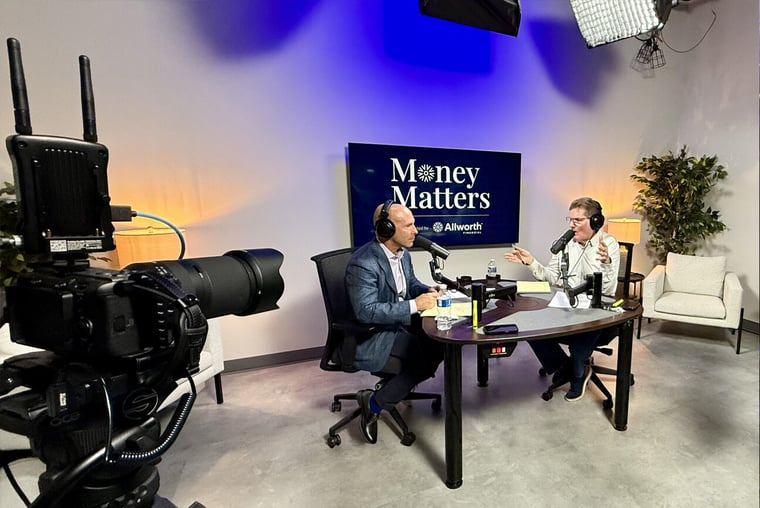
Is retiring at 55 with a $2M nest egg realistic? On this episode of Money Matters, Scott and Pat break down the numbers with a caller aiming for an early exit from the corporate grind. They discuss how to balance pre-tax 401(k)s, Roths, RSUs, and taxable brokerage accounts—plus how to front-load 529 plans without triggering unnecessary taxes.
Scott and Pat also dive into:
The Rise of Private Equity: What proposed SEC changes mean for everyday investors, and the hidden risks, lack of liquidity, and valuation pitfalls of alternative investments in 401(k) plans.
Building a Multi-Generational Legacy: A caller asks how to pass down a $2M estate efficiently. The hosts discuss asset location, when Roth conversions make sense across generations, and navigating RMDs.
Family Wealth Conversations: Why talking to your adult children about trustees and estate planning today prevents headaches tomorrow.
Join Money Matters: Get your most pressing financial questions answered by Allworth's co-founders Scott Hanson and Pat McClain live on-air! Call 833-99-WORTH. Or ask a question by clicking here. You can also be on the air by emailing Scott and Pat at questions@moneymatters.com.
Pat: Welcome to Allworth's "Money Matters". Scott Hanson.
Pat: Pat McClain. Thanks for joining us.
Scott: Yep, we're talking about finances. We'll take some calls. Talk a little bit about some things that we find interesting in the financial markets.
Pat: And hopefully, you do as well.
Scott: Hopefully, you can learn a little something. At least get our opinion on things. Maybe it'll help you shape your own opinions.
Pat: Yeah. Or maybe we can learn a little something.
Scott: And lead to some positive outcomes.
Pat: That's the goal. Now that that's out of the way, let's get started. That is our objective.
Scott: That is our objective, positive outcome.
Pat: What is the objective of this meeting? That's how we used to start them.
Scott: Well, of course.
Pat: What's the objective? Just so we're not wasting any time. No chit chat. And now that we're older...
Scott: No chit chat. I don't care about your damn weekend. No, no, no.
Pat: Now that we're older, we chit chat because we're not in a hurry to get out of here.
Scott: A couple of things I want to talk about is these alternative investments. What Congress is doing right now to make... It's just an interesting time. Do you realize there are more... Let me pull up the stent. I'll tell you what it is. Because there's more... I forget exactly. I'll get it right in a minute, and I'll tell you what it is. But right now, it's not that important.
Pat: It's only an hour. So, the SEC, Securities Exchange Commission, and this has been in the works for a number of years, moves to give ordinary investors more access to private equity. And private equity, whatever that means, can be a number of different forms. It could be private credit funds. It could be investments in small companies. And private equity is a direct reaction, in my humble opinion, from the amount of regulations that it takes to bring a company public in terms of the cost associated with that. And so, this private equity, there's nothing good or bad about private equity, it just has a tendency to be obscure. And this is both really, really good and really, really bad at the same time. Because in private equity, you need a team to vet private equity in order to tell you whether you should invest or not. Because the...
Scott: Are you talking about the private equity team analyzing companies that they want to have part of their portfolio? Or are you talking about a team that helps an everyday investor pick the right private equity firm?
Pat: Well, you need both. But in terms of this podcast, you want the team that's going to help you pick the right firm. Because it's really... The visibility is lacking into a lot of private equity.
Scott: So, if you go back to 2000... Here's how...
Pat: Okay, the statistics about why private equity has grown.
Scott: Yeah. If you go back to the year 2000, there were roughly three times as many public companies, publicly-listed companies as there were private equity-backed companies.
Pat: 2000, 26 years ago.
Scott: So, there was roughly a little over 2000 companies owned by private equity and there were 7,500 publicly-listed companies. Today, the number of publicly-listed companies has declined by about 30%. So, there's roughly 4,500 or so publicly. But the private equity-backed companies, they've quadrupled in size. And so, there's now almost twice as many firms that are owned by private equity than there are publicly-listed companies.
Pat: And partially is a reaction to access to the capital markets.
Scott: Sarbanes-Oxley and all the other burdensome regulations that make it so difficult to be
Pat: Yeah, which had a place and time, right? And maybe Sarbanes-Oxley was an overreach. They should have just been enforcing the existing regulations, enforcing existing regulations rather than creating new ones. But the pendulum has a tendency to swing very far. But the point being is, this is where a team of advisors and a depth in that advisory firm becomes really important, because someone has to vet the private equity. So, I was having dinner with two couples, not too long.
Scott: And by the nature of those private companies that there's twice as many as there are publicly listed, there's going to be an average return. Half those companies are going to do above average and half are going to do below average.
Pat: And half have more risk than you actually will ever know.
Scott: That's right. Yeah, that is right.
Pat: Because of how they use leverage. So, not only...
Scott: And it's very opaque. You don't know what's going on.
Pat: So, it's not only investing in the companies, it's investing in the credit, the companies that lend money to those. So, there's two aspects to private equity. There's private credit and then there's direct investment. So, I was having dinner with two couples and they were in their late 70s, early 80s. And somehow private equity, they said, "How do you feel about private equity?" And I said, "Well, it's like asking me how I feel about water. It's good and it's bad. You need it to live, but you can drown in it too." Yeah, right? And so, private equity is not either good or bad. And people hear stories like, "Oh, I'd never, ever, ever sell my company to private equity because they're all sharks." And then you talk to other people...
Scott: Well, that's data I just looked at. There's over twice as many private companies owned by private equity than there are public listed companies.
Pat: Which means something's got to go. And we know this from multiple... Scott and I have sold a company to a Fortune 100 firm at one point in time. We had a reverse mortgage company that we sold 2007, I think. And we've traded with private equity a number of times. My son...
Scott: I have a book titled "The Private Equity Advantage".
Pat: And you see great outcomes and you see terrible outcomes, right? But the point being is, if the SEC allows this ordinary investors, that's what's access to private equity.
Scott: So, SEC, it's a proposal. I think this is, it's a regulation that's going to come down, and they have to have some, like, 60-day comment. Is that the one?
Pat: It's well on its way. Yeah, it's well on its way. Where you used to, if you had a certain net, a high net worth and a certain knowledge...
Scott: Credited investor.
Pat: ...you could invest in private equity. But it's not either good or bad, but what's really important is the ordinary investor either needs to acquire the skills in order to vet the investments because the information is relatively opaque and they don't know what questions to ask. Even ChatGPT won't know what questions to ask. Or that they need to actually hire someone that can help them. Because it is taking a place in more and more portfolios.
Scott: And 401(k) plans.
Pat: Yes. You know, for certain clients, we use it.
Scott: I mean, at some point, like when there's twice as... Now, granted, market capitalization is still going to be in publicly-traded companies. The massive companies tend to be publicly traded.
Pat: Yeah. But the lack of liquidity, too, in private equity and private credit is an issue in the lack of...
Scott: And we saw that with private credit earlier this year.
Pat: Oh, well, how they were pricing it too. Well, first of all, the lack of liquidity and how each firm that owns the same loan to the same...
Scott: Have different prices.
Pat: Across the board. It was quite...
Scott: Yeah, so these companies we're talking about, let's say that private equity, they own the equity, there could be three different sponsors as they are called.
Pat: In the same investment.
Scott: In the same company. And they list them at different prices internally. Because who knows the price? The price is only what someone's willing to pay.
Pat: And they get compensated on that price that they raised.
Scott: That's right. That's right. So, they have an incentive to drive the price.
Pat: So, it's not either good or bad. It is just what it is.
Scott: But there's an interesting case that's at the Supreme Court. I think they heard arguments, like, a week or two ago on someone sued Intel corporation, their investment committee, for having some alternative investments. This is right after the financial crisis. And then I believe it's one of their target date funds or some of their target date funds where they said, "Why don't we put some assets in here that aren't correlated to the stock market?"
Pat: And I always question the correlation.
Scott: And so, the subsequently underperformed.
Pat: This is, this goes back years and years.
Scott: Yeah, but it's at Supreme Court now.
Pat: Okay, yeah.
Scott: They'll make a decision.
Pat: Which means by the time that they actually hear it, they may have outperformed. By the time the Supreme Court, those target date funds may have outperformed. And then they get in front of the justices and they're like, "Ah, never mind." So, what's the point, Scott?
Scott: Well, it'll be, I mean, right now, there's this kind of a move to have a lot of these alternatives inside 401(k) plans. But if you're an employer and like, "Well, if I offer it and it underperforms, I'm sued." It'll be interesting to see how this goes.
Pat: "But if I don't offer it, maybe I get sued because if those alternatives actually did better than the public markets over that time period, I'm going to..."
Scott: I mean, it's interesting because as an employee, you had options. You didn't have to put it in that particular fund. You could have put it anywhere you wanted to in that 401(k), right? You could have put an S&P 500 index. You could have put it...
Pat: Or you could have just opened up a self-directed brokerage window and let people do whatever they wanted inside the 401(k).
Scott: I remember, Pat, years ago we had Arthur Levitt, who was a former securities exchange commissioner to speak at some event. I don't know why we had Arthur Levitt because usually...
Pat: It was Neil Cavuto and Arthur Levitt.
Scott: People don't usually line up to see securities exchange, former securities exchange commissioners.
Pat: I found it fascinating.
Scott: But I'll never forget one of these who says, "Well, you know, Pat, sometimes the investor is just responsible for their own decisions." So, if they want to make stupid choices, it's up to them and they have to live with the consequences.
Pat: And that's kind of a fair point. And maybe...
Scott: Inside of a 401(k), it's hard. The fiduciary standard in a 401(k) is difficult. But let's go.
Scott: Let's take some calls. And if you want to join us, we love taking calls from our listeners. And you can schedule time when we're in the studio just by sending us an email at questions@moneymatters.com, again, questions@moneymatters.com. We're talking with Tom in South Carolina. Tom, you're with Allworth's "Money Matters".
Tom: Hey, Pat and Scott. How are you guys doing?
Scott: Good. How you doing, Tom?
Tom: Hey, doing good. Thanks for taking the call. I've been listening to you here for a few years now, and I appreciate the chance to have a discussion on the air.
Scott: Thank you.
Pat: Well, thank you. What can we do for you?
Tom: So, my wife and I, we find ourselves, we're in a bit of a season of transition, if you will. And I wanted to get your perspective on our current savings strategy as it relates to retirement and the different taxable buckets that we're currently funneling those dollars into, and maybe get your perspective on how we can best manage that between now and a targeted retirement age of 55.
Pat: And how old are you? We'd love to help. How old are you now?
Tom: So, if you want, I can just run through all the information here.
Pat: Thank you. Yes.
Scott: Perfect.
Pat: Thank you.
Tom: So, I'm 43. My wife is 38, and we have two kids, 12 and 7. Our combined household income is about $400,000 a year. And of that, my salary is, call it, $230,000 with $30,000 in annual bonus. And annually, I have about $30,000 in RSUs at best that I take advantage of. And my wife earns the remainder of that, the remaining $100,000. And our income, I would say, today, is we've only been at $400,000 maybe the last three years or so before that, before my wife was back working outside the home. We were closer to $200,000. So, it's been fairly recent that we've been at that amount.
Scott: When did she go back to the work? So, she took some time off when the kids were young and now, she's back working?
Tom: She did, she did. And she's always worked part time, but really leaning in and getting into, I would say, a more competitive salary really hasn't been, you know, just in the past three or four years.
Scott: So, your household income four years ago was $200,000, now it's $400,000. What do you anticipate it to be for the next five years?
Tom: I would expect it to be between that $4 and $5. We would expect her to stay in the workplace, and with my annual salary adjustments, I would expect it to be around there.
Scott: Okay.
Tom: So, where we have our investments today, and this gets to my question, right now, we have been on a consistent 401(k) and IRA savings strategy. And I'm starting to look out, as I hear you talk about having different types of accounts to maybe bridge to 65, just figuring out, what role should the taxable brokerage play in our savings strategy? So, right now, we have about $2 million invested. $1.2 of that is in a traditional pre-tax 401(k). Between Roth IRAs and Roth 401(k), we have about $0.5 million. And then the taxable brokerage is $250.
And right now, almost all of our savings are really going towards, we're maxing as best we can, our 401(k)s and then doing the backdoor Roth. So, between our contribution and employer matches, we're putting about $125,000 per year into retirement accounts. And my question is, as we look forward to the next 5 years or to the next 10 years, should we, and how should we start to funnel any of those dollars more towards the taxable brokerage versus the traditional retirement savings route?
Scott: Well, I mean, to my... Like, the Roth IRA or Roth 401(k) is the best investment, I mean, because of the tax consequences of it. So, I would have that. That'd be my preference over anything in brokerage.
Pat: How much do you have in 529?
Tom: So, we have a combined about $50,000 in for the two kids. And what I'm using when the RSUs vest annually, we give monthly throughout the year, but I take those $30,000 of RSU's and put those into the 529 every December to try to catch up...
Pat: And how's the brokerage allocated?
Tom: The brokerage is direct index 8020, U.S. International.
Pat: And why not just pull a bunch of money out of that direct index, right? Without any gain there because it's direct indexing, and you should be able to get to... Why not pull $100,000 out of the brokerage account or $150 grand, drop it into the 529, and then refill that brokerage account with the RSU's as they come out every year.
Tom: Okay. And you...
Pat: And the reason behind that is we're just front-loading it.
Scott: It's better taxes. Yeah, because it's tax free.
Pat: And actually, it's going to be less expensive than the direct indexing, easier, and it's tax-free. And then even if the kids don't spend the money, you could either bring it back into your estate, or they can convert it to a Roth IRA when they become of age. And so, we're front-loading that. So, we're not... Look, you guys are phenomenal savers. I mean, let's just take our hats off to you right now. We're just trying to clean stuff up around the edges. And so, I agree with Scott...
Scott: I actually like your strategy, Pat.
Pat: Well, thank you, Scott.
Scott: Let's see how much of the brokerage account we can get out without any tax consequences.
Pat: Mic drop, I'm done.
Scott: Well, it's not that exciting.
Pat: I got a compliment from Scott. But otherwise, I agree with you on the Roth IRA. That is...
Scott: And the 125 a year that's going into your 401(k)s, including the backdoor Roth, is it roughly half pre-tax, half post-tax?
Tom: No, we're about a 60/40, 60 pre-tax, 40 Roth.
Scott: I mean, I like it.
Pat: Yeah, it's good. I would do the brokerage.
Scott: I mean, because you're at a tax... Your income now, I like being able to take advantage of a tax deduction of the pre-tax 401(k).
Tom: So, selling in the tax efficient way, portion of that brokerage, go ahead and front load the 529s, and then just invest, just direct, not at the expense of retirement accounts, but just redirect the RSU's moving forward into the taxable.
Pat: Direct index.
Pat: Yeah. In fact, I would look at, I wouldn't do less than $100. And I probably would...
Scott: Well, you might not be able to get that much out depending on...
Pat: Well, in a perfect world. Well, it depends on how long they've been there and what they're doing, but I wouldn't do less than $100, and I wouldn't do more than $150. So, I do it in that band. And if I couldn't get it out of the direct index, then I would use these RSU's to fund the 529 plan.
Scott: Which is what he's been doing, yeah.
Pat: He hasn't been using the RSU's. Oh, he has been using the RSU's, but he, obviously, hasn't been doing it very long.
Scott: Restricted stock units, for those who don't know what that means.
Tom: No, no, I started that, last year was the first year we did that.
Pat: Yeah, he hasn't been doing it very long. So, that, that's the only direction I would make.
Tom: So, thank you for that. Maybe one more quick question.
Pat: How much life insurance do you have on yourself?
Tom: So, I have $1.5 on my wife and $5 on myself.
Pat: Thank you.
Scott: $5 million?
Pat: Thank you. That makes sense.
Scott: Okay, perfect.
Pat: This guy's perfect.
Scott: I know.
Tom: So, one last question. I don't know how much more of... I think targeting a retirement age at 55 from my current employer is my objective, but it's not to stop working. It's maybe to transition to something that allows me to maybe personal fulfillment and maybe lower stress. Is there any reason with what you see now, if we continue on this current track, that 55 would not be doable?
Scott: Nope.
Pat: No.
Scott: I mean, I can run the numbers, but I can tell if it could be.
Pat: No, no. And when you get to 55, you might decide that the stress is acceptable, and that the greater fulfillment is money.
Tom: Yeah. Well, it's 43, a 12 year old, a 7 year old, and all that life brings you. So, it's hard to imagine that.
Pat: No, that's a busy age, yeah.
Tom: But maybe I'll get there.
Pat: Yeah, no, it's 55, right?
Scott: I mean, if you do look at the studies though, people are happier when they're older. They're happier when the kids are out of the house. I mean, statistically, that's just reality.
Pat: Yeah, but still...
Scott: We love our kids, but it's a lot. I know it's a 12 year old and 7 year, it's nonstop.
Pat: I know, but at 55, they're 24 and 19, and one's out of college and newly engaged.
Scott: But I think the point...
Pat: And then you're paying for a wedding, and then you might decide that you're going to stay in work.
Scott: Yeah, but it's being at the point where work can be an option and not a requirement.
Tom: That's right. That's right.
Scott: Getting to that point.
Pat: And I assume your living trust is up to date.
Tom: Yep, living trust is up to date.
Pat: I'm always curious. What type of work? You don't have to tell us the company, but are you an engineer or an accountant? What type of work do you do?
Scott: It's a tech company?
Tom: So, believe it or not, I come from a family of engineers, but I broke the mold and I'm in sales.
Pat: Oh, do you sell a technical product?
Tom: I do not.
Pat: Oh, really?
Tom: In the manufacturing space.
Pat: All right. Good for you.
Scott: Well, wrong again.
Pat: All right. Well, you're doing fine.
Tom: Well, guys, appreciate it. Thank you so much.
Pat: All right, Tom. I appreciate it.
Scott: Glad you called. And a lot of.... RSUs are very common now. It used to be stock options that people were awarded, but today, it's much more common to have restricted stock units than have...
Pat: Do you want to explain what they are?
Scott: Well, the term describes part of it. They are restricted stocks that you get, essentially...
Pat: In units. You're not supposed to use the words in the definition.
Scott: Okay. But it's an equity award that has some vesting requirements to them, and they typically will vest, become available to you at certain increments based upon some certain criteria. And every company structures them differently. And there's different tax consequences depending on how they're structured. But it's a pretty common thing now.
Pat: So, I go to work for XYZ company. They say, "Here are these units. You can't sell them for five years. And if we perform at this level, this is how much they will be worth, and you can sell them at five years."
Scott: That's right. Let's talk now with Jonathan. Jonathan, you're with Allworth's "Money Matters".
Jonathan: Hi. Good morning, Pat and Scott. How are you doing?
Scott: Good. Thanks for joining us.
Jonathan: So, my parents are in their late 60s and early 70s. One, actually the younger of the two is retired now for about two years. The other one just turned 71, and she's looking to retire within the next 1 or 2 years. They're in a pretty strong financial position. They have about $2 million in invested assets and about $170,000 per year in social security, pension, and disability income.
Pat: And what did you say that...? I'm sorry, I blanked for a second. What was the retirement assets?
Scott: $2 million.
Jonathan: About $2 million.
Pat: And how are they comprised?
Jonathan: About a million in traditional IRA, about a half a million dollars in Roth, and some in taxable brokerage, some in annuities. And they've got about $170,000 a year after retirement in guaranteed income. Most of which has survivor benefits on it. They live pretty well within their means. Their expenses are somewhere between $120,000 and $150,000 a year. And they live pretty frugally and they don't aspire to spend down their wealth. They are now looking to try and play what I call the team game of trying to build legacy wealth and pass it on. I'm their only child, so that makes it pretty conflict free. And so, I wanted to get some advice from you guys on, what can they do to optimize that, to maximize that, and what are some strategies they could look at?
Pat: Tell us about your situation.
Jonathan: Sure. So, I'm mid-30s, married, three young children. I'm also doing fairly well financially. I've got a $1.1 million net worth, about three quarters of a million invested assets, most of it Roth between IRA and 401(k).
Pat: What's the family income?
Jonathan: And I own a house. About $150,000 a year income for myself.
Pat: Okay. And the reason we ask that is we've got a million dollars in IRA and $0.5 million dollars in Roth IRAs and $500,000 in brokerage account. This is where asset location becomes very, very important. And then projecting what the beneficiaries income looks like when they actually receive the money. So, this is pretty easy because there's only one of you. So, I just did this with an existing client who's been a client for 25 years and we were going through it. I said, "Okay, let's go through the asset location again. And based upon his income and his children's income, I said, "We are not going to convert certain things to Roths only because of the fact that your kids are in lower income."
Scott: Lower income tax bracket.
Pat: But if some of these are in higher incomes, then it makes sense to convert to a Roth. And we ended up doing the Roth conversion. And I said, "This is good for three out of your four children. It is bad for one of them, but it's great for three out of the four." So, when we look at your situation and we look at...
Scott: And you say bad because the net worth at time of death wouldn't be quite as high because the prepayment of the tax is on the Roth.
Pat: That's correct.
Scott: As opposed to the beneficiaries paying the tax on the inherited IRA or 401(k).
Pat: Thank you. And the funny thing is the beneficiary will never know whether it was good or bad for him or not. It was just what it is. They inherited the money. So, when you look at your income today and you look at your parents' income, and then you look at the differences in the marginal tax rates at $170,000 a year, there's room to do Roth conversions in here.
Jonathan: Right. Yeah, and a little bit more context for you guys. For the past couple of years, last year and this year, my parents have been doing Roth conversions up to, I think it's the third or fourth IRMAA limits, happens to fall around the same place as the top of the 24% bracket, so around low $400,000 a year total income. So, they've been converting roughly 200,000 a year. Most of that Roth is relatively new over that past couple of years.
Pat: Wow. And the money in the brokerage account, is it all equities?
Jonathan: Yes. So, with the amount of fixed income or guaranteed income they have, they're all stocks on their investments.
Scott: And do they have any desire to fund their grandkids' education? Do they do any 529 plans?
Jonathan: They're doing that to... So, we've got 529 plans for our kids. They're contributing, you know, a few thousand dollars here and there over the last few years. And so, they're certainly being generous with that. And I think at this point, they're still peddle the metal on saving for themselves. But I think they're, they're starting to realize that they're in a really good financial position. Their main concern...
Scott: They're relatively young, right? So, they're not in their 80s, late 80s, where it's like, "All right, we know that these assets are going to be passed through this." So...
Jonathan: Yeah, and they do have some health concerns that lead them to think, "Well, hey, we don't..." You know, they may not have as long of a life expectancy as... They don't have forever longevity though. They do have some health concerns. I'd rather not go into it.
Pat: That's fine.
Pat: Okay. Yeah. No, no, no. So, yeah, I think, well, I like the idea of them putting a little bit more money into the 529s, but if I was their son, I don't even know if I would mention it quite frankly. I don't know if I would bring it up.
Scott: I mean, have they had conversations with you and say, "Hey, Jonathan, we realized we have more than we need, and we want to structure our estate so that it's most beneficial to you?"
Jonathan: Yeah. And that is their expressed desire.
Pat: Okay. Well, then ask them to put more money in the 529 plans, and it grows tax deferred for your kids. Have you use for college, then there's no tax on it.
Jonathan: Yeah. One other one they've talked about, but aren't sure about is, if they're confident that a potential long-term memory care situation would be covered. That's their biggest concern future expenses wise. But if they're confident there, then one area we've kind of talked about is, for some of the traditional assets, would it make sense for me to be named as a beneficiary to a portion of it, as opposed to all of it going to the surviving spouse with so much guaranteed income...
Pat: It's not gonna make any difference.
Jonathan: ...or single filing, it doesn't take a lot of RMDs to boost them up to the tax bracket.
Scott: You can have a spouse listed as primary and a child as contingent, and the spouse could waive those assets, disclaim it.
Pat: Yeah. I don't think it's going to matter, but if that makes you feel good, do it. And then the laws around that at that point in time will be different than they are today in terms of the look back. I mean, what you're really talking about is artificially impoverishing the surviving spouse in order to be eligible for government aid. That's essentially...
Jonathan: Well, I think the idea would be not trying to qualify for Medicaid. But if they're sure that they have the income and the assets outside of a portion of traditional, just avoiding RMDs, basically, that's forcing income.
Pat: Oh, I wouldn't do that. I wouldn't do that.
Scott: If they had to use their IRA for medical expenses, they would have an offset in medical deduction.
Pat: Yeah. I don't see the point of that. I don't know. I wouldn't. That wouldn't be on my radar or something to worry about, quite frankly. They have enough income. what's the value of their home?
Scott: At this age.
Jonathan: In the neighborhood of $300,000 with about $50,000 mortgage left on it.
Pat: I think they're fine. I think they're fine. The only thing I would do is just push the 529 funding and then continue to do the Roth conversions. Yeah, I don't think I would worry about much else.
Jonathan: Okay. Yeah, that's along the lines of what I...
Pat: Are they retired teachers? Are they retired teachers?
Scott: One's not retired.
Jonathan: The non-retired is the teacher, yes.
Pat: Okay. And the retired person is a professor.
Scott: Like, I'm a clairvoyant. Pat, guess my career, Pat.
Jonathan: No, retired pastor. So, he's got some pastor pension which leaves a portion of their income non-taxable.
Pat: Okay. He is a teacher though. Just he teaches...
Jonathan: Biblical teacher.
Pat: Yes. No, they're great savers. And they should be thankful that, and I'm thankful that you're working so closely with them on this.
Jonathan: Yeah. We're really close. I mean, our long-term care plan for them is that we've got our apartment, or a basement is basically set up as an apartment for them. So, if they do reach a point of physical disability, within limits physical disability, then the idea is that they would move down into our basement. You know, they've been very generous with us and we appreciate that and want to help take care of them.
Scott: That's good.
Pat: That's nice. Very nice and beautiful. We appreciate the call.
Scott: Yeah. Thanks, Jonathan.
Pat: Keep up the great work.
Scott: And I think what interesting about this call, there's that book, "Die Broke", most of us aren't going to die broke, right, particularly listeners of this program.
Pat: Well, okay, I was going to say, most will.
Scott: Fair enough. Most of society will die broke because most of society is broke on a global basis. All right. But listeners of this program, people who have had successful careers and have saved well.
Pat: This would be a terrible show to listen to if you had zero money nor any interest in actually saving, it would just be depressing.
Scott: It would be highly depressing. Yes, I think it would.
Pat: I'm poor and I have no prospects. So, let's listen to a show about tax strategy to avoid income on gains. Gains? Okay, keep going. Sorry.
Scott: No, but I'm going to share a quick story. So, my son, when he was in high school, my son's in late 20s now, when he was in high school, he was involved in this youth and government thing. And it was all these kind of leftist ideas they had, right? So, he was kind of leftist for a while, and that...
Pat: I didn't know that when he asked me for money. I supported that for the youth and government then.
Scott: Well, thanks a lot, Pat. So, anyway, and then he went to work for... It was one of the big boxes. I'm not going to name it because it's irrelevant. And after he worked there for a while, at first, he felt like, he said, "Oh, there's this 32-year-old single parent and I feel really bad for them. And there's this other person, I feel bad for them for the job." And then after he worked there for a year or two, he realized that some people just choose certain lifestyles.
Pat: And there's nothing wrong with that.
Scott: Yeah. So, I don't mean to be any derogatory. And so, he's changed his tune quite a bit, particularly now, worked hard to get a career and he's doing well.
Pat: He's in the workforce.
Scott: He's a commercial pilot, and it really bugs him, the fact that there's no merit, it's all based on seniority, it's all unionized, and it drives him absolutely nuts. So, he's not that quite leftist anymore, right? Anyway, we're getting way off track. So, back to, so some people are just gonna die broke. Most of us won't. And so, if you are one that took responsibility with your career, had a successful career, saved well, you'll have more than you are going to spend in your lifetime. Think about not just where you want these dollars to go, but how things should be allocated today so that your estate wishes are going to be fulfilled with the minimum amount of taxes.
Pat: Excellent point. And that may involve you actually having conversations with your children.
Scott: And odds are your kids, if you have more than one, they're going to be in a different financial situations, etc., but having that kind of... This is an unusual call because the parents were relatively young, but sound like there's some health issues as well. But it's, if you've got more than... And any good saver has more than they thought they were going to have.
Pat: They're going to spend, yes.
Scott: And more than they're going to spend in their lifetime.
Pat: We had one that...
Scott: And figure out the right kind of investment. Yes, that's important, but where those investments are located, how they're designed. Those are bigger questions.
Pat: We had a family meeting three weeks ago with my four children on a Zoom meeting that we... And now we do it once or twice a year, just like, "This is what's happening. This is..." And part of it was, "Okay, this is the roles people play." And now that my daughter's an attorney, the questions are longer.
Scott: Okay. I have a friend who his parents passed away and there's four siblings, one's an attorney and he was not an estate attorney. I forget what kind of attorney it was, but he really knew little about... I think it was a mistake that his parents listened just because he was an attorney.
Pat: Oh, he's a trustee.
Scott: He was very slow on paying things out. And he relished in the power of the siblings.
Pat: They asked the kids, "Who's the trustee?" And we said, "Well, you know, last time we discussed it, you guys couldn't decide on anyone among yourselves and it's all four you." And I said, "And by the way, if you ever decide to name an outside trustee that we would pay, that's fine, too. But I'm just telling you, it's going to be a little bit of a tussle with all four of you on there, but I'll be gone."
Scott: So, good luck to you. All right, well, hey, a couple of things. One is we've got a monthly newsletter, and if you're not signed up for that, we would recommend it. It's good. We have timely market commentary and some analysis from a chief investment officer, Andy Stout. There's some insights from some other experts on some key planning considerations. If you sign up, you'll also get our wealth planning checklists for complex portfolios. And to sign up, go to allworthfinancial.com. And if you just scroll to the bottom of that page there, you'll see how to sign up. It's free. All right, this has been Scott Hanson and Pat McClain, Allworth's "Many Matters". We'll see you next week.
Automated Voice: This program has been brought to you by Allworth Financial, a registered investment advisory firm. Any ideas presented during this program are not intended to provide specific financial advice. You should consult your own financial advisor, tax consultant, or a state-planning attorney to conduct your own due diligence.
Insights for Complex Wealth Decisions
Join our email list for exclusive commentary from our Chief Investment Officer, early access to expert-led webinars, and your complimentary Wealth Planning Checklist for Complex Portfolios.
We take your privacy seriously and respect your privacy choices. By submitting this information you agree to our Terms of Use Agreement, Privacy Policy, and to receive important notices and other communications electronically.