
Retired at 55 With $4M: How to Dodge a Massive Tax Surprise
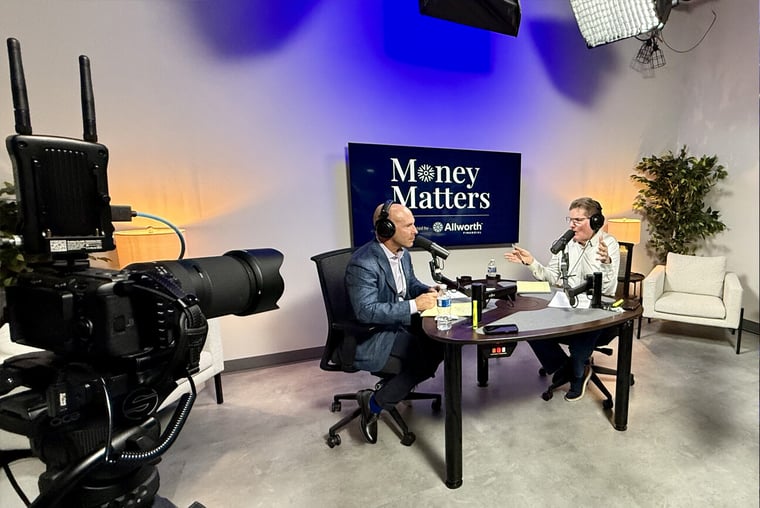
What happens when an early retirement success story hits an unexpected tax wall? In this episode of Money Matters, Scott and Pat dive straight into real-life retirement dilemmas, starting with a 55-year-old caller sitting on a $4M+ nest egg who was hit with a major tax surprise.
Ron’s taxable brokerage account is generating $75,000 in unexpected annual capital gains distributions—threatening his Affordable Care Act (ACA) health insurance subsidies and throwing off his early retirement plans. Scott and Pat break down why "ripping off the Band-Aid," taking a one-time tax hit, and shifting to direct indexing might be the key to regaining control of his income.
Also featured on this episode:
Mark (Age 51): With over $2M saved and sights set on retiring in seven to eight years, Mark asks where to put extra cash after maxing out his pre-tax 401(k). Scott and Pat explain why paying down a 2.9% mortgage early is terrible math and why a Mega Backdoor Roth should take priority.
Trouble Brewing in Life Insurance: Scott and Pat discuss private equity firms acquiring life insurance companies, the hidden solvency risks in fixed indexed annuities, and why the current environment shares eerie similarities to the Savings and Loan crisis.
Join Money Matters: Get your most pressing financial questions answered by Allworth's co-founders Scott Hanson and Pat McClain live on-air! Call 833-99-WORTH. Or ask a question by clicking here. You can also be on the air by emailing Scott and Pat at questions@moneymatters.com.
Scott: Welcome to Allworth's "Money Matters". Scott Hanson.
Pat: Pat McClain. Thanks for joining us.
Scott: Yeah, glad to... Yep, ready? Welcome to Allworth's "Money Matters". Scott Hanson.
Pat: Pat McClain. Thanks for joining us.
Scott: Yep, I think we've got a good show. We've got a couple of good calls coming on. And we want to start by talking about these life insurance companies.
Pat: Interesting. Very, very interesting.
Scott: I think... Pat and I were chatting about this before we started recording.
Pat: It's the next savings and loan crisis. It's brewing. It's brewing. It has a similar look and feel to the savings and loan crisis, which is, vast amounts of capital, lightly regulated, visibility is poor from the regulators into it, and then the redeployment of those capitals in less than conservative investments.
Scott: And the ratings game that's still being played with... So, here's what's going on. You're like, "What are these guys talking about?" You might have read some about it, you might not have. You will read about it in the future. I don't think this story is going away. I think we are at the tip of the iceberg on this. And at a high level, insurance companies are regulated not by the Securities and Exchange Commission, National...they are regulated state by state. Every state has their own insurance regulator.
Pat: Which is, if you see an ad, oftentimes, they will say, "Available, not available in these particular states," oftentimes, New York.
Scott: Because each product has to get approved state by state by state. Very common.
Pat: Yeah. So, oftentimes, for whatever reason, this is not available in New York.
Scott: Well, because there's no, like, one regulator monitoring them all, things could start happening that people don't see.
Pat: It goes under the radar.
Scott: And what's been going on here is some people have been buying these insurance companies, and then whatever business project they had, they would raise that capital by using the insurance company's money.
Pat: Very similar to the savings and loan crisis.
Scott: Exact same thing.
Pat: Except back then, it was normally...
Scott: Banks.
Pat: ...real estate developers buying banks and then borrowing money from those banks in order to develop their real estate. But the big one was, what's the guy from the Dodgers?
Scott: Mark Walter. He's the owner of the Dodgers, Mark Walter.
Pat: Was.
Scott: Is he still?
Pat: Well, they're in the process of selling assets.
Scott: And allegedly... Well, he's under federal investigation. I don't think that's an alleged thing. Because they didn't have full disclosure. They didn't report loans. Look, if you have... Let's say, Pat and I went out and bought a life insurance company. Came up with the money somehow, purchased this life insurance company, and then we said, you know, "We have this other business we'd like to start. We're going to fund it by issuing loans. This company's going to issue loans. We'll borrow money. We're going to borrow money from the insurance company."
Pat: Which we own.
Scott: Which we own.
Pat: Yes, but the capital came from mom-and-pop investors across the United States.
Scott: Of buying insurance products.
Pat: Normally fixed indexed annuities.
Scott: Indexed annuities. These companies that specialize in indexed annuities.
Pat: Indexed annuities. And the indexed annuities are sold as if, "Oh, look, there's no market risk. There's no... You get to participate in the S&P or whatever underlying index, and there's no risk in it." Well, the risk in it is actually the principle itself, not the return on it. The risk, they're sold as...
Scott: Well, to your point... And look, Pat and I were investors in an insurance product many years ago. The insurance company went insolvent.
Pat: Yeah, that's correct.
Scott: And we ended up receiving pennies on the dollar. And they were an investment grade insurance company purchased by another insurance company.
Pat: That's right. That's right. And it got worse from there. And these are long-term contracts. Very long-term, these indexed annuities. So, it's just be careful. It's just...
Scott: Well, it's more than that. I think it's just amazing when you read about... And some of these big private equity firms are involved in these things.
Pat: Large. Very large ones. But why wouldn't they be? It's a very inexpensive source of capital. It's extreme... I buy this insurance company. Maybe the insurance company is a good investment, maybe it's not. But the assets inside, if I could get them to loan me money...
Scott: But wouldn't you think that there would be regulations in the books that would say everything needs to be arm's length transaction? Or if it's not, at least it's capped to say 5% of the reserves?
Pat: Well, this is where it's breaking the... Because the guy from LA used it to purchase all these sporting things, and it looked like arm's length transactions, but they weren't. They weren't arm's length. They weren't doing reporting. That's why he's under federal investigation.
Scott: And some of these, the majority of the insurance company's reserves are invested in products that's not arm's length that are controlled by the same people who control the insurance companies.
Pat: And the pricing is difficult. The pricing... We all know that. And private credit...
Scott: And who knows what these things are actually worth?
Pat: That's right. The pricing is. They set their own... My son worked for a private equity firm for a number of years, and he was pricing a non-traded debt.
Scott: That was his job?
Pat: He was helping to price it. And I said, "How did you determine the price?" He said, "Ah, you know."
Scott: Well.
Pat: And I said, "But why? Because if four private equity firms own the same debt, shouldn't they all be priced the same?" And he said, "You would think, but that's actually not how it works."
Scott: I was on a panel at a conference a couple of weeks ago, financial conference, CEO conference, and I made some comment to the effect of, I said, "Well, you know how these underwriting works. If you really want something, you just change the assumptions a little. Instead of assuming you're going to have a 6% return, you're assuming you're going to have a 9% return," or whatever it is. Look, going into this whole financial crisis, these were very educated, smart people rating these loans. Very smart people talking about why the housing market is not in a bubble, why it's going to continue.
Pat: During the mortgage crisis.
Scott: The mortgage crisis, yeah, the financial crisis.
Pat: And how did the crowd respond to the comments? Did they agree?
Scott: I had a standing ovation. It was amazing. My first one. No, I don't think. They didn't even respond. I was just rambling on. I think a couple of them were sleeping. Anyway, all right, let's...
Pat: Just look, when someone says a product has no risk...
Scott: I think it stinks.
Pat: When someone says a product has no risk, everything has risk, everything has risk.
Scott: Well, the question I have on some of these, first of all, I'm not a big fan of equity index annuities because it feels like a smoking... There's no such thing as a free lunch.
Pat: Yeah, they're not giving any free lunch.
Scott: There's no such thing as a free lunch.
Pat: And if you wanted to...
Scott: Anytime you move out of an FDIC-insured account or a U.S. Treasury, you are taking some degree of risk.
Pat: And, Scott, they're actually, inside of those, the index... If you wanted that, you could build a synthetic without using an insurance company to do it.
Scott: And do much better.
Pat: You could do the same strategy, correct.
Scott: So, I think the risk in there is you're going to be disappointed in your returns because they're not going to be anything close to what you're hoping. But there's a risk now that some of these insurance companies are going to become insolvent. I think that's what we're going to see in the next year or two.
Pat: Oh, I think so. I think so. And by the way, there are state guarantees on each one, but every state is different.
Scott: And they're not that high.
Pat: And they are not that high.
Scott: Yeah. All right. Let's take some calls. If you want to...
Pat: Well, that was pretty upbeat.
Scott: I mean, these stories, I remember the first time I read it a few months ago, I read it twice. Like, "Did I read this correctly?"
Pat: Yeah, this is... Well, we'll see it.
Scott: And first of all, that you're allowed to do this sort of thing, because the Dodger's owner, what allegedly is he didn't disclose it. It wasn't that he did anything nefarious. It was that he wasn't disclosed. I guess that's nefarious by nature.
Pat: Yes. He knew what he was doing.
Scott: Allegedly. All right.
Pat: Let's go to the calls.
Scott: Yeah. If you want to join us, if you've got a question, want a second opinion, want our opinion, send us an email, questions@moneymatters.com, questions@moneymatters.com. We're in North Carolina with Ron. Ron, you're with Allworth's "Money Matters".
Ron: Hey, guys. Hello from beautiful North Carolina.
Scott: Yeah, thanks. I think we had someone from last week in North Carolina.
Ron: Yeah, yeah. Got a few questions for you.
Scott: It's actually one of the few states that I think I could live if I moved out of California.
Pat: Too many trees.
Scott: Too many trees. That's beautiful.
Ron: It's beautiful. It's a couple hours to the ocean, a couple of hours to the mountains.
Scott: You got the beach. I know. It's nice. Very nice.
Pat: Yeah, too many trees.
Scott: The weather's relatively mild.
Pat: You drive from Charleston to Charlotte, and there's nothing but trees on both sides. You can't see anything.
Scott: Yeah, California, everything's nice and golden, dead, but golden.
Pat: You could see something.
Ron: All right. So, a little background information. Married, 55 years old. Retired early last year. I was an executive in one of the tobacco companies here in North Carolina, which there was a couple. Total net worth right now, $4.6 million. If you take property out of it, it's about a little north of $4.1. So, the house is about $0.5 million.
Scott: Did you have some sort of early retirement offer?
Ron: Yeah, yeah. You know, the whole industry is just declining. So, the opportunity came up, and I thought it was a wonderful time to take advantage of it. And, yeah, it's worked out beautifully.
Scott: All right, good. Did you have a pension lump sum? Is that how your net worth is what it is?
Ron: You know, so we were bought out a couple of years ago, and they offered a buyout of the pension then and I took it and I invested that and it's done beautifully over the past 12 years. Wonderful.
Scott: Got it. Good for you. Good for you.
Ron: So, I put a lot of effort into diversification over the years. And the root of my question, so this $4.1 million, about $1.03 million of it is my taxable brokerage, right? It's at a 76% cost basis. What I'm stuck with is, you know, now that we're looking at, you know, full-time retirement coming up in 2027... I've taken a little job with municipality here in town, which has been nice. But next year, you know, this thing keeps throwing capital gains and dividends, these tax surprises that hit. It's throwing about $75,000 at me every year. So, if I'm looking at ACAs and I'm trying to keep the mag eye down...
Scott: Oh, that's a lot. Do you have all mutual funds in there or what?
Ron: Yeah. Yeah, it's been a while, yeah.
Pat: $75,000 in taxable gain?
Ron: Yeah. Yeah, that's right.
Pat: Okay. All right. And I'm glad you mentioned...
Scott: That's 7.5%.
Pat: Yes, correct. It's large. But I'm glad you mentioned the ACA because this is exactly where I was going with this. So, keep going with your thought process.
Ron: So, the thought process is, I'm trying to keep the mag eye down so I can get the ACA subsidies next year. But if this thing keeps throwing these high capital gains, that takes a lot of wind out of my sail. So, I was looking at converting it, just cashing it out, converting everything to ETFs, and bringing that risk down to something more manageable. And when I did my numbers, the cost to do that is about $38,000, $39,000 I would have to pay in taxes when I do it.
Scott: Maybe.
Ron: And so, I'm debating, am I chasing down a rabbit?
Scott: Maybe, because let's say you did this in January. It's just a couple of months from now, right? Let's say you did this in January, and then rather than buying ETFs, you did a direct index strategy, and you said...
Pat: Oh, yeah, and then you took your loss.
Scott: ..."let's harvest." Because what happens, if you look at the S&P 500, assuming that's the index, but you can build a direct index and strategy on any index really, in any one year, let's say, the stock market average is 10% a year on average, it's kind of somewhere there, you're going to have maybe 150 stocks that have done really well. You're going to have 150 stocks that have done absolutely dreadful. And then you're going to have the rest kind of mediocre. And what a direct index strategy does, looks at those companies that really have their stock price is way down, sell those, they sell them, and then repurchase something very similar. And technology does it all today.
Pat: And then they wait 31 days to decide whether they should sell out of the position they just purchased and go back to the old position or what. But it's...
Scott: And it can generate significant... If you do it early in the year, and the more volatile the year is for the stock market, usually the more opportunities there are. But that'd be a way to get your tax bill down.
Pat: For sure. But so, for the rest of the listeners, what Ron's talking about is the Obamacare subsidy for health insurance.
Scott: Yeah. It doesn't look at your net worth. All it looks at is cash, is your income.
Pat: Is income. And so, I actually think it's a combination of things. My guess is that if...
Scott: But then if you wait until January, that doesn't... You need it next year, right?
Scott: Well, it still works for a municipality.
Pat: Correct. Right now.
Scott: Yeah, but when is that going to end?
Ron: December 31st.
Pat: Okay. And what does this mean? Does your wife work outside of the home?
Scott: We could still use a direct index strategy versus ETFs.
Pat: Understand, but...
Ron: She's a very part-time teacher, 15 hours a week.
Pat: Okay. So, my thought is, if I opened up that $1,070,000 in mutual funds, we're not going to indiscriminately just sell everything. There's stuff in there that you probably don't have much gain on. Have you gone through it position by position?
Scott: Well, I think the challenge he has, if they're older mutual funds, not ETFs, it's the capital gains. You could have a flat year and you could distribute a 15% or 20% capital gain.
Ron: Correct.
Pat: I understand, but we don't know what they're... Are they old American funds?
Ron: That's exactly what it is.
Pat: Holy smokes, look at that. That's what you get for being in the industry for 35 years.
Ron: Pat, you've done this before.
Pat: Well, they were a huge capital group.
Scott: Yeah, that's right.
Pat: And are they the Investment Company of America?
Scott: Edward Jones?
Pat: Was it an Edward Jones or did you buy it at a bank?
Ron: I did it through my financial advisor, and we did it through Capital Group.
Scott: Yeah. But your advisor wasn't with Edward Jones?
Ron: No, no, no. Just a small, local, here in town.
Scott: They're a fine company. They're not...
Pat: So, yes. But even still, though, Scott, the ACA is going to... The promise...
Scott: How much...? So, what's the maximum you have to pay on ACA if you didn't have any subsidies?
Ron: If I didn't have any subsidies?
Scott: That's correct.
Ron: It would cost around... We did it for a couple months this year. It was about $2,300 a month is what we were paying.
Pat: And your subsidize, it's down to, like, $300 or $500 a month?
Ron: Yeah, I'm estimating it's going to be around $500 to $700.
Scott: $2,300 a month?
Ron: Yeah, yeah. Yep.
Pat: $39,000 tax hit, 55 years of age.
Ron: Rip the Band-Aid.
Scott: All right. So, well, let's think about this. So, you've got... And you need to do this for the next decade, right?
Pat: That's right.
Ron: Correct, yeah.
Scott: And so, of your $4 million roughly of investments, a million is taxable. That means $3 million is in IRAs.
Pat: And what is the income limit on the ACA subsidy for you?
Ron: I think it's $84,000 in North Carolina.
Pat: But you could see, that's my point, is maybe we do half of it. The problem is you can't control it, Scott.
Scott: Well, I'm just thinking, of the $3 million in IRAs, how much of that is in Roth?
Ron: $419,000.
Scott: Yeah, I mean, so let's call it $2.5 in IRAs. Ten years now, let's assume it's going to double. Now, you've got $5 million in IRAs, taxable IRAs at age 65 when you can go on Medicare.
Pat: Do you think you're going to enter the workforce again?
Ron: You know, I don't think I'll... Maybe, maybe. The problem I have is our parents are getting much older and we've got, you know, memory loss happening, Parkinson's happening. And I think we're going to have a full-time job handling them for a couple of years.
Pat: So, here's the idea. The problem with these American funds is that you cannot time the taxation with it.
Ron: Exactly.
Pat: But you can go around the edges. So, let's just say we liquidated 50% of that portfolio, we still don't know what the taxation is.
Scott: Yeah, I wouldn't. Yeah, yeah, because he could be thinking he's all set. And then it's December 5th and there's a capital gain distribution that he's taxed on.
Pat: There's a capital gain distribution. I'd rip the Band-Aid off.
Ron: That's what my gat's telling me.
Pat: I like it. I think this is a brilliant strategy.
Scott: I would actually do it now, like right now, and I would redeploy in direct indexing now.
Pat: And then try to harvest any loss between now and the end of the year.
Scott: That's correct.
Ron: The only thing about doing it now is my income this year with part of the payouts is going to be around $375,000.
Pat: Oh, okay. Well, then that's a bad...
Scott: But can you wait until January?
Ron: Yeah, that's what I'm thinking, January.
Pat: It's even better in January.
Scott: Yeah, because then you could... You have a whole year.
Pat: Because then we have 12 months to look for loss to offset gain in the sale of this in a direct index. Did your advisor talk about direct indexing?
Ron: No. I had to let that advisor go because they couldn't get through this issue with me, so I let them go. And I've just recently tried another one and I'm on the fence right now.
Pat: Well, you know, we are open for business. I just...
Ron: I hear you got a business. A little bit of self-promotion here, but we have an office in Charlotte, don't we? Of that brokerage account, how much of that is in cash?
Ron: In the brokerage account, cash, $32,000.
Scott: Okay, so it's all invested.
Pat: Yeah, I would rip that.
Scott: I would actually look to see if there's anything... Because you'd want to generate some long-term capital gains...I'm sorry, losses. Short-term losses offset long-term gains, is the same, so it doesn't matter.
Pat: Yeah, we'd be okay there.
Scott: Yeah, it doesn't matter.
Pat: If you do January 1.
Scott: Yeah, thereabouts.
Ron: Rip the Band-Aid.
Pat: I would.
Ron: I love it.
Pat: I would.
Ron: That's where all my numbers are going.
Scott: Well, the challenge is you got... I mean, what else are you going to be doing? Like, you can sell a little one year, sell a little the next year, sell...
Pat: The problem is that you don't know what the capital gains distribution is. You have no control over the taxation.
Scott: If these were in your IRA, it wouldn't matter.
Ron: Right, right.
Pat: Yeah, and you owe no one money, correct?
Ron: Completely debt-free probably the last 10 years, yeah.
Scott: Yeah, medical insurance is your big wild card, huh?
Ron: Yeah. And see, the financial advisor I'm with now is saying, you know, "Don't even chase the ACA. Just budget $30,000 and pay it."
Scott: $30,000? But I'd rather pay $38,000 in capital gain tax once.
Pat: We have clients...
Ron: Hence why I may be looking for another advisor.
Pat: We have clients like you with this sort of net worth or more.
Scott: Oh, yeah, or more.
Pat: Or more.
Scott: On a subsidized ACA.
Pat: On subsidized ACA. And people might be listening to this podcast saying, "Well, what's wrong with these guys? This is bad for society."
Scott: Okay. I didn't create the tax code.
Pat: And you're like, look, it's not my job to actually decide what's good or bad for society. It's just to give the clients options, and then they actually decide what they want to do. So, yeah, you absolutely.
Scott: You didn't create the rules.
Ron: No, just living within the rules.
Scott: That's right.
Pat: That's right. That's right.
Ron: That's all we do. We don't make them. We just abide by them.
Scott: That's right. All right. And there's plenty of other ones that kind of smack you.
Pat: And just for fun, before we go, because you were in the tobacco industry, did you ever read the book "Thank You for Smoking"?
Ron: Yes. Yes, everybody in the industry has read that.
Scott: I was going to make some joke about, "Well, we don't have to worry about Ron's longevity because..."
Pat: He may not... Anyway, but everyone in the industry has read "Thank You for Smoking"?
Ron: Yeah, I'm pretty sure. But I'll tell you what, I've not smoked a cigarette. I've been there for 26 years, but I've never smoked a cigarette.
Pat: Look, it's part of the society we built where people get to make choices, so...
Ron: That's right. That's right.
Scott: And I enjoy a cigar every once in a while. I really do. My wife equates it to crack cocaine, which is probably good. Otherwise, I would smoke them too much. I know my personality.
Ron: Yeah, know your limitations.
Scott: Yeah, my wife's good at reminding me where the boundaries are sometimes.
Ron: That's the truth.
Pat: Well, why does she have to - you've better to crack cocaine.
Scott: Well, maybe I'm exaggerating a bit. Let's just say she doesn't like it.
Pat: Okay. All right. Appreciate it.
Scott: All right. Thanks, Ron.
Pat: And by the way, we are open for business. I just got to say that again.
Ron: I may have to look into that.
Pat: Let me tell you, I ran into a friend, and his...
Scott: You know, so for 30-some years we've been doing this show, we've always said, let's just provide education, and if they want to become a client, people find us.
Pat: Look, we own a very small amount of Allworth now, Scott and I.
Scott: That's right, because it's a very large organization.
Pat: It's a percentage.
Scott: Most advisors own the equity.
Pat: Right. So, I ran into a friend the other day whose son is college football and he's eligible for NIL next year. And I said to him, "Look, we have advisors that are great at this." And he said, "Oh, is that so?" I said, "I'm not doing it for me. I'm not doing it because I want the money. I'm doing it because I think that your son is going to be well served."
Scott: Well, to your point, at this stage, it makes no difference. Your life is not going to change one iota, whether we even do this show, or anyone becomes a client, or if Allworth goes out of business or becomes the most successful business in the world. It's not going to make any difference in your lifestyle. That's your point.
Pat: My point to my friend, well, acquaintance, was, "Look, I'm doing it because I know your son will be well taken care of and get good advice." And then there were four of us there, and the other two guys happened to be clients of the firm too, and they're like, "Yeah, Allworth's pretty good." But that is no... I can't promote that. I can't say that.
Scott: You can't say what?
Pat: What clients think about the firm. I think it's against the regulatory background.
Scott: Oh, there's all kinds of crazy rules. I think you can as long as you say that's probably not indicative of everybody and there's probably clients that hate you too.
Pat: Okay, that's what it says.
Scott: Something like that. It might be a little extreme. Maybe it's not quite that in the disclosure, but it's somewhere along those. Anyway, Ron, glad you called. We're talking with Mark. Mark, you're with Allworth's "Money Matters".
Mark: Hey, thanks for taking my call, gentlemen.
Scott: Yes, sir.
Mark: So, I've got a question regarding what to focus on after we fill out our pre-tax 401(k)s. But do you want me to kind of give you the question, or do you want me to lay out kind of our situation?
Scott: Lay out your situation, if you don't mind.
Mark: Okay. So, both my wife and I are 51. We hope to retire in, say, seven to eight years. We don't have to, but that's the goal. Currently, traditional IRA, 401(k)s, $2 million. We've got a Roth IRA and a Roth 401(k) total that is $180,000. We've got a brokerage account of $220,000, an HSA, currently it's $55,000, and I've got a high-yield savings account that's about $115,000 in that right now.
Scott: And what's your income?
Mark: Income fluctuates a little bit. So, I'm in sales, and the average over the last five years, it's around $450,000.
Scott: And was it that, what it was 10 years ago, or...?
Mark: No, probably it started to ramp up five, six years ago. Before that, we probably averaged between $250,000 and $275,000.
Scott: And who do you owe money to? Mortgage?
Mark: Mortgage. Yep, that's the big question. So, the question is, knowing that we want to try to retire in seven to eight years, obviously, we want to fill out the pre-tax buckets for the tax purposes. But after that, I'm looking at three options and I'm trying to figure out which to tackle.
Scott: All right, good. What do you owe on the home?
Mark: $347,000.
Scott: What's the interest rate?
Mark: $2.9.
Pat: Okay. And tell us what you were thinking.
Mark: Yep. So, either I do have a mega backdoor Roth plan that I can contribute to through my employer. So, that's the first, that's one option. The second would be to put money into the taxable brokerage. And the reason why I would do that is, you know, in our 60s, I really want to look at some Roth conversions and I'd want to leverage the brokerage account to help pay taxes for that. Or third, would be to just start aggressively paying down the mortgage so that once we retire in eight years, it's gone. So, it'd be, you know, tackling to make sure the mortgage is gone by the time we're 58-ish, or funnel money into either the backdoor Roth or the brokerage account.
Pat: How many years are left on your mortgage?
Mark: Approximately 15.
Pat: Okay. All right. So, we don't want to do the pay the mortgage down. It just doesn't economically sound right.
Scott: Well, because here's... Let's assume you had nothing else going on in your life. That was the only question you had. You had no other assets. I would say you can't retire in seven to eight years, number one. But we would say, because the interest rate is so good at 2.9%, you'd be better off finding a high interest rate savings account and just funnel the money into there. So, that in years eight or nine or seven or eight, when you go to retire, you've got a bucket of cash that you can pay the mortgage off.
Pat: But which you do have $115,000 in a high interest savings account, so you're the right way. So, when I...
Scott: If this rate was four and a 4.4%, 5%, 6%...
Pat: It would be different. You know what? So, when you say seven, eight years, so you just think about the phone call that we just took, right, with the ACA the Affordable Care Act, you've got six years. Let's assume that you're on track. You've got six years. Will your health insurance...?
Scott: Will you have lifetime medical from your employer?
Mark: So, through my wife's employer, we'll most likely have a pretty decent plan that we could use when she retires.
Pat: I would do the mega backdoor Roth.
Mark: Okay.
Pat: I would do that before the brokerage account. It just, the idea of the brokerage account is fine, but the mega backdoor Roth is, it's just so easy and you can really dial in the distributions and have some control over...
Scott: I would always do a Roth before anything else, I mean, for extra money. You've maxed out your pre-tax. Because if your choice of, let's say, you have $100,000 in a brokerage account or $100,000 in a Roth, I'll take the $100,000 in a Roth all day long.
Pat: Completely flexible in terms of how you invest. You don't have to worry about dividends or capital gains.
Scott: Could be tax free until the...
Pat: You don't care. And then you could just take it out whenever you want without any taxation on it, which may come into play because of the Affordable Care Act when you go to retire prior to age 65 or whenever you're eligible. Assuming we don't...
Scott: There are some limits on the Roth IRA under age 59 and a half.
Pat: That's right. But assuming that we don't actually have socialized medicine by then.
Scott: Well, look, two and a half years from now, things can be much different. We don't know.
Pat: The Democrat socialist party is going to reshape the Democratic party.
Scott: They are already. They listen to some of the candidates that sounded mainstream, now they sound like lefties.
Pat: But, Scott, I think in a similar manner that Trump reshaped the Republican party. You can see it. It's happening. So, I would do that. And then for...
Scott: And then the traditional Democrats are going to scratch in their head like traditional Republicans are scratching their head.
Pat: Like, "What happened? I didn't see this coming."
Scott: What happened to the free markets?
Pat: The and then once the mega Roth is done, then you start doing the brokerage.
Scott: Agree. Totally agree.
Pat: In that order.
Mark: And so, you're not worried about if... You know, because I know it's a ways out, but making sure that I don't have the RMD issues, you know, 20 years down the line. I want to be able to tackle that. So, I think...
Pat: But there is no RMD on a Roth.
Scott: No, he says he wants to do some.
Mark: No, no, no, the traditionals.
Pat: Oh, I'd worry about that when we got there.
Scott: Well, his thought is, "I want to make sure I've got some money out to be able to pay the tax on conversion."
Pat: But wait, I understand that.
Scott: But you can always use the IRA itself to pay for the tax.
Pat: Not only that, maybe you'll have enough in the Roth by then that it makes no sense to actually start doing that. We don't know.
Scott: Yeah, I would funnel as much as you can into the Roth.
Pat: Yeah, and then the brokerage account. And then in terms of the conversions, look, depending upon how health insurance looks, if you retire at age 59 and a half, you've got 16 years between the age 59 and a half and age 75 in order to worry about Roth conversions. That's a long time. That is a long time. So, when you... I love the fact that you're thinking that far ahead, but that's a long time in order to deal with Roth conversions there.
Scott: And if you're concerned about the volatility of the markets versus your mortgage, allocate some portion of your assets in more secure investments to match maturity so that you have the option to pay off your house if that's something you want to do when you retire.
Mark: Yeah. You know, I mean, that's where my mind was thinking. I've recently had advice to try to pay it down, but I did look at the math, and it didn't make sense. So, that's kind of why. That's where the questioning was coming from. I understand the math of it.
Pat: But did an advisor tell you to pay it down?
Mark: They did. Yes.
Pat: That's awful advice. Because I would...
Scott: Just put the money... Look, you can amortize how much would the payments need to be so it's paid off in seven years. You can do that math, right? But instead of making that extra payment to the mortgage, set it inside an account until interest rates are lower than that. Once they become lower than that, then you want to pay it off. But until that time, take advantage of the arbitrage.
Pat: The only person you paying the mortgage off is good for is the person that lent you the money.
Scott: They would love it paid off.
Pat: Oh, they would love you to pay this off, right? If I hadn't lent you money for 15 or 18 years at 2.9% and you wanted to prepay it, you'd be like, "This is awesome. How do we get more guys like this?" Don't interact with that advisor again, please. That is just one-on-one. I mean, that's just terrible advice. It doesn't make any sense. All right. Are you good? Anything else we can do for you?
Mark: I'm good, I think. Well, yeah, if you can help me retire by next year, that'd be good, but I believe that...
Pat: Do you like your job?
Mark: I do. Yeah, I do.
Scott: Okay. I just want to be in a position so that it's an option.
Mark: [inaudible 00:33:38.260].
Scott: I mean, your next decade will probably be your best decade.
Pat: Oh, my gosh. If you're making this much money at 51, I can't wait to see how much...
Scott: I don't know what the stats are.
Pat: I have a friend that turned 60 and I asked him, "Are you going to retire?" He goes, "I can't now."
Scott: He's making too much money.
Pat: He goes, "I've worked my whole career."
Scott: I mean, you get better and better, typically, in net worth.
Pat: He said, "I've worked my whole career to make this much money." And he said, "I'm not actually working that hard to do it anymore because I know the job so well." He said he's making like $1.5 million a year. He goes, "This is the grand... I've worked..." He said, "Even if I was unhappy, I don't think I could leave it at this stage." Like, "Good for you."
Mark: He's happy with that.
Scott: Yeah. All right. I appreciate the call.
Mark: All right. I appreciate it. Thank you.
Scott: Wish you well, Mark. You know, Pat, it got me thinking when you're talking about the mortgage, "We wish you would pay that off," right? So, I'm not an expert in the mortgage market, Fannie Mae, Freddie Mac, how interest is given to...
Pat: What percentage of the population do you think you know more than whatever an expert is?
Scott: But a loan, when today's interest rate would be, let's call it 7% or let's 6.5%, and there's a loan at 2.9%, that loan would be trading at a discount.
Pat: A significant discount.
Scott: So, in the market, it's not worth $347,000.
Pat: It's probably worth $300...
Scott: Whatever. You can crunch the numbers and see what the math is. My question is, do you think we'll see a time when mortgage companies will offer people an incentive to buy their way out? And I don't know enough about who owns these.
Pat: Well, as long as there's liquidity in the marketplace, I don't think they'd go through that hoop. It's when there's a lack of liquidity in the marketplace that...
Scott: Yep, yeah, you're right. You're 100% right. You're right. That's exactly right. You answered my question.
Pat: Okay.
Scott: Yeah, that's exactly right.
Pat: As long as there's liquidity.
Scott: You're managing a mortgage fund for...
Pat: The servicer doesn't want it to get paid off earlier.
Scott: No, no. They have a...
Pat: But the loan, the people that actually...
Scott: But to your point, it's already priced to the market, and there's liquidity in the marketplace, so...
Pat: And there's liquidity, so...
Scott: All right. Hey, it's been fun being with everybody. Appreciate it. This has been Scott Hanson and Pat McClain of Allworth's "Money Matters". Oh, by the way, if you don't subscribe to our program, please do. Just go hit the follow button. And we also have a pretty good YouTube channel if you want to watch any videos and stuff. That's good as well. Anyway, a little self-promotion. We'll see you next week.
Automated Voice: This program has been brought to you by Allworth Financial, a registered investment advisory firm. Any ideas presented during this program are not intended to provide specific financial advice. You should consult your own financial advisor, tax consultant, or a state-planning attorney to conduct your own due diligence.
Insights for Complex Wealth Decisions
Join our email list for exclusive commentary from our Chief Investment Officer, early access to expert-led webinars, and your complimentary Wealth Planning Checklist for Complex Portfolios.
We take your privacy seriously and respect your privacy choices. By submitting this information you agree to our Terms of Use Agreement, Privacy Policy, and to receive important notices and other communications electronically.