
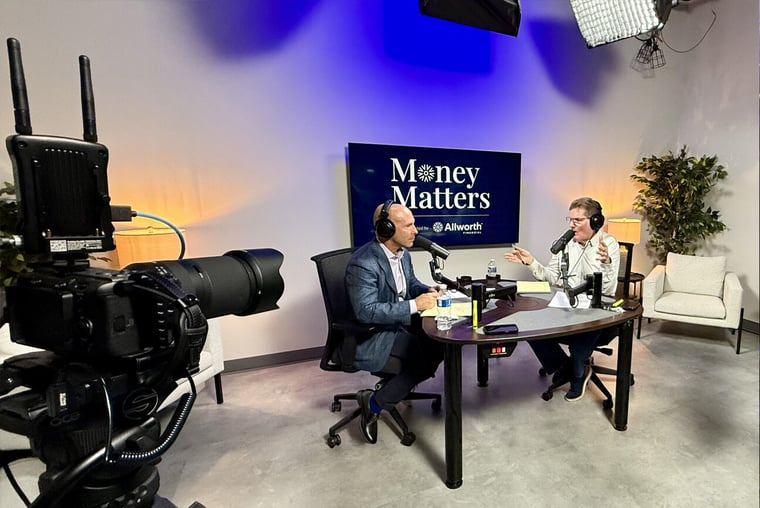
Financial Planning: Stress Testing, Early Retirement & RMDs
Are your retirement assumptions realistic, or is your financial plan relying on best-case scenarios? In this episode of Money Matters, Scott and Pat dive into the practical realities of long-term planning—from preparing for market volatility to navigating complex estate and tax rules. Plus, Scott and Pat answer caller questions on managing a multi-million-dollar portfolio, strategic gifting, and what it really takes to achieve financial independence in your 40s.
In this episode, we cover:
Stress-Testing Your Portfolio: Why planning for bear markets matters, how to avoid overly optimistic return assumptions, and why keeping 5–7 years of income in cash or fixed income can protect your lifestyle.
A $6M Estate & RMD Strategy: Navigating PCRA/401(k) rules while still earning income, managing high tax brackets, and balancing lifetime gifting vs. traditional inheritance.
529 Plans & SECURE 2.0: Key considerations when redirecting college savings and exploring Roth rollover rules.
The Realities of FIRE & Coast FI: Breaking down the 4% rule (25x expenses), balancing early retirement with long-term fulfillment, and understanding the "Four Freedoms."
Protecting Your Family: Why life insurance is essential for young families on the path to financial independence.
Join Money Matters: Get your most pressing financial questions answered by Allworth's co-founders Scott Hanson and Pat McClain live on-air! Call 833-99-WORTH. Or ask a question by clicking here. You can also be on the air by emailing Scott and Pat at questions@moneymatters.com.
Pat: Welcome to Allworth's "Money Matters". Scott Hanson.
Pat: Pat McClain. Thanks for joining us.
Scott: Yeah, we're talking about financial matters, taking questions, talking a little bit about the markets. Not that much about the markets, because the markets do what the markets are going to do. Although, I do think it's important that people have realistic assumptions in their planning. Because we've had such a phenomenal run with the markets the last few years, the stock market.
Pat: Do you think?
Scott: And the last couple bear markets we had were so short-lived. One was what we had during the Liberation Day, the tariff, whatever. I think we were down about 19%, maybe not quite 20%, but it recovered.
Pat: It was really fast.
Scott: It recovered. If you had a long nap, you missed the whole thing.
Pat: And the one before that was in COVID, wasn't it? Did I forget?
Scott: No, we had one in '22, but that was very short-lived as well.
Pat: When you say short-lived, nine months or less?
Scott: They were all...
Pat: They're months.
Scott: ...three months or less.
Pat: Yeah. Just boom, boom.
Scott: And they weren't that deep. Unlike...
Pat: Oh, prolonged ones, the years.
Scott: The financial recession.
Pat: Years.
Scott: The dot-com. I mean, the last 25 years, you've had two nasty ones. In your planning, you need to plan for those events.
Pat: Yeah. Assume that it's going to happen again.
Scott: If you're going to build a house on the ocean, you should assume that every once in a while, there's going to be some storms that come and beat the crud out of your house, and so you want to make sure it's designed properly. It's really the same thing with financial planning. And I don't know, it just feels like, I mean, one of those times where you...
Pat: It's nice how you compared that to a natural disaster.
Scott: Well, it's kind of similar.
Pat: It is.
Scott: We live in California. There's going to be a big earthquake again.
Pat: Yeah, and maybe a forest fire, or taxes might go up.
Scott: Or utility bills are going to increase. I don't know.
Pat: No, no, no.
Scott: Yeah, but planning for those things.
Pat: Yeah, we'll talk about that. You wanna talk about it?
Scott: We'll talk about it now. That's what I'm talking about.
Pat: Okay, let's go.
Scott: Well, I am going. But I'll just never forget, Pat, the longer these bull markets last... And maybe this is going to be sustained, who knows? Maybe because of what's happening with AI, we're going to see double digit returns on the S&P for the next five years. That looks to be like probably not. Like, maybe we've already priced in the benefits.
Pat: Well, and maybe the AI actually, with these interlocking liability structures that they have in this circular environment in which they live, actually causes the markets to pull back. Who knows?
Scott: The information is available to everybody, as the theory that you just brought up right there as well, right? But the markets have priced that in, and here's where we're sitting today at the markets. But look, particularly, if you're getting close to retirement, or you're currently retired, or you're living off your portfolio, you just need to plan for some nasty times.
Pat: And planning means having enough money and fixed income to provide income for a period of years until...
Scott: Five to seven years. That you're not dependent on anything that's tied to the equity markets.
Pat: So, fixed income.
Scott: Yeah, fixed income, cash. Things that don't fluctuate value.
Pat: Stable fixed income, too.
Scott: Yeah, like CDs, Treasuries, short-term bond funds.
Pat: Yeah. High quality corporates.
Scott: Yeah, short term. Like, things that you can convert to cash.
Pat: Yeah, pretty easily.
Scott: Because, I mean, I remember, Pat, this is back in 1999, maybe it was right at the beginning of 2000. So, the stock market peaked, we hit 10,000, stock market peaked. And if you're thinking, "10,000, we're at 50,000 now, what are you even worried about?"
Pat: Well, it was...
Scott: When you're living through it, it's a different story.
Pat: Especially if you're not working.
Scott: You see your million dollar portfolio drop to $750, $600.
Pat: It's disturbing. It is disturbing.
Scott: And anyway, I have a guy came in and he was planning on retiring, had an opportunity for a pension lump sum, and he had different rate of return assumptions. And his most conservative was 12%.
Pat: That's crazy.
Scott: Just looked at some advisors telling him... They were from 12% to 20% his rate of return assumptions. And some financial advisor of sorts is the one that gave him these assumptions.
Pat: Could you imagine a world in which you could compound at 20%?
Scott: I know. On every portfolio.
Pat: On everything. Everything would be so expensive.
Scott: I mean, obviously, that's... What happened...
Pat: And then what did he do?
Scott: Well, I had a meeting with him and he's like, "I'm really glad I talked with you." Because I looked, I said, "Let's look at history here." Because even there was other periods of time, '73, '74 was a nasty bear market.
Pat: Oh, terrible.
Scott: Right? There was other nasty ones. So, "Look, you need to ride these things through." And I showed him why I think that 12% is completely unrealistic, even if you were 100% stock.
Pat: And what would the number you have used? Seven, eight?
Scott: Seven or eight. Yeah, seven or eight depending on someone's risk tolerance, right? Maybe even a little less today.
Pat: Oh, yeah, might be.
Scott: Withdrawal rates probably less.
Pat: A bumper.
Scott: He was grateful he had this conversation with me. Then a week later, I don't know if I reached out or he reached out and said he's going to go with the original advisor.
Pat: Because the assumed rate of return was higher? Because this guy went up...
Scott: Because he had to retire.
Pat: Because the advisor had a big imagination. And he could imagine a world in which your lowest rate of return over a period of time in a well-diversified portfolio would be 12%. That's crazy.
Scott: Well, it's important...
Pat: It won't happen again.
Scott: It's important to look at... And there's programs that you can kind of stress test your portfolio. And you can say, "Here's my exact holdings. Here's everything I have, my ETFs, my direct..." Whatever you own, right? You can all plug it into a program. It's pretty simple now with tools. And say, "Show me what this portfolio would have done during the Great Recession or during the dot-com." Or, "What happens if oil spikes to 170 or..."
Pat: Or what happens if interest rates go up on the long government bond to 9%?
Scott: How does this impact my portfolio? And what happens if interest rates drop? So, you can do some different what-if scenarios and then see what kind of decline your portfolio is going to have. And it's good to do those ahead of time because when they come, if you're not expecting it, your biggest risk is not the financial markets.
Pat: It's the person investing in the financial markets.
Scott: The individual, yeah.
Pat: Well, assuming that you have a diversified portfolio.
Scott: That is correct. Assuming you have a diversified... If you don't have a diversified portfolio, then it's good luck to you.
Pat: It's really for naught, yeah.
Scott: I mean, who knows?
Pat: Yeah, it's anyone's guess.
Scott: That's correct. It's just luck of the draw at that point. I mean, you might as well play a little roulette while you're at it.
Pat: Actually, you know, it's funny. I was talking to a gentleman the other day and he had 30%, 40% of his portfolio in three company holdings. Almost all his equities. And he said, "But they're great companies. Why do I need to worry?" And I said, "Well, let's go through history and talk about all the great companies that are no longer around." I said, "How much time do you have? Because this is going to take a while."
Scott: I mean, just look at the S&P 500 25 years ago versus today.
Pat: Yes. Look at Sears, Enron, WorldCom. Those were all considered great companies. Enron was the one that was in the front of business magazines and that was held up as the great example. Look at GE, the Stalwart. Look at Intel. Look at... How much time do we have?
Scott: I remember meeting the guy with GE in the late '90s. He worked for GE. He came in almost every year, wanted to prepare for retirement. And every year I'd say, "Look, you probably should diversify away from GE a bit here." "Oh, Scott, you don't understand." And I don't know whatever happened to him.
Pat: No.
Scott: Because, obviously, he wasn't a good client because he had no desire whatsoever to move anything out of GE, which was a disaster for the looks.
Pat: But the long and short of it is prepare, and you have to do it now.
Scott: When things are good.
Pat: Yes, you have to do it now. And it's hard. It's not easy to say, "This is what my portfolio is doing." And I have to remind clients, "This is what your portfolio did." It's not doing anything. It did. Everything... The mere fact that we can measure it means it's already taken place.
Scott: And I think...
Pat: And the only guide is history.
Scott: ...the typical stock fund, I just saw a headline this morning, is up about 12% for the year, give or take, right? I think international is even a little better. Some sectors may be a little better, some sectors worse. But let's assume your stocks are up 12%. And you started the year with maybe you had 60% of your portfolio in inequities. Well, you might be pretty out of line right now. But to your point, it's tough to say, "Well, shoot, I'm at 65% now. I'm going to sell when things are going so well. I'm going to sell some stocks to replenish other pieces of my portfolio. Not easy to do. It's prudent.
Pat: It's responsible. Yes.
Scott: And it works.
Pat: Yes, because there will be a time.
Scott: Yes, of course, there will be. We've been through them. And the last two nasty ones, my wife kind of teased me because I came home both during those times saying something to the effect of, "When these markets recover, I'm getting out of this industry, I'm doing something different."
Pat: Really?
Scott: Because it's so painful.
Pat: It is painful to watch.
Scott: Well, as an advisor, you're dealing with people's emotions and people are terrified.
Pat: Well, the advisors are scared too.
Scott: That's right. I know. It's just a challenging time. Yeah. Anyway, so enough about that. Why don't we take some calls? If you want to join the program, you can send us an email at questions@moneymatters.com, again, questions@moneymatters.com. We're talking with Jim, Jim with Allworth's "Money Matters."
Jim: Good morning. Thank you for taking my call.
Scott: Thanks, Jim.
Jim: I love listening to you fellows every weekend.
Scott: Thank you.
Jim: I have a couple of questions dealing with, oh, let's call them estate planning. My wife and I reached 64. We live in Illinois. My wife is semi-retired and will probably retire sometime in the middle of next year. I work full-time in a field that lets me earn revenue from business I brought into my professional services firm for years to come.
Pat: It's not a long...
Scott: Like insurance or something along those lines?
Jim: I beg your pardon?
Scott: Like insurance or something along those lines?
Jim: It is, yeah. That's a probably good way to think of it.
Scott: Something with a very long tail on it.
Jim: Yes. Yes, well put. We, I think, have adequate retirement resources that we don't need to worry about what's going to happen. We're going to probably be able to live pretty well. But at my firm, I have what's called a PCRA, Personal Choice Retirement Account. And because I'll be paid for a long time to come and I don't own 5% of the firm, my read is that I won't have to take RMDs on my...
Scott: While you're working.
Jim: ...$3 million dollar. Yeah, or while I'm working. But if I'm paid for years to come, am I working or just being paid for work I already did? I mean, how much work do I really need to do?
Scott: All right, if you receive it... A dollar. As long as you're on a W-2 or you're self-employed, it's considered earned income.
Jim: Exactly. Okay, so that's my...
Scott: Yeah, if it's taxed for Social Security, that's earned income. If it's not taxed, it's Social Security. If it's... And I don't know how royalties are taxed, but let's assume it's a royalty, that would be a different story. Okay.
Jim: Okay. So, it sounds to me like I won't need to take those RMDs. And would I...
Scott: You probably won't be employed until the day you die.
Jim: Well...
Pat: You could be.
Scott: Okay, let's assume that.
Jim: Maybe 80 or 90.
Pat: Okay, all right. So, what's the question?
Jim: So, my question is, if I'm at the 32% or 34% tax bracket, should I be taking any distributions from that account, or should I just focus on my wife's account in taking withdrawals?
Pat: So, what do you have in qualified money, which is your PCRA, which is basically just a self-directed 401(k)? What do you have in retirement accounts for both you and your spouse total dollar amount?
Jim: Oh, $6 million.
Pat: Okay, and what do you have outside...?
Scott: And how much of that is in your name and how much is your wife's?
Jim: A little more than half is in my name. The rest is in her name.
Pat: And how much money do you have outside?
Jim: Oh, probably $0.5 million. So, we aired in that, you know, making Roth contributions to 401(k)s earlier on, but, you know...
Scott: Whatever.
Pat: Okay, so the question is?
Scott: How many kids do you have?
Jim: We have one surviving daughter. And this will lead into another question I have. But, yeah, I'd like to leave as much, you know, to my daughter as I can. I don't know which...
Scott: And do you have any grandchildren? Sorry about the loss of your other child. Do you have any grandchildren?
Jim: No, we don't. My daughter will shortly be married. And what... I'd like to leave her, you know, plenty of money. And what my question deals with, should I be taking money out of the PCRA, or just kind of let it ride until, you know, I reach, you know, whatever age where I'm no longer receiving that W-2 income?
Scott: What's your income now?
Jim: We have probably around six. When my wife is fully retired, we'll be around $400,000.
Pat: And well, you know, I expect that this income will go down over the years as this tail falls off. Is that a fair assumption?
Jim: It will. It will. But, you know, as I continue to work and develop recurring revenues to come... Yeah, I think it's been less for some time.
Scott: The challenge now, so you're at a pretty high tax rate now, right? Like your top bracket.
Jim: Exactly, yes.
Scott: So, like, if you consider Roth conversions... Or you mentioned just withdrawing. I wouldn't just withdraw, I would do a Roth conversion because it preserves the money in a potentially tax-free environment. But you're pretty much at the top tax bracket, right? You're in the 35% federal tax bracket currently.
Pat: What percentage of pay are you putting into the PCRA?
Jim: I don't put anything in because it is not matched. It's, you know, subject to the safe harbor.
Scott: Does it have a Roth option?
Jim: It does, but if I could put it in Roth, you know, or when I spend it or use the excess cash to do Roth conversions.
Scott: Well, I would put in money in Roth first. But...
Pat: I don't know if I would.
Scott: It's a rounding thing at that point.
Pat: I like the idea of spending it. Are you trying to help out your daughter?
Scott: Yeah, what is our objective here?
Pat: Yeah, are we trying to get as much money to our daughter downstream while you're living or when you pass or both?
Jim: Both. And, you know, my worldview is that our generation is done wrong by our kids' generation by, you know, spending as much at the federal and state level as we have. So, I expect exactly...
Pat: In the state of Illinois, is that...? Really?
Scott: Except for the state of Illinois.
Jim: Can you believe it?
Pat: You're talking to someone from California. Your cousins.
Scott: So, is your objective to have 100% of this go to your daughter? Or do you have some to go to charity? Or, like, what's your thought process there?
Jim: Well, we do have a couple IRA accounts that we made, you know, after-tax contributions to that we earmarked for, you know, charitable contributions. And, you know, those would happen after age 70. And those are probably, in the aggregate, $400,000 today.
Pat: Okay, and how much after-tax was in there of that $400,000?
Jim: $80,000 or $100,000.
Scott: So, the nice thing about a charity receiving proceeds from someone's death from a retirement account, it's tax-free to the charity, okay? There's no... Because other times there's U-bit tax, there's other kind of weird taxes that charities can pay sometimes. But with retirement accounts, currently there's no taxes to the charity. Anything your daughter receives is going to be 100% taxable to her, unless there's some sort of cost basis. So, the $400,000 of IRAs, you have roughly $100,000 cost basis, which if your daughter received that, that $100,000 would be tax-free.
Pat: So, the answer to the question there is...
Scott: There's no question. He was just... Earmark $400,000 from your other accounts.
Pat: And not from that after-tax.
Jim: Oh, okay.
Pat: So, that's an easy one. I disagree with the Roth thing. Scott, I would actually start giving it to her now. I wouldn't be funding anything else into a retirement account.
Scott: Yeah, I mean, relative to your net worth, you don't have a lot outside of retirement accounts.
Jim: Correct. Get that.
Pat: That's right. It makes planning a little bit more difficult. So, if you were to build that up outside, I would get that. And the funny thing is, with your situation, you don't sound super confident you know what this tail looks like. You said it could last until your dying day. You could sell, you could sell that tail to someone else, right? When you...
Scott: I'm assuming. We don't know exactly what your industry is, but, yeah.
Pat: Normally, that's an option. I assume that you're probably a partner in the firm or you're not. You're not, but you...
Jim: Yeah, I'm not, no.
Pat: Okay. Yeah, I wouldn't be putting any more money in retirement accounts. Scott?
Scott: Well, at $600,000 level, you would think you could be able to afford to put some into a Roth, but at this point, it's not going to make that much difference one way or the other.
Pat: Yeah, he's 64.
Scott: And you have a relatively high standard of living.
Jim: We have a home in Illinois and we just built a home in Florida.
Scott: Yeah, that's fine.
Jim: And so, yeah, we can... My wife is a great saver. I think I save pretty well. We're getting better at spending.
Scott: Well, that's good.
Pat: Well, you have 10 years' worth of income saved.
Jim: Yes.
Pat: Yeah, and so the idea of actually putting more money in... The reason I kind of opposed to putting more money into a Roth is that you're giving up flexibility of actually giving that money to your daughter while you're alive. That's the only reason behind it.
Scott: Well, to Pat's point, if your plan is for all these dollars to go to your daughter, if you start running the numbers when you're 74, 84, if you really think that these dollars are going to be helpful to her and you want to leave her some inheritance, to Pat's point, you probably want to start a little earlier.
Pat: Yeah, by giving money out of other assets other than the... Or even taking money out of the 401(k) or the IRA and starting gifting to her.
Scott: Yeah, because she'll have to distribute it in 10 years and pushes her... She's going to be in the top tax bracket.
Pat: She's going to be in the top tax bracket. So, it doesn't really much matter.
Scott: That's right.
Jim: Yeah, that's true. I guess my hope is that, you know, if we die on a timely basis, that she could quit working and be at a lower tax rate and spend the money from...
Scott: She won't be in a lower tax bracket. She's got $6 million that has to be spread out over 10 years.
Pat: She's going to be in the same tax bracket.
Scott: Assuming no growth, that's $600,000 a year.
Pat: And that she actually has income and her soon to be spouse is in a complete deadbeat and they have income as well.
Jim: He's not a deadbeat.
Scott: Okay. Unlike my daughter's boyfriend, but that's another story.
Jim: I have another question that deals with my late daughter's 529 balance. She died as a freshman in college.
Pat: Oh, boy.
Scott: Oh, how awful.
Jim: That was eight years ago.
Scott: Oh, I'm so sorry.
Jim: And her balance is now like $300,000. So, what I'd like to do is transfer money to her...
Scott: Sister?
Jim: ...sister in order to use the secure 2.0 and contribute to a Roth for her. I'd like to use a portion to pay down my son-in-law's student debt. I'm interested now, can I also transfer money to a 529 for him and make Roth contributions for him?
Pat: Yeah, I believe so as long as, I think, they have to be in his...
Scott: You can have one beneficiary at a time.
Pat: But can you not rename the 529 into multiple? I'm trying to remember what I did with my kids.
Scott: It's once a year you can make a change.
Pat: Understand. But let's say you move half of it into the daughter's 529 today, Scott, and then half of it into...
Scott: I don't think you can split it like that, unless the rules have changed, and I'm not an expert in the 529.
Pat: I don't know.
Scott: But having said that, this is an area I would definitely do some research to find the best way to plan this. Because they're technically your dollars that you had earmarked for your daughter. You have the ability to change the beneficiary to whomever you want.
Jim: Yes. And there's something to the secure 2.0 that says an account needs to be in existence for 15 years before it can make contribution.
Scott: And it's only like $30 grand or something for the Roths, isn't it? It's not that much.
Pat: It's the maximum that they're allowed to put under ordinary if they were making the deposits that you can convert into the Roth. So, it's whatever their limits were to convert.
Jim: Right, right. And it's the lifetime max of $35,000, I think it is.
Pat: Yeah, yeah. So, that's going to require some research, off the top of my head. And so sorry about your loss. I had lost a daughter of 30... How old would she have been? Thirty-three or thirty-four years ago? Well, so...
Jim: Well, I'm sorry to hear that.
Pat: It's not easy.
Jim: It never gets easy.
Pat: No, no, no. Love lasts a lot longer than life does.
Jim: Yes, it does. Yes, it does. Well, thank you very much.
Pat: All right, thanks.
Jim: You've both been very helpful and I'll give your producers a call with what we decide to do.
Pat: All right. And then if you need some help on that research, on the 529 plan, if you get in touch with the producers, we'll have our tax and legal team.
Scott: There's someone on our team who's an expert in the 529.
Pat: Yeah, there's someone in the team that actually...
Scott: For sure. That's their job.
Pat: ...that's what they do. So, if you ask the producer to hook you up with them, they'll answer all the questions and actually roadmap it for you.
Jim: Well, thank you very much. Appreciate that.
Scott: All right, appreciate the call.
Pat: Appreciate.
Jim: All right, have a great day.
Pat: But wait, one question, one question, do you have any individuals talk in the PCRA?
Jim: Very nominal amount.
Scott: It's a private company?
Pat: It's a private company or publicly traded that you're at?
Jim: Oh, the company I work for is private. No, there's nothing back in the company.
Pat: Okay. Appreciate the call.
Jim: All right. Thank you.
Scott: Wish you well. See you, Jim. It's interesting how life goes, because as financial advisors, our job is to help people make good choices with their finances, but then life happens. I had breakfast with a friend a couple weeks ago and he's an extremely successful business guy, and then his wife has some major illnesses. And he's retirement age, but any sort of thoughts of dreams for retirement are out the window.
Pat: Like traveling or...
Scott: Yeah, all that. And, I mean, you just think about it as being financial advisors for three decades, how often that's happened with... Life happens.
Pat: Well, but as with many things, Jim actually, and your friend who was successful, probably have choices because they made good decisions going up to that point in time.
Scott: Well, that is true. Money doesn't solve all problems, but it can certainly help in some areas.
Pat: Yeah, it provides flexibility in your decision making.
Scott: And someone might think, "Well, look, it'd be easy for Jim to save. He's making $600,000 a year." I'll never forget, Pat, one of the worst situations I've seen is husband and wife, both in the medical field, physicians of sorts. Their income was roughly $700,000. This was 20-some years ago. And they came in to visit with us because they wanted to figure out, is there a way they can get out of...? They had $100,000 in their retirement accounts. How can they use that $100,000 for current travel? So, I made $700,000.
Pat: And they couldn't...
Scott: They had $100,000 in savings.
Pat: And they wanted to get at it.
Scott: Not even two months of savings, and they wanted to get at it. That's the worst situation I've seen, but I'll never forget it. It's like, what planet are you from?
Pat: Well, Scott, these are physicians.
Scott: Understand.
Pat: But they are probably brilliant in their field.
Scott: Of course.
Pat: I know lots of people that don't understand money. Just flat out don't... It just doesn't register.
Scott: Well, to your point, obviously, they didn't quite...
Pat: It didn't register with them. Some people don't have a brain for that.
Scott: All right. Well, I wouldn't call it a brain, but okay. Brain for it. I don't have a brain for it. My apologies. I clearly don't have the temperament to be... I couldn't be a medical doctor.
Pat: No, I would not let you be my doctor.
Scott: I'm pretty good with numbers. I remember numbers. I struggle with... Like, even just trying to memorize names of different diseases would be impossible for me. Very challenging.
Pat: You tried it?
Scott: I just remember biology in high school. I hated it. Chemistry and stuff.
Pat: Well, I think probably a lot of kids in high school hated biology and chemistry, so I'm just guessing.
Scott: I like math. Anyway, let's continue on. We're talking with Travis. Travis, you're with Allworth's "Money Matters".
Travis: Hi. Thanks for taking my call. My wife and I really enjoy listening to personal finance shows, reading personal finance content. And one concept that really excited us listening...
Scott: Of course, what better way to spend a marriage?
Travis: It's a good hobby, I think. It
Scott: is a good hobby. There could be definitely worse hobbies.
Travis: One concept that we've found recently that has really excited us is the FIRE movement, Financial Independence, Retire Early. Are you guys familiar with that?
Pat: Yep, yep.
Scott: Absolutely. I've met a couple people that are doing it.
Travis: That's awesome. So, I was calling wondering what you guys think about the FIRE movement in general. And then my wife and I are both 30. We were wondering if we could potentially make an early retirement in our 40s a reality, doing some of the FIRE stuff.
Scott: So, have you heard of the Coast FI?
Travis: Yeah, yeah. You do all your saving and then let it compound.
Scott: It's getting to a point... That's a different concept though, because the Coast Financial Independence is how much do I need to save today so that when my ultimate retirement date comes, I have enough money. And so, "Oh, at age 35, I have enough money saved for when I retire at 60, now I can go screw around and worry about savings.
Pat: That's right, but this actually just leads into the conversation we had less than three minutes ago when we were talking to Jim, right? Which is, he has the money saved so he can make the choices, where the FIRE says, "I'm actually going to quit work," right? Do you have children?
Travis: We have one daughter.
Pat: And what's the idea behind the FIRE for you? What's it mean to you?
Scott: Yeah, that's a good question.
Pat: Thank you.
Travis: We really like the idea of time freedom, basically, deciding what we do and when instead of outside of working hours, just evenings and weekends. And my wife and I always say we really enjoy our Saturdays a lot more than our Mondays. So, that's kind of our main thought.
Pat: Well, so actually, I think any of this is good, as is everything else in life with moderation, right? Because if you're sacrificing and giving up lifestyle now so you could have a lifestyle in the future, you have to decide whether that's worth it.
Scott: There's a balance.
Pat: And then it completely negates this FIRE movement. Any of the purpose that comes from working and being around other people other than your family, or... And I got to tell you, for me, personally, I stepped down as CEO, what now, two and a half years ago?
Scott: Yeah.
Pat: Is this, Scott, the first couple months was hard for me only because I still had a job and I'm still coming to doing the radio show and the podcast and I still had like 30 clients. But I went from driving at 90 miles an hour to going 15 and not really being in a hurry to get there. And emotionally, at first couple of months. But I haven't really missed it since then. Not even a little. Where Scott happens to be in a completely different position.
Scott: I have a very different position. I turned 60 this month and I'm planning on... I want to continue to work until I'm 80. But I think the difference is, Travis, and depending on your career... Like, I know a lot of people who they never had any flexibility with their schedule. They were working for a big company, corporate job, whatever it was. Like, they had to work 50, 60 hours a week, every week. When they're on the road, they had to be available. They traveled a lot, all that stuff. And for that kind of people, like, I can understand why I got to get off this treadmill because...
Pat: Yeah, my brother had a job where... In fact, I was traveling with him a couple of weeks ago. He's talking about how many times he had to leave vacations early to get back to work unplanned with his whole family. He said, "Well, we were in Hawaii for a week and a half with my family and I had to leave after four days because there was this deal I was working on and it was..." And so, I think it's all good. I don't see anything wrong with the FIRE movement or the Coast FI.
Scott: I think most people continue to... Like, and there's quite a few bloggers on the FIRE movement.
Pat: But aren't they blogging? Isn't that a job? It's just a job with flexibility.
Scott: Well, that's my point. It's just different. And, Travis, there's a formula that I think through myself when opportunities come, the four freedoms. And this I stole from Dan Sullivan. He's an entrepreneur, coach of sorts. The freedom of time, the freedom of money, the freedom of people, and the freedom of purpose. And almost anything you commit yourself to, there's going to be some give and take on one of those freedoms.
Pat: So, it's time, money, purpose, and people.
Scott: Yes.
Pat: Well, I'm going to have to get a new set of friends.
Scott: But there's always a trade-off on those things. And you might say, "I'm going to give up money for time."
Pat: And right now what he's saying is that he's giving up time for money. And in the future, you want to give up money for time.
Travis: Yeah, you know, take care of the money first and then the time frees itself up later.
Pat: Are you comfortable with the lifestyle you're living under this scheme?
Travis: Oh, I would say, we're very comfortable. We make, as a household, $270,000 a year. And we spend, including our mortgage, about $140,000 a year.
Pat: Perfect. If it's working for you... Here's what we do know is if you have the resources, financial resources, and you get to that window where you say, "Now is the time I can do this," then you get to make the choice.
Scott: That's right.
Pat: And maybe you make a choice that is completely not even in the scheme of the idea today, which is, "Okay, I'm going to become a youth pastor," or, "I'm going to become..."
Scott: Whatever.
Pat: "I'm going to go to work at a woodworking shop and work part-time." The money gives you that choice.
Scott: That's right. And we're big fans of people getting to the point in their lives financially, where work is an option and not an obligation.
Travis: Yeah, the optionality part, that's very appealing to us.
Scott: Yeah, I get that.
Pat: Yeah, yeah, I love the idea.
Scott: Then you have some freedoms. You get to make some choices.
Pat: It's the people that live in their vans down by the river trying to save all this money so they'll be rich someday that really kind of bother... I don't understand it. Because they don't sound like...
Scott: Well, there's a weird balance. No, it sounds like you've got... Well, you're obviously both professionals. You've got good salary.
Pat: Yeah, I like the idea.
Travis: Yeah, our jobs are, they're fine. You know, we are well compensated, I would say.
Scott: Yeah, and you might get to the point where you're financially independent and you might say, "Actually, now that I'm financially independent, I could tell my boss, 'Here's my working conditions.'"
Pat: And then if they like you enough or you add enough value, they let you scot.
Scott: "Here's my working conditions. I'm gone. When I'm gone two weeks on a trip, I'm unavailable."
Travis: So, in the stuff we've read about financial independence, the target that you're shooting for once you get there is 25 times your annual expenses. Is that roughly what you guys agree with?
Scott: Well, maybe because, look, the younger you are, the...
Pat: Well, it depends on what the expenses are. Because if you have no mortgage, right, that's an expense that won't be reoccurring. So, you have to break the expenses in the lifestyle, too. Because I've seen people retire and then actually decide that they don't like the house they're living in and want to upgrade. And then you have to tell them, "Look, you don't have enough money to upgrade because that wasn't in the plan."
Scott: That's right.
Pat: So, 25 times would be a 4% distribution. I'd be okay with that.
Scott: Yeah, that's what that is, 4% distribution.
Pat: Yeah, it's a 4% distribution. Yeah, it'd be absolutely fine with that.
Travis: And even if that was in your 40s, say.
Pat: Yeah. Oh, yeah, absolutely.
Travis: Okay. That's great to hear.
Pat: Scott, are you comfortable with it?
Scott: Yeah.
Pat: I mean, the lower that number, if it's 30 times, it's better than 25.
Scott: And we can plan to get like to 95% confidence level, 90%. You're never going to get to 100% confidence level because who knows what's going to happen with our overall society in the next 40, 50 years, right? There could be a lot of changes.
Travis: Yeah, that makes a lot of sense. So, then, yeah, we would love to be at financial independence in 10 to 15 years.
Scott: Perfect. It's a great goal, particularly at the level of income you've got, you're just saying, "Look, we're not going to..." Actually, any income level. If you're making $70,000, then it's a little tough to save much. But once you get to a point where you don't have to worry about putting food on the table and paying for your utilities and your rent or mortgage, then it's all choices, right?
Pat: And how old is your child?
Travis: Five months.
Pat: So, this is... I've got to just tell you, I mean, a lot of what your disposable income will go to in the future is your child. And it drives a lot of financial decision making in a lot of families, like where the kid wants to go to college and...
Scott: Well, then I know families that take their kids and homeschool them and travel for a year or whatever. I've known those families.
Pat: Yeah, yeah. I mean, so that works its way into there. It absolutely. Like I told my kids, "You can go to a private school if you want, but you're not going to go to..." I remember I brought my oldest to Boulder, Colorado. And you've seen that campus. That is spectacular. It is unbelievable.
Scott: Yeah, it's nice. I've been there.
Pat: The swimming pool is shaped like a... They have indoor ice skating rinks and it's... And I said to him, I'm not paying for you to go to an out-of-state college where you're going to get the same education...
Scott: As state school.
Pat: ...as state school in California just because it's a nicer campus. But if you wanted to go to a private school where the classroom size is 25 or 30 people and you get more individualized and it's something you're interested in, we will make that sacrifice, but I'm not going to do it just so that you get to hang out on a nice campus and drink the beer of choice in Colorado, the Coors, it's not going to happen. But that will drive the decision making at some point in time. But I like where you're going with this.
Travis: Well, thank you. Glad to hear that from you guys.
Scott: Yeah, sounds well. I mean, do you have life insurance?
Travis: We are shopping for it now that my daughter is...
Scott: It's interesting. I find a lot of younger people don't have life insurance. I look at them as, you've got a 5-month-old kid, something happens to either you or your wife, your financial life's completely turned upside down.
Pat: Scott, how much life insurance would you buy?
Scott: Kind of rule of thumb is 10 times your annual income.
Pat: But on the...
Scott: Cheap. It is very, very inexpensive. When you're young, as long as you're good health, it's dirt cheap.
Pat: Yeah. You should buy some quick soon.
Travis: Yeah, absolutely. Thank you, guys, very much.
Scott: That way, your spouse still has some financial independence, should something happen to either one of you. So, all right, wish you well, Travis. Thanks. Appreciate it.
Pat: Thanks for calling. So, Scott, we'll spend a... It's interesting he brought up this FIRE because we haven't heard it for a while. Remember two or three years ago, it was all the rage.
Scott: Maybe it still is. And it's just not... It's not there. I mean, it's a very small subset of people that are focused on it. Maybe it's more popular now than it was three years ago. I don't know. It's just not popping up in the mainstream.
Pat: But so, I came across this and did some research on this Coast Fi, which is where they determine, the person determines how much money they need to set aside at an early age and then continue to work. But that nest egg is set aside, and assumed rate of return will grow to enough that they can actually quit making contributions into the savings plans and retired a certain age. But what I found interesting about it is it ignores, actually, human behavior. Because if you were so disciplined in your 20s and 30s, then you can save.
Scott: Maybe you're going to be that disciplined in spending.
Pat: It's hard to...
Scott: I totally agree.
Pat: It's hard to change that. Like, he's going to, Travis is going to save this, and then he's going to say, "Okay, I'm here." But then he's going to say, "Well, maybe..."
Scott: "I saved a little bit more."
Pat: "...I saved a little bit more."
Scott: The odds are.
Pat: "And I don't really dislike my job that much, or maybe I'll take a job with less responsibility." But then realizes, "I'm not getting any satisfaction." So, I think all of this, the discipline to save is great. I just don't think that people can turn on their behaviors and turn them off that easily.
Scott: Well, I think it also, what I find odd about that whole fire movement, Financial Independence, Retire Earlier, I think there's a lot people can contribute in the marketplace, whatever kind of work that is, right? And I think about some of the great people in our society, what would life be like if they retired as soon as they would be financially independent? What happened if Steve Jobs said, "Oh, I have enough money," or Elon Musk or Jeff Bezos or Oprah Winfrey, whatever.
Pat: And maybe they came into their own after they had enough money because they had the freedom to explore without financial consequences. Maybe it's the accumulation of the capital that creates the creative gene, helps spark the creative gene.
Scott: I think those people I mentioned were all pretty creative when they were broke, but...
Pat: But not as much.
Scott: They're outliers. They're very much outliers.
Pat: But maybe they were, but I bet they weren't as big of a risk taker until they had the capital.
Scott: Yeah, I would probably agree with that.
Pat: Right? You know many people that actually didn't start taking big risk in their careers until they actually had enough money that they were comfortable with. I know I didn't.
Scott: Yeah, correct. Me too. But I also think there's something to consider. Like, if you're not digging your job...
Pat: Yeah, if you're not liking it.
Scott: Maybe you find something that you're not counting down the days till you could leave.
Pat: I agree with that.
Scott: And how many times, Pat, if we help people plan, maybe they're in their 50s, they're like, "I don't know if I can do this for seven more years." And instead they leave that, whatever that career is, do something different at a lesser pay, and then suddenly, the whole retirement dates out the window. They don't even think about it. They don't care anymore.
Pat: About 15 years ago, I ran into a guy I went to high school. I was going to say a kid. He was a kid in high school. But I ran into him in the car wash about 15 years ago and I asked him, "How you doing, Tim?" He goes, you know, "Good. I only have 1723 days till I get to retire." And I thought...
Scott: What a way to live.
Pat: ..."Oh, my. You hate your job that much."
Scott: And if you hate your job that much, maybe go do something different.
Pat: Yeah. Well, he had a big pension at the end of his...
Scott: That's where it's hard.
Pat: He had a big pension.
Scott: Those golden handcuffs.
Pat: Yeah, big pension at the end.
Scott: Well, hey, we are just about out of time. But we've got a... Pat and I are going to be in the studio for just a call session. We're going to take calls, sit in the studio, and just take calls. And it's really designed for those with a million or more in retirement savings. It's this Wednesday, September 16th from 11:30 to 1:30 Pacific time. Again, this Wednesday, September 16th, 11:30 to 1:30 Pacific time. If you'd like to sign up to have a conversation with us, send an email at questions@moneymatters.com, again, questions@moneymatters.com, or you can call 833-99-WORTH.
Pat: And we'll be here to take your calls.
Scott: And good being with you. We'll see you again next week. This has been Scott Hanson and Pat McClain of Allworth's "Many Matters".
Automated Voice: This program has been brought to you by Allworth Financial, a registered investment advisory firm. Any ideas presented during this program are not intended to provide specific financial advice. You should consult your own financial advisor, tax consultant, or a state-planning attorney to conduct your own due diligence.
Insights for Complex Wealth Decisions
Join our email list for exclusive commentary from our Chief Investment Officer, early access to expert-led webinars, and your complimentary Wealth Planning Checklist for Complex Portfolios.
We take your privacy seriously and respect your privacy choices. By submitting this information you agree to our Terms of Use Agreement, Privacy Policy, and to receive important notices and other communications electronically.