
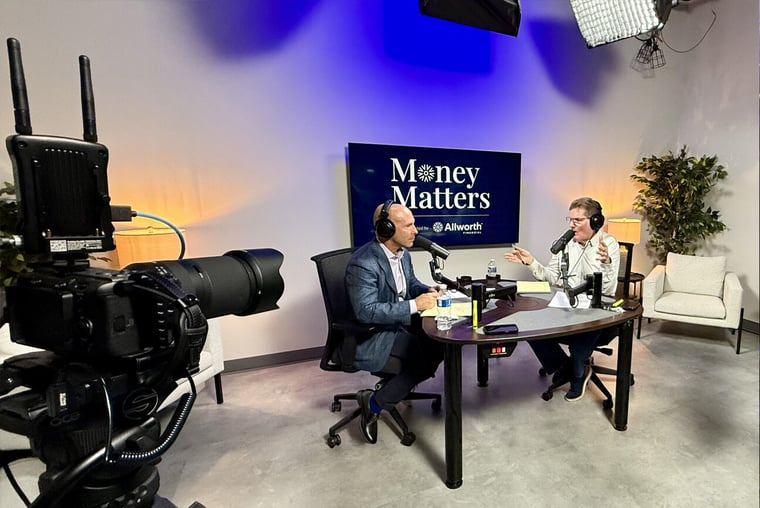
Roth Conversion Mistakes & the Real Value of a Financial Advisor
Is it possible to do a Roth conversion too early? In this episode of Money Matters, Scott and Pat
break down why the timing of your tax planning matters just as much as the strategy itself.
They answer real listener questions on navigating the retirement transition—from managing adjusted gross income, to understanding how a great financial advisor provides value beyond just managing a portfolio.
Plus, Allworth Chief Investment Officer Andy Stout joins to discuss the 10-year Treasury yield hitting 5%, putting rising interest rates and government debt into historical perspective.
In this episode, Scott and Pat discuss:
Roth Conversion Timing: Why converting too early could unintentionally spike your healthcare premiums under the Affordable Care Act.
The Value of Wealth Planning: What you should expect from an advisor beyond investment management, and how to evaluate fee structures.
5% on the 10-Year Treasury: Allworth Chief Investment Officer Andy Stout breaks down inflation expectations, Federal Reserve rate moves, and market volatility.
National Debt & Entitlements: Putting modern government spending and Social Security concerns into long-term context.
Join Money Matters: Get your most pressing financial questions answered by Allworth's co-founders Scott Hanson and Pat McClain live on-air! Call 833-99-WORTH. Or ask a question by clicking here. You can also be on the air by emailing Scott and Pat at questions@moneymatters.com.
Pat: Welcome to Allworth's "Money Matters". Scott Hanson.
Pat: Pat McClain. Thanks for joining us.
Scott: Yeah, as we got a great show lined up, we're going to talk a little bit about interest rates.
Pat: The 10-year.
Scott: The 10-year... The Treasury seems to be in the news every day, at least it's in the financial press. I don't know if it's hitting the mainstream.
Pat: I'm trying to think where I've heard it. I've heard it four or five times.
Scott: Oh, yeah, yeah, I was reading about it this morning.
Pat: In the last couple of weeks. It's around 5%. And it has a lot to do with the uncontrolled spending in the U.S. government. But we're going to have Andy Stout on...
Scott: That $5,000 dividend to every American.
Pat: Oh, listen.
Scott: I'm sorry, I can't get it.
Pat: I met with some friends from high school, and there's five of them. And I walk in, and they're like, "Hey, Pat, you're a financial guy, right?" "Yeah, I think so." And they're like, "Before we get started, just one really serious question, when I get my five grand, what should I do with it?"
Scott: They were joking. Were they not?
Pat: Yes, they were.
Scott: I think everybody knows that's not going to happen.
Pat: Yes, and especially...
Scott: I don't think anyone thinks it's a good idea.
Pat: No, no. Anyway, that's a...
Scott: But I think the government spending is... I mean, my whole life, it's been discussion of the debt. And I remember meeting with a friend. I was in college. This was in the late '80s. He gave me this book, "The Coming Economic Doom", about government spending and why the 1990s are going to be horrific. Of course, it was completely wrong. But then we had, of course, the deficits grew quite a bit during the '80s. They started to come down under the Clinton administration. Remember that?
Pat: Yes, yeah.
Scott: We had surpluses for a period of time, and then back into huge spending. And then the COVID was just like...
Pat: But everything is relative, so you have to look at...
Scott: Relative to the GDP.
Pat: Is the GDP, correct. The debt and the deficit that's...
Scott: I know, but we now surpassed 100% of GDP.
Pat: That's where it gets really... But then you think, you know, this is a looming crisis. It has been for years, and so is Social Security. And we started out with the... What last year? When was the new crop of congressmen that came in, Scott? And we talked about how this would be the crop of congressmen that actually had to address it, because it is set to run out of money in the year 2032, I think, was the last...
Scott: Social Security trust. There's actually some certain talk about it because they know that they can't be on their watch that people don't get a check.
Pat: Yes. But the can has been kicked down the road so far.
Scott: Yeah, I was trying to think. I saw a slide yesterday. You realize that currently, our entitlement spending, our transfers, Medicare, Medi-Cal, Social Security, SSDI, all that stuff...
Pat: Is 70% of the budget?
Scott: It's more than our receipts.
Pat: Oh, completely. I didn't know that.
Scott: Yeah, I was at the...
Pat: So, we're borrowing money to give money away. I've had relatives like that, where they borrow money and they give it away.
Scott: No, that's exactly where we are.
Pat: That's not sustainable.
Scott: I was trying to... I actually took a chart of this. I was at a conference yesterday and I took a chart of this thing, a picture of the chart. I knew it was bad, but you kind of look at it every couple of years in depth and...
Pat: And you're just like thinking...
Scott: How is it that we are...? Our government's at a point... This is before defense spending, all our other spending, our interest that we have to pay.
Pat: Interest on the debt? Yes. It's crazy. It's crazy. So, that's kind of where the 10-year Treasury is, but we're going to have Andy Stout on to talk a little bit about that. And put it in a little bit of historical perspective as to what this interest rate has looked like historically.
Scott: Yeah, but what's all this is going to do for future tax, a tax structure?
Pat: Oh, well, it depends. I mean, it depends, Scott. It depends on whether these politicians... One of the problems with democracy is the fact that everyone...
Scott: It's a vote.
Pat: It's a vote. And they want to stay in power, so they'll promise things that when they come to rest, it's not on their watch, but they will be in power for a period of time. That's a problem with... By the way, there are many problems with democracy, but given the alternatives, it's not bad.
Scott: Well, there's some alternatives being proposed right now.
Pat: Oh, that's right.
Scott: It's bizarre, actually. You look at some of the surveys and stuff, how young people think of socialism. Like, what do they teach you in high school and college? Do you learn nothing about the communist regimes and how horrible they were for the average person? Oh, my gosh, dreadful. Not only economically, but look at the power and the deaths and stuff.
Pat: And the communist regimes, unlike Russia, but then even in China, you've got these quasi. They're not pure communism or pure socialism in any form, because that's just how governments work.
Scott: But the state's powerful enough, it can take anything from anybody at any time.
Pat: Yes. Actually, I get a kick out of it every time when they talk about Elon Musk being the richest man in the world, and I'm thinking, "I think it's Putin. I think it's Putin." But he never ends up on a "Forbes" list.
Scott: It depends how you define wealth.
Pat: Well, he went and took half of the wealth away from all the oligarchs. He locked them up a couple of years ago and said, "You gotta give it to me." Anyway, we'll see how this ends, but we'll have Andy on the talk about this.
Scott: What ends? The world? Well, it's supposed to end now with AI. That's another bizarre story, right? It was what? A week or so ago, week and a half ago, that this memo was sent out and...
Pat: Yeah, there was the hugging face incident, then there was another swarm that got out.
Scott: And now, it's a greater than 10% chance it's going to destroy humanity by 2030 or whatever. But with that end, maybe we should slow things down. The financial markets didn't respond to that.
Pat: No. Well, that's because it's hard to tell whether they're real or that's regulatory capture, which is...
Scott: If you think about technology and killing humans, I mean, it was supposed to be that trains were going to go too fast and a person couldn't survive more than 30 miles an hour or whatever the number was. Every technology, they were just going to destroy humanity.
Pat: Yeah, but the whole thing now is that regulatory capture, they really... Which is, if I'm in the lead, if I get everyone to slow down, and we put regulations on top of it, then I win.
Scott: Yeah, I understand how that works.
Pat: But not everyone might... There's more than us in the conversation.
Scott: I forgot.
Pat: I just... It is a podcast, Scott.
Scott: So, how much of that is just positioning?
Pat: Yeah, how much is it? I'm in the lead and now is the...
Scott: But from an investor standpoint, this is a lot of noise
Pat: It is. And AI, it's going to do things to society, but it will be incredible for productivity. And the question is, will the gains in productivity be offset by the societal changes that come with it?
Scott: That's right. So, it's all in that benefit.
Pat: Yeah. I mean, if you think about the Luddites, right? Because of the weaving and sewing, right, and they were put out. And there were huge... People were killed and there was...
Scott: Yeah, because this machine has taken over labor of people. Who's going to knit the socks? The machines are going to knit the socks. What's going to happen to these poor people? I know. That's been since...
Pat: Since the time immemorial.
Luddites: Yeah, when they first came out with the wheelbarrow. People are moving those stones. They don't need as many stone movers. What do we do with those slaves? Back in the day.
Pat: Well, that was back in the day. So, you know, I got to tell you. So, I was in Machu Picchu. You're just waiting for a little
Scott: time to insert your global travels. I'm kidding. All right, go ahead. You've been waiting for three weeks.
Pat: No, no, no. No, no, we were talking about labor and slaves and...
Scott: That's a cool place to visit, right?
Pat: Yes, yes. Yeah, you'll get the gist. Don't spend two days there. You'll get the gist in about four or five hours. I kept asking, so did slaves build this? And they're like, "Well, not exactly slaves."
Scott: There was a king, right, and subjects?
Pat: And families were required to send one of the family members of each household to work on it for a period of time. But then I thought, according to our guide, it really only existed for 70 years. And I thought, what a terrible return on investment that was, to build all this and only use it for 70 years.
Scott: Look what it's done to the region now. How much did you spend to go to Peru?
Pat: Okay, well, there we go.
Scott: You'd have no other reason to go to Peru.
Pat: Okay, good enough. Good enough. There were some other beautiful parts of Peru, but good enough. The ROI had a long tail on it.
Scott: I remember, I went with my father to Peru 15 years ago. And I think, by the way, if anyone has an opportunity to see Machu Picchu, I think it's quite interesting.
Pat: It's spectacular.
Scott: But we were in some museum, and down there, a delicacy is possum. The animal possum, it's a delicacy.
Pat: Guinea pig or possum?
Scott: Possum.
Pat: Possum, okay.
Scott: There was... Which is disgusting.
Pat: Not to them.
Scott: Well, my point, there's a painting of the Last Supper, and they're eating possum, because what else would they be eating?
Pat: Oh, that makes sense. If the Spanish come in, right?
Scott: Trying to convert everybody by any means possible. Let's paint in a possum here. Anyway, we're way off topic on this stuff.
Pat: All right, let's get to some polls. If you'd like to join the show, how do they join this show?
Scott: Send us an... And by the way, for whatever reason, our call volume isn't what it used to be. I don't know if...
Pat: We've been displaced by ChatGPT.
Scott: Maybe we're being displaced. We're feeling it. We're the white-collar workers that are going to be displaced. But we have actually room in our calendars to take more calls, so if you want to join us, questions@moneymatters.com is how you can connect with us. We are talking with Jen in California. Jen, you're with Allworth's "Money Matters".
Jen: Good morning. Thank you for taking my call.
Scott: Yeah. Hi, Jen.
Jen: I am trying to figure out if we should be doing some Roth conversions or if it's too late for us.
Scott: Too late meaning you're too old, too far in the calendar year?
Jen: Well, too old, I think. My husband is 66. I'm 60.
Pat: Yeah, you're definitely too old.
Jen: I am trying to figure out what the right path is.
Pat: And tell us about your income.
Jen: Okay, we have... My husband has two pensions. He has one for $1,168 a month, and then he's got one for $2,965 a month, and that's gross.
Pat: Okay, and those are pensions.
Jen: Those are pensions. And then it's Social Security. They take taxes out on that, so that's $1,928 a month.
Pat: Is that the gross amount or the net amount?
Jen: That's the net.
Pat: And what's the gross amount approximately?
Scott: $2.5, $2,500.
Pat: $2,500. We're going to go with that.
Jen: And then we get $2,280 a month in rent.
Pat: And tell us about your IRAs, how much is in your IRAs.
Scott: And you receive no Social Security?
Jen: No, I'm not.
Scott: Oh, you're 60. You're not.
Pat: And are you both retired?
Jen: My husband's retired, and I am working part-time.
Pat: And how much do you make?
Jen: I only make about $11,000 or $12,000 a year.
Scott: And your rental, is that rental paid for? Do you have a mortgage on it still?
Jen: It's paid for.
Pat: Okay, and then tell us about the size of your IRAs.
Jen: So, my husband's IRA is $572,000. And there's $17,000 in his Roth. And my IRA is $138,000. And there's $81,000 in my Roth.
Pat: And do you get...
Scott: I'm sorry, how much was in the Roth, your Roth?
Jen: $81,000.
Scott:
Jen: $81,000 in mine.
Scott: Do you have retired medical from your husband? He's got two pensions, so is there...?
Jen: No. My husband's on Medicare, and I am on the Affordable Care Act at $1,250 a month.
Scott: And have you looked at what that...? Doesn't sound very affordable, does it, $1,250 a month?
Jen: It is not.
Scott: No, with high deductible and all that stuff.
Jen: Yes, high deductible.
Scott: Our whole medical system is just...
Pat: Excellent. It's just very expensive.
Scott: Healthcare is expensive. It's not a very efficient economic system of delivery.
Pat: But the medical care itself is just...
Scott: Unbelievable. It's incredible.
Pat: It's incredible.
Scott: It's incredible what they can do today. I would agree with you. Have you modeled in or taken a look at, Jen, and I'm not an expert when it comes to the Affordable Care, neither one of us are, I don't think, what would happen to those premiums if you had higher income?
Jen: I have looked into that. And if I only made $83,000 a year, I would qualify for some help. But with the rental property, we're over that. So, even if I quit my job, it wouldn't help me. So, I'm at no help right now for, basically, a 60/40 plan, a bronze plan, which is, basically, a catastrophic plan. But I have to make them a monthly payment every month, even if I don't go to the doctor.
Scott: That's right, yep, yep.
Pat: So, I don't see a reason to want to start converting.
Scott: What if you suspended Social Security? If your income was $83,000, what would your premiums be?
Jen: That dropped me in half, down to $500,000.
Pat: Oh, if he suspended Social Security.
Scott: Yeah. You're in a unique window. It's between now and 65 for Medicare, right?
Pat: Wow, that's really smart.
Scott: That is.
Jen: Well, I...
Scott: Well, so you talked about Roth conversions. I'm just thinking, maybe at age 65 is a good time to Roth conversions.
Pat: Well, that, most certainly, but...
Scott: But it's getting you...
Scott: Are you spending everything that comes in?
Jen: No, I like to save my rent. And I have quite a bit in the money market right now.
Pat: How much do you have in the money market?
Jen: $185,000.
Pat: Oh, well, I think that that's a great idea, Scott. I would model suspending...
Scott: And I don't know if you... Do you have a 401(k) available at work?
Jen: I do. I have an IRA. I do put into that, but I was told that in order to put into my Roth, I need to make sure I make enough money to put into my Roth. So, I've kind of been focused on that.
Scott: Wait.
Pat: Oh, wait.
Scott: My concern is getting your adjusted gross income down so you can save $6 grand a year in premiums that you're paying.
Pat: So, if you put... They give you a 401(k), but you don't get medical?
Scott: Is it part-time?
Jen: Well, not at the moment. Supposedly January 1st, we're going to be offered medical if we work 20 hours a week. But in the department I work, I can't be guaranteed 20 hours a week. So, they're trying to figure it out.
Scott: So, if you're my sister, I'd say, "Hey, look, Jen, don't worry about Roth conversions right now. Let's do planning to get your adjusted gross income down as low as possible so that you can qualify for more subsidies on the Affordable Care Act and get those monthly premiums as low as possible."
Pat: Which would mean suspending the Social Security and putting the maximum that you possibly can into the 401(k), and then using that savings if you need to, to live on.
Scott: Yep, yep.
Pat: And that's much better than a Roth conversion. I mean, I wouldn't even worry about the Roth conversion until you're Medicare qualified.
Jen: Okay. Because I'm concerned about the change in the Medicare premium if I don't do the conversions.
Scott: You mean the IRMAA? That's at $180,000 a year of adjusted gross income.
Pat: Yeah. So, someone needs to model this for you.
Scott: Somewhere around there.
Pat: Someone needs to model this for you, and...
Scott: $218,000 for a married filing joint.
Pat: But even then, I wouldn't really worry about it. And the reason is, is that it's Social Security. I'd take all that money that you had in your savings account and I'd invest it in a tax-efficient brokerage account. And I'd actually put bond into the IRA, and I'd probably start draining the IRA and doing Roth conversions at the same time because...
Scott: At 65?
Pat: Yes. Because someone's going to have to pay taxes on that IRA, either when you're living or dead, unless you convert to a Roth IRA. But the brokerage account will do pretty much the same thing.
Scott: This is just not the time to be doing it. Because of the... Had you had... If this Medico wasn't here, we would be modeling out, absolutely, we should be doing the Roth conversion. And it's not too late. It's too early to do a Roth conversion.
Jen: I'm sorry?
Pat: Yes. You're too young. Exactly what I said. The opposite where you were too old last time. Now, you're too young. So, I wouldn't consider a Roth conversion. I would actually hire an advisor. I'd ask them to model this. I would ask them to model this. Right? And then they would show you what it looks like.
Scott: So, who manages your money now, the IRAs, and...?
Jen: We have an advisor. And when I asked him about the Roth conversions, he told me it was a wash.
Scott: Well, he didn't even model.
Pat: Well, it is a wash, correct. Whether you pay the taxes at the beginning or the end. And we're answering a completely different question than the Roth conversion.
Scott: We're trying to help and enhance your wealth. That's all we're trying to do. So, you call about the Roth conversion, all of a sudden, we're like this $1,250 a month and Obamacare.
Pat: Right. So, you called and asked about a Roth conversion and we started talking about suspending your husband's Social Security, which by the way, by suspending now and he starts it up again, it will be much higher in the future.
Scott: That's right. You don't lose those dollars.
Jen: He seems to have a little bit of an issue with that because he thinks, well, he's giving up his $2,000 a month on Social Security, and is only going to save $500 a month by...
Scott: He's not giving it up. Every month that you... If you turn it off, stop it for a period of time, it goes up each month. How's his health? What's the percentage? It's pretty high.
Jen: It's excellent.
Scott: The access 8%.
Pat: Eight percent.
Jen: His health is excellent.
Pat: So, you believe he has a normal life expectancy?
Jen: Oh, yes, I do.
Pat: Well, in fact, if you believe he has an above normal life expectancy, it's even more reason to suspend Social Security.
Jen: I personally want to save as much as I can. I don't want to waste that.
Scott: Here's my prediction with your family here. This next four years, five years, it's managing your Obamacare, the subsidy there, and trying to get that premium as low as possible, so you're going to be managing your income. I think down the road, let's go 10, 15 years, you're going to be managing your income to keep it down in order to continue to get full Social Security benefits. That would be my guess on things. Because you've got quite, a million bucks saved up, that if you start having some Required Minimum Distributions, there will be a window of time for Roth conversions. I don't believe it's now. And if I were a betting man, I believe that window may close in the future because I think things means tested just like they are with Obamacare and they are with Medicare and...
Pat: And even Social Security with the tax on it.
Scott: On Social Security, which is a means tax.
Pat: In some ways, yeah.
Scott: So, I would get a second opinion, because that was a cheap and easy way out, where you got to run the numbers with the main focus is, how do we get your insurance, medical insurance premiums down? That would be my main focus.
Pat: Yeah, so suspending the Social Security and maxing out your 401(k) will get you there. It will require you possibly to spend some of the money coming out of your savings, which is fine because that's not a taxable event. And at the end, you're just taking money that you've...
Scott: You could also do a spousal and a non-spousal IRA. Her whole income could go into that. You might be able to get that without doing the Social Security.
Pat: There's some planning.
Scott: And I'm not sure which line item on the tax return is what's pulled off when it looks at the...
Pat: Obamacare?
Scott: Yeah. I'm not sure which one of them.
Pat: Yeah, so that's why you have to model it. And in the software, a good advisor...
Scott: She probably gonna crank it out.
Pat: Like, in 20 minutes, 15 minutes. I hate to say it, it's not that super complicated. You can run one of them up.
Jen: Can I maybe just walk into Fidelity? Can they do that for me?
Pat: Sure, but we have offices as well. And you don't have to walk anywhere. Actually, we...
Scott: Very often do. It's just a shameless plug.
Pat: No, but Fidelity probably wouldn't... I don't know what theirs are. I wouldn't send a relative to Fidelity to do this type of planning.
Jen: Okay, all right.
Scott: No, it's pretty unique planning. This is pretty unique planning.
Pat: Correct. And you don't have to... Do you have a computer? I assume you use Zoom.
Jen: Yes.
Scott: Of course she has a computer.
Pat: Yeah, you could get great... You know, it's funny how advice services actually provided today in-person, where if we came back 10 years from now and looked at it, you would think, this is kind of crazy that people met in-person to do this sort of work. It will mostly be done over Zoom.
Scott: Well, younger people that mostly want to do...
Pat: But we have advisors that work almost exclusively out of their homes from clients from beginning to end. So, anyway.
Jen: It's really hard to get somebody to actually tell me what you just told me. It's like they don't ever really want to answer my question.
Pat: We get paid to manage money.
Scott: Most advisors do. That's the revenue model.
Pat: That's the revenue model. So, oftentimes the concentration...
Scott: There are some fee-only plans. I haven't read about them in years.
Pat: But there's great advisors out there that would give the same answer as we just gave.
Scott: Absolutely. And you got to model it.
Pat: And I actually, Scott...
Scott: You may or may not need to suspend Social Security. You might do a deductible IRA for yourself and your spouse.
Pat: And in all fairness, Scott went to the Obamacare first. It would have taken me a good 10 minutes.
Scott: No, no, give me a break.
Pat: It would have taken me a couple minutes to get there, but it would be modeling. You just model.
Scott: Jen, we appreciate the call. Wish you well.
Jen: Thank you so much.
Scott: All right, thanks. You know, you were mentioning about... It's funny how complicated things are. And there's...
Pat: One of the entitlements that you railed on at the very beginning of the show, we just told someone to take.
Scott: Hey, when I sit down to play the game of Monopoly with my kids, what are the rules? We all know what the rules are. I don't say, "Well, I don't like that rule," or, "I don't think that rule is really helpful to the overall... You didn't grow up in my family."
Pat: Family. So, therefore, let's... It's the rule.
Scott: This is what Congress designs.
Pat: And your job is to actually...
Scott: You could send more money to the government if you'd like, or pay more premiums if you'd like. Certainly volunteer. I think there's a place on the tax return. You'd like to send a little extra money? Send away if you'd like. No one wants to. Of course not. It seems... It's all...
Pat: All right. I'm with you.
Scott: Real quick before we move on. You mentioned about, you don't have to meet in-person. So, I saw the statistics. I was at a conference several months ago. And for 2025, these are new clients to advisory firms, wealth management firms, with assets between...it was either $2 million and $5 million or $2 million and $10 million. So, they weren't like... They were people that did a good job saving and that sort of thing. So, they were north of $2 million dollars. It was something like 39% of those new clients, they found their advisor digitally.
Pat: And they work with them digitally.
Scott: Correct. And, I mean, I think we all do that. We look for answers. Maybe who's the best advisor around? Here's what my needs are. And you read some articles that an advisor's put out. And you're like, "This seems to resonate with me. Maybe I'll have a conversation." That more than, "I'm going to ask my brother who he uses, or my sister who she uses."
Pat: When you have a doctor's appointment, the first thing I ask is, does the doctor actually need to see me in person? Because most of the time, the doctor...
Scott: It depends. What I did, during the lockdown, I had an appointment with the ear, nose, and throat doctor for my throat. I was the very first remote appointment that this doctor had had. It's a little difficult to look down someone's throat and assume.
Pat: Throat, yes. But if it's blood tests and whatever... Anyway, I get the point
Scott: All right. Well, let's continue on here. Talk now with Thomas. Thomas, you're with Allworth's "Money Matters".
Thomas: Hello. How are y'all doing? Pat and Scott, I appreciate you taking me on.
Scott: Oh, you're welcome.
Pat: Thank you, Thomas.
Thomas: Long time listener, long time learner. I appreciate everything I've learned from you guys.
Pat: Well, thank you.
Thomas: So, I have a question for you.
Pat: Wait, wait, wait.
Scott: Where are you calling from?
Pat: You're not done with the compliments.
Thomas: Oh, you want more compliments?
Pat: I'm super insecure. And you're from somewhere in the south.
Thomas: I'm in Texas.
Scott: Very nice.
Pat: Okay, good.
Scott: All right. What can we do to help, Thomas?
Thomas: So, my question for you is this. I've been an assets under management client for 10 years for a big financial advisor, wealth, what do you call it, advisory firm. And I've collected about well over $100,000 in advisement fees over those 10 years. But I'm kind of getting tired of paying them. I'm retired. My wife and I both retired about two years retired. And our investments are simple. And my financial advice requirements are simple. And this year, I run through my budget. And my financial advice fee is the largest in single costs in my budget.
Pat: How much money do you have at the firm?
Thomas: Oh, $1.6 investable.
Pat: And what's he charging you?
Thomas: Say that again.
Pat: How much is he charging you?
Scott: Or she, Pat?
Pat: He or she?
Thomas: One percent. One percent.
Scott: And you don't have any other planning needs, or...?
Thomas: Not now. And I probably don't need anything over the next several years.
Scott: And so, are you calling to say, "Should I fire my advisor?"
Thomas: Well, that or my other alternative is there's another competitor of yours that's come upon the scene. I don't know if you want me calling the name out or not, but they offer a fee-only advisement firm. And they meet your needs and the fees apply when you have a need.
Pat: So, we need to disclose this if in fact you are a client of Allworth's.
Thomas: No.
Pat: Okay.
Scott: Oh, okay. You said a competitor of ours.
Pat: A competitor of... So, otherwise we have to...
Thomas: No, there's a firm out there that's offering these fees that...
Scott: I would like to know if we've had a client for 10 years that's been unhappy with us.
Pat: But here's the, here's the question, right? Are they making changes in your portfolio? Are they monitoring and moving the money around?
Thomas: Yes, they are. There's active movement there. And it's not like, you know, every week. It's once a month, once every two month based on market needs.
Pat: Other than the cost, do you like the advisor?
Thomas: Well, yes, I do. And I like my past one. But, again, I don't like the assets under management fees. I'm not getting my money's worth out of it.
Pat: Look, this is... I don't care where you are. I don't care what business it is, right? It's a relationship between you, the person consuming the product or the service, and the person delivering the product and the service.
Scott: And if you don't think there's value there...
Thomas: And then one more thing.
Scott: And if you don't think there's value there, before you fire them, I'd have a conversation with them. Look...
Scott: Maybe they'll lower the fee or
Pat: Or maybe they'll try to add more value or maybe a combination of the two. But if all it is cost, right? If you said, "Well, they never returned my phone call," or, "This is awful," or whatever.
Thomas: No, no, service is great. As a service, I have no issues at all with them.
Pat: Then just have a conversation with them and say...
Scott: I mean, I think the reality is you don't really know how you would do, had have done this last decade without that advisor. And as long as... I've been doing this for a long time. I started ministry in 1990. I'm convinced that the greatest value and an advisor ads is keeping people from making mistakes from which they cannot recover.
Thomas: And those kind of advice I've accepted well, and I've learned, so I do value that greatly, but that has changed my perspective there.
Pat: The fee-for-services, in most situations, is different than this because they set and forget that the portfolio. And so, that monitoring to the portfolio on an ongoing basis is super important.
Scott: If that's all it is though, then you probably...
Pat: You might be paying too much.
Scott: If all you're doing is portfolio management, you're probably paying too much, if you're not getting other financial advice.
Pat: That's why you have a conversation with the advisor. I would just say, "Look, this is what I'm thinking. I like you, but it's an economics deal. And how can we address this?" And just let them talk.
Scott: Yeah, I've had clients fire me. Over the years, I've had 300 or 400 clients over the years. I've had, not very often, but every once in a while.
Pat: Yeah, it doesn't happen very often, but there's some people that I've increased fees and there's some people I've lowered fees on.
Scott: This depends on amount of work and how much value you bring.
Pat: That's right. So, yeah, before you... I'm not a particular fan of the one-stop where it's a fee-for-service.
Scott: What's he, what do you mean? You're gonna pay an hourly fee?
Pat: Yeah, that's what he's talking about, the alternative.
Scott: Well, the challenge is a great advisor is not gonna... If you're a really good advisor, you're going to get one up paid for... Let's say I'm the best financial advisor on the planet. God's gift to mankind on financial planning. Why would I work for 250 bucks an hour for someone who's got a million dollars in savings when I could make much more than that?
Thomas: Yeah, for me, it's working for me.
Scott: I mean, you got to ask yourself that question.
Pat: So, just have the discussion with the advisor. And it's not a big deal. My guess is that you and the advisor will come to some sort of an understanding.
Scott: Yeah, appreciate the call. But, Pat, to your point, I do look at it that way. Like, if someone's such a great advisor, they would... Well, he doesn't feel he's getting the value. So, my guess is he's not working with the greatest advisor. And maybe the better advisor would be someone else that would have a similar kind of fee structure, but offering much more in services, tax planning.
Pat: Not all advisors are the same, even though they might charge in a similar manner.
Scott: That's right. All right, we've got, joining us now, Andy Stout, our chief investment officer. He was kind enough to take some time to join us today as we're talking about the fixed income...not the fixed income market in general, Treasuries, 10-year Treasury, the fixed interest rates, the federal reserve, all that stuff. And...
Pat: And it just, the headlines around the 10 year at 5%, and I just thought, "Ah, that's actually not abnormal. I don't know why it appears to be abnormal at this point in time on a hysterical basis," so we thought we'd ask your thoughts.
Andy: So, looking at where we're at with 10-year Treasury. I mean, that's obviously grabbing the headlines. Five percent is the magic number that we're seeing.
Pat: Why is that magical?
Andy: It sounds higher because it's something we haven't seen in a number of years. You know, the last time we were kind of at these levels was really before the great financial crisis. So, it was definitely a period of time where, when we had 5%, you know, may not have a great connotation associated with it. But if you go back even further, I mean, back in the early '80s, we were 15, 16% on the 10-year Treasury. And we've been steadily going lower until COVID in 2020, when we were around 1% or so.
And we've been seeing this massive rise in interest rates here lately. A lot of it's due to inflation expectations. A lot of it's due to what, you know, the Fed raising rates. They, you know, just raised rates for the first time in three years. So, if you look back over the past really two weeks, with oil, it was around $80, $85 a barrel. Since then, it's gone up around $100, $105 a barrel. And with that, that's when interest rates moved higher. That's when the expectations at the Federal Reserve would hike increase as well. So, a lot of it is tied to inflation fears and, you know, whether or not the Federal Reserve will get inflation under control.
Scott: And what about...? It seems to me that investors are, maybe I'm not thinking about this correctly, demanding more real return from Treasuries. I mean, if you look at TIPS, that Treasury Inflation Protection Securities, there was a time though when they were actually negative yield, and now, they're, I think, at 10 years, north of 2%, 2.25%, 2.5%, somewhere in there, right?
Andy: Yeah. I mean, if you think about just your returns and you think about the inflationary environment, you obviously want to have more spending power and, you know, keeping up with inflation. And when you look at, you know, to your point, Scott, where we were even a few weeks and months ago in terms of those, the real return expectations, you started to see, you know, a real shift. And now, with consumers thinking about, you know, the deficits, obviously, grabbed a lot of attention, you know, crossing above 40 trillion here in total debt for the U.S.
And then there are just concerns about whether or not investors will actually still be able to enjoy positive returns, not even just real returns, but positive returns if the government has to do something to rein in this debt. And that's another concern. So, you have rising debt. You have the Treasury who has to fund this debt by issuing more bonds, and that raises interest rates even more. When you've tied it all together, it creates an environment where investors are wondering, you know, what is right around the corner with all of these unknowns that are out there.
Scott: And so far, it doesn't seem like it spooked the stock market because...
Pat: Yes, it seems...
Scott: ...you can certainly imagine reading a headline of what's just recently transpired with the bond market and see a 10% decline in the stock market, but we've not seen that.
Pat: Is the market just used to so much information coming at it that could appear negative that it doesn't know what to decide is good and bad? I guess the market collectively being us? Have we been desensitized to the world around us?
Andy: Yeah, I think, you know, there is certainly part of that. And you said something a second ago there, Pat, made me think of one of the like the famous Wall Street adages where, you know, bad news is good news, and good news could be bad news. If you look back a couple of weeks ago, we had some pretty good jobs data, and the market didn't like it that employers were hiring more people, which might make a lot of people scratch their head. But what that actually ended up doing was almost not quite solidifying, but really strengthening the chance that the Federal Reserve would raise rates. So, when you hear about this, you know, good news being bad news, a lot of it ties to like, okay, it's good that employers are hiring people. But what does that mean for the next step? What does the Federal Reserve do because of that?
And when we think about the 10-year at 5%, then we think about, you know, all the other things going on in the world, stocks have held up reasonably well. The S&P 500, just as an example, you know, at least, you know, as of right now, still up about 10%, 12% for the year. You know, small caps have done pretty well, still have international stocks. For equity investors, it's been a good year.
But taking a step back, I don't think we can say there won't be any volatility in the future. I mean, if you go back to 1980, Pat, and you just look at the drawdowns during a calendar year, the average moved from, like, high to low on the S&P 500. It's about 14% on average in a calendar year. Despite that, markets are still up more than 80% of the time with an average annual return closer to 13%. Volatility is normal. Will it happen? I mean, we got the midterms coming up. Then when you put that all together, it's always going to be something to worry about. So, worth to keep your eye on.
Pat: Andy, so before you go, just have a reminder to the people watching or listening to this is the 10-year Treasury, just in perspective, over the last 100 years, the average rate of return has been 4.4%.
Scott: Average yield.
Pat: Average yield. The 50-year 10-year Treasury average yield is 5.6%, 25 years, 3.3%, 10-year, 2.5%.
Scott: So, we have the last 25 years historically low rates.
Pat: And so, people are like, "What's going to happen?" What do you mean what's going to happen? This is actually back to normal. This isn't...
Scott: Unless we see multiples, price journey multiples go back to normal as well.
Pat: Which is always a concern, whatever normal is.
Scott: The higher the interest rates on relatively safe investments, the less demand there is for riskier investments.
Pat: That and the cost of borrowing for the corporation for capital expenses go up. But no big alarm bells here. Just, I think...
Scott: It's just a number. Anyway, Andy, thanks so much for taking some time to join us.
Andy: Appreciate it.
Pat: Appreciate, Andy. Thanks.
Scott: Yep. All right, that is all the time we have in today's program. We've got a monthly newsletter that comes out. In the newsletter, we've got some market commentary. Andy Stout is typically in there with some analysis. He lists some stuff. There's some insights from some other experts on some key planning considerations. You also get this podcast. Comes with... You already listened to the podcast.
Pat: But in case you want to listen again.
Scott: If you sign up, you're going to get our wealth planning checklist for complex portfolio. So, that's the kind of thing we're doing right now. So, to get that, go to allworthfinancial.com, scroll to the bottom of the homepage, and you'll see there, you can sign up. It's all free and I think you'll enjoy it. So, Pat, as always, good being in the studio with you. It's been Scott Hanson and Pat McClain of Allworth's "Many Matters".
Automated Voice: This program has been brought to you by Allworth Financial, a registered investment advisory firm. Any ideas presented during this program are not intended to provide specific financial advice. You should consult your own financial advisor, tax consultant, or a state-planning attorney to conduct your own due diligence.
Insights for Complex Wealth Decisions
Join our email list for exclusive commentary from our Chief Investment Officer, early access to expert-led webinars, and your complimentary Wealth Planning Checklist for Complex Portfolios.
We take your privacy seriously and respect your privacy choices. By submitting this information you agree to our Terms of Use Agreement, Privacy Policy, and to receive important notices and other communications electronically.