
When Can You Retire? Making the Most of Your Savings
When can you retire? It’s one of the biggest financial questions you’ll ever answer—and knowing you have enough is about more than reaching a certain number.
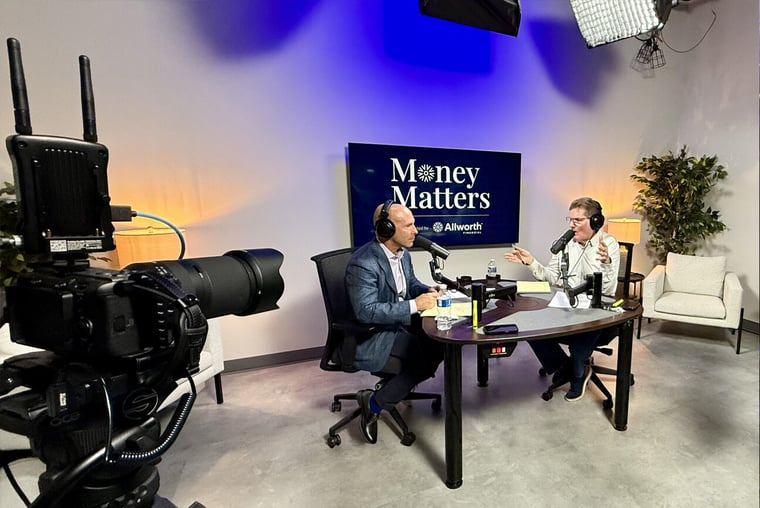
In this episode of Allworth’s Money Matters, Scott and Pat help a 57-year-old teacher determine whether she can afford to leave the classroom after 33 years. They break down her pension, retirement savings and spending needs, and discuss whether taking a pension supplement as a lump sum or an annuity makes more sense.
Then, a young couple earning a strong income wonders whether they should keep maximizing retirement savings or build up cash for a future home purchase and possible move out of California. Scott and Pat explain why sometimes the smartest financial decision isn’t saving every available dollar for retirement—it’s making sure your money supports the life you’re trying to build.
So, when can you retire, and how do you balance saving for tomorrow with the financial priorities you have today? Whether retirement is right around the corner or decades away, this episode offers practical perspective for making those decisions with confidence.
Join Money Matters: Get your most pressing financial questions answered by Allworth's co-founders Scott Hanson and Pat McClain live on-air! Call 833-99-WORTH. Or ask a question by clicking here. You can also be on the air by emailing Scott and Pat at questions@moneymatters.com.
Scott: Welcome to Allworth's "Money Matters". Scott Hanson.
Pat: Pat McClain. Thanks for joining us.
Scott: Yeah, glad to have everyone listening to our program today. I guess they're listening to our show.
Pat: Well, they're here, but...
Scott: We're here. You're here. Because you were on vacation of sorts.
Pat: I went on a trip. Yes, it was with my wife.
Scott: Is it a vacation when you're semi-retired?
Pat: They're really just trips. What am I vacating? Right, what am I vacating? I mean, when you think of the word vacation, you're vacating something. So, it's a trip. And I still have clients. I still work, but I have no management responsibility in the organization. And I can tell you, it's a... You know, my brother, my older brother, he's a couple of years older than me. He was the CEO of a tech company. And he had been...
Scott: Is he retired?
Pat: He is. Well, kind of. He's got a very similar situation that I do and you do. He consults to upstart tech companies about how to bring product to market and to price. He gets asked to sit on boards, but he won't sit on a board. He says there's too much day-to-day responsibility. If you sit on a board, you're responsible to people. He said, "What do you do...?"
Scott: And you have to live by their schedule.
Pat: And their schedule. So, we talked a little bit. I spent the last two weeks with him and we talked a little bit about, like, what the transition was like. And he agreed with me. It's much harder on the spouse than it is on the person leaving the position. Because all of a sudden, you're spending a lot more time together. And, you know, he's been married for 43 years. I've been married for 40. You know, the day-to-day responsibilities kind of float away a little bit, and then there's realignment over who does what. Like yesterday when we got back from our trip... Was it yesterday? Yesterday, I went to the grocery store and did the shopping with a massive list, by the way, Scott, it was massive list. But he and I agreed that, psychologically, it was difficult to kind of step...
Scott: Moving. And you're neither one of you are fully retired, which is interesting. Because the whole concept of retirement is shifting. And if you look, the more educated one is, and the higher the net worth, the more likely they are still have, doing some sort of work in retirement. It's kind of like there's two ends of the spectrum. There's those that don't have any options, that are stuck working, typically, not great jobs, but they're working maybe into their 70s because they need the income. And then there's this other side. They're not working for the income as much as they've got something they can contribute. And it's a day and age where you can still have some sort of employment. You know, with Zoom, I mean...
Pat: And you can work anywhere.
Scott: You think about...
Pat: I mean, you could work anywhere. I mean, anywhere in the world, there's connectivity. I shouldn't say anywhere.
Scott: Most about.
Pat: Just about anywhere.
Scott: Just about anywhere.
Pat: If there's running water and sewage systems, there's a good chance there's connectivity.
Scott: Clearly, if there's sewage systems, there's connectivity.
Pat: There's connectivity.
Scott: Wonder what percentage of the world actually has a sewage system. But anyway, that's another...
Pat: But your point's well taken, right? That there's options. So, speaking of working, you are not retired. You started the new venture we've talked a little bit about here on the show, your book. And I wrote a review for it on LinkedIn, I believe.
Scott: You did? Well, thank you.
Pat: I did. And it was a positive review before you thank me for the review.
Scott: Yeah, my book came out -- well, it's interesting. So, the book, really, it's for people that are considering selling a business. The title is the "Private Equity Advantage", Balancing Price Terms and Legacy when Selling your Business. And I focused a little more narrowly on private equity, mainly because they're the ones behind about 70% of all transactions in the mid and small market for, which is where most businesses are. If you look Pat, there's, like, over 2 million baby boomers that own businesses. They're all going to transact. Either someone gets to control their succession, or someone else will control for them when they're either dead or they're sick.
Pat: That's right. That's right. Right, right.
Scott: No one gets out of here alive. You can't take the business with you.
Pat: And don't think that just because there's a lot of money there, that it's actually good for the family that's actually receiving the money, especially with a small, closely-held business with family members that work in it.
Scott: State that again.
Pat: Just because the business is of value and someone dies with it, and family members work in that business, it isn't necessarily good for the family. I mean, the money comes in...
Scott: Oh, my gosh.
Pat: ...but it tears families apart.
Scott: You read about it all the time.
Pat: Oh, I've seen it.
Scott: I know we've all seen it.
Pat: We've seen it. And it's terrible, right? It's terrible.
Scott: Yeah. So, part of this is, how do you make sure that the money is a blessing to the family and not a curse to the family?
Pat: Good enough.
Scott: But it's kind of a nuts and bolts of all the things to consider. But the interesting thing with Forbes books, so it was released on August 11th, and I started getting some messages from friends, "Hey, I can't order your book." And so, on the day it was released, out of stock. And I think Amazon's algorithms have changed such that they didn't have enough books on hand. It's not like a bestseller, right? It's a very new...
Pat: Okay. Well, how many did they have? Like, four.
Scott: I'm thinking maybe four of them, four. But it's still like a couple of weeks later and you go to order it and it's still a couple of weeks out. They're fulfilling orders, but it's a...
Pat: Are you on a book tour or are you down at the Barnes and Noble signing...?
Scott: No, I'm not at the Barnes and Noble signing books.
Pat: Borders.
Scott: Whatever.
Pat: Whatever's left.
Scott: The Borders' still on?
Pat: I don't think so. Barnes and Noble is.
Scott: But if you're trying to sell a book and you don't have any, well, you can get it off target or you can get them online. I'm like, "Who buys their books anywhere other than Amazon?" I'm sorry. But what? A 95% of the market this day and age.
Pat: So, digital copies, are they selling, or...?
Scott: Yeah. I think we had some promotion on the digital, like a free digital copy for a period. There's a way they do to it.
Pat: Are you enjoying rankings?
Scott: I certainly enjoyed writing it. I enjoyed writing the book. Promoting the book, I don't know.
Pat: And are you speaking to conferences?
Scott: Oh, Pat, I'm just lined up. They're sending the jet out for me. Bring me in. I'm going to Jackson Hall with the elites, Bill Clinton, Barack Obama. I don't know.
Pat: Are you going to speak in business conferences?
Scott: I've been invited a couple of companies. Yes, yes, so we will see.
Pat: So, your thoughts so far? How long are you into this venture? I know you've been writing the book for over a year, but you've promoted, started the book... When did you formally launch your business?
Scott: It's not. I don't have a business formally launched. Right now, I'm just working on the book and see what happens, see what happens. All right. I don't know, yeah.
Pat: You do have children.
Scott: It's helpful to buy though. If you are, or someone you know has a business that are thinking about selling it sometime in the next five years or whatever, it's a help. It's a good read. I think it's a good read.
Pat: Oh, Scott. It was a good read. It's super important, it's super important to think about the legacy of...if you own a business, I don't care how small it is, about what happens to that business. Because even the smallest business will have value, some terminal value to somebody.
Scott: To somebody.
Pat: And so you see these businesses sometimes just closed down, even consulting businesses just closed down. And you think, "Why would you close it down?" First of all, you're leaving the people that consume your services in a lurch. They would prefer you to...
Scott: Have somebody.
Pat: ...somebody that you could refer to.
Scott: Well, I tell you...
Pat: And the other is that there's an income or net worth component right there.
Scott: There's a new market for the small businesses. There's this whole movement called ETA, Entrepreneurship Through Acquisition. So, a lot of the business schools and their MBA programs have courses on this. It's basically how to go buy a small business and run it. So, there are lots of new college grads or just finishing their master's degree or whatever, out hunting for small businesses to buy. These are like values of maybe 3 million bucks or less, so smaller businesses. But 3 million bucks is still good, you know, for an average American, it's a nice, little business.
Pat: It's funny, that that's exactly what my son, Tom did. He worked for private equity. He left that and he said, "I'm just going to go and buy a small business." And he went out in the marketplace and probably looked at 70 or 80 small businesses in all kinds of industries, figuring out which one actually had good margins, which one fit his lifestyle. And he ended up making an offer on a portable toilet business for like weddings and corporate events. But the offer fell through, and he just realized that after the fact, that it wasn't much harder to actually go and build his own businesses than it is to buy. But he had to go through that process, which you called entrepreneurship.
Scott: I didn't call it. It's a whole movement. I mean, if you Google it online, it's actually a thing. ETA, Entrepreneurship Through Acquisition. Well, I think it's a little interesting misnomer because, isn't the idea of entrepreneurship to create something from nothing, but...
Pat: I hate this word entrepreneur.
Scott: What does that mean? Well, you know what I really hate is, "Well, I'm an entrepreneur." Okay, well, I don't know what that means. Just like you.
Pat: I hate that.
Scott: What does that mean?
Pat: I mean, look, you're a plumber. Okay, let's call it what it is.
Scott: Or financial advisor.
Pat: Or financial advisor or a handyman.
Scott: Whatever. Yeah, most businesses, it's like someone had some skill in a trade and they're working for somebody and they don't like working with that person and went and started their own thing. And then it grew. And the next thing you know, they have 50 employees or 500 employees or whatever. That's how most of these businesses start. It's not like...
Pat: It's almost like our story.
Scott: Of course, it is. It's not like someone has this grandiose plan, "I'm going to have 1,000 employees in eight years. Yeah, there's a small piece of that. And those firms tend to take venture capital and stuff. But I think that if you look at most businesses, you know, it's not how they started.
Pat: So, before we go to the calls, and I'll leave you with this. So, I remember I was having...
Scott: You're going to leave me with this? Well, thank you, Pat.
Pat: Well, there you go. About 10 years ago, I was having breakfast with this attorney and he said, "Was this always a dream, Pat? To build this business, financial services?" And I said no. He said, "Well, what was the dream?" And I said, "Not be poor." He said, "What does that mean?" I said, "It was to not be poor. It wasn't like I was going to build something.
Scott: No, we started like most small businesses.
Pat: Exactly.
Scott: We had one employee. We did everything.
Pat: Remember she quit?
Scott: Well, that first employee, before she started.
Pat: Before she started.
Scott: She went to Texas and met some boy and didn't come back.
Pat: Is that technically an employee where they never on payroll?
Scott: Nah, probably not.
Pat: Probably not.
Scott: The other one stayed with us. She stayed with us for a decade or so.
Pat: Stacy.
Scott: Yeah, yeah. Yes.
Pat: So, anyway, there you go.
Scott: Anyway, that was long time ago.
Pat: Long time ago.
Scott: So, the book, you can find it on Amazon. Just if you look at Scott Hanson, "Private Equity", or I have a website, scotthanson.com, Hanson's with an O.
Pat: Okay. It's not to be confused with that rock band, The Hansons or wasn't that...?
Scott: Or the football announcer, Scott Hanson also spelled the same way. He does the "RedZone".
Pat: I haven't seen it. Although I have been watching the HBO series on football. I'm not a huge football fan, but I...
Scott: The HBO series on football.
Pat: What's it called?
Scott: I don't know. No idea.
Pat: Anyway. All right, let's go. Pretty funny. "Hard Knocks".
Scott: Is it good?
Pat: Yeah, I enjoy it. My brother asked me the same thing. He saw me watching it on...
Scott: I mean, it just seems surprising...
Pat: ...the plane.
Scott: ...you watching the documentary on football.
Pat: Yeah, that's what my brother said to me. He goes, "You don't watch football." I go, "I love 'Hard Knocks'. I haven't missed a season." He goes, "Why would you watch this and not the football?" I said, "Well, I find the football monotonous, but I think building the team is fascinating." Like all the intricacies of who wins and how they play. Who's going to be cut from the team. What practice, the counseling that goes into each one of the players. I found that fascinating. The game itself is kind of okay.
Scott: You didn't play team sports growing up.
Pat: I played baseball until I was 11.
Scott: Okay, until 11. All right, somehow the rules and the parameters probably didn't really sit too well with you.
Pat: All right, let's go to the calls.
Scott: This funny. Real quick. I talked to a business owner yesterday. I think he's doing $25 million in revenue, something like that.
Pat: Is it profitable?
Scott: Oh, yeah, yeah. Great margins. Not only did he not finish college, he didn't finish high school.
Pat: Really?
Scott: Yeah. I'm like, "That's amazing."
Pat: Oh, good for him.
Scott: High school dropout. He's a very... You could just tell his mind works a little different than most.
Pat: When he dropped out of high school, did he just sit at home and smoke pot, or did he...?
Scott: I don't know. Anyway. All right, we better take some calls. By the way, if you want to join us, Pat and I are going to just sit in the studio and take calls. Kind of a, a call bank time.
Pat: Do I know about this?
Scott: Well, it's a little thing here. And so, I'm reading the little thing. Who's this for? for those that with a million dollars or more of investable assets. I don't know why that's necessarily important. But anyway, I think the point is we can help people that... I remember years ago, someone says, "Scott, why is it that all you've got firms, you all have these minimums. Don't you care about people that don't have much money?"
Pat: Certainly do.
Scott: I said, "Well, I've been doing radio." We did a radio program for years that helped. But, like, if someone gets to retirement age and they don't have any money saved, there's not a lot we can do to help. What are we going to do?
Pat: Yeah. I mean, and we do run a business. It doesn't say that we don't support financial literacy in nonprofits because we do, but...
Scott: Anyway.
Pat: So, it's a million dollars or more.
Scott: So, here's the two-hour window if you want to have a call with us, Wednesday, September 16th, from 11:30 to 1:30 Pacific time, Wednesday, September 16th, 11:30 to 1:30 Pacific time. Sign up by sending an email at questions@moneymatters.com, again, questions@moneymatters.com, or you can call 833-99-WORTH. And with that, we are going to talk with Amy. Amy, I'm here with Allworth's "Money Matters".
Amy: Hi, how are you guys? It's so good to speak with you.
Scott: Well, thank you.
Amy: My husband and I have been listening to you probably for 25 years or more.
Scott: No way.
Amy: Yeah. And, you know, the older we get, the more we have been able to listen more regularly. So, we're about to come to some big financial decisions and we would love your input.
Scott: Oh, good. We're happy to help.
Amy: Thank you. Okay, so our situation is, we're some of those people you were talking about earlier that don't have much money. So, I'm a teacher. I would like to retire. And we have worked hard and tried to follow your advice over the years. So, let me give you some of our vital statistics, but the main question here... Though, I have two questions really. One is, if we will have enough money to last if I retire. And then, I mean, there's a possibility you get, there's a defined benefit supplement amount that teachers have an option to take as an annuity or a lump sum, and I just would like your advice on that. So, here's our overall picture.
Pat: How old are you, Amy?
Amy: I am 57.
Pat: How old is your spouse?
Amy: Fifty-nine. And he would continue working for several more years, probably seven years.
Pat: And does he have a defined benefit pension plan like you do?
Amy: He does not.
Pat: Okay. Thank you.
Amy: He has no pension at all, so...
Pat: Okay. Hence the keep working for a number of years.
Scott: That's right. That's right. For my our IRAs, we have about $350,000. We've got $100,000 in Roth. We have a brokerage of about $430, $440, somewhere in there. About $160 and 403(b)s. And my pension should be around $7,000 pre-tax. And I want to know, you know, if we can retire with that.
Pat: And...
Amy: The only real estate we own is our home. So, we don't have...
Pat: Is it paid for?
Amy: It is not. Value is probably around $650, and we owe $180.
Pat: And what's the interest rate?
Amy: Two point two five.
Pat: Okay. That's what I thought. I got to tell you, Scott, before you started and you said you were worried, you did not have enough money for retirement, I smiled because it made me believe that you probably do have enough money for retirement. Because the people that worry about it...
Scott: I know.
Pat: ...normally have enough. The people that come in and say, "Oh, this will be easy," always frighten me a little bit. So, what do we want to tackle first?
Amy: Okay, that's a positive.
Scott: Wait, I have a question. So, the brokerage account, did you inherit some money or this was these dollars that you've saved?
Amy: We inherited the bulk of it that got us started on that.
Scott: Okay. Thank you. And when was that inherited?
Amy: Few years ago.
Pat: Are you supporting any children or parents?
Amy: No. Parents are fine and kids, they may need assistance in the future. They're in their 30s, but they're struggling like a lot of young people are to get enough to buy a home or that kind of thing.
Scott: It's almost impossible for young people.
Amy: Yeah, it's really hard. So, we do want to, you know, assist them in the future and also, you know, leave something for them when we're no longer here.
Scott: And what's your annual salary right now, compensation?
Amy: combined probably about $190.
Scott: And how much of that is yours?
Amy: About $130.
Scott: And are you thinking of retiring this year or another... Does your pension continue to escalate quite a bit, or you get to the point where you've already maxed it out?
Amy: I have not maxed it out, but I have maxed out, I believe, my longevity in what I'm doing.
Scott: So, let me ask you, so I... And school year's back in, and I'll say, maybe you're feeling it even more.
Amy: Yeah, I've been teaching for 33 years.
Pat: What grade?
Amy: High school.
Pat: Oh, good.
Amy: It's been great, but it also is super taxing...
Scott: No kidding.
Amy: ...on, you know, just physically, emotionally. And I also have other dreams still.
Scott: As my youngest is 15 and a teenage girl. And I swear, this morning... Teenage girls, she's a great kid, but she's teenage attitudes. And I thought, "Ah, I can't do this too many more years."
Pat: Fortunately, you won't have to.
Scott: She gets her driver's license soon. That'll be helpful. So, let's say that you retired today, like, after this call, you got up, and that's it. You call the school and you're like, "I'm not showing up today," what's your next decade look like?
Amy: I don't know, for sure. I probably want to do some kind of work. I have other things I'd like to pursue maybe, but it probably won't be full-time work. It would just be part-time work. And it would be more for enjoyment and satisfaction.
Pat: And did you get a Social Security estimate?
Amy: I do. I'm a few quarters shy. So, that's another reason I just wanna work part time.
Pat: How many?
Amy: I have 38.
Pat: Oh, beautiful.
Scott: My gosh. You don't need to actually work four quarters unless there's a certain dollar amount. Work a week somewhere. You're going to get your four quarters, something like those days.
Pat: And once you get the four quarter, the full, any idea of what the benefit will be, $2,200 a month or so, or...?
Amy: Oh, mine will be a pittance because most of it will be based on what I made in high school and college jobs before I became a teacher. And just a little bit where I've done, you know, piecemeal things throughout the years.
Scott: Well, it'll be 50% of your spouses.
Amy: Okay. Then that. So, yeah, it would maybe be in the neighborhood of...
Scott: It's the greater of the two.
Amy: It might be in the neighborhood of $12, $15.
Pat: So, let's go through the numbers real quick. How much are you putting as a percentage of your pay into your 403(b) right now?
Amy: I'm not putting as much in my 403(b)s anymore just because after listening to you guys, I think it's better if they go into other things. So, I'm putting more into Roth now because I didn't start a Roth until about maybe three or four years ago.
Pat: And so, what's that total amount between the Roth and the 403(b)s?
Amy: About $100 in Roth. That's both of us together. And my 403(b)s are $160.
Pat: No, no, no, your contributions.
Amy: Oh, so probably about 15% of our total, at least, goes into any of our IRAs or Roth or 403(b).
Scott: Okay. If you left today, because your husband's going to keep working, would you need to take some income from your accounts, or could you live on the $7,000 a month pension?
Amy: We can live on my pension and what he makes while working.
Scott: So, you have a million dollars saved, your home is almost paid for, and you've got a pension that has a net present value of a couple million dollars.
Pat: You can easily retire. So, if you think about this right now, if you're putting 15% of your pay away towards retirement, whether it's in the Roth or the 403(b), and then you're putting money into Social Security, you're living on about 75...
Scott: She's not paying in Social Security.
Pat: Oh, that's correct. Never mind. Well, you can still retire pretty easily. So, you're, you're living on about $115,000, your take home after your contributions. And $84,000 is what your...
Scott: The delta's not that large.
Pat: It's not that large. It isn't that large.
Amy: Amazing.
Scott: And you fit... Look, here's how I look at it. So, it's interesting, Amy. I can't tell you how many people we've talked to over the years that, like, you're in a job that's got this pension. So, like, when you were 49, if you wanted to change jobs, forget about it. You really couldn't. Like, "I've got too many years here. I've got to get my pension." But now you're at the point where the pension is pretty good size. You're not liking what you're doing. I doubt you're going to just find yourself sitting home taking up crochet for the next 25 years of your life.
Amy: True.
Scott: You'll probably find something to do. And you'll probably earn some income over the next decade or whatever, while your husband's continuing to work.
Pat: So, you can easily afford to retire. Now, let's address the pension versus the lump sum. What is the lump sum amount?
Amy: Probably it'll be in the neighborhood of $110,000, $115,000. So, in our state, you can take it one, you know, as a lump sum, you can take it as an annuity, or you can take it as a combination of both.
Pat: Well, this is the supplemental.
Scott: Yes.
Amy: Yeah, the defined benefits supplemental.
Scott: And does the $7,000 a month, did that include the income that you're...?
Amy: No.
Pat: Okay. So, what is the supplemental monthly amount?
Amy: So, it depends, you know, if you decide to take a 3-year, 5-year, a 10-year annuity or whatever. But it could be, if I did it for three years only, it would be, like, I don't know, $3,500 a month or something like that. If I take it over 10 years, it's maybe like $1,200 or $1,400 a month. But I'm feeling like if you take it as a lump sum, then you have a better chance of investing it in something that's going to make you more money longer.
Scott: So, let me ask you this. If you took the lump sum, would you roll into an IRA and just let it grow?
Amy: Well, you know how it is when you retire. So, I think we would want to do some things. Probably if we took it as a lump sum, to use some of that money to either do some repairs on our house or, you know, pay off. We have about $40,000 in debt, like, you know, car payment or that kind of thing that we would want to probably not have.
Pat: Well, and what was the lump sum amount? So, we're going to use the $1,200 a month over 10 years. What was the lump sum payment?
Scott: It's got $112.
Amy: Yeah.
Scott: $110 to $115.
Amy: About $110.
Scott: And that will fluctuate based upon interest rates. So, as interest rates go up, the value of that will be less because it's a net present value of future income stream. So, Pat, it's funny how things have changed, instead of our big calculators, and then there's the computer spreadsheets, now you speak it into AI.
Pat: Yeah, actually, I used to punch it in. I just put it in... It was $112,000 at 5% or $113,000 at 5%.
Scott: So, it's a 5% return.
Pat: That's a 5%...
Scott: Over 10 years.
Pat: Over 10 years. So, what we did is we just did the calculation as to what kind of rate of return you would need. If I took that money and put it in an account and paid out $1,200 a month for 10 years, right, for 10 years, how much would the rate of return I needed so that at the end of 10 years, that pot would be empty, right? What was that amount? And it's approximately 5%.
Scott: And a 10-year Treasury bond today pays 4.66%.
Pat: So, that tells us...
Scott: Which would be less risk than even with the supplemental pension.
Pat: So, the reason we did that calculation is to tell us what the hurdle rate. Because if it came back and said, "Well, you need a 10% rate of return," then you would take the monthly pension. If it came back and said you needed a 2% rate of return, then you absolutely should take the lump sum.
Scott: You'd be a fool to not take the lump sum.
Pat: But the rate of return is 5%. So, the question you ask yourself in order to determine whether you take the pension or the lump sum is that, do I believe, over the long-term, let's call it 10 years, will I achieve a 5% rate of return on a similar investment?
Scott: I think that's one of the hurdle rates. But I also look at her tax situation now. So, her husband's continued to work. Whenever that time he quits working, you're going to have a much more flexibility in how you'd structure your taxes. So, right now, you'd be taxed at a higher rate on that if you took the supplemental, maybe even over three years or whatever. Like, odds are, you're going to be in a lower tax rate, way the brackets work.
Pat: Assuming that you take our advice and not use this money to do that repair or to pay down that debt.
Scott: And the best thing is you haven't spent the money. It's still there for the day when your husband goes to retire. And if you've got some money earmarked for some expenses, let's say you have $100,000, you want to pay off the cars, want to redo the house, whatever, the brokerage account would be a better place to get that. And you're thinking, "Well, I might have some of those earmarks for my kid's house." That's fine as well. I think you can make all those things work. But spending down those retirement dollars in part because the way they're taxed, I would...
Pat: You'd use the brokerage account for that. But the answer to your question is, take the lump sum, rolled into an IRA, put it together. I'd put probably a 60/40 portfolio. Would not plan on spending that money for 10-plus years, 10-plus years, right? So, the investment's going to match that. If you need to get to cash in order to pay down some debt or to help the kids out, you want to use the brokerage account. And by the way, you would benefit from a good financial advisor, by the way, just to sequence these.
Scott: To run through all these things.
Amy: I think we have one. And I've also asked these same questions, but I'm getting a second opinion because I trust you guys.
Pat: Yeah. No, that makes sense.
Scott: All right, perfect. Yeah, good for you.
Pat: Perfect, perfect.
Scott: Yes. Yep. Okay.
Pat: Perfect.
Scott: And part of this, Amy, if you called, said, "My goal is to have as much money as possible at age 80," we would say, "Suck it up, keep doing this job until age 80." But that's not your objective, right? Part of it was what you told us, was like, you're kind of done. And I get it.
Pat: I knew. Scott, having been a previous high school teacher, I taught for two days in a friend's class. It wasn't full two days.
Scott: Just an hour, 50-minute class.
Pat: It was just an hour in each one of the classes for a bunch of juniors. I can tell you, it's a very difficult job.
Amy: Thank you for your service.
Scott: Oh, that's funny.
Pat: So, yes, you're comfortable. And if your advisor is giving you similar advice, and you needed the second opinion to confirm it, have at it.
Amy: Awesome. All right. Thank you so much.
Pat: And by the way, thank you for your service. I remember my school teachers. Holy smokes, in fact, I saw a number of them. A friend of mine died a couple of years ago and he was student body president when we were in high school. I was...
Scott: But he was friends with you. Like, how that it work.
Pat: It was nuts. And a bunch of the teachers showed up for his memorial. I thought that was nice.
Scott: I was the kind of student, Amy, that you hated.
Amy: Oh, gosh.
Scott: Maybe not, maybe hates a strong word. But I remember I had a trigonometry class. And the first day of school he showed how he's going to grade. And I looked at it and thought, "If I get an a on the first exam, I can get an F on everything else, and he has to pass me." And that's exactly what I did. Every day I asked for the pass, the hall pass, and went and got a cup of coffee in the cafeteria. And the guy, that he'd look at me like, "What the heck is wrong with you?" And I look back, I don't know what was wrong with me. And it was, why did I have this defiance?
Pat: How disappointing for the teacher to know you were that smart and not apply yourself at all.
Scott: Of course. That's exactly it. I wouldn't do my homework. He'd come by and check my homework. Never did it. I just look at him.
Pat: You're like an idiot, Hanson.
Scott: I'm sorry, I apologize.
Pat: What color was your hair then? Was it the purple phase?
Scott: No, I had normal hair until I was 18. But that was it.
Pat: Okay. Anyway, all right, Amy, thank you for your service.
Scott: There's hope, as you've seen, Amy, there's hope for some of those kids.
Amy: Thank you.
Pat: Yeah. I'd probably take care of some...
Amy: Have a great day, guys.
Scott: Bye.
Amy: Thank you.
Pat: But I did a week long course at one of those top schools.
Scott: You could say it. Yeah, it doesn't matter. And...
Pat: Are you the only one that went to Harvard and not even for a week. What was it?
Scott: Now I have the flag at my house. Harvard alum on my car.
Pat: It was a week-long course.
Scott: I did a week long course on leading professional services firms.
Pat: What was it at Harvard?
Scott: At Harvard.
Pat: Oh, look at you.
Scott: Okay. That's why I was going to mention it. It's irrelevant. There was about 100 people in professional services, all kinds of different professional services. But my point is, I went and I enjoyed it so much. I thought, why didn't I pay a little more attention in high school and give myself a little more options in college? I think I really would have enjoyed this, but anyway.
Pat: Okay. Well, all right.
Scott: Not redoing my life.
Pat: Do you want to go to the next call?
Scott: Let's talk here with Frank in California. Frank, you're with Allworth's "Money Matters".
Frank: Hi, Scott and Pat.
Scott: Hi, Frank.
Frank: Thanks for taking my call today. I have probably a good problem to have. But I'll ask the question and then, you know, give you the stats if you need them. So, my wife and I, my wife's employer have the ability to contribute to something they call like a defined contribution plan, and then do an in-service roll over to a Roth in the same year. And we're trying to weigh whether or not we should be saving in that DCP and then moving it to the Roth, or if we should be saving up for a home because we don't own a home yet. And so, trying to weigh those and figure out which one is gonna pay out the best for us in the long term.
Pat: Oh, got it. How old are you?
Frank: I'm 30 and my wife is 32.
Pat: And tell us about your incomes.
Frank: We make $360 combined, $180 and $180.
Pat: And children?
Frank: No children yet, but we do want some children. And that's what complicates this a little bit, is once we have children, we want to sort of transition my wife to staying home with the kids, and then maybe eventually, you know, a decade later, go back into the workforce part-time or something.
Pat: And do you have money saved outside of your 401(k)s or IRAs towards the purchase of a home?
Frank: Yes, we have $160,000 saved already.
Pat: And it's in a high yield money market account?
Frank: Yeah, it's in a money market, yes.
Pat: And any investments outside that $160 outside of the pension plans?
Frank: We have... So, like a 401(k)?
Pat: No, outside of 401(k) or IRAs.
Frank: Oh, no, we just have that $160 there.
Pat: And how much do you have in 401(k)s?
Frank: $210,000 combined.
Pat: And when do you plan on purchasing...?
Scott: How much are you saving? What percentage of your pay right now are going into your 401(k)s?
Frank: We are... So, for me, I maxed out my 403(b), and my wife uniquely has a 403(b), 457(b), a pension, and a CCP. And we maxed out the 403(b) and the 457(b) for her.
Scott: And how much would a home cost you?
Frank: We are also thinking about leaving the state of California. So, we're thinking somewhere in the, like, $400,000 to $500,000 range.
Pat: You guys are great savers. Holy smokes.
Scott: That's what I was thinking.
Pat: Good for you. How long have you been in the workforce?
Frank: About seven, eight years now.
Pat: Good for you.
Frank: And most of that...
Scott: I wouldn't recommend doing the extra contributions and converting into a Roth.
Pat: I agree.
Scott: For a couple reasons. One is what you've got on the horizon here of looking to buy a house, I mean, your age, where you're at in your career. Like, there's always kind of a bit of balance between saving for the future and dealing with current needs that we've got today, and considering you're looking at buying a home. Secondly, if you're thinking about leaving the state of California, you'd want to take a tax deduction on things as much as possible and not necessarily use a Roth.
Pat: That's correct. That is correct. Because there's a very good chance that you will move into a lower tax state.
Scott: Unless you're going to Hawaii or New York City, you're going to be in a lower tax rate. My guess is you're not moving to Hawaii nor New York City.
Frank: No, no, definitely not.
Pat: I would save anything extra. I would even question whether, at this point in time, I would actually do the... Your wife is maxing out both the 457 and the 403(b)?
Frank: Yes.
Pat: You've got a lot going into savings.
Frank: Yeah, we really do. We're a little bit frugal. But I guess the way they describe the defined contribution plan was that it's already like it comes out of our check, it's after tax, and that can just be rolled right over. So, would it really be a savings if we moved and take it out later? Because we're already taxed on it, I guess.
Pat: Yeah, well, I mean, you could make a... If we were going to go that way, we could actually just direct some of your 401(k) into a Roth 401(k), which I would not do, which I would not do. It isn't... You're focusing on, you know, this defined contribution that you could convert to a Roth, and what we're focusing on is the purchase of a home. And so, I would have a tendency... And by the way, not only the purchase of the home, there may be a good chance that you decide to move to another state, and only one of you gets a job, to begin with. You did...
Scott: Or your income's not quite the same.
Pat: Or many, many other things that happen. So, I wouldn't do any of those. I even question whether you should be maximizing the 403(b) and 457, and not putting any more money.
Scott: But they've got plenty of money.
Pat $160. You're fine.
Scott: Yeah, for a good downside.
Pat: So, I would not be doing that.
Scott: I wouldn't bother with it right now.
Pat: I wouldn't. And I assume you both have some term life insurance on yourselves?
Frank: Yes, we do.
Pat: Okay. Yeah, you're doing a great job. You're doing a great job.
Frank: So, you wouldn't be worried about, if she does leave the workforce, and then, you know, I take a job in another state making less, that, you know... Obviously, I guess I've been saving, we've been saving at such a high level that that in itself becomes scary, because then it's like, we're not going to be able to get to maybe where we need to be. You wouldn't worry about that at all. You just worry about sort of what's right in front.
Scott: That's right. You're going to get...
Pat: You say it, Scott, you say it.
Scott: A lot of people we worry about the long term because they don't have the discipline to save. You, you do not lack in that discipline.
Pat: I'm not worried about that. Not at all, right?
Scott: You'll figure out how to make whatever work.
Pat: Yeah, yes. So, remember, money, oftentimes, revolves around the psychology of the people that are actually making it, saving it, and spending. Not oftentimes, all the time, all the time. So, if I were you, I'd be thinking, "Okay, where do we really want to spend the rest of our days?"
Scott: Yeah, or at least this next season of life, you're talking about having a family and stuff, where do you guys want to be?
Pat: What does our economics look like? What do the economics look like when my spouse leaves the workforce, right? And you're fine. And so, the more money you have in that high yield money market before you make the move, the more comfortable that move will be. Because, you know, you move out of state, you move to... What state are you thinking of?
Frank: Oh, we're in between a few of them, but like Texas, Tennessee, Virginia.
Pat: There we go. Well, Virginia, I wouldn't have called, but Texas and Tennessee were on my list. And I would have thrown in Arizona as well.
Scott: And Nevada.
Pat: And Nevada.
Scott: That's where all the California's moving. A few make it to Florida, but usually, it's those.
Pat: Yeah. Don't do that. Don't do that at all. Just continue to save more money into the money market for the move.
Frank: Okay.
Pat: All right. And you're always going to worry about it, by the way, so that's never going to leave you. You show me someone that doesn't...
Frank: Sure, great.
Pat: It's just the way it is. It's just the way it is. Show me someone that doesn't worry about money, and I'll show you someone that doesn't have any. You know, I'm 61. I could retire tomorrow comfortably. I still worry about money.
Scott: I still worry about money as well.
Pat: Right? I'll wake up the whole night afraid I'm going to run out of money. I'm not that bad. I'm not that bad. I'm not that bad.
Scott: Not quite.
Pat: So, you're fine, you're fine. And, listen, you know, if that move is on the horizon, you've really got to be intentional about it. You can't just kind of wait for things to line up. You have to be intentional. It is a big move to move. Did you grow up in this area and the area that you live now?
Frank: Yeah.
Pat: That's a big move, right?
Scott: You've got family, I imagine.
Pat: You've got family and friends and you're going to go out and create a new life.
Frank: All my family already left the state.
Pat: That makes it easy. Okay.
Scott: How long, and in what period of time did they leave the state?
Frank: My brother left in like 2014 and then my parents left during COVID.
Scott: Where'd they go?
Frank: They went to Texas.
Scott: Okay. Yeah. All right, Frank, appreciate the...
Pat: Yeah, be intentional...
Scott: I got to...
Pat: Have great intentions about the move.
Scott: Well, Pat, as usual, it's been fun being with you. If you don't currently subscribe to our podcast, we encourage you to follow it. Just hit the follow button and it'll be dropped into your feed on a regular basis. So, not that you have to listen to us every week, but at least maybe a, "Oh, yeah, I forgot about those Hanson and McClain guys on Allworth's 'Money Matters.'" And we've got a good newsletter that Allworth puts out on a monthly basis. If you don't receive that, we encourage you to go subscribe to that. Just go to our website, allworthfinancial.com, hit subscribe button.
Pat: It's worth reading. It's got little tidbits and true life stories that may be appropriate. And subscribe for a while, and if you don't like it, then unsubscribe.
Scott: Then leave it. It's easy.
Pat: Easy.
Scott: All right, we'll see you next week. This has been Scott Hanson, Pat McClain, Allworth's "Many Matters".
Automated Voice: This program has been brought to you by Allworth Financial, a registered investment advisory firm. Any ideas presented during this program are not intended to provide specific financial advice. You should consult your own financial advisor, tax consultant, or a state-planning attorney to conduct your own due diligence.
Insights for Complex Wealth Decisions
Join our email list for exclusive commentary from our Chief Investment Officer, early access to expert-led webinars, and your complimentary Wealth Planning Checklist for Complex Portfolios.
We take your privacy seriously and respect your privacy choices. By submitting this information you agree to our Terms of Use Agreement, Privacy Policy, and to receive important notices and other communications electronically.